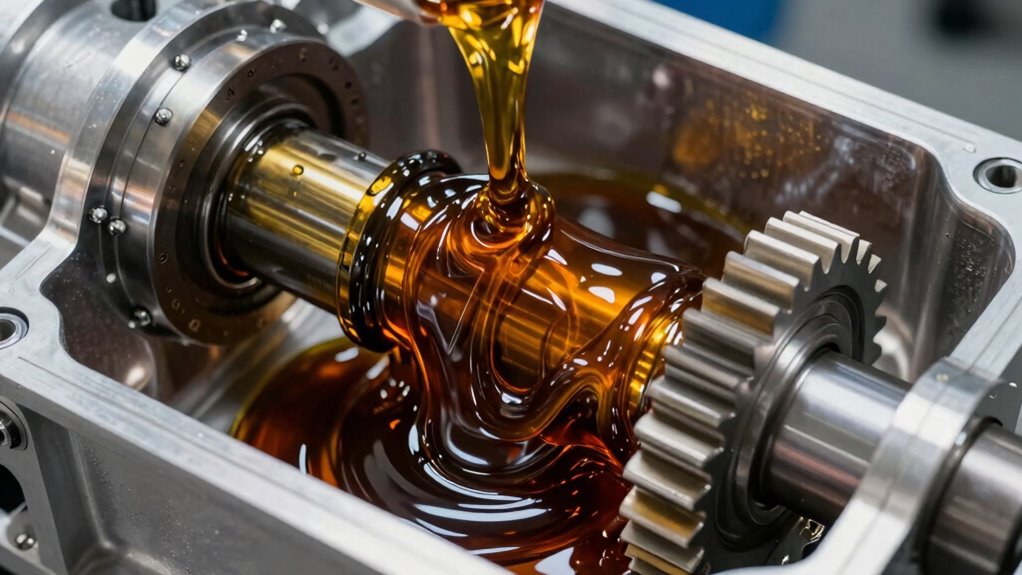

Many believe that thicker gear oils offer better protection, but this isn’t true for manual gearboxes. Selecting the right viscosity depends on your driving conditions, temperature, and manufacturer recommendations. Thicker oils can hinder shifting, cause heat buildup, and reduce efficiency. Modern technology shows that optimized, lighter oils actually provide better lubrication, protection, and performance. If you want to understand why the “thicker is better” myth ends here, you’re in the right place to discover the facts behind proper gear oil choices.

Get business pricing on garage and car supplies
- Business-only prices and quantity discounts
- Tax-exempt purchasing
- Multiple users, one account, clear invoices
Key Takeaways
- Modern gear oils prioritize optimal viscosity, balancing protection and smooth shifting, rather than simply being thicker for safety.
- Excessively thick oils can hinder gear movement, increase heat, and reduce efficiency, debunking the “thicker is better” myth.
- Proper viscosity ensures effective lubrication across temperature ranges, preventing wear and maintaining performance.
- Advances in additive technology allow lighter oils to provide equal or superior protection compared to heavy oils.
- Always follow manufacturer recommendations for viscosity, as choosing the right grade is more critical than opting for thicker oils.
manual transmission gear oil 75W-90
As an affiliate, we earn on qualifying purchases.
As an affiliate, we earn on qualifying purchases.
What Viscosity Means for Your Manual Transmission
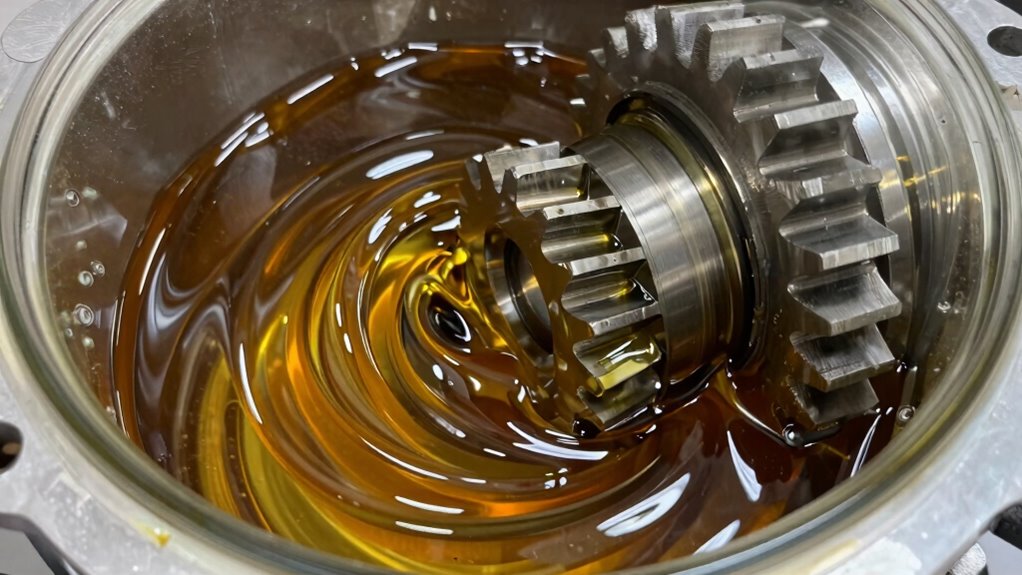
Understanding viscosity is essential because it directly affects how your manual transmission shifts and performs. Viscosity measures how thick or thin the gear oil is, influencing how easily it flows within your gearbox materials. Thicker oils may offer better protection for certain components, but they can also make shifting less smooth. Conversely, thinner oils flow more freely, promoting easier shifts and quicker response times. Your driver preferences—whether you prioritize smoothness, responsiveness, or gear protection—play a significant role in selecting the right viscosity. Different gearbox materials interact uniquely with various oil thicknesses, so choosing the proper viscosity guarantees ideal performance and longevity. Additionally, oil compatibility between the viscosity and gearbox components is crucial to prevent wear and ensure optimal operation. It’s also important to consider temperature effects because viscosity can change with temperature, impacting performance in different driving conditions. Being aware of viscosity’s influence on gear engagement helps you optimize your driving experience and extend your transmission’s lifespan. For example, selecting the correct viscosity can help prevent gear slipping and improve overall transmission responsiveness. Ultimately, understanding these factors helps you make an informed choice that aligns with your driving style and your vehicle’s needs.
best viscosity gear oil for manual gearbox
As an affiliate, we earn on qualifying purchases.
As an affiliate, we earn on qualifying purchases.
Why Thicker Gear Oils Were Once the Norm: And Why That’s Changing
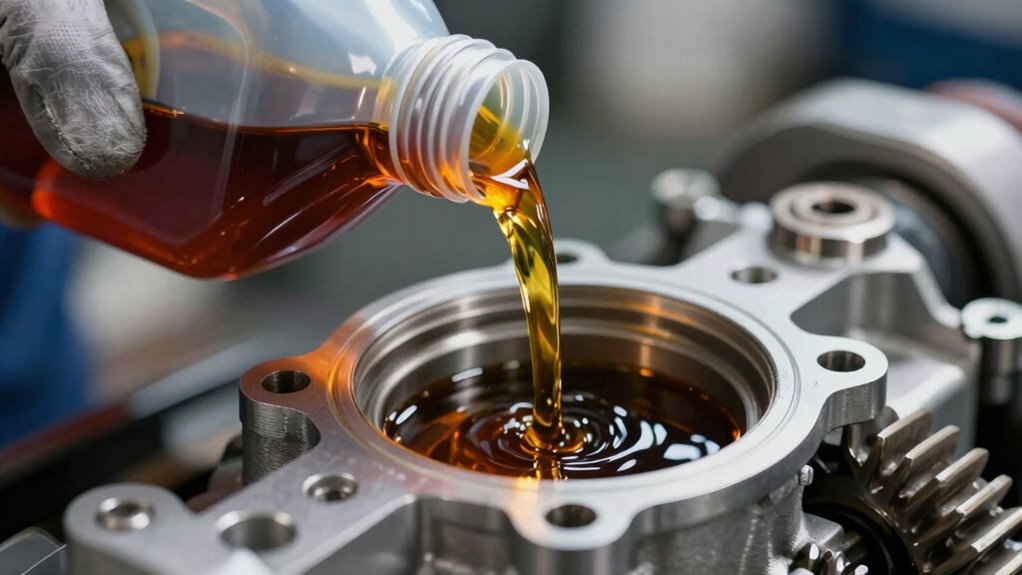
In the past, gear oils were typically thicker because manufacturers believed higher viscosity provided better protection for the demanding conditions of manual transmissions. They thought that increased viscosity helped withstand stresses from gearbox metallurgy and prevented wear. Additionally, additive formulation was designed for these heavier oils, aiming to improve load-carrying capacity and reduce friction. However, thicker oils also had downsides, like increased drag and heat. Over time, advances in gearbox metallurgy and additive technology allowed for lighter oils that deliver better lubrication without sacrificing protection. The table below shows how these factors influenced the shift:
| Factor | Old Approach | Modern Approach |
|---|---|---|
| Gearbox metallurgy | Heavy, robust materials | Advanced, lightweight alloys |
| Additive formulation | Thick, anti-wear-focused oils | Precise, temperature-sensitive additives |
| Oil viscosity | High viscosity, thicker oils | Optimized viscosity for efficiency |
gear oil additive for manual transmissions
As an affiliate, we earn on qualifying purchases.
As an affiliate, we earn on qualifying purchases.
How Viscosity Impacts Gear Performance, Lubrication, and Temperature
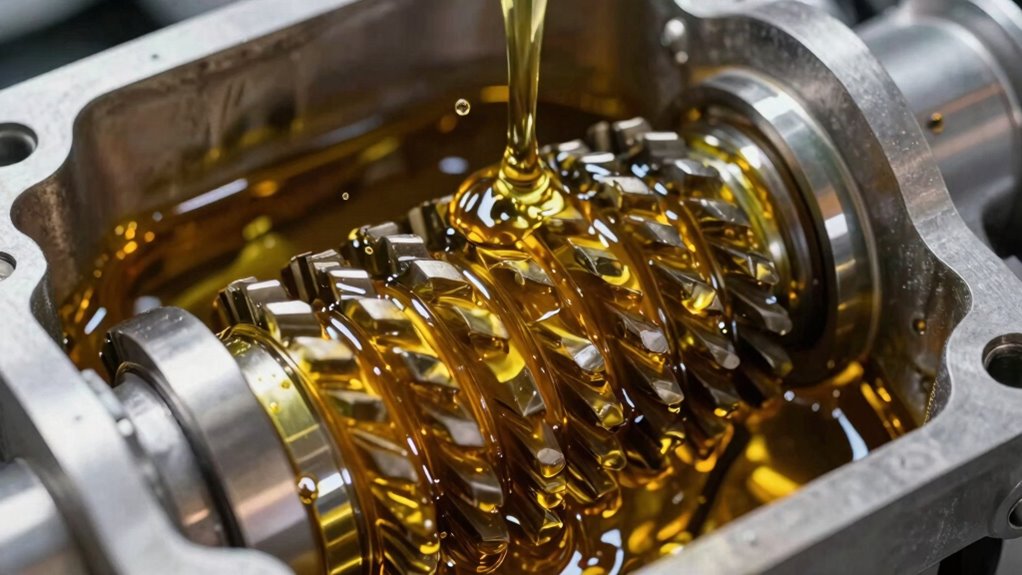
Your choice of oil viscosity directly affects how smoothly your gears shift and operate. As temperatures rise, thinner oils may lose their lubricating properties, leading to increased wear. Choosing the right lubricant helps you select the right viscosity to optimize performance and protect your gearbox. Additionally, understanding body jewelry measurements and materials can provide insights into how time and life’s mysteries influence our perceptions of change and movement. The contrast ratio of your lubricant can also influence its effectiveness under different operating conditions, ensuring optimal performance across temperature variations. Recognizing how viscosity impacts gear performance can further guide you in selecting the most suitable lubricant for your specific needs.
Viscosity and Gear Smoothness
Viscosity plays a crucial role in determining how smoothly your manual gearbox shifts gears. When the lubricant’s viscosity is just right, it provides a thin, consistent film that reduces friction between gear components, resulting in smoother gear shifts. If the oil is too thick, it resists flow, causing sluggish shifts and increased wear. Conversely, if it’s too thin, it may not adequately lubricate, leading to gear noise and potential damage. Selecting a lubricant with the right viscosity ensures compatibility with your engine and transmission, optimizing gear performance. Proper viscosity helps maintain consistent lubrication under varying conditions, preventing abrupt gear engagement and promoting longevity. Additionally, temperature stability of the lubricant is essential to maintain optimal viscosity across different driving environments. Ultimately, the right viscosity enhances gear smoothness, making your driving experience more comfortable and reliable.
Temperature’s Effect on Lubrication
Temperature has a significant impact on lubrication performance, as it directly affects the viscosity of your gearbox oil. When engine temperature rises, the oil becomes thinner, reducing its ability to maintain a protective film and potentially increasing metal-to-metal contact. Conversely, at lower temperatures, the oil thickens, making it harder for oil to flow freely through the gears. Proper oil flow is essential for cooling and preventing wear, especially during warm-up or high-temperature conditions. If the oil is too viscous, it hampers lubrication; if too thin, it can’t protect components effectively. Maintaining ideal viscosity ensures consistent gear performance, prevents overheating, and supports smooth operation regardless of engine temperature fluctuations. Viscosity control is vital for optimizing gear efficiency and longevity under varying thermal conditions. Additionally, understanding the temperature-viscosity relationship helps in selecting the appropriate lubricant for different operating environments. Properly managing viscosity also contributes to energy efficiency, reducing unnecessary strain on the gearbox during operation. Recognizing the importance of thermal stability in lubricants can further enhance gear performance and durability. A thorough understanding of viscosity changes across temperature ranges allows for better maintenance and lubricant selection strategies.
automatic vs manual transmission oil
As an affiliate, we earn on qualifying purchases.
As an affiliate, we earn on qualifying purchases.
Choosing the Right Gear Oil Viscosity for Your Driving Conditions
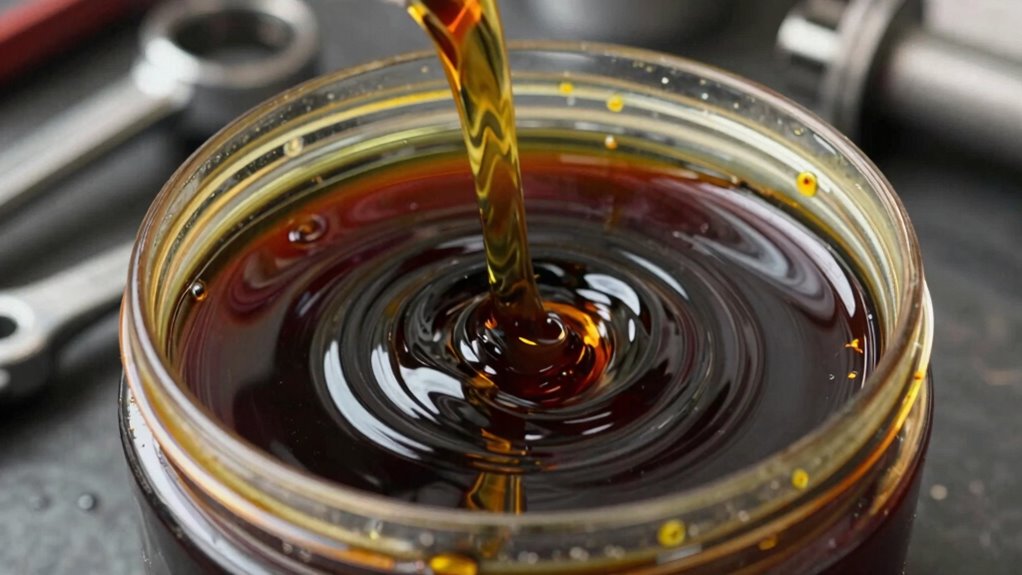
Choosing the right gear oil viscosity depends on the driving conditions you’ll encounter most often. If you drive in diverse or extreme environments, selecting the correct viscosity guarantees peak performance. Consider these factors:
Selecting the correct gear oil viscosity ensures optimal performance in diverse driving conditions.
- Climate: Colder temperatures demand lower-viscosity oils for easier shifting, while hot climates require thicker oils for protection. Using the appropriate viscosity ensures optimal lubrication across temperature ranges.
- Driving Style: Aggressive driving or frequent gear changes benefit from oils with enhanced additive packages that improve lubrication. Tailoring your oil choice to your driving habits can extend gear life.
- Oil Type: Synthetic blends offer better temperature stability and flow, making them ideal for variable conditions without sacrificing protection. The oil formulation plays a crucial role in performance.
- Urban greening initiatives can also influence maintenance practices, encouraging the use of environmentally friendly gear oils that reduce emissions and environmental impact. Incorporating eco-friendly oils can help meet sustainability goals while maintaining gear efficiency, especially as environmentally conscious choices become more prevalent in automotive maintenance. Additionally, selecting environmentally friendly oils can contribute to reducing greenhouse gases and support broader ecological efforts. Moreover, advancements in biodegradable gear oils are making it easier for drivers to align their vehicle maintenance with sustainable practices.
Debunking Myths About Gear Oil Thickness
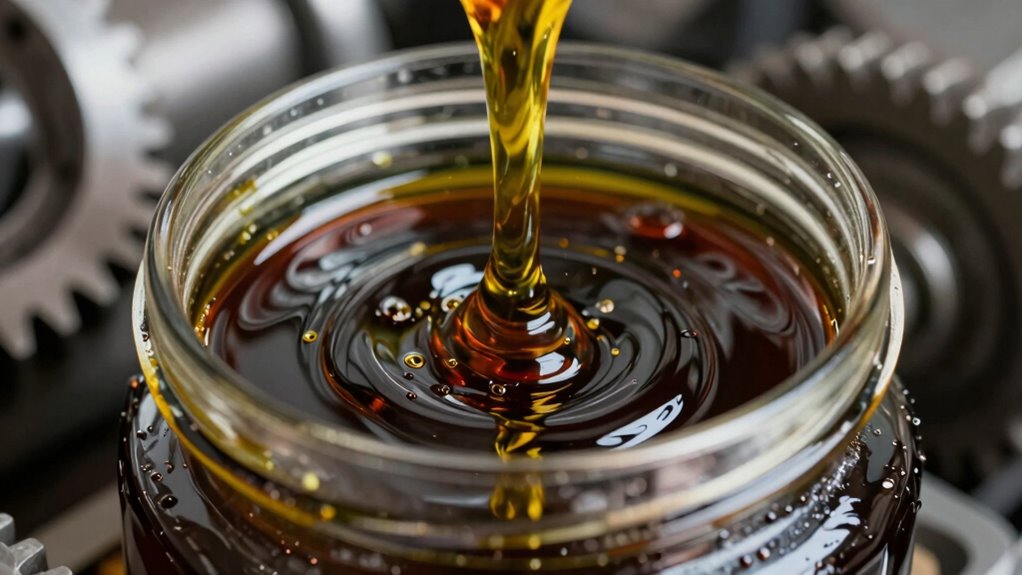
Many drivers believe that thicker gear oils always provide better protection, but this isn’t necessarily true. Excessive viscosity can hinder gear movement and impair transmission sealing, leading to increased wear. Proper gear oil additives are designed to optimize lubrication without making the oil overly thick. Thicker oils don’t automatically improve protection; they can cause resistance and heat buildup. Instead, the right viscosity ensures smooth shifting and effective sealing. Choosing the appropriate viscosity level is key to reliable transmission performance. Additionally, understanding the impact of viscosity on transmission efficiency helps prevent unnecessary component stress.
Tips for Selecting and Maintaining the Best Gearbox Lubricant
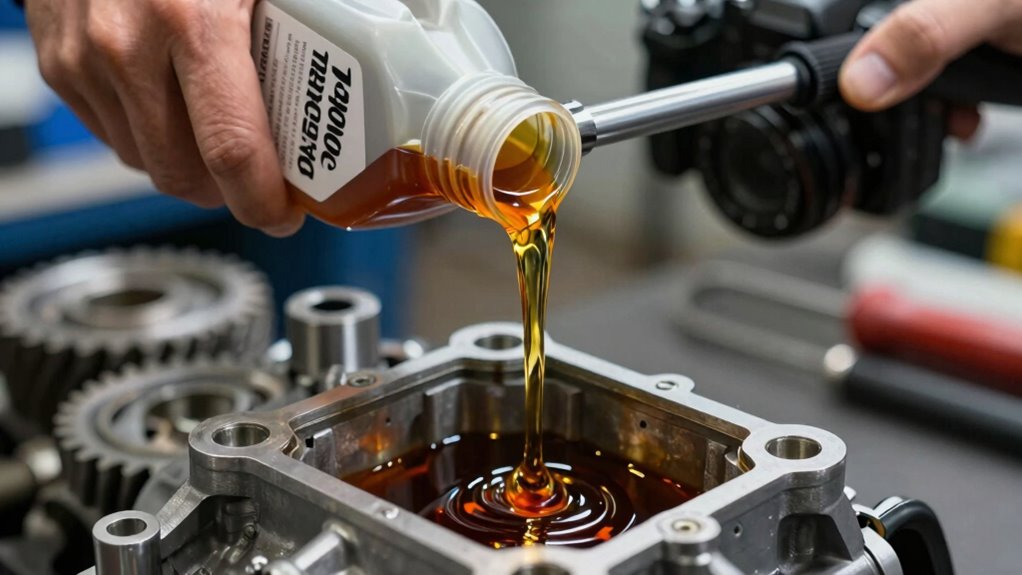
Choosing the right gearbox lubricant starts with selecting the correct viscosity for your transmission. You should also check your lubricant regularly to catch any contamination or degradation early. Proper storage guarantees the lubricant stays effective and ready when you need it most.
Correct Viscosity Selection
Selecting the right viscosity for your manual gearbox lubricant is crucial to guarantee smooth shifting and peak performance. To choose wisely, consider these factors:
- Check your vehicle’s manual for manufacturer recommendations, which often specify viscosity grades suitable for your climate.
- Explore synthetic alternatives, which offer better temperature stability and longer-lasting protection, especially in extreme conditions.
- Keep environmental considerations in mind by opting for eco-friendly lubricants that reduce ecological impact without sacrificing performance.
Using the correct viscosity ensures your gearbox operates efficiently, reduces wear, and extends its lifespan. Skip the myth that thicker is always better; instead, prioritize matching viscosity to your driving environment and vehicle needs. Proper selection enhances performance while supporting sustainability efforts.
Regular Lubricant Checks
Regularly checking your gearbox lubricant is essential to keep your manual transmission running smoothly. Start by inspecting the fluid level and condition, ensuring it’s compatible with your vehicle’s specifications. Using the right lubricant compatibility prevents issues like increased wear or corrosion. Look for signs of contamination, such as discoloration or debris, which can indicate the need for a change. When selecting gear oil, consider additives that improve performance, like friction modifiers or anti-wear agents, tailored to your driving conditions. Consistent checks help you identify early signs of lubricant degradation, allowing timely replacements. Maintaining ideal lubricant quality ensures your gearbox operates efficiently, reducing wear and extending its lifespan. Remember, proper lubricant checks are a simple but crucial step in gearbox maintenance.
Proper Storage Practices
Proper storage of your gearbox lubricant helps maintain its quality and performance over time. Ensuring the right storage environment is vital for effective gearbox maintenance. Keep the lubricant in a cool, dry place away from direct sunlight and temperature fluctuations. Avoid storing it near chemicals or other contaminants that could compromise its integrity. To optimize storage practices, consider these tips:
- Use sealed containers to prevent contamination and moisture ingress.
- Store in a stable environment with consistent temperature, ideally between 10-25°C.
- Keep the lubricant off the ground and away from sources of heat or humidity.
Frequently Asked Questions
How Often Should I Change My Manual Transmission Oil?
You should change your manual transmission oil every 30,000 to 60,000 miles, depending on your vehicle’s maintenance schedule. Regularly checking the gear oil lifespan helps prevent gear wear and ensures smooth shifting. If you notice grinding or difficulty shifting, it’s a sign it’s time for a change. Following your manufacturer’s recommended maintenance schedule keeps your transmission in top condition and extends its lifespan.
Can Using the Wrong Viscosity Damage My Gearbox?
Using the wrong viscosity oil is like pouring the wrong fuel into your car—your gearbox wear accelerates, and performance suffers. When oil isn’t compatible with your gearbox, it can cause increased friction and premature deterioration. Stick to the manufacturer’s recommended viscosity to keep your gearbox running smoothly and avoid unnecessary damage. Proper oil selection guarantees your transmission stays well-lubricated, reducing wear and extending its lifespan.
What Signs Indicate My Gear Oil Needs Changing?
You’ll notice signs like gear oil degradation, which can cause rough shifting or grinding noises, indicating it’s time for a change. Metal shavings in the oil are another warning sign, suggesting increased wear inside your gearbox. If you experience difficulty shifting or unusual noises, check your gear oil regularly. These signs help prevent damage and keep your manual gearbox running smoothly by ensuring the oil stays effective.
Are Synthetic Gear Oils Better Than Conventional Ones?
Is synthetic gear oil better? Absolutely. Think of synthetic advantages as your gear’s secret weapon—offering better temperature stability, enhanced lubrication, and longer-lasting protection. Unlike conventional limitations, synthetic oils resist breakdown and flow more easily at extreme temperatures, ensuring smoother shifts and less wear. You get better performance and extended intervals between changes, making synthetic gear oils a smarter choice for maintaining your manual gearbox and keeping it in top shape.
Does Climate Affect the Ideal Gear Oil Viscosity Choice?
Yes, climate impacts your gear oil viscosity choice. In colder climates, you should opt for lower viscosity oils to guarantee smooth shifting and quick lubrication startup. Conversely, in hot environments, higher viscosity oils help maintain protection and prevent thinning. Always consider climate impact when selecting gear oil, and don’t hesitate to adjust viscosity accordingly to keep your manual gearbox running smoothly and efficiently in varying conditions.
Conclusion
Remember, choosing the right gear oil isn’t about going thick for the sake of it—think of it like Goldilocks finding what’s just right. Modern gearboxes thrive on the proper viscosity, not the thickest option. By understanding your driving style and conditions, you can keep your transmission running smoothly, like a well-oiled machine. Don’t let myths clog your judgment—select wisely, and enjoy the ride with confidence and ease.
Fall Picks
fall essentials
As an affiliate, we earn on qualifying purchases.