
Syncs in manual transmissions need special fluids because they contain unique friction modifiers that help gears engage smoothly and quickly without grinding. Unlike standard gear oils, these fluids are formulated to match the contact surfaces of synchronizer rings, ensuring proper grip and quick engagement. If the fluid wears out or isn’t right for your truck, shifting can become rough or noisy. Keep an eye on your fluid type and quality to maintain smooth gear changes and prolong your transmission’s life.
Key Takeaways
- Synchronizer fluids contain specialized friction modifiers to ensure smooth gear engagement without slipping or grinding.
- They are formulated to provide optimal friction levels for quick, quiet shifts and to prevent synchronizer wear.
- Standard transmission oils lack the precise friction qualities needed for synchronizer operation, making dedicated fluids essential.
- Proper synchronizer fluids maintain consistent friction across temperature ranges, ensuring reliable performance.
- Using the correct fluid helps prevent gear shifting issues, prolongs transmission lifespan, and maintains smooth operation.

Valvoline Synchromesh Manual Transmission Fluid 1 Quart
- Suitable for manual transmissions: Meets manual transmission and transaxle needs
- High wear protection: Provides excellent wear protection under high loads
- Smooth shifting: Enhances synchronizer performance for smooth shifts
As an affiliate, we earn on qualifying purchases.
As an affiliate, we earn on qualifying purchases.
Why Do Synchronizers Need Special Fluids and How Does This Affect Your Transmission?
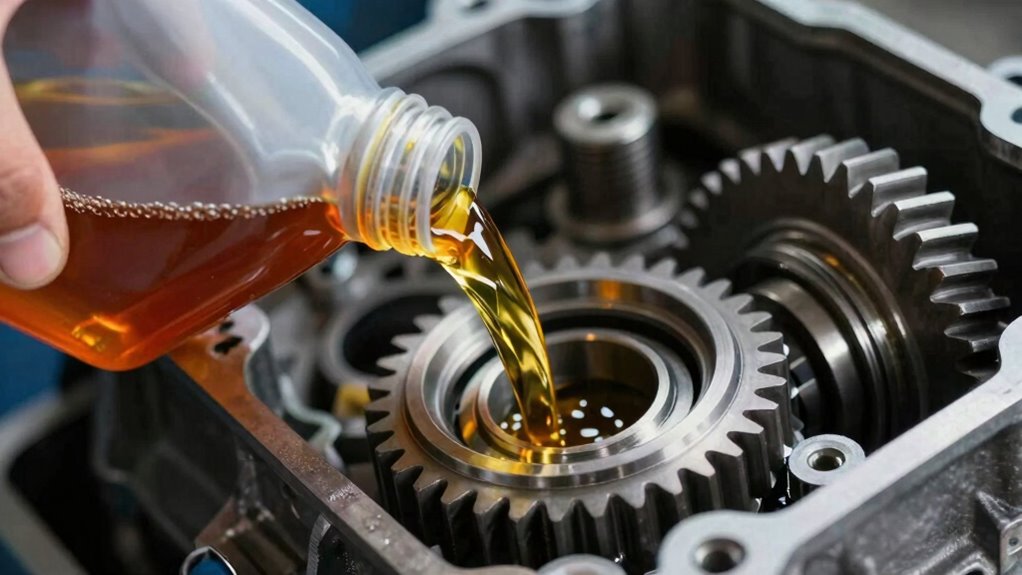
Synchronizers in manual transmissions rely on specialized fluids because they require precise lubrication and friction properties to function correctly. These fluids help guarantee smooth clutch engagement by reducing wear and preventing slipping during gear shifts. When the right fluid is used, it facilitates gear synchronization, allowing gears to mesh seamlessly without grinding or delay. Standard oils may lack the necessary friction characteristics, leading to rough shifts and increased component wear. The specialized synchronizer fluids have additives that maintain ideal friction levels, ensuring your transmission shifts smoothly and efficiently. Using the correct fluid directly impacts the longevity of your transmission, making gear changes easier and more reliable. Proper lubrication with the right fluid keeps your manual transmission performing at its best, especially since synchronizer performance depends heavily on the quality of the fluid. Additionally, advancements in fluid technology have further improved the effectiveness of these specialized lubricants. For optimal results, selecting fluids with appropriate friction modifiers is essential for maintaining smooth gear engagement and prolonging transmission life.

Smilyeez Listing for BG Syncro Shift II PN 792 with Pocket Screwdriver (2 Bottles) Synthetic Gear Lubricant – Fluid for Manual Transmissions and Trans-Axle
- Optimized for Manual Transmissions: Enhances front-wheel drive manual gear performance
- Reduces Maintenance Costs: Improves thermal and shear stability for longevity
- Enhanced Shifting Experience: Provides smoother, more efficient gear shifts
As an affiliate, we earn on qualifying purchases.
As an affiliate, we earn on qualifying purchases.
How Do Synchronizers Work in Manual Transmissions?
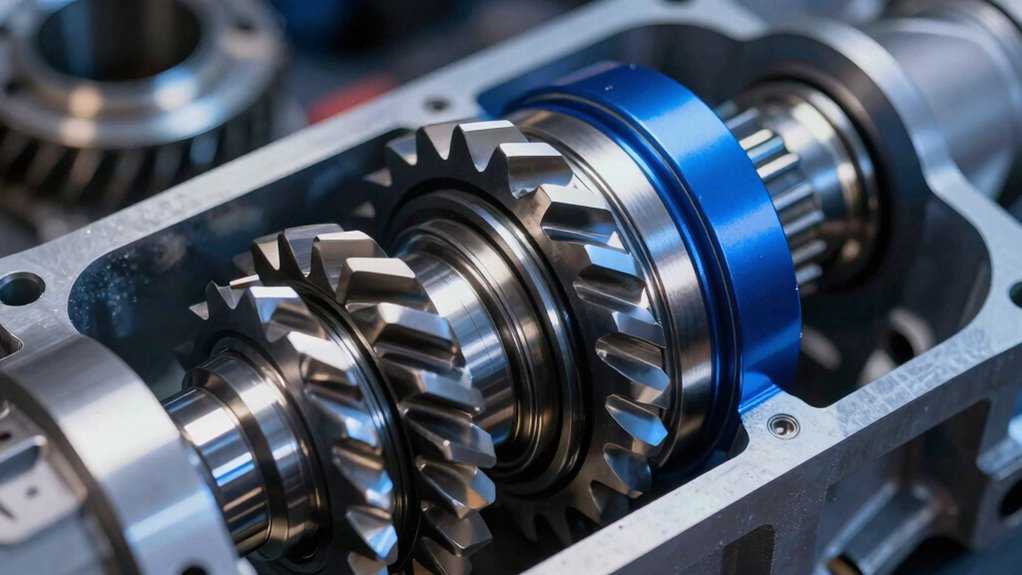
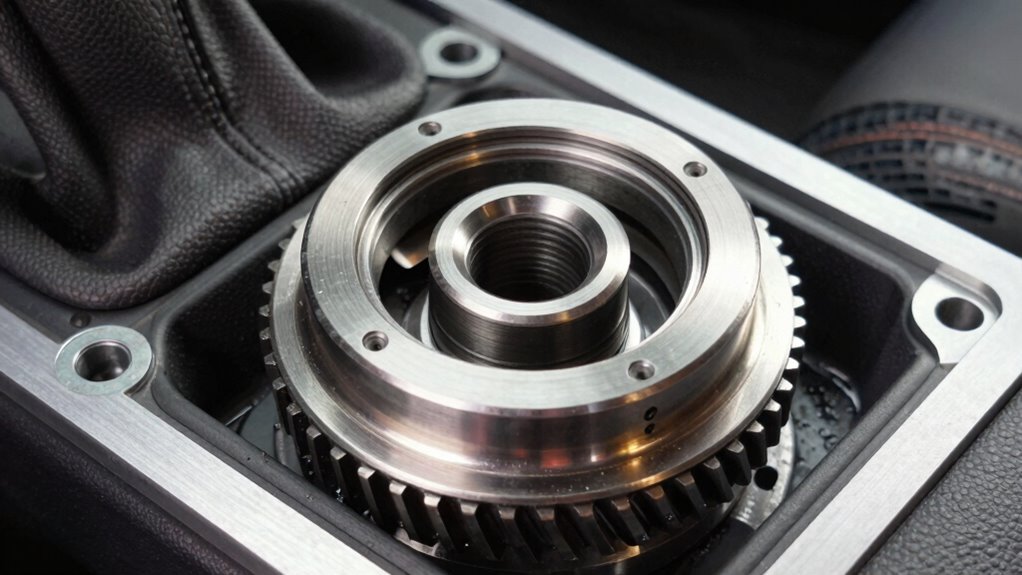
Usually, when you shift gears in a manual transmission, the synchronizers work behind the scenes to make the process smooth and quiet. They facilitate gear engagement by matching the speeds of the gears and the shaft. When you engage a gear, the synchronizer’s friction materials come into contact with the cone-shaped surfaces of the gear and hub. These friction materials generate just enough friction to equalize their rotational speeds, preventing grinding. As the speeds align, the synchronizer locks into place, allowing the gear to engage smoothly. This process relies on precise contact between the synchronizer’s friction materials and the gear surfaces. Without these carefully designed friction materials, gear engagement would be rough, noisy, and potentially damaging to the transmission. Proper maintenance of transmission fluids ensures that the synchronizers function effectively over time, as the lubrication quality directly impacts the friction properties necessary for smooth shifting. Additionally, using the correct fluid viscosity helps maintain optimal synchronizer performance and longevity.

Valvoline Dual Clutch Transmission Fluid 1 Quart
- Suitable for Dual Clutch Transmissions: Meets dual clutch transmission demands
- Anti-Shudder Protection: Ensures smooth shifting and power transfer
- Wear-Resistant Technology: Extends transmission lifespan
As an affiliate, we earn on qualifying purchases.
As an affiliate, we earn on qualifying purchases.
How Do Synchronizer Fluids Differ From Standard Gear Oils?
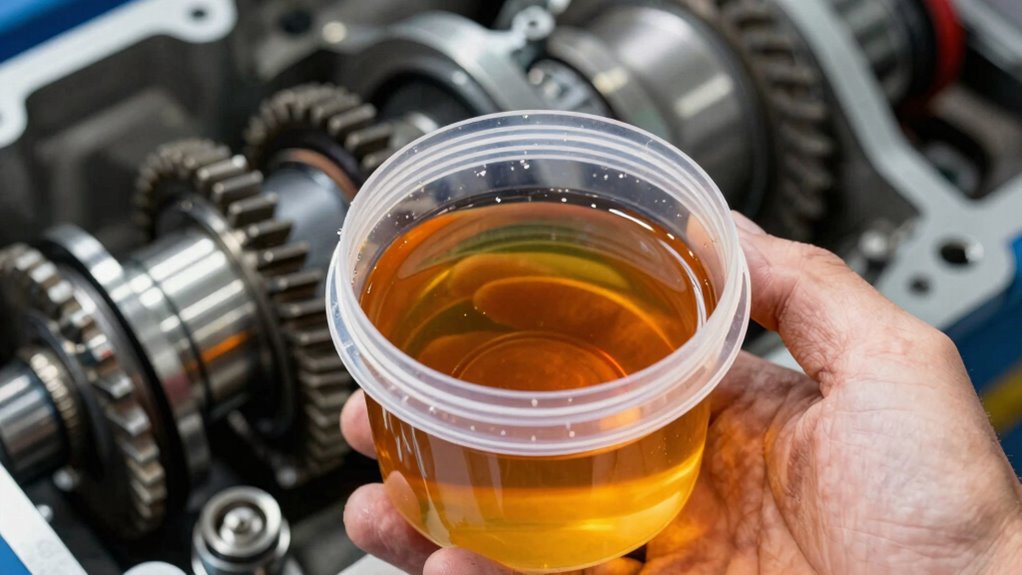
Synchronizer fluids contain specialized friction modifiers that help gears smoothly engage, unlike standard gear oils. These fluids also have unique additive requirements to prevent wear and guarantee quick synchronization. Understanding these differences is key to choosing the right fluid for your transmission. Incorporating the right airless paint spraying tips can help ensure proper maintenance and optimal performance of your transmission system.
Specialized Friction Modifiers
How do synchronizer fluids stand out from standard gear oils? They contain specialized friction modifiers designed to enhance the engagement of synchronizers. These friction additives ensure smoother, quicker shifts by controlling the amount of slip needed for gear synchronization. Unlike standard gear oils, which focus on protecting gears and bearings, synchronizer fluids prioritize fluid compatibility with synchronizer components and precise friction control. The right balance of friction modifiers prevents gear grinding and reduces wear on synchronizer rings and cones. Because these fluids are formulated specifically for manual transmissions with synchronizers, they need to maintain consistent performance across a wide temperature range. Additionally, formulation stability ensures reliable operation under varying operating conditions. This specialized formulation helps ensure your shifts are smooth, responsive, and reliable, making synchronizer fluids essential for effective transmission operation.
Unique Additive Requirements
Unlike standard gear oils, synchronizer fluids require specialized additives that precisely control friction to guarantee smooth gear engagement. These additives must be compatible with the overall fluid formulation to prevent issues like chatter or gear slipping. Because synchronizers rely on specific friction levels, the additive compatibility becomes critical; incompatible additives can impair shifting performance or cause wear. The fluid formulation for synchronizer oils is carefully balanced to assure the right friction characteristics without compromising lubrication. This delicate formulation ensures that even minor changes do not negatively affect performance, so manufacturers develop custom additive packages tailored to synchronizer needs. Additionally, understanding the frictional properties of the additives is essential for optimal function. Proper formulation also considers the compatibility with materials, preventing deterioration of seals and other components. In essence, the unique additive requirements of synchronizer fluids set them apart from standard gear oils, emphasizing the importance of precise formulation and compatibility for optimal operation.

Red Line 50604 MT-LV 70W/75W GL-4 High-Performance Full Synthetic Gear Oil Lubricant for Manual Transmissions & Transaxles – 1 Quart
- High-Performance Gear Protection: Ensures longer synchro life and meets viscosity standards
- Faster Shifting: Provides smooth, quick gear shifts even when cold
- Safe for Brass Synchros: Free of reactive sulfurs, prevents damage to brass components
As an affiliate, we earn on qualifying purchases.
As an affiliate, we earn on qualifying purchases.
What Friction Qualities Make Synchronizer Fluids Work Best?
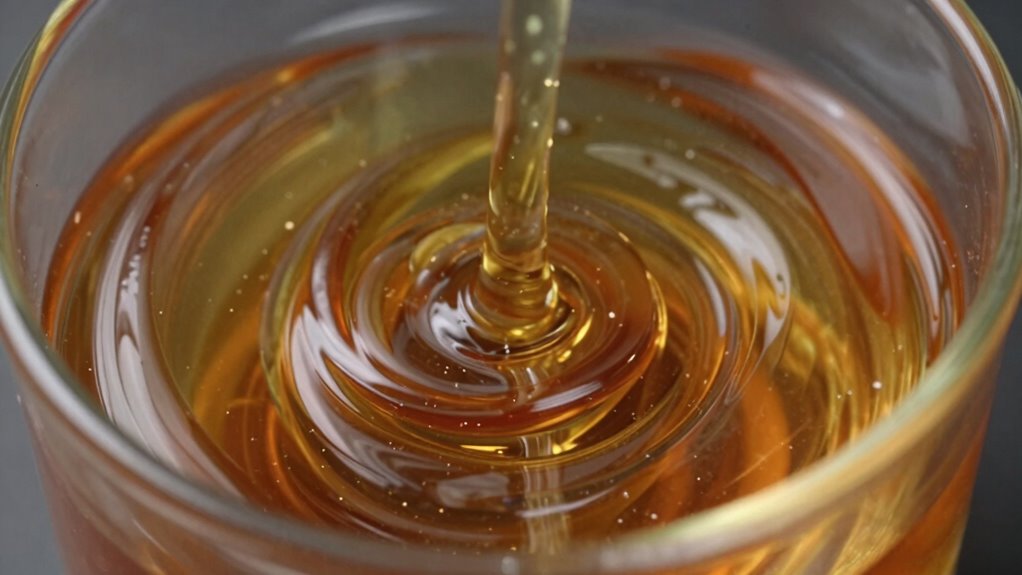
Have you ever wondered what makes synchronizer fluids effective during gear shifts? The key lies in their friction qualities, which directly influence clutch engagement and gear synchronization. The fluid needs just the right amount of friction to allow smooth engagement without slipping or grabbing too harshly. Too much friction can cause hard shifts and wear, while too little can lead to delayed synchronization. High-quality synchronizer fluids contain specialized additives that optimize this balance, ensuring quick and smooth gear changes. They provide enough grip to match gear speeds efficiently, reducing wear on synchronizers. friction qualities are carefully engineered to maintain proper friction levels, helping your transmission operate quietly and reliably, making every shift seamless and extending the lifespan of your transmission components.
How Can You Tell If Your Synchronizer Fluid Is Worn Out?
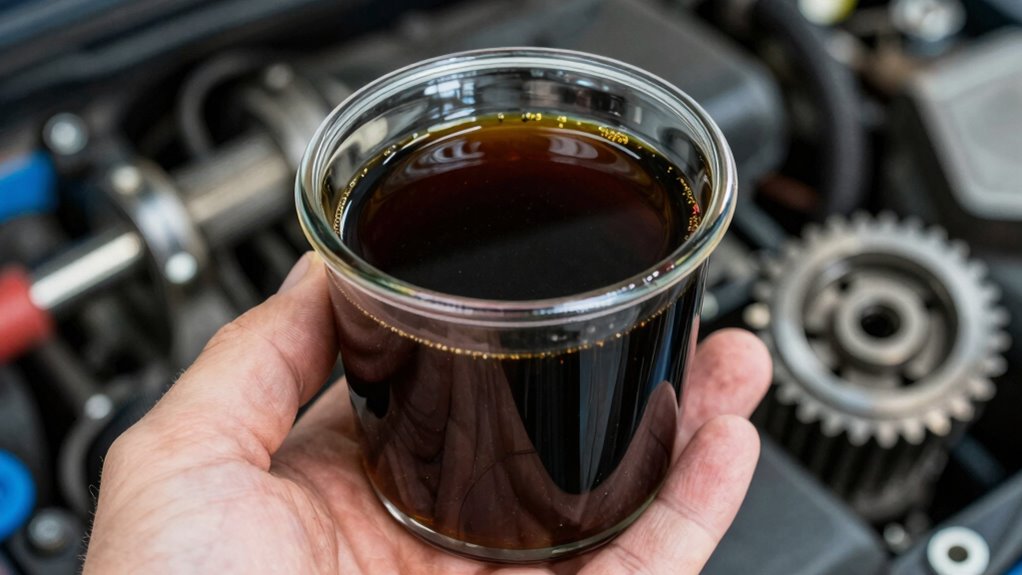
If you’re noticing difficulty shifting gears or hearing grinding sounds, your synchronizer fluid might be worn out. Unusual gear shifts are often a sign that the fluid isn’t lubricating properly anymore. Pay attention to these signs, as they can help you determine if it’s time for a fluid change. Proper transmission maintenance can help extend the life of your vehicle’s shifting components. Additionally, degraded synchronizer fluid can lead to increased wear on the gear engagement mechanisms, potentially causing more extensive repairs if not addressed promptly. Regular inspections and timely fluid replacement are essential for optimal vehicle performance and longevity.
Unusual Gear Shifts
When your synchronizer fluid starts to wear out, you’ll notice unusual gear shifts that feel rough or unresponsive. You might struggle to find the correct gear or experience slipping during shifts. This can also cause delayed engagement or difficulty in matching gear ratios smoothly. To address this, check your clutch adjustment, as improper engagement can mimic worn synchronizer symptoms. Additionally, the Free Floating nature of synchronizer fluid means it can be affected by environmental factors, impacting performance. Regularly monitoring the environmental impact on your transmission fluid can help prevent premature wear and ensure smoother shifts.
Grinding Noises During Shifting
Grinding noises during shifting often indicate that your synchronizer fluid is worn out. When the fluid isn’t lubricating properly, gear engagement becomes rough, causing a grinding sound. You might notice this noise when shifting into specific gears or during acceleration. The transmission noise can feel harsh and may persist even after the gear is engaged. Worn synchronizer fluid hampers the smooth operation of the synchronizers, making it harder for gears to mesh seamlessly. If you experience these grinding sounds regularly, it’s a sign that your transmission isn’t receiving adequate lubrication, and the fluid should be checked or replaced. Proper fluid maintenance is essential for preventing premature wear of transmission components. Regular maintenance and using the correct glycolic acid concentration can help ensure optimal transmission performance. Addressing this issue promptly can prevent further damage and restore smooth gear engagement in your manual transmission. Additionally, understanding transmission lubrication can help you better maintain your vehicle’s shifting performance and longevity. Ensuring the right fluid quality can also extend the lifespan of your transmission and reduce costly repairs.
How to Choose the Right Synchronizer Fluid for Your Manual Transmission
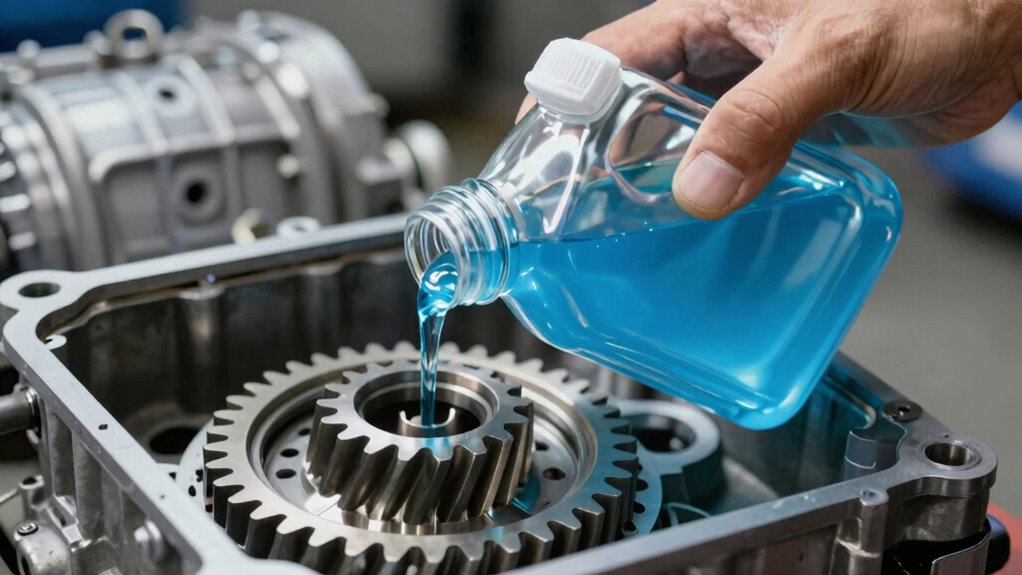
Choosing the right synchronizer fluid for your manual transmission is essential to guarantee smooth gear shifts and long-lasting performance. To do this, consider the fluid’s ability to promote proper clutch engagement and facilitate gear synchronization. Look for a fluid that matches your vehicle manufacturer’s specifications, as using the wrong type can cause delayed or harsh shifts. Check the viscosity rating and additive package to certify optimal friction properties. Some fluids are designed specifically for certain transmission types, improving overall responsiveness. Avoid generic fluids that don’t meet your transmission’s requirements. Proper selection helps prevent wear on synchronizers, reduces shifting noise, and enhances overall driving comfort. Additionally, selecting a compatible fluid that aligns with your transmission’s needs can help maintain its longevity. Always consult your owner’s manual or a professional to choose the best fluid for your specific vehicle. Ensuring the correct fluid type can also prevent costly repairs and extend the lifespan of your transmission components. Paying attention to transmission maintenance can further optimize performance and reliability over time. Regularly inspecting and changing your transmission fluid according to manufacturer guidelines is a key aspect of automated testing and ongoing quality assurance.
How Regular Maintenance Keeps Your Synchronizers and Transmission Healthy
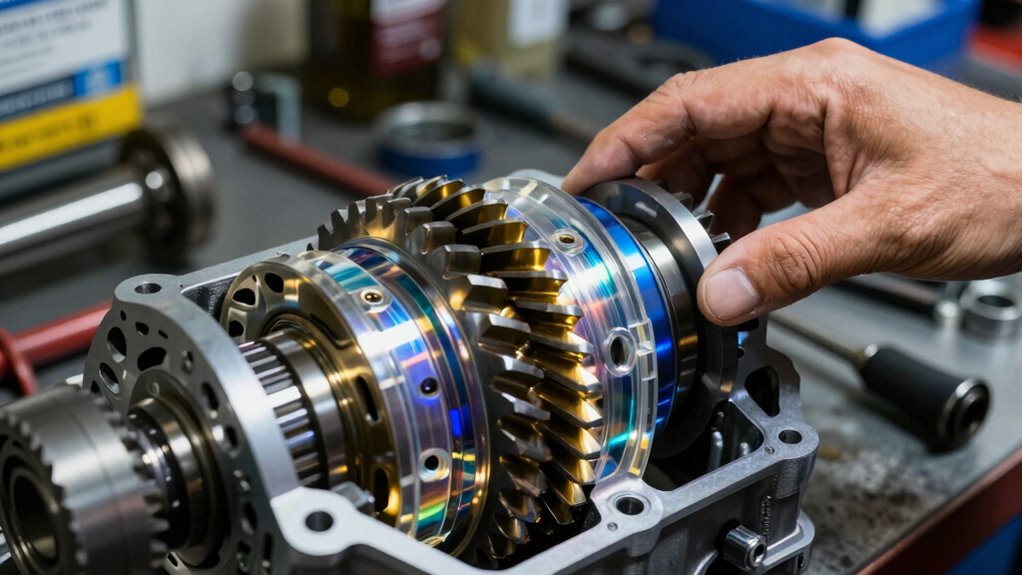
Regular maintenance is essential for keeping your synchronizers and transmission in top shape, as neglect can lead to costly repairs and reduced performance. Using the right lubrication technology ensures your transmission fluid maintains ideal viscosity and protective qualities. Regularly checking and replacing fluid helps prevent contamination and ensures fluid compatibility with your transmission components. Proper lubrication reduces wear on synchronizers, allowing them to function smoothly during gear changes. Over time, fluid degrades and loses its ability to lubricate effectively, so timely changes are crucial. Maintaining the correct fluid level and quality keeps your transmission running quietly and efficiently. Consistent maintenance not only prolongs the lifespan of your synchronizers but also preserves overall transmission health, saving you money and frustration in the long run.
Can You Repair or Replace Synchronizers Yourself?
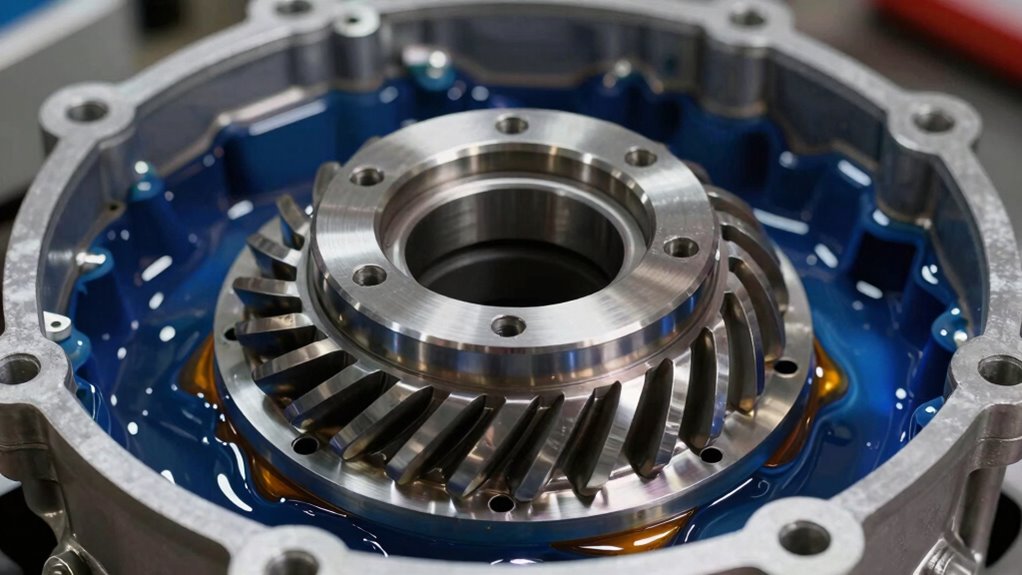
Repairing or replacing synchronizers is a complex task that typically requires specialized tools and a good understanding of transmission mechanics. If you’re considering DIY repairs, be aware that mistakes can lead to more damage and costly repairs later. For most drivers, professional replacements are the safer choice.
| DIY Repairs | Professional Replacements |
|---|---|
| Require technical skill | Done by experienced mechanics |
| Risk of incorrect installation | Ensures proper function |
| Save money upfront | Guarantee quality work |
Unless you have advanced mechanical skills, it’s best to leave synchronizer repairs to experts. Attempting DIY repairs can be tempting, but the intricacies involved mean that a professional replacement usually results in a more reliable, long-lasting fix.
Frequently Asked Questions
Can Using the Wrong Fluid Damage Your Transmission or Synchronizers?
Yes, using the wrong fluid can damage your transmission and synchronizers. Fluid compatibility affects lubrication and friction, which are vital for smooth gear shifts. If you choose an incompatible fluid, it can cause increased synchronizer wear, leading to slipping or grinding during shifts. Always use the manufacturer-recommended fluid to guarantee proper lubrication, reduce wear, and prevent costly damage to your transmission components.
How Often Should Synchronizer Fluids Be Changed for Optimal Performance?
A stitch in time saves nine, so don’t delay your synchronizer maintenance. You should change synchronizer fluids every 30,000 to 60,000 miles, depending on driving conditions. Regular fluid change intervals help prevent wear and guarantee smooth gear shifts. Keep an eye on your transmission’s performance, and stick to recommended fluid change intervals to extend the life of your synchronizers and sustain ideal performance.
Are Synthetic Fluids Better Than Conventional for Synchronizers?
Synthetic fluids are generally better than conventional options for synchronizers because of their synthetic advantages, such as improved lubrication and temperature stability. They offer better fluid compatibility, reducing wear and tear on internal components, especially during extreme conditions. You’ll notice smoother shifting and longer-lasting performance with synthetic fluids, making them a smart choice for maintaining your synchronizers and extending your transmission’s lifespan.
Do Different Vehicle Brands Require Specific Synchronizer Fluids?
Yes, different vehicle brands often require specific synchronizer fluids because of brand compatibility and unique fluid formulations. You should always check your vehicle’s owner manual or consult the manufacturer to make certain you select the right fluid. Using the correct fluid formulation helps maintain peak performance and prevents damage. Ignoring these specifications might lead to poor gear shifting or premature wear, so it’s crucial to follow brand recommendations for your transmission fluid.
What Are the Signs of Early Synchronizer Failure Unrelated to Fluid Issues?
You notice gear grinding or difficulty shifting, and it might signal early synchronizer failure. These issues happen when synchronizers struggle to match gear speeds, causing rough shifts. If you ignore these signs, your transmission could suffer more damage. Don’t wait—address shifting problems promptly. Regular maintenance and proper fluid use help prevent synchronizer wear, but staying alert to these early signs keeps your transmission running smoothly longer.
Conclusion
Maintaining your synchronizers is like tending a delicate dance—smooth, precise, effortless. When you use the right fluid, you’re keeping this performance flawless, avoiding the grinding and slipping that can turn harmony into chaos. Neglect it, and your transmission becomes a stubborn, rusty machine, fighting against itself. So, treat your manual transmission like a finely tuned instrument—regular care guarantees it keeps singing, not squeaking, down every road.