
TL;DR

Get business pricing on garage and car supplies
- Business-only prices and quantity discounts
- Tax-exempt purchasing
- Multiple users, one account, clear invoices
Road.cc has published a buyer’s guide to front and rear bike lights for road cycling, drawing on products it says it has reviewed and beam-tested. The guide advises riders to match lights to where they ride, check mounting compatibility and avoid choosing by lumen count alone. It does not identify a new safety rule or announce a specific product.
Road.cc has published a guide to choosing front and rear lights for road cycling, outlining how riding conditions, mounting compatibility, brightness and battery needs should shape a purchase. The guide presents a selection drawn from the site’s archive of reviewed and beam-tested lights, but the supplied source does not name individual products or provide prices.
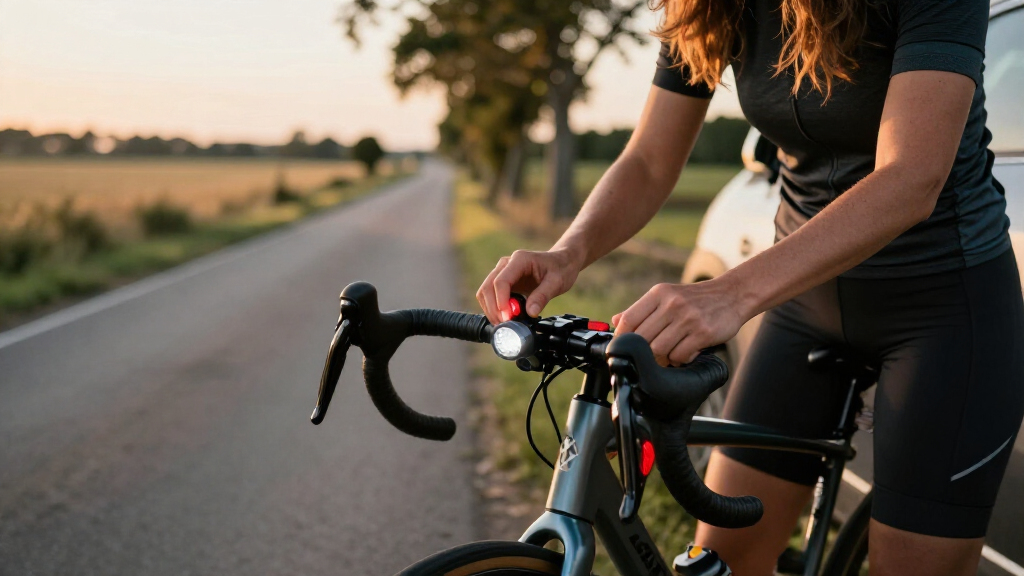
The guide says riders should first check whether a light will fit their bike. Some road bikes have aero-shaped seatposts, while integrated or flattened handlebars can limit front-light mounting options. Road.cc recommends looking for flexible mounting systems when a standard round clamp may not fit.
Brightness should reflect where a cyclist rides, the guide says. Riders staying on lit roads may not need a powerful front light intended for unlit paths. Road.cc cautions that lumens alone do not describe a beam: beam shape also affects how a light illuminates the road and whether it dazzles other people. It says a town rider is unlikely to need a front light with a maximum setting above 800 lumens, and that the highest setting will rarely be necessary in that setting.
Road.cc also advises considering light modes and controls. A steady front light paired with a flashing rear light is described as a popular urban setup, but riders should judge whether the rear light is too bright for others. Easy-to-operate buttons and accessible low and high settings may be useful for riders who change modes often or wear gloves. The guide favors rechargeable USB lights, while noting that riders on multi-day trips without access to electricity may need longer runtimes or a dynamo system.
Choosing Lights That Fit the Ride
The advice matters because a light needs to work with both the cyclist’s route and bicycle. A bright model can be a poor choice if it does not fit the handlebars or seatpost, while a light designed for dark trails may be more than a rider needs on lit streets. Matching the beam and settings to the riding environment can help cyclists see the road without unnecessarily dazzling drivers or other riders.
The guide also makes clear that buying a light is not just a brightness decision. Battery access, controls and mounting affect whether a light is practical for daily use, winter riding or trips away from a power source. These are purchasing considerations, not a substitute for local lighting rules or an independent assessment of road safety.
Products Worth Considering

VIOFO A229 Pro 4K HDR Front and Rear Dash Cam

VIOFO A329S 4K+2K+2K Dash Cam Front Cabin and Rear, STARVIS 2 HDR, Wi-Fi 6

Vantrue N2X 2.7K Dual Dash Cam (Front and Inside)
As an affiliate, we earn on qualifying purchases.
How Road.cc Frames Its Picks
The source describes rechargeable LED lights as the main option in its guide, alongside dynamo-powered lighting and lights that combine illumination with an action camera. It contrasts current rechargeable models with older battery-powered lights and says modern options are available at a range of prices. Those are broad descriptions in the source; it supplies no product-by-product pricing or performance data in the material provided.
Road.cc says its selections draw on a larger archive of light reviews and beam tests. It also points readers to separate front- and rear-light guides, reviews and a Beam Comparison Engine showing still images of beam patterns. The source does not explain the testing methodology in detail here, referring readers elsewhere for information on how its buyer’s guides are assembled.
““The sheer number of lumens isn’t everything, as beam shapes have a big influence on how dazzling lights can be.””
— Road.cc buyer’s guide
Product Details Not Included
The supplied source material does not list the guide’s individual recommended lights, prices or specifications, and it gives no publication date. It is therefore not possible from this material to compare specific models, verify current stock or assess how the guide’s selections have changed over time.
The source also does not provide a detailed account of its testing process or cite research quantifying the safety effects of particular brightness levels or flash patterns. Its recommendations are presented as editorial buying advice, not as a universal standard. Riders should check applicable local requirements and their own bike’s mounting constraints before buying.
Check Fit Before Buying
Readers looking to act on the guide can compare its full product selections with the linked front- and rear-light reviews and use the Beam Comparison Engine to inspect beam patterns. Before purchasing, they can check mount compatibility, mode controls and stated runtime against their bike and typical routes. The source does not announce a follow-up date or a new product release.
Key Questions
What is Road.cc’s bike-light guide about?
It is a buyer’s guide to front and rear lights for road cycling, with advice on choosing a light for a rider’s routes, bike and power needs.
How bright should a road bike front light be?
Road.cc says riders on lit roads may not need a high-powered light intended for unlit paths. It says town riders are unlikely to need a maximum setting above 800 lumens, while emphasizing that beam shape matters too.
What should I check before buying a bike light?
Check whether the mount fits your seatpost or handlebars, and consider the beam, modes, button operation and battery runtime. Flexible mounts may help with aero-shaped seatposts or non-round handlebars.
Are rechargeable lights the only option in the guide?
No. Road.cc says it recommends rechargeable lights apart from a dynamo option, which generates power from the wheel. It also mentions lights that combine illumination with an action camera.
Source: rss