
TL;DR

Get business pricing on garage and car supplies
- Business-only prices and quantity discounts
- Tax-exempt purchasing
- Multiple users, one account, clear invoices
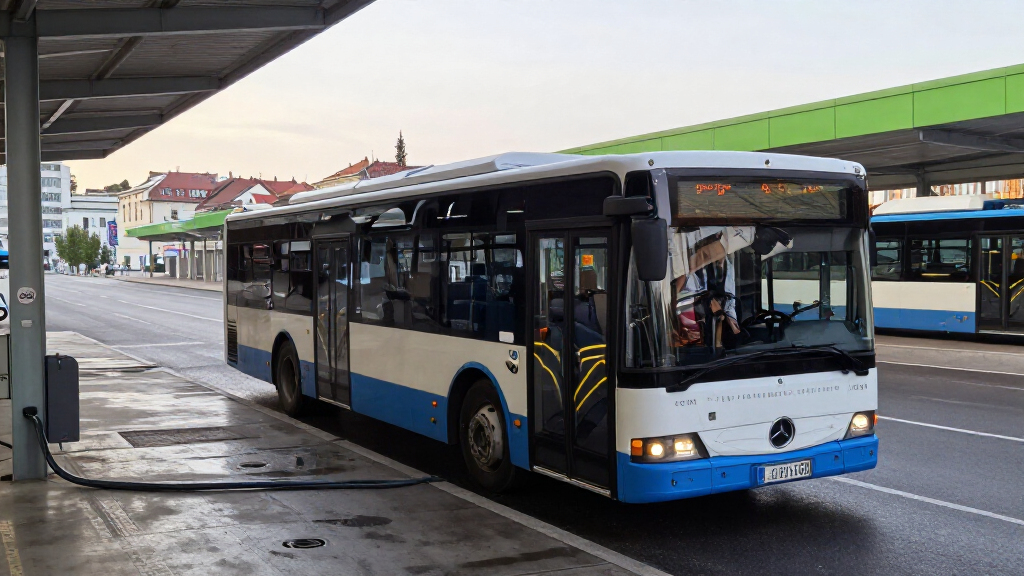
Ljubljana’s municipal bus operator, LPP, has added 35 Mercedes-Benz buses over the past year: 25 battery-electric eCitaros and 10 eCitaro G Fuel Cell buses. The operator says it has also developed charging and hydrogen infrastructure, but the purchase cost, exact bus configurations and route assignments have not been disclosed.
Ljubljana’s municipal transport operator, Ljubljanski Potniški Promet (LPP), has added 35 Mercedes-Benz buses to its fleet over the past year: 25 battery-electric eCitaros and 10 eCitaro G Fuel Cell buses. The project combines battery power and hydrogen fuel-cell technology in the Slovenian capital’s public transport fleet, with LPP also reporting that it has built the related charging and hydrogen infrastructure.
The 35 vehicles make up what LPP describes as the largest fleet modernisation project in the operator’s history. The purchase cost has not been disclosed. The report says the buses were added within a year, but does not give individual delivery dates or say whether every vehicle is already in regular passenger service.
LPP is using the battery-electric eCitaros mainly on city routes with predictable schedules and regular charging opportunities. The fuel-cell buses are intended to complement them on routes where greater range and operational flexibility are required. The report does not identify specific routes or explain how many buses are assigned to each one.
The vehicles have different drivetrain arrangements. A standard battery-electric eCitaro can theoretically hold up to 666 kWh, according to the source report. The fuel-cell models use a smaller battery alongside a hydrogen fuel cell serving as a range extender; for the articulated eCitaro G Fuel Cell variant, the stated figures are up to 392 kWh of battery capacity and a 60 kW fuel cell. LPP’s precise vehicle configurations have not been published, so those model-level figures do not establish the capacity or range of the buses it bought.
How the Two Drivetrains Fit LPP’s Routes
The purchase gives LPP two technologies to deploy according to the operating demands of different services. Battery buses can be used where schedules and charging access are predictable, while the fuel-cell buses offer an additional option for routes that call for more range or flexibility. The operator’s stated approach is to combine the vehicles rather than rely on a single drivetrain type.
Adding buses alone does not make such a fleet usable: charging access, hydrogen supply and staff operating procedures also matter. LPP says it has developed the charging and hydrogen infrastructure and operational processes needed for the vehicles. The report does not provide details such as the number or capacity of chargers, hydrogen production or sourcing, or infrastructure costs, so the scale and practical performance of that supporting system cannot be assessed from the disclosed information.
The project is also linked in the report to Ljubljana’s participation in the European 100 Climate-Neutral and Smart Cities initiative. The stated aim of that initiative is to support cities on a path to climate neutrality. The fleet’s local emissions profile is relevant to that effort, but the source provides no emissions accounting or figures showing the buses’ measured effect on the city’s overall climate targets.
Products Worth Considering

Chemical Guys 16-Piece Arsenal Builder Car Wash Kit with Foam Cannon & Bucket

DEWALT 20V MAX Drill and Impact Driver Combo Kit (DCK240C2)

DEWALT 20V MAX XR 1/2-Inch Cordless Impact Wrench Kit (DCF900P1)
As an affiliate, we earn on qualifying purchases.
A Fleet Built Around Two Technologies
The report describes the buses as part of Ljubljana’s wider public transport transformation, not as a standalone vehicle order. LPP, the city’s municipal operator, is combining battery-electric vehicles with hydrogen fuel-cell buses and says it has developed the infrastructure and operating practices for both. Its chief executive described the fleet added over the past year as locally CO₂-free; that is the operator’s characterization of the vehicles’ operation, not a full lifecycle emissions assessment supplied in the report.
The distinction between bus models matters when interpreting the published technical figures. The standard eCitaro is battery-electric, while the eCitaro G Fuel Cell pairs a smaller battery with a fuel cell used as a range extender. The reported battery capacities are model-level figures, and the report says the exact configurations ordered by LPP are unknown. It therefore does not support a precise estimate of the new fleet’s driving range, energy use or refuelling needs.
The project also involves Mercedes-Benz and its Slovenian general distributor, Autocommerce. Autocommerce’s chief executive discussed the interaction of vehicles, infrastructure and operating expertise. The report does not provide a breakdown of which companies supplied or constructed LPP’s charging and hydrogen facilities.
“Over the past year, we have built a locally CO₂-free fleet based on both battery-electric and hydrogen technology. Together, they create the foundation for reliable and future-ready public transport.”
— Dr. Rok Vihar, LPP chief executive
Purchase Cost, Range and Routes Undisclosed
The report does not disclose the investment amount, the exact configurations LPP ordered, or the range of its individual buses. Although it provides possible capacity figures for the Mercedes-Benz models, those specifications cannot be treated as the confirmed configuration of LPP’s fleet. There is also no information on hydrogen consumption, charging schedules or the expected service life of the vehicles.
It remains unclear which routes will receive the buses, how many are currently operating in passenger service, and whether all 35 vehicles have been delivered. The report says LPP has built charging and hydrogen infrastructure but gives no details on facility locations, capacity, hydrogen supply or operating costs. It also does not quantify the buses’ expected or measured contribution to Ljubljana’s climate targets.
Fleet Operations and Results to Follow
The next evidence of the project’s impact will come from how LPP deploys the buses and reports on their operation. Route assignments, service start dates, reliability and energy use would clarify how the operator is matching battery-electric and fuel-cell vehicles to its network. The report provides no schedule for those disclosures.
Further details on the purchase cost and infrastructure would help show the scale of the investment, while information on hydrogen sourcing and real-world emissions would put the operator’s locally CO₂-free description in broader context. LPP’s participation in the European climate-neutral cities initiative offers a policy backdrop, but the source does not set out a project-specific timetable or next milestone.
Key Questions
How many buses has Ljubljana added?
LPP added 35 Mercedes-Benz buses over the past year: 25 battery-electric eCitaros and 10 eCitaro G Fuel Cell buses, according to the source report.
What is the difference between the two bus types?
The eCitaro is battery-electric. The eCitaro G Fuel Cell combines a smaller battery with a hydrogen fuel cell that acts as a range extender. The report does not provide the exact configurations LPP ordered.
How much did the bus purchase cost?
The purchase cost has not been disclosed in the source report.
Are the buses already carrying passengers?
The report says the buses were added within a year and describes LPP’s intended route strategy, but it does not confirm how many are currently in regular passenger service or provide service start dates.
What remains unknown about the buses’ range?
The report gives model-level battery capacity figures but says LPP’s precise vehicle configurations are undisclosed. It does not specify the fleet’s actual range, so a reliable range estimate cannot be made from the available information.
Source: electrive.com