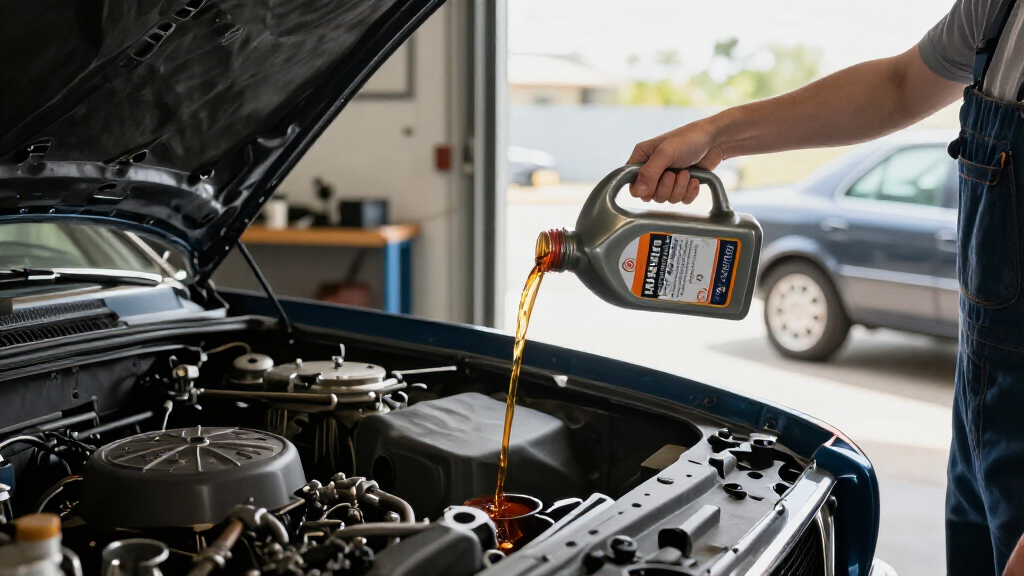
The best premium motor oils balance the viscosity and approvals your engine requires with the protection and formulation you want. My best overall pick is Mobil 1 Advanced Full Synthetic 5W-30 for its broad everyday fit, while Castrol EDGE 5W-30 stands out for drivers prioritizing a performance-focused full synthetic, and Valvoline MaxLife High Mileage 5W-20 targets aging engines. The main tradeoffs are not simply conventional versus synthetic: viscosity, vehicle specifications, mileage, and intended use all affect the right choice. A premium oil that does not match your owner’s manual is the wrong oil for your engine. Read on for the full comparison and guidance on choosing among these 15 options.

Get business pricing on garage and car supplies
- Business-only prices and quantity discounts
- Tax-exempt purchasing
- Multiple users, one account, clear invoices
Complete the kit


Key Takeaways
- Vehicle fit outranks formulation. The lineup spans 0W-16 through 5W-40, plus diesel and small-engine oils, so the right pick depends first on the viscosity and specifications listed for your engine.
- Mobil 1 Advanced 5W-30 is the strongest all-rounder here. It offers a straightforward full-synthetic choice for drivers whose manuals call for 5W-30; it is not a universal match for every vehicle.
- High-mileage oils serve a distinct need. Castrol EDGE High Mileage and Valvoline MaxLife are aimed at older, higher-mileage engines, while standard full synthetics better suit drivers without that specific priority.
- The specialist options are not substitutes for passenger-car oil. STP’s small-engine formula and Valvoline Premium Blue Extreme diesel oil serve different equipment and engine requirements.
- Premium does not always mean full synthetic. The conventional Pennzoil and Castrol GTX oils and STP synthetic blend may suit compatible engines or narrower needs, but they should not be chosen to replace a manual-required synthetic specification.
| Pennzoil 10W-30 Motor Oil, 1 Quart |  | Best for Conventional-Oil Top-Ups | Brand: Pennzoil | Oil type: Conventional motor oil | SAE viscosity grade: 10W-30 | VIEW LATEST PRICE | See Our Full Breakdown |
| Castrol GTX High Mileage 5W-30 Synthetic Blend Motor Oil, 5 Quarts |  | Best for Higher-Mileage Engines | Brand: Castrol | Oil type: Synthetic blend motor oil | SAE viscosity grade: 5W-30 | VIEW LATEST PRICE | See Our Full Breakdown |
| Mobil 1 Advanced Full Synthetic Motor Oil, 5W-30, 5 Quart |  | Best for Extended-Service Synthetic Protection | Brand: Mobil 1 | Oil type: Full synthetic motor oil | SAE viscosity grade: 5W-30 | VIEW LATEST PRICE | See Our Full Breakdown |
| STP Premium Synthetic Blend 10W-30 Small Engine Oil, 32 fl oz |  | Best for Four-Cycle Outdoor Equipment | Brand: STP | Oil type: Synthetic blend, four-cycle | SAE viscosity grade: 10W-30 | VIEW LATEST PRICE | See Our Full Breakdown |
| Castrol GTX Full Synthetic 5W-30 Motor Oil, 5 Quarts |  | Best for Everyday Full-Synthetic 5W-30 | Brand: Castrol | Oil type: Full synthetic motor oil | SAE viscosity grade: 5W-30 | VIEW LATEST PRICE | See Our Full Breakdown |
| Castrol EDGE 5W-30 Full Synthetic Motor Oil, 5 Quarts |  | Best for Extended-Interval 5W-30 Protection | Brand: Castrol | Viscosity grade: SAE 5W-30 | Oil type: Full synthetic | VIEW LATEST PRICE | See Our Full Breakdown |
| Mobil 1 Advanced Fuel Economy Full Synthetic Motor Oil 0W-16, 5 Quart |  | Best for 0W-16 Efficiency and Hybrid Applications | Brand: Mobil 1 | Viscosity grade: SAE 0W-16 | Oil type: Full synthetic motor oil | VIEW LATEST PRICE | See Our Full Breakdown |
| Valvoline Advanced Full Synthetic SAE 0W-20 Motor Oil, 5 qt |  | Best Broad-Spec 0W-20 Pick | Brand: Valvoline | Viscosity grade: SAE 0W-20 | Oil type: Full synthetic motor oil | VIEW LATEST PRICE | See Our Full Breakdown |
| Castrol EDGE High Mileage 0W-20 Full Synthetic Motor Oil, 5 Quarts |  | Best for High-Mileage 0W-20 Engines | Brand: Castrol | Viscosity grade: 0W-20 | Oil type: Full synthetic | VIEW LATEST PRICE | See Our Full Breakdown |
| Valvoline MaxLife High Mileage Full Synthetic 5W-20 Motor Oil, 5 qt |  | Best for High-Mileage 5W-20 Engines | Brand: Valvoline | Viscosity: 5W-20 | Oil type: Full synthetic | VIEW LATEST PRICE | See Our Full Breakdown |
| Castrol GTX Full Synthetic 0W-20 Motor Oil, 5 Quarts |  | Best for Broad Specification Coverage | Oil type: Full synthetic | Viscosity grade: 0W-20 | Volume: 5 quarts (160 fluid ounces) | VIEW LATEST PRICE | See Our Full Breakdown |
| Castrol GTX 10W-30 Conventional Motor Oil, 5 Quarts |  | Best Conventional Pick | Oil type: Conventional motor oil | Viscosity grade: SAE 10W-30 | Volume: 5 quarts (160 fluid ounces) | VIEW LATEST PRICE | See Our Full Breakdown |
| Valvoline Premium Blue Extreme 5W-40 Full Synthetic Diesel Engine Oil, 1 Gallon |  | Best for Heavy-Duty Diesel Use | Oil type: Full synthetic | Viscosity grade: SAE 5W-40 | Container size: 1 gallon (128 fluid ounces) | VIEW LATEST PRICE | See Our Full Breakdown |
| Pennzoil Ultra Platinum Full Synthetic 0W-40 Motor Oil, 1 Quart, 6-Pack |  | Best for High-Performance Engines | Oil type: Full synthetic | Viscosity grade: 0W-40 | Bottle size: 1 quart each | VIEW LATEST PRICE | See Our Full Breakdown |
| Castrol EDGE High Mileage 5W-20 Full Synthetic Motor Oil, 5 Quarts |  | Best for High-Mileage 5W-20 Engines | Oil type: Full synthetic | Viscosity grade: SAE 5W-20 | Container size: 5 quarts (160 fluid ounces) | VIEW LATEST PRICE | See Our Full Breakdown |
| premium motor oil | Oil type | Brand | Volume | Viscosity grade |
|---|---|---|---|---|
| Pennzoil 10W-30 Motor Oil | Conventional motor oil | Pennzoil | 32 fluid ounces (1 quart) | — |
| Castrol GTX High Mileage 5W-30 | Synthetic blend motor oil | Castrol | 160 fluid ounces (5 quarts) | — |
| Mobil 1 Advanced Full Syntheti | Full synthetic motor oil | Mobil 1 | — | — |
| STP Premium Synthetic Blend 10 | Synthetic blend, four-cycle | STP | 32 fluid ounces | — |
| Castrol GTX Full Synthetic 5W- | Full synthetic motor oil | Castrol | 5 quarts | — |
| Castrol EDGE 5W-30 Full Synthe | Full synthetic | Castrol | 5 quarts (160 fluid ounces) | SAE 5W-30 |
| Mobil 1 Advanced Fuel Economy | Full synthetic motor oil | Mobil 1 | 5 quarts (160 fluid ounces) | SAE 0W-16 |
| Valvoline Advanced Full Synthe | Full synthetic motor oil | Valvoline | — | SAE 0W-20 |
| Castrol EDGE High Mileage 0W-2 | Full synthetic | Castrol | 5 quarts (160 fluid ounces) | 0W-20 |
| Valvoline MaxLife High Mileage | Full synthetic | Valvoline | — | — |
| Castrol GTX Full Synthetic 0W- | Full synthetic | — | 5 quarts (160 fluid ounces) | 0W-20 |
| Castrol GTX 10W-30 Conventiona | Conventional motor oil | — | 5 quarts (160 fluid ounces) | SAE 10W-30 |
| Valvoline Premium Blue Extreme | Full synthetic | — | — | SAE 5W-40 |
| Pennzoil Ultra Platinum Full S | Full synthetic | — | — | 0W-40 |
| Castrol EDGE High Mileage 5W-2 | Full synthetic | — | — | SAE 5W-20 |
More Details on Our Top Picks
Pennzoil 10W-30 Motor Oil, 1 Quart
A straightforward conventional 10W-30, this Pennzoil is a practical pick for drivers whose manuals call for that grade and who want a single quart for topping up or a smaller service job. Its deposit-control formulation is intended to help keep engines clean, while the stated wear-protection claim is based on a Sequence IVA test using SAE 5W-30—not this exact viscosity grade. Compared with Mobil 1 Advanced Full Synthetic 5W-30, it gives up the full-synthetic formulation and its stated long service interval, but its conventional-oil compatibility makes it a simpler match for vehicles already using conventional oil. The tradeoff is its one-quart container: it is not a convenient choice for a full oil change, and 10W-30 is unsuitable when the owner’s manual specifies another grade.
Pros:- SAE 10W-30 grade for vehicles that specify that viscosity
- Formulated to help limit deposits from dirt and contaminants
- Compatible with engine seals and other conventional oils
- Suitable for gasoline cars, SUVs, light vans, and trucks
Cons:- One-quart bottle is insufficient for many full oil changes
- Conventional formulation lacks the full-synthetic positioning and stated service interval of Mobil 1 Advanced Full Synthetic 5W-30
- The listed Sequence IVA wear-test basis uses SAE 5W-30, not this 10W-30 product
Best for: Owners of gasoline cars, SUVs, light vans, or trucks that specify conventional SAE 10W-30 and need a top-up or small-quantity supply.
Not ideal for: Drivers doing a full oil change who want a multi-quart container, or owners whose manuals require synthetic oil or a different viscosity grade.
- Brand:Pennzoil
- Oil type:Conventional motor oil
- SAE viscosity grade:10W-30
- Container type:Bottle
- Volume:32 fluid ounces (1 quart)
- Compatible vehicle types:Cars, trucks, and UTVs
- Suitable engines:Gasoline engines in cars, SUVs, light vans, and trucks
Our verdict“Choose this Pennzoil for a conventional 10W-30 vehicle that needs a compatible top-up, not for a full synthetic oil-change setup.”
Castrol GTX High Mileage 5W-30 Synthetic Blend Motor Oil, 5 Quarts
Castrol GTX High Mileage is tailored to engines past 75,000 miles, with a synthetic blend and additives aimed at sludge control, wear reduction, and limiting leaks and oil burn-off. That focus gives it a clearer use case than Castrol GTX Full Synthetic 5W-30, which is positioned for broader vehicle use rather than specifically for older, higher-mileage engines. The formulation also includes phosphorus replacement technology intended to help protect the catalytic converter, a useful consideration when an aging engine’s oil consumption is a concern. Its main tradeoff is that specialization: newer, lower-mileage vehicles may get less benefit from a high-mileage formula, and the synthetic blend is not the same choice as a full synthetic. Check the manual for the required viscosity and specifications before selecting it.
Pros:- Formulated specifically for vehicles with more than 75,000 miles
- Seal conditioners are intended to help reduce leaks
- Designed to limit oil burn-off and help control sludge and wear
- Phosphorus replacement technology is intended to help protect the catalytic converter
Cons:- High-mileage focus may not suit newer, lower-mileage engines
- Synthetic blend rather than full synthetic
- 5W-30 grade and listed specifications still need to match the vehicle manual
Best for: Drivers with passenger cars, trucks, or SUVs past 75,000 miles who want a 5W-30 synthetic blend with features aimed at leaks, oil consumption, and sludge.
Not ideal for: Owners of newer or low-mileage vehicles seeking a general-purpose full synthetic, or anyone whose manual calls for a different grade or specification.
- Brand:Castrol
- Oil type:Synthetic blend motor oil
- SAE viscosity grade:5W-30
- Volume:160 fluid ounces (5 quarts)
- Compatible vehicles:Passenger cars, trucks, and SUVs with over 75,000 miles
- Specifications:API SP/SN PLUS/SN/SM; ILSAC GF-6; Ford WSS-M2C946-B1; Ford WSS-M2C961-A1
- Manufacturer part number:03102C
Our verdict“Pick this Castrol for a higher-mileage engine needing 5W-30 support for leaks and oil consumption; choose GTX Full Synthetic for a broader full-synthetic option.”
Mobil 1 Advanced Full Synthetic Motor Oil, 5W-30, 5 Quart
Mobil 1 Advanced Full Synthetic 5W-30 leads this group for drivers prioritizing a full-synthetic formulation and a stated extended protection interval. Its product information cites protection for up to 15,000 miles or one year, whichever comes first, alongside oxidation control, timing-chain wear protection, and cold-start performance. That makes it a different proposition from Castrol GTX Full Synthetic 5W-30, which lists protection for up to 10,000 miles between changes. The longer claim may appeal to drivers whose schedules and vehicle requirements support extended intervals, but it does not override the vehicle maker’s maintenance guidance. The listing specifies ILSAC GF-7 and describes a vehicle-specific fit, so buyers should verify compatibility rather than assume the broad fit associated with some alternatives. Its chief tradeoff is that the extended interval depends on the vehicle and service conditions.
Pros:- Full-synthetic 5W-30 formulation
- Designed to control oxidation and help protect timing chains
- Cold-start performance is a stated formulation benefit
- Manufacturer states protection for up to 15,000 miles or one year, whichever comes first
Cons:- Vehicle-specific fit makes compatibility checks necessary
- The stated service interval may not match the vehicle maker’s maintenance schedule or driving conditions
- Listed standard is ILSAC GF-7, so buyers must confirm the manual’s required specifications
Best for: Drivers whose manuals permit this 5W-30 and who want a full synthetic with stated oxidation, timing-chain, and cold-start protection plus an extended-interval claim.
Not ideal for: Owners whose vehicles require another viscosity or specification, or drivers who prefer a simple universal-fit listing without checking application details.
- Brand:Mobil 1
- Oil type:Full synthetic motor oil
- SAE viscosity grade:5W-30
- Container size:5 quarts
- Standard:ILSAC GF-7
- Flash point:230 °C
- Automotive fit:Vehicle-specific fit
- Manufacturer part number:124317
Our verdict“Choose Mobil 1 when your vehicle calls for this 5W-30 and its maintenance guidance supports the longer stated protection interval.”
STP Premium Synthetic Blend 10W-30 Small Engine Oil, 32 fl oz
Unlike the automotive oils elsewhere in this roundup, STP Premium Synthetic Blend 10W-30 is made for four-cycle small engines. Its intended uses include lawnmowers, generators, tractors, and snow blowers, with detergents, antioxidants, anti-wear technology, and a corrosion inhibitor aimed at equipment that may sit between seasons. That storage-oriented protection distinguishes it from Pennzoil 10W-30 Motor Oil: both are 10W-30 products, but Pennzoil is described for gasoline vehicles, while this STP oil is specifically listed for small engines. The all-weather formulation also suits equipment used across changing seasons. The key tradeoff is narrow compatibility: this is not a substitute for passenger-car motor oil, and even among small engines, the owner’s manual determines whether 10W-30 and a four-cycle oil are appropriate.
Pros:- Designed for four-cycle small engines rather than passenger vehicles
- All-weather 10W-30 formulation for seasonal equipment use
- Antioxidants and anti-wear technology address heat and engine wear
- Corrosion inhibitor supports protection during seasonal storage
Cons:- Not intended as passenger-car or truck motor oil
- Compatibility must be checked against the specific equipment manual
- One 32-fluid-ounce container may not cover multiple machines or larger service needs
Best for: Owners of four-cycle lawnmowers, generators, tractors, or snow blowers whose manuals call for 10W-30 small-engine oil.
Not ideal for: Car, truck, or motorcycle owners, and small-engine owners whose manuals specify another viscosity or oil type.
- Brand:STP
- Oil type:Synthetic blend, four-cycle
- SAE viscosity grade:10W-30
- Volume:32 fluid ounces
- Pack count:1
- Suitable equipment:Lawnmowers, generators, tractors, snow blowers, and other small engines
- Model number:18588
Our verdict“Choose STP for compatible four-cycle outdoor equipment, while keeping automotive oils such as Pennzoil for vehicles.”
Castrol GTX Full Synthetic 5W-30 Motor Oil, 5 Quarts
Castrol GTX Full Synthetic 5W-30 is the broad-use option for buyers who want a full synthetic without relying on the longer interval claim attached to Mobil 1 Advanced Full Synthetic 5W-30. Castrol lists protection for up to 10,000 miles between oil changes and names API, ILSAC, GM dexos1 Gen 3, and Ford specifications, giving shoppers several concrete compatibility references to compare with their manuals. Its formulation targets wear, sludge, and viscosity breakdown, which makes it a more general everyday fit than Castrol GTX High Mileage 5W-30, whose additives and use case focus on engines beyond 75,000 miles. The tradeoff is that “universal fit” does not mean every 5W-30 vehicle is covered: buyers still need to match the required specification, and the stated service interval is not a replacement for manufacturer guidance.
Pros:- Full-synthetic 5W-30 formulation for cars and trucks
- Designed to help protect against wear and sludge
- Formulated to resist viscosity breakdown
- Lists API, ILSAC, GM dexos1 Gen 3, and Ford specifications
Cons:- Vehicle compatibility must be checked against the required specifications
- Its stated protection interval is up to 10,000 miles, shorter than Mobil 1’s stated 15,000-mile claim
- Not specifically formulated for the higher-mileage concerns addressed by Castrol GTX High Mileage
Best for: Drivers of cars or trucks that require 5W-30 and match the listed API, ILSAC, GM, or Ford specifications, seeking a general-purpose full synthetic.
Not ideal for: Owners who need a high-mileage-specific formula, a different viscosity, or an oil specification not listed for this product.
- Brand:Castrol
- Oil type:Full synthetic motor oil
- SAE viscosity grade:5W-30
- Volume:5 quarts
- Compatible vehicle types:Cars and trucks
- Specifications:API SQ/SP/SN PLUS/SN; ILSAC GF-7; GM dexos1 Gen 3; Ford WSS-M2C947-B1; Ford WSS-M2C962-A1
- Flash point:203 °C
- Manufacturer part number:15E6DE
Our verdict“Pick this Castrol for routine 5W-30 full-synthetic service when its listed specifications match your car or truck.”
Castrol EDGE 5W-30 Full Synthetic Motor Oil, 5 Quarts
Castrol EDGE 5W-30 suits drivers whose vehicle calls for 5W-30 and whose priority is synthetic protection with a long stated service interval. Its formulation targets wear, viscosity control, and thermal stability, while the listed GM dexos1 Gen 3 approval gives a specific compatibility reference for some vehicles. Compared with Valvoline Advanced Full Synthetic 0W-20, this is the better match for a 5W-30 requirement, not a substitute for a thinner grade. The up-to-20,000-mile interval is a product claim, not a reason to exceed the vehicle maker’s schedule or oil-life monitor. Its main tradeoff is narrow fit: drivers must confirm the required viscosity and specifications before choosing it.
Pros:- Full synthetic formulation targets wear protection and viscosity control.
- Designed for thermal stability and high-temperature performance.
- Listed as exceeding API SQ and earlier categories and ILSAC GF-7.
- GM dexos1 Gen 3 approval offers a useful specification match for eligible vehicles.
Cons:- SAE 5W-30 is unsuitable when the vehicle specifies a different viscosity grade.
- The stated extended interval is capped at 20,000 miles or one year and does not replace the vehicle maker’s schedule.
Best for: Drivers of cars or trucks that specify SAE 5W-30 and want a full synthetic with listed GM dexos1 Gen 3 approval.
Not ideal for: Owners whose manuals require 0W-20, 0W-16, or another grade, or drivers who prefer to follow a shorter manufacturer-specified oil-change interval.
- Brand:Castrol
- Viscosity grade:SAE 5W-30
- Oil type:Full synthetic
- Volume:5 quarts (160 fluid ounces)
- Container:Jug
- Compatible vehicle types:Cars and trucks
- Standards and approvals:Exceeds API SQ/SP/SN PLUS/SN and ILSAC GF-7; approved for GM dexos1 Gen 3
- Flash point:230 °C
Our verdict“Choose Castrol EDGE 5W-30 if your vehicle specifies this grade and its listed approvals, but follow the service interval in your manual.”
Mobil 1 Advanced Fuel Economy Full Synthetic Motor Oil 0W-16, 5 Quart
Mobil 1 Advanced Fuel Economy 0W-16 is the specialized pick here: it is designed for engines that explicitly call for this low-viscosity grade, including suitable hybrid applications. Its cold-start flow and efficiency focus make it distinct from the broader-grade Castrol EDGE 5W-30, but that difference only helps when 0W-16 matches the owner’s manual. The formula also targets sludge, deposits, oxidation, pre-ignition, and timing-chain wear, giving buyers several protection priorities in one oil. Mobil 1 lists protection for up to 15,000 miles or one year; actual service timing should still follow the vehicle maker. The central tradeoff is limited compatibility: this is not a flexible choice for cars requiring 0W-20 or 5W-30.
Pros:- 0W-16 formulation is designed to support engine efficiency and fuel economy.
- Low-temperature flow supports cold-start performance in vehicles specified for this grade.
- Targets sludge, deposits, oxidation, pre-ignition, and timing-chain wear.
- Listed as suitable for hybrid vehicles when their required specification matches.
Cons:- The 0W-16 grade sharply limits compatibility to vehicles that specify it.
- The stated protection interval is up to 15,000 miles or one year, subject to the vehicle maker’s service schedule.
Best for: Owners of cars or hybrids whose manufacturer specifically requires SAE 0W-16 and who want a full synthetic focused on efficiency and cold starts.
Not ideal for: Drivers whose manuals specify a more common grade such as 0W-20 or 5W-30; using the wrong viscosity can make this a poor fit regardless of its protection claims.
- Brand:Mobil 1
- Viscosity grade:SAE 0W-16
- Oil type:Full synthetic motor oil
- Volume:5 quarts (160 fluid ounces)
- Pack quantity:1
- Compatible vehicle type:Car; suitable for hybrids when specified
- Protection interval:Up to 15,000 miles or 1 year, whichever comes first
- Standard:ILSAC GF-7
Our verdict“Pick Mobil 1 Advanced Fuel Economy 0W-16 only when your vehicle calls for 0W-16 and you want a synthetic geared toward efficiency.”
Valvoline Advanced Full Synthetic SAE 0W-20 Motor Oil, 5 qt
Valvoline Advanced Full Synthetic 0W-20 is a strong fit for drivers seeking a widely specified modern grade with a substantial set of listed gasoline-engine standards. It targets wear, friction, heat, and deposits, while low-temperature flow can help protect during cold starts. Its listed Ford, Chrysler, and GM specifications give it a wider documented standards profile than Mobil 1’s specialized 0W-16 offering, though neither should be used unless the vehicle requirements match. Valvoline also lists compatibility with many Toyota, Honda, Nissan, Chevrolet, Ford, and Dodge vehicles, plus hybrids. That breadth is useful, but not a guarantee for every model year or engine. The tradeoff is straightforward: this is a 0W-20 choice, not an all-purpose oil.
Pros:- Full synthetic formula targets wear, friction, heat, and deposit control.
- Low-temperature flow is designed to support cold-start protection.
- Lists ILSAC GF-7A and API SQ, SP, SN PLUS, and earlier gasoline categories.
- Lists additional Ford, Chrysler, and GM specifications and compatibility with hybrid cars.
Cons:- 0W-20 is unsuitable for engines that require a different viscosity grade.
- Broad vehicle compatibility descriptions still require a check against the exact vehicle manual and model year.
Best for: Owners of compatible cars or hybrids that specify 0W-20, especially those seeking an oil with multiple listed API, ILSAC, and manufacturer specifications.
Not ideal for: Drivers whose owner’s manual calls for 0W-16, 5W-20, 5W-30, or a specification not listed for this oil.
- Brand:Valvoline
- Viscosity grade:SAE 0W-20
- Oil type:Full synthetic motor oil
- Size:5 quarts (160 fluid ounces)
- Standards:ILSAC GF-7A; API SQ, SP, SN with SN PLUS, and preceding API and ILSAC gasoline categories
- Additional specifications:Ford WSS-M2C962-A1; Chrysler MS-13340; GM dexos1 Gen 3
- Compatibility:Suitable for hybrid cars and many Toyota, Honda, Nissan, Chevrolet, Ford, and Dodge vehicles
- Manufacturer part number:881150
Our verdict“Choose Valvoline Advanced 0W-20 when your vehicle specifies this grade and you value its broad set of listed manufacturer specifications.”
Castrol EDGE High Mileage 0W-20 Full Synthetic Motor Oil, 5 Quarts
Castrol EDGE High Mileage 0W-20 is tailored to a specific ownership stage: vehicles with more than 75,000 miles that still require 0W-20. Its formulation targets leaks, oil burnoff, and deposits, while phosphorus replacement technology is intended to help protect the emission system. Compared with Valvoline MaxLife High Mileage 5W-20, this Castrol is the relevant option when the manual calls for 0W-20; MaxLife is a different viscosity and should not be treated as interchangeable. Castrol lists API and ILSAC categories along with Chrysler and Ford engine-test requirements. The tradeoff is its narrow audience: lower-mileage vehicles or engines requiring another grade have little reason to choose this specialized formula. Its stated interval is also limited to one year.
Pros:- Designed specifically for high-mileage vehicles above 75,000 miles.
- Formulation targets leaks, oil burnoff, and deposit buildup.
- Phosphorus replacement technology is intended to help protect the emission system.
- Lists API and ILSAC categories plus Chrysler and Ford engine-test requirements.
Cons:- Its high-mileage focus offers little reason to choose it for vehicles below the stated mileage range.
- The listed oil-change interval is capped at one year, even if the vehicle has traveled fewer than 15,000 miles.
- 0W-20 limits use to engines that specify that viscosity.
Best for: Owners of vehicles above 75,000 miles that specify 0W-20 and are concerned about oil burnoff, leaks, deposits, or emission-system protection.
Not ideal for: Drivers of newer, lower-mileage vehicles or high-mileage engines that require 5W-20, 5W-30, or another viscosity.
- Brand:Castrol
- Viscosity grade:0W-20
- Oil type:Full synthetic
- Volume:5 quarts (160 fluid ounces)
- Vehicle compatibility:Vehicles with over 75,000 miles
- Oil-change interval:Up to 15,000 miles or one year, whichever comes first
- Standards:API SP/SN PLUS/SN/SM; ILSAC GF-6
- Additional compatibility:Meets engine test requirements of Chrysler MS 6395 and Ford WSS-M2C947-B1 and WSS-M2C962-A2
Our verdict“Choose Castrol EDGE High Mileage 0W-20 for an older, high-mileage engine that specifically calls for 0W-20 and needs attention to oil use or leaks.”
Valvoline MaxLife High Mileage Full Synthetic 5W-20 Motor Oil, 5 qt
Valvoline MaxLife High Mileage 5W-20 is the purpose-built option for engines past 75,000 miles that specify 5W-20. Its seal conditioners are intended to help reduce leaks and oil consumption, while the formula also targets wear, sludge, and heat protection. Compared with Castrol EDGE High Mileage 0W-20, MaxLife serves a different viscosity requirement; the choice between them should start with the manual, not mileage alone. Valvoline lists current API and ILSAC categories and additional Ford and Chrysler specifications. The tradeoff is specialization: newer, lower-mileage vehicles may not benefit from its high-mileage focus, and it is not suitable for engines requiring 0W-20 or another grade. The stated protection comparisons are against industry standards, not a substitute for vehicle-specific approvals.
Pros:- Full synthetic formulation is designed for high-mileage engines.
- Seal conditioners target leaks and reduced oil consumption.
- Targets wear, sludge, and heat protection.
- Lists ILSAC GF-7A, API SQ and earlier categories, plus Ford and Chrysler specifications.
Cons:- 5W-20 viscosity rules it out for engines requiring a different grade.
- Its high-mileage formulation is specifically aimed at vehicles with 75,000 miles or more.
- Protection comparisons are stated against industry standards and do not establish fit for every engine.
Best for: Drivers with vehicles at or above 75,000 miles whose manuals specify 5W-20 and who want a formula aimed at leaks and oil consumption.
Not ideal for: Owners of lower-mileage vehicles or engines requiring 0W-20, 5W-30, or a viscosity and specification not listed for this oil.
- Brand:Valvoline
- Viscosity:5W-20
- Oil type:Full synthetic
- Size:5 quarts (160 fluid ounces)
- Intended use:Vehicles with 75,000 miles or more
- Wear protection:Stated as 50% stronger than industry standards
- Sludge defense:Stated as 20% stronger than industry standards
- Heat protection:Stated as 2.5 times better than industry standards
- Standards and specifications:ILSAC GF-7A; API SQ, SP, SN with SN PLUS, and preceding gasoline categories; Ford WSS-M2C960-A1; Chrysler MS-13340
Our verdict“Pick Valvoline MaxLife 5W-20 when your high-mileage vehicle calls for that grade and you want added attention to seals and oil consumption.”
Castrol GTX Full Synthetic 0W-20 Motor Oil, 5 Quarts
For drivers whose vehicles call for 0W-20, this Castrol GTX stands out for pairing full-synthetic protection with an unusually broad set of listed API, ILSAC, GM, and Ford specifications. Its sludge-removal and sludge-prevention focus gives it a different emphasis from Pennzoil Ultra Platinum 0W-40, which is aimed more squarely at high-performance engines and a different viscosity requirement. The stated protection interval of up to 10,000 miles may appeal to drivers seeking fewer oil changes, but it is not a blanket schedule: I would follow the vehicle maker’s interval and account for driving conditions. The main limitation is fit, not formulation: 0W-20 is only appropriate when the owner’s manual calls for it, and this five-quart jug offers no advantage to engines requiring another grade.
Pros:- Full-synthetic formula is designed to resist wear and viscosity breakdown.
- Formulated to remove existing sludge and help limit new sludge formation.
- Lists API SP, ILSAC GF-6, GM dexos1 Gen 3, and multiple Ford specifications.
- Provides up to 10,000 miles of stated protection, subject to vehicle and use requirements.
Cons:- 0W-20 is unsuitable for engines that require a different viscosity grade.
- The 10,000-mile interval may not match the vehicle maker’s schedule or severe-use requirements.
Best for: Owners of cars or trucks requiring 0W-20 who want a full synthetic with listed GM dexos1 Gen 3 and Ford specifications.
Not ideal for: Drivers whose manuals specify another viscosity, or anyone treating the stated 10,000-mile interval as a substitute for the vehicle’s maintenance schedule.
- Oil type:Full synthetic
- Viscosity grade:0W-20
- Volume:5 quarts (160 fluid ounces)
- Compatible vehicle types:Car, truck
- API specifications:SP, SN PLUS, SN
- ILSAC specification:GF-6
- Additional specifications:GM dexos1 Gen 3; Ford WSS-M2C947-B1; Ford WSS-M2C962-A1
- Manufacturer part number:15E725
Our verdict“Choose this Castrol GTX when your vehicle specifies 0W-20 and its listed approvals match your requirements; skip it if your engine calls for another grade.”
Castrol GTX 10W-30 Conventional Motor Oil, 5 Quarts
This is the roundup’s clear choice for a buyer who specifically wants conventional 10W-30, rather than a synthetic formula. Castrol GTX focuses on sludge control, resistance to thermal and viscosity breakdown, and anti-wear additives intended to help limit oil consumption. That makes it a more straightforward match for compatible vehicles than Pennzoil Ultra Platinum 0W-40, which is a full synthetic built for a different viscosity and performance brief. The tradeoff is the formulation itself: this oil does not offer the full-synthetic positioning of the other premium-oriented picks, including Castrol GTX Full Synthetic 0W-20. I would select it only when the manual allows conventional 10W-30 and its listed specifications fit. A five-quart bottle is practical for many routine changes, but the grade is not a universal substitute for the vehicle’s required oil.
Pros:- Conventional 10W-30 option for engines whose requirements permit that formulation.
- Designed to help protect against engine sludge.
- Formulated to resist viscosity and thermal breakdown.
- Anti-wear additives are intended to protect components and help minimize oil consumption.
Cons:- Conventional formulation lacks the full-synthetic positioning of several other oils in this roundup.
- 10W-30 may not suit engines that require a different viscosity grade.
Best for: Owners of cars requiring SAE 10W-30 who prefer a conventional oil with listed API and ILSAC specifications.
Not ideal for: Drivers whose vehicles require synthetic oil, a different viscosity, or approvals not listed for this product.
- Oil type:Conventional motor oil
- Viscosity grade:SAE 10W-30
- Volume:5 quarts (160 fluid ounces)
- Compatible vehicle type:Car
- API specifications:SP, SN PLUS, SN, SM
- ILSAC specification:GF-6
- Container type:Bottle
- Manufacturer part number:15B7AA
Our verdict“Pick Castrol GTX Conventional when your vehicle calls for 10W-30 and you want a conventional formula; choose a listed full synthetic if that is your engine’s requirement.”
Valvoline Premium Blue Extreme 5W-40 Full Synthetic Diesel Engine Oil, 1 Gallon
Unlike the passenger-car oils elsewhere in this group, Valvoline Premium Blue Extreme is tailored to heavy-duty diesel applications and severe operating conditions. Its 5W-40 full-synthetic formulation is designed to address wear, oxidation, deposits, sludge, and corrosion while supporting cold starts and high-temperature operation. That makes it a more relevant comparison for truck owners than Castrol GTX Full Synthetic 0W-20, whose grade and stated applications target a different set of vehicles. The product also cites a possible fuel-economy improvement over conventional 15W-40 in on-highway use, but that claim is specific to those conditions and should not be assumed for every route or engine. It comes in a one-gallon container, not a five-quart jug, and any extended-drain guidance applies only to specified Cummins engines and operating conditions.
Pros:- Full synthetic 5W-40 formulated for heavy-duty diesel and gasoline engines.
- Designed to protect against wear, oxidation, deposits, sludge, and corrosion.
- Formulated to support cold starts and high-temperature operation.
- Cites up to 1.5% fuel-economy improvement over conventional 15W-40 for on-highway use.
Cons:- The stated fuel-economy benefit is specific to on-highway use and comparison with conventional 15W-40.
- Extended-drain guidance is limited to certain Cummins engines and operating conditions.
- One-gallon container may not cover the full fill requirement for some engines.
Best for: Truck owners with compatible heavy-duty diesel engines who need 5W-40 full synthetic for demanding or on-highway operation.
Not ideal for: Passenger-car owners or diesel operators whose engine requires another viscosity or whose service schedule does not match the product’s specified guidance.
- Oil type:Full synthetic
- Viscosity grade:SAE 5W-40
- Container size:1 gallon (128 fluid ounces)
- Vehicle type:Truck
- Intended applications:Heavy-duty diesel and gasoline engines
- Model number:774038
- Manufacturer part number:774038
- Item weight:7 pounds
Our verdict“Choose Valvoline Premium Blue Extreme for a compatible heavy-duty engine that calls for 5W-40, not as a general replacement for passenger-car oils such as Castrol GTX 0W-20.”
Pennzoil Ultra Platinum Full Synthetic 0W-40 Motor Oil, 1 Quart, 6-Pack
Pennzoil Ultra Platinum earns its place for drivers whose high-performance engine calls for 0W-40, especially where operation across extreme temperatures is part of the brief. Its full-synthetic formula is designed to protect against wear, sludge, and deposits, and it is made with natural gas. That focus differs from Valvoline Premium Blue Extreme 5W-40, which is intended for heavy-duty diesel and truck applications rather than this car-oriented performance role. The six one-quart bottles can make measured top-ups or smaller fills easier, though they require more handling than a single large jug. This is a narrow-fit recommendation: neither its performance positioning nor its viscosity makes it a general-purpose upgrade. The product description also ties warranty coverage to eligibility conditions and following the vehicle’s oil-change schedule.
Pros:- Full synthetic 0W-40 formulated for high-performance engines.
- Designed to protect against wear, sludge, and deposits.
- Formulated for performance in extreme temperatures.
- Six one-quart bottles allow measured dispensing and separate storage.
Cons:- 0W-40 is appropriate only for engines that specify or permit that viscosity.
- Six separate bottles require more handling than a single larger container.
- Warranty coverage has eligibility conditions, including following the vehicle’s oil-change schedule.
Best for: Owners of performance cars whose manuals specify 0W-40 and who want full synthetic oil supplied in individual quart bottles.
Not ideal for: Drivers whose engines require another viscosity, or buyers seeking one large container for a high-capacity truck engine.
- Oil type:Full synthetic
- Viscosity grade:0W-40
- Bottle size:1 quart each
- Pack quantity:6
- Total volume:192 fluid ounces
- Compatible vehicle type:Car
- Model number:550040856-6PK
- Base material:Made with natural gas
Our verdict“Choose Pennzoil Ultra Platinum when your performance car specifically calls for 0W-40; otherwise, match the oil grade to your manual rather than opting for this specialized formula.”
Castrol EDGE High Mileage 5W-20 Full Synthetic Motor Oil, 5 Quarts
For a vehicle past 75,000 miles that still specifies 5W-20, Castrol EDGE High Mileage offers a more targeted formula than the general-purpose Castrol GTX Full Synthetic 0W-20. Its high-mileage focus includes features intended to reduce leaks, oil burnoff, and deposits, while phosphorus replacement technology is designed to help protect the catalytic converter. The stated interval—up to 15,000 miles or one year, whichever comes first—may suit some maintenance schedules, but it does not override the vehicle maker’s guidance or driving conditions. Compared with conventional Castrol GTX 10W-30, this is a full synthetic with a different viscosity and a specific high-mileage audience. That specialization is also its limitation: newer, lower-mileage vehicles may not need it, and engines requiring another grade should use a matching oil instead.
Pros:- Full synthetic formula specifically intended for vehicles with over 75,000 miles.
- Designed to reduce leaks, oil burnoff, and deposits.
- Phosphorus replacement technology is intended to help protect the catalytic converter.
- States an interval of up to 15,000 miles or one year, whichever comes first.
Cons:- Designed for high-mileage vehicles rather than serving as a universal choice for newer engines.
- The 15,000-mile limit is capped at one year and remains subject to the vehicle’s maintenance guidance.
- 5W-20 is unsuitable for engines that require a different viscosity.
Best for: Owners of vehicles with more than 75,000 miles whose manuals specify SAE 5W-20 and who want a full synthetic aimed at high-mileage concerns.
Not ideal for: Owners of lower-mileage vehicles or engines requiring a viscosity other than 5W-20; the high-mileage formula and stated interval may not fit their needs.
- Oil type:Full synthetic
- Viscosity grade:SAE 5W-20
- Container size:5 quarts (160 fluid ounces)
- Vehicle compatibility:Vehicles with over 75,000 miles
- Oil-change interval:Up to 15,000 miles or one year, whichever comes first
- API specifications:SP, SN PLUS, SN, SM
- ILSAC specification:GF-6
- Additional specifications:Chrysler MS 6395; Ford WSS-M2C945-B1; Ford WSS-M2C960-A1
Our verdict“Choose Castrol EDGE High Mileage if your vehicle has passed 75,000 miles and calls for 5W-20; otherwise, a standard oil matched to your manual may be a better fit.”
How We Picked
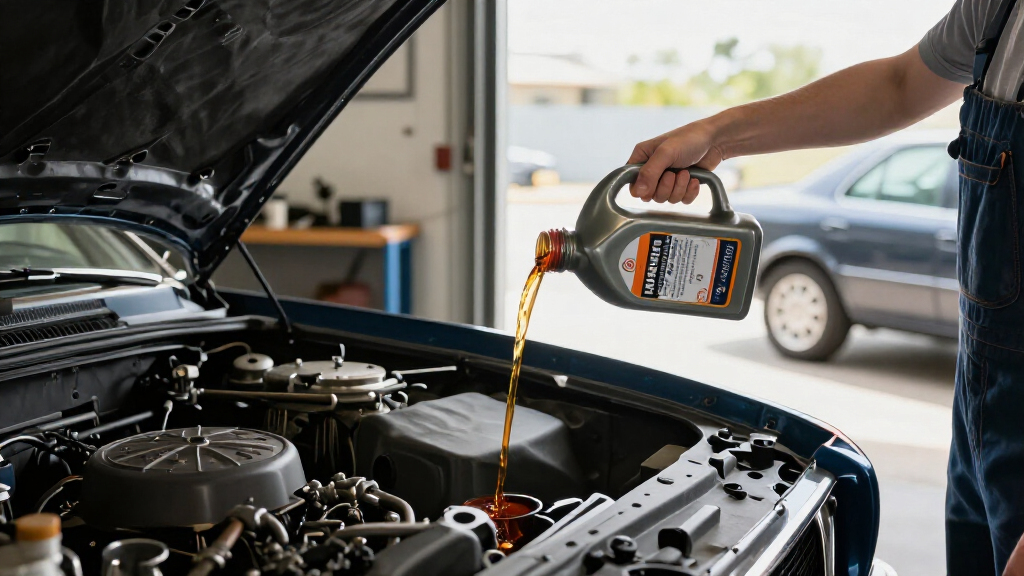
I compared these oils by intended engine fit, viscosity, formulation, and use case, rather than treating “premium” as a single performance grade. The list includes conventional oils, synthetic blends, full synthetics, high-mileage formulas, a small-engine oil, and a diesel-specific option. That range makes application a key part of the ranking: a product earns a strong position when its stated role is clear and it can serve a useful group of buyers without being mistaken for a universal oil.
Ranking priority went to versatility within the labeled application, then to how clearly the oil addresses a particular need, such as high mileage, fuel-economy viscosity, or diesel service. I also weighed practical tradeoffs: a specialized viscosity can be a strong fit for one engine but a poor choice for another, and a targeted formula is useful only when the vehicle calls for it. Product labels and the vehicle owner’s manual take precedence; this roundup does not claim that oils with different viscosities or approvals are interchangeable.
| premium motor oil | Brand | Oil type |
|---|---|---|
| Pennzoil 10W-30 Motor Oil | Pennzoil | Conventional motor oil |
| Castrol GTX High Mileage 5W-30 | Castrol | Synthetic blend motor oil |
| Mobil 1 Advanced Full Syntheti | Mobil 1 | Full synthetic motor oil |
| STP Premium Synthetic Blend 10 | STP | Synthetic blend, four-cycle |
| Castrol GTX Full Synthetic 5W- | Castrol | Full synthetic motor oil |
| Castrol EDGE 5W-30 Full Synthe | Castrol | Full synthetic |
| Mobil 1 Advanced Fuel Economy | Mobil 1 | Full synthetic motor oil |
| Valvoline Advanced Full Synthe | Valvoline | Full synthetic motor oil |
| Castrol EDGE High Mileage 0W-2 | Castrol | Full synthetic |
| Valvoline MaxLife High Mileage | Valvoline | Full synthetic |
| Castrol GTX Full Synthetic 0W- | — | Full synthetic |
| Castrol GTX 10W-30 Conventiona | — | Conventional motor oil |
| Valvoline Premium Blue Extreme | — | Full synthetic |
| Pennzoil Ultra Platinum Full S | — | Full synthetic |
| Castrol EDGE High Mileage 5W-2 | — | Full synthetic |
Factors to Consider When Choosing Best Premium Motor Oils
Use this guide to narrow the field before comparing brand names. Start with the engine’s requirements, then decide whether a particular formulation or use case adds value for your vehicle.
Match Viscosity Before Comparing Brands
The viscosity grade in the owner’s manual is the first filter, not a suggestion to override for weather or mileage without manufacturer guidance. Grades in this lineup range from 0W-16 to 5W-40, and the numbers signal different operating characteristics rather than a simple premium ranking. A lower winter grade can support cold-start flow in engines designed for it, while the second number relates to viscosity at operating temperature. Do not assume that moving to a thicker or thinner oil will protect an older engine better. Check the manual and oil cap, then confirm the exact grade for your engine and model year. If the manual lists more than one approved grade, follow its conditions for choosing between them.
Check Specifications and Approvals, Not Just the Label
Two oils with the same viscosity may still differ in whether they meet the service specification your vehicle requires. Look up the required API, ILSAC, or manufacturer approval in the manual, then compare it with the oil container’s current label. This matters especially for newer engines, turbocharged vehicles, and cars with emissions equipment, where the wrong specification can create compatibility concerns. “Full synthetic” describes a formulation category, not proof that an oil meets every engine maker’s requirement. If you cannot confirm a match from the product label, consult the manufacturer’s product data or choose an oil explicitly approved for your vehicle. Avoid picking based on brand familiarity alone.
Decide Whether a High-Mileage Formula Fits Your Engine
High-mileage oils are designed for engines with substantial use, but the odometer alone does not dictate the right product. Consider the vehicle’s condition, maintenance record, oil consumption, and the manufacturer’s guidance before switching. These formulas can appeal to owners seeking an oil tailored to older engines, yet they are not a repair for leaks, worn seals, or mechanical faults. If the engine runs well and has no age-related symptoms, a standard oil that meets the manual may be the simpler choice. Do not switch viscosity solely because the vehicle has accumulated miles. Choose a high-mileage formula only when its grade and approvals also fit the engine.
Choose Synthetic, Blend, or Conventional for the Actual Job
Full synthetic, synthetic blend, and conventional oils are not interchangeable by label alone; each still needs the correct grade and specification. A full synthetic may be the better fit when the manufacturer calls for it or when the vehicle’s operating demands support that choice. A blend or conventional product can make sense for compatible engines and maintenance plans, but it should not be treated as a downgrade or upgrade without checking requirements. Oil-change intervals come from the vehicle maker and the conditions the vehicle faces, not a broad assumption about oil type. Severe driving, such as repeated short trips or heavy loads, can affect service needs. Follow the maintenance schedule rather than extending intervals based on the word “synthetic.”
Separate Passenger-Car, Diesel, and Small-Engine Oils
Some products in this roundup are for jobs outside ordinary passenger-car use, and their labels matter. The STP synthetic blend is identified for small engines, while Valvoline Premium Blue Extreme is a diesel engine oil; neither should be substituted into a car simply because its viscosity seems familiar. Diesel engines can require different service categories and equipment compatibility, while small engines may have distinct operating demands and oil capacities. Confirm the engine type, manufacturer instructions, and required specification before buying. For equipment that has separate oil-change guidance, use that schedule rather than a passenger-car interval. If the intended application is unclear, check the equipment manual or ask a qualified service professional.
Buy the Package Size That Matches Your Maintenance Plan
Container size affects how conveniently you can complete a change and store any remainder, but it should come after compatibility. A five-quart jug may suit vehicles whose oil capacity is close to that amount, while single-quart bottles or multipacks can help with top-ups or engines with different fill volumes. Check the exact capacity in the manual and avoid pouring in a full container without measuring. Store opened oil sealed, upright, and away from heat or contamination, and follow the product maker’s storage guidance. Buying extra oil is useful only if the grade remains appropriate and the container can be stored properly. Never mix oils as a substitute for confirming the correct specification.
Frequently Asked Questions
Can I choose a different viscosity from the one printed on my oil cap?
Use the viscosity specified in your owner’s manual unless the manufacturer gives an approved alternative for your conditions or model. An oil cap may show a common grade, while the manual contains additional details for climate, engine variant, or service requirements. The products here range across several grades, so a higher or lower number does not make one option a universal upgrade. Check the manual by model year and engine, not just the vehicle name. If you are unsure, ask a service professional to verify the exact grade and approval.
Is full synthetic always the better choice than a synthetic blend or conventional oil?
Not automatically: the right oil is the one that meets the engine maker’s viscosity and service requirements. Full synthetic can be a suitable choice for engines designed around it, but the label alone does not establish compatibility or justify a longer change interval. A blend or conventional oil may fit an engine whose manual permits it. Compare the required specification on the manual with the product label before deciding. If both options meet the requirement, weigh the vehicle’s use and maintenance plan rather than assuming the most advanced-sounding label is best.
Should I switch to high-mileage oil when my car reaches a certain odometer reading?
There is no single mileage threshold that makes a switch right for every engine. Check the manual and consider the vehicle’s condition, oil use, and any age-related symptoms before choosing a high-mileage formula. A high-mileage label does not fix a leak or replace needed maintenance. If your engine is running normally, an approved standard oil may remain appropriate. Confirm that the high-mileage product also matches the required viscosity and service specification before using it.
Can I use the diesel or small-engine oils in a regular car?
Do not use either product in a passenger car unless its manufacturer explicitly approves that oil for the specific engine. Diesel oils and small-engine oils are formulated and labeled for different applications, and a matching viscosity number by itself does not establish suitability. Check the required service categories and approvals in your car’s manual. In this roundup, Valvoline Premium Blue Extreme is the diesel-specific choice and STP’s blend is for small engines. For a car, select a product whose label meets the vehicle’s stated requirements.
How do I choose between Mobil 1 Advanced 5W-30 and Castrol EDGE 5W-30?
Start by checking whether your vehicle calls for 5W-30 and whether each product’s label meets its required approvals. Mobil 1 Advanced is the straightforward all-round full-synthetic pick in this roundup, while Castrol EDGE is positioned as a performance-focused full synthetic. That difference matters only if both products are suitable for your engine; neither brand name should override the manual. If your car needs a high-mileage formula, a different viscosity, or a specific manufacturer approval, compare the relevant product instead. When both meet the same requirements, choose based on the formulation role and package that best suit your maintenance needs.
Conclusion
For a broad everyday choice, I recommend Mobil 1 Advanced Full Synthetic 5W-30 as the best overall option here, provided your manual calls for that grade and specification. Castrol GTX Conventional 10W-30 is the best value-oriented direction for buyers whose compatible engine permits conventional oil, while Castrol EDGE 5W-30 is my best premium pick for drivers seeking a performance-focused full synthetic in the correct application. Beginners should start with the oil grade and approvals in the manual, then choose a clearly labeled match such as Valvoline Advanced Full Synthetic 0W-20 when that is the specified grade. For specific needs, choose Valvoline MaxLife or a Castrol EDGE High Mileage formula for a compatible older engine, Mobil 1 0W-16 for an engine requiring that grade, and the dedicated diesel or small-engine oil only for its stated equipment. The best choice is the one that fits the engine first; brand and formulation come after that check.