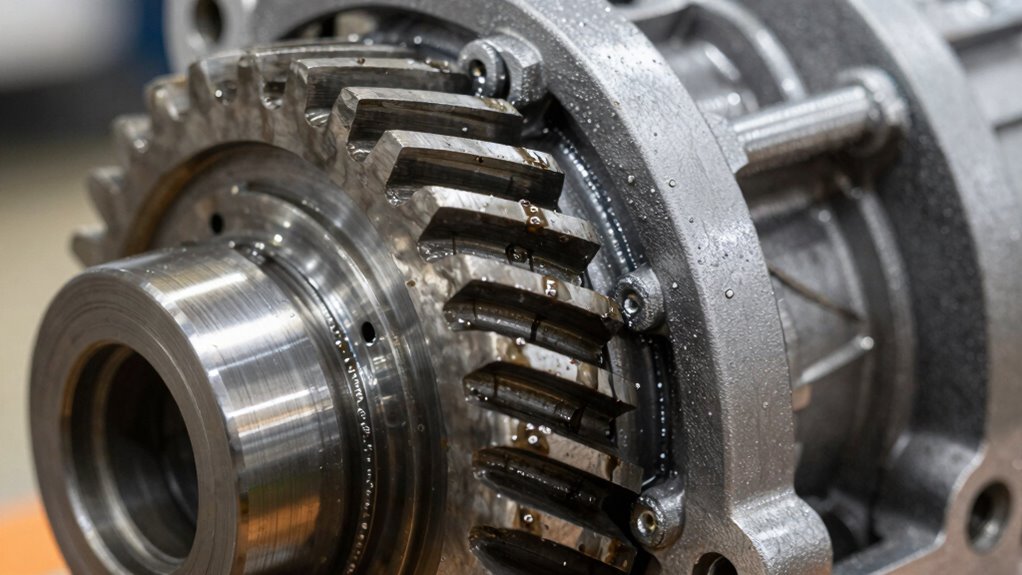

If your gearbox sounds dry or harsh, entrained air in the oil is likely the cause. Air pockets reduce the effectiveness of lubrication, leading to metal-to-metal contact, increased noise, and wear. Entrained air also causes foam and vibrations, which can harm gear surfaces over time. Proper air management, like regular oil checks and using air separation devices, can prevent this problem. Keep going to find out how to control air entrainment and protect your gear system.

Get business pricing on garage and car supplies
- Business-only prices and quantity discounts
- Tax-exempt purchasing
- Multiple users, one account, clear invoices
Key Takeaways
- Entrained air creates a thin lubricating film, leading to dry, harsh, or noisy gearbox operation.
- Air pockets hinder proper lubrication, causing metal-to-metal contact and increased gear noise.
- Foam or bubbles in oil indicate excessive air, reducing lubrication effectiveness and causing dryness sounds.
- Poor air management can cause cavitation, surface pitting, and erosion, making the gearbox sound dry and rough.
- Regular maintenance and air separation systems help remove trapped air, minimizing dryness and noise in gearboxes.
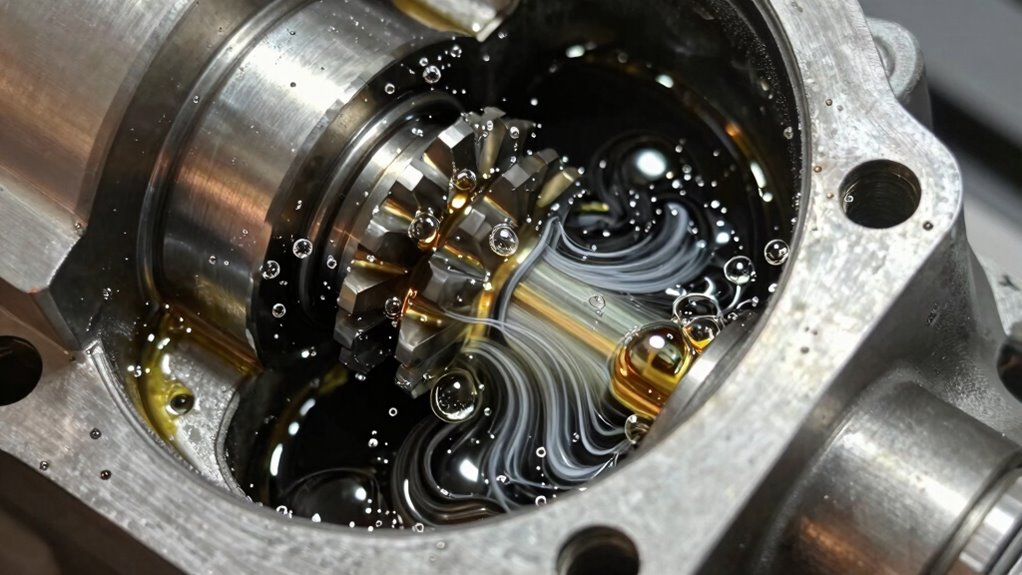
Have you ever wondered how air gets incorporated into concrete or other fluids? It might seem like a straightforward process, but in machinery like gearboxes, air entrainment plays a crucial role in maintaining ideal performance. When your gearbox sounds dry or noisy, one of the culprits could be improper air management within the oil. Air can enter the system through various means, including oil contamination. If the oil isn’t clean or has been exposed to moisture, it can develop tiny bubbles or foam. These entrained air pockets disrupt the lubrication process, leading to increased noise and wear. The presence of air creates a less effective film between moving parts, which results in metal-to-metal contact, generating that harsh, dry sound you’ve come to associate with a poorly lubricated gearbox.
Proper air entrainment control is essential not just for noise reduction but also for prolonging your gear’s lifespan. When air is trapped in the oil, it often causes cavitation—these tiny bubbles collapse with force, causing pitting and erosion on gear surfaces. This damage accelerates wear and reduces efficiency. You might notice that your gear system becomes noisier or vibrates more than usual. That “dry” sound signals that the lubrication isn’t doing its job, often due to air pockets that prevent the oil from forming an even, cushioning layer. To combat this, you should regularly check for oil contamination, ensuring the oil remains clean and free of moisture. Using high-quality, properly filtered oil helps prevent the formation of foam and bubbles that trap air. Additionally, employing air separation devices can significantly reduce entrained air, leading to quieter and more efficient operation.
Additionally, designing your lubrication system with air separation in mind can greatly reduce noise and improve performance. Air separators and degassing units help remove entrained air from the oil before it circulates through the gearbox, ensuring a more stable, silent operation. This not only quiets the gear noise but also enhances oil’s lubricating properties by maintaining its viscosity and reducing the risk of oil breakdown. When the oil is free of excess air, your gearbox operates more smoothly, with less vibration and noise. That “dry” sound you hear is often a sign that the oil isn’t doing its job properly, which could stem from poor air management, oil contamination, or inadequate filtration.
As an affiliate, we earn on qualifying purchases.
Frequently Asked Questions
Can Air Entrainment Cause Long-Term Gearbox Damage?
Yes, air entrainment can cause long-term gearbox damage. When air gets into the lubricant, it reduces lubricant viscosity, leading to inadequate lubrication and increased wear. This also compromises seal integrity, allowing more contaminants to enter and further degrading the gearbox. Over time, these issues can cause significant damage, making it vital to address air entrainment promptly to protect your gearbox’s longevity and ensure smooth operation.
How Does Temperature Affect Air Entrainment Levels?
Temperature fluctuations directly impact air entrainment levels in your gearbox. As temperatures rise, viscosity changes occur, causing oil to thin and more air bubbles to form. Conversely, cooler temperatures increase viscosity, reducing air entrainment. These variations can lead to inconsistent lubrication and potential gear damage over time. To maintain ideal performance, monitor temperature conditions carefully and choose oil viscosity suited for your operating environment.
What Are the Signs of Excessive Air in the Lubricant?
If you notice oil foam or hear unusual sounds, it’s a sign of excessive air in your lubricant. This can reduce lubrication efficiency, causing increased wear and potential damage to gears. Foam forms when air gets trapped in the oil, making it less effective at protecting moving parts. Check for aeration and address leaks or improper sealing to minimize air entrainment and keep your gearbox running smoothly.
Is Air Entrainment More Common in Specific Gearbox Types?
Coincidentally, certain gearbox designs and challenging operating environments make air entrainment more common. Gearboxes with poorly sealed housings or those operating at high speeds and varying temperatures tend to trap air more easily. This is especially true in environments with high vibration or moisture, where sealing integrity is compromised. Understanding your gearbox’s design and environment helps you anticipate and mitigate air entrainment, reducing dry-sounding operation and potential damage.
How Can I Prevent Air Entrainment During Operation?
To prevent air entrainment during operation, verify your lubricant viscosity matches the manufacturer’s specifications, which helps maintain proper flow and reduces turbulence that can trap air. Also, regularly check and maintain seal integrity, as damaged or worn seals allow air to enter the gearbox. These steps minimize air pockets, keep lubrication effective, and prevent the gearbox from sounding dry, ultimately extending its lifespan and improving performance.
oil filtration system for gearboxes
As an affiliate, we earn on qualifying purchases.
As an affiliate, we earn on qualifying purchases.
Conclusion
Now that you know how air entrainment can make your gearbox sound dry and rough, imagine what could happen if you ignore it. Will you catch the subtle signs before it’s too late? The next step might surprise you—uncovering the hidden dangers lurking inside your system. Don’t wait until a small issue turns into a costly failure. Stay alert, stay informed, and keep that gearbox running smoothly. The secret to its longevity is just a step away.
As an affiliate, we earn on qualifying purchases.
gearbox oil contamination tester
As an affiliate, we earn on qualifying purchases.
As an affiliate, we earn on qualifying purchases.
Fall Picks
fall essentials
As an affiliate, we earn on qualifying purchases.