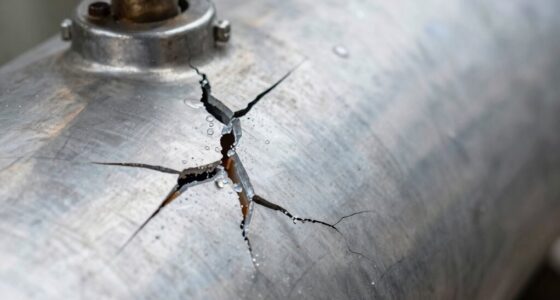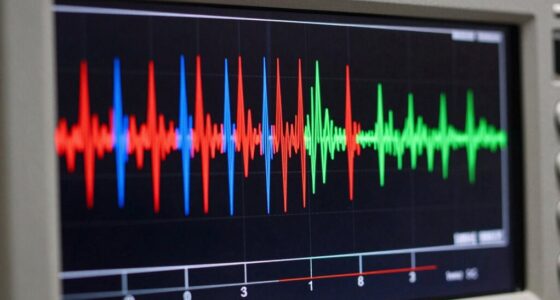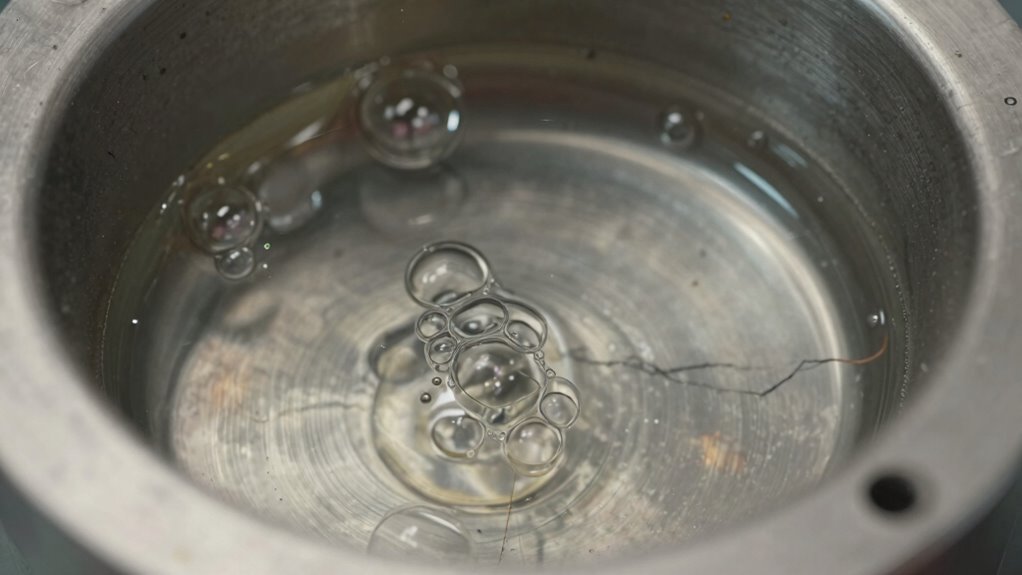
Cavitation in lubrication systems often creates loud knocking or cracking sounds that signal trouble. When pressure drops below vapor pressure, vapor bubbles form and suddenly collapse, causing noise, vibration, and surface damage. These vibrations can lead to efficiency loss and long-term wear, risking equipment failure. Recognizing these warning signs early helps prevent costly repairs. If you want to understand how to identify and stop cavitation, there’s more to learn that can protect your machinery.
Key Takeaways
- Cavitation causes knocking or cracking sounds due to collapsing vapor bubbles in lubrication systems.
- Noise levels increase as vapor bubbles collapse, often accompanied by vibrations and surface erosion.
- Audible signs of cavitation help identify pressure drops and bubble collapse in machinery.
- Monitoring system noise and vibration can detect cavitation early, preventing damage.
- Proper system design and pressure control reduce cavitation noise and extend equipment lifespan.
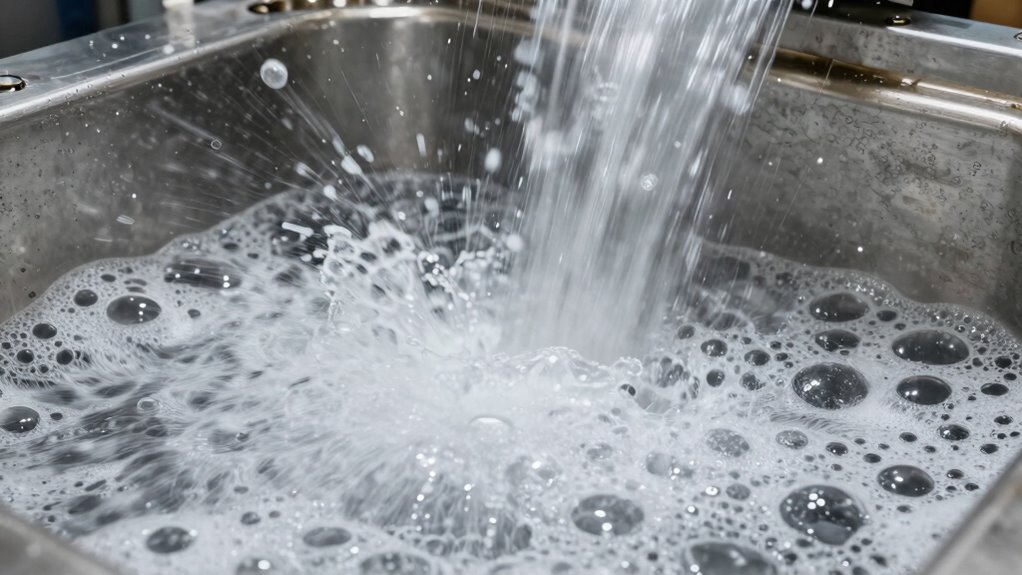
Cavitation in lubrication systems occurs when the pressure drops below the vapor pressure of the lubricant, causing bubbles to form and collapse rapidly. This process is driven by pressure fluctuations within the system, which create pockets of low pressure where vapor bubbles can develop. When these bubbles form, they can cause significant damage as they collapse violently, leading to noise, vibration, and potential wear on system components. Recognizing how pressure fluctuations contribute to bubble formation is key to understanding cavitation’s destructive nature and learning how to prevent it.
As the lubricant flows through different sections of your machinery, sudden changes in pressure can cause localized drops below vapor pressure. These fluctuations might result from abrupt shifts in load, design flaws, or improper maintenance. When pressure dips, vapor bubbles start to form, often near highly stressed regions like pump impellers or bearing surfaces. The rapid formation and subsequent collapse of these bubbles generate shock waves that induce pitting and surface erosion over time. The characteristic noise associated with cavitation—often a distinct knocking or cracking sound—serves as an audible warning that bubbles are collapsing nearby, damaging the system in the process.
Understanding bubble formation in relation to pressure fluctuations helps you take proactive steps. For example, maintaining consistent pressure levels within your lubrication system minimizes the chances of vapor bubbles forming. Properly designed pumps and flow paths can reduce sudden pressure drops, while regular monitoring helps detect early signs of pressure instability. Additionally, selecting the right lubricant with appropriate vapor pressure characteristics can make a significant difference. Lubricants with higher vapor pressures are more prone to cavitation under fluctuating pressures, so choosing a suitable grade for your operating conditions is vital.
You should also be aware that cavitation isn’t always immediately visible but often manifests through increased noise and vibration levels. If you notice unusual sounds or a drop in system efficiency, it might be due to bubble formation caused by pressure fluctuations. Addressing these issues early involves reviewing system design, ensuring proper lubrication, and monitoring pressure points regularly. Implementing pressure relief valves or optimizing flow rates can help stabilize pressure and reduce the likelihood of cavitation. Paying attention to pressure fluctuations and their impact on the system can greatly extend the lifespan of your machinery.

SCTSNSR 0 to 200 Psi Pressure Gauge, Glycerin Liquid Filled, 2.5 inch Dial, 1/4" NPT Lower Mount, Stainless Steel Case, for Air Compressor, Shock, Water System, Well Pump, Tank, Pipe, Pressure Test
This pressure gauge is built with brass and stainless steel parts to measure pressure in liquids and gases…
As an affiliate, we earn on qualifying purchases.
As an affiliate, we earn on qualifying purchases.
Frequently Asked Questions
Can Cavitation Damage Be Completely Prevented in Lubrication Systems?
You can’t completely prevent cavitation damage in lubrication systems, but effective cavitation mitigation and lubrication optimization considerably reduce the risk. Regularly maintaining and monitoring your system helps identify early signs of cavitation, allowing you to take corrective actions. Proper fluid selection, pressure control, and system design are essential. While some risk remains, proactive measures help protect your equipment and extend its lifespan by minimizing cavitation-related harm.
What Are the Early Signs of Cavitation in Machinery?
You’ll notice early signs of cavitation like unusual vibration patterns that feel like your machinery is dancing offbeat, and oil discoloration that hints at internal chaos. These subtle clues serve as red flags, alerting you to impending trouble. Pay close attention to irregular vibrations and changes in oil color, as catching these signs early helps prevent serious damage and keeps your equipment running smoothly.
How Does Cavitation Affect the Lifespan of Lubrication Components?
Cavitation can markedly shorten the lifespan of your lubrication components by causing component fatigue due to repeated pressure shocks. This process weakens the material over time, leading to cracks or failures. Vibration analysis helps you detect cavitation early, allowing you to address issues before serious damage occurs. Ignoring cavitation risks reducing component durability, increasing maintenance costs, and causing unexpected breakdowns, so stay vigilant to preserve your machinery’s longevity.
Are There Specific Lubricants More Resistant to Cavitation?
Think of lubricants as armor against cavitation, with some more suited than others. You should choose lubricants with additives designed for cavitation resistance, ensuring better viscosity stability under stress. These additives help maintain consistent flow and pressure, preventing bubble formation. By selecting lubricants formulated for cavitation resistance, you protect your system’s components and extend their lifespan, keeping noise and damage at bay.
What Maintenance Practices Best Reduce Cavitation Noise?
To reduce cavitation noise, you should regularly perform vibration analysis and acoustic monitoring to detect early signs of cavitation. Maintain proper fluid levels, ensure correct pump alignment, and check for any leaks or blockages. Keep lubricants clean and at recommended levels, and inspect equipment frequently. These practices help identify issues early, minimize cavitation, and keep noise levels down, ensuring your system runs smoothly and quietly.
cavitation noise detection sensor
As an affiliate, we earn on qualifying purchases.
As an affiliate, we earn on qualifying purchases.
Conclusion
Understanding cavitation in lubrication systems isn’t just technical; it’s about safeguarding your machinery’s heart. When you ignore those telltale noises, you risk costly damage and downtime—think of it as ignoring the silent screams of your engine. Stay vigilant, listen to your system’s whispers, and address cavitation early. Remember, in this modern age, a well-maintained machine can last like a trusty steed from yesteryear, ensuring your operations run smoothly through every twist and turn.

HYDRO MASTER Safety Relief Valve With 3/4 Inch Thread 30 PSI ASME Hot Water (30 PSI)
3/4" male NPT threaded inlet for connecting to a female NPT threaded connection.
As an affiliate, we earn on qualifying purchases.
As an affiliate, we earn on qualifying purchases.

HOJILA Digital Vibration Meter VM-6310 Vibrometer for Moving Machinery with Velocity 0.01~199.9mm/s
In accordance with ISO 2954, used for periodic measurements, to detect out-of-balance, misalignment and other mechanical faults in…
As an affiliate, we earn on qualifying purchases.
As an affiliate, we earn on qualifying purchases.