
TL;DR

Get business pricing on garage and car supplies
- Business-only prices and quantity discounts
- Tax-exempt purchasing
- Multiple users, one account, clear invoices
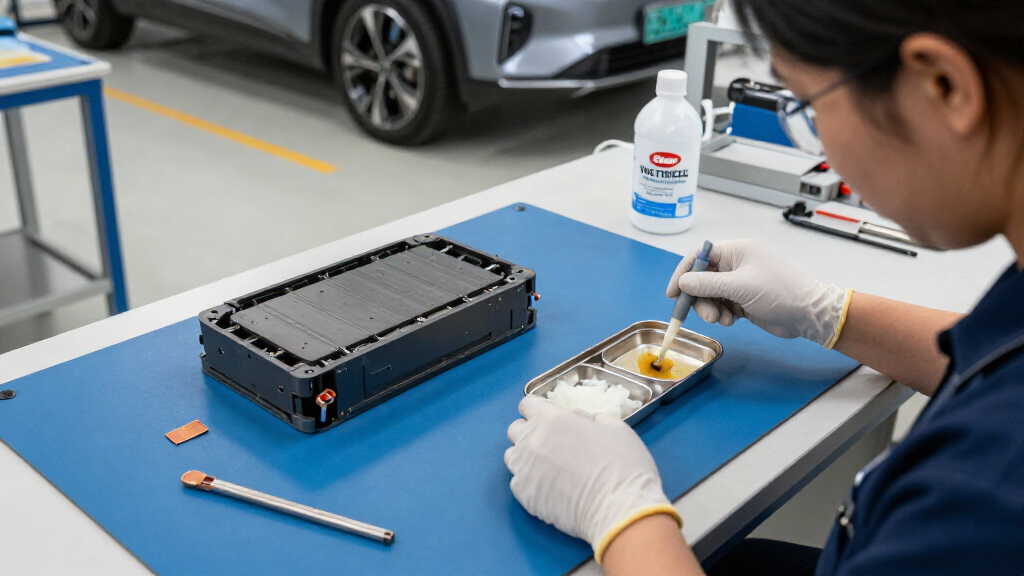
Dow announced VOLTRICELL, a platform bringing together binders, dispersants, rheology modifiers, surfactants and specialty additives for battery-cell applications. The company says the materials are intended for current and developing chemistries, while separate fire-protection products target battery assemblies and housings. Dow has not disclosed specific performance results, customer agreements or commercial rollout details in the source report.
Dow has launched VOLTRICELL, a platform of binders, dispersants and other materials for battery cells, saying the portfolio is designed to support manufacturing and a range of battery chemistries, including sodium-ion, silicon-anode and solid-state technologies. The announcement brings Dow’s battery-cell materials together under one platform, but the source report does not provide performance data or customer deployment details.
Dow describes VOLTRICELL as its first materials platform designed specifically to support electrochemistry inside a cell. Its products are intended for use in electrodes, separators, coatings and battery-cell packaging. The portfolio includes binders, dispersants, rheology modifiers, surfactants and specialty additives that customers can select and combine, according to the company.
Dow says the materials are intended to help with battery performance, manufacturability and scalability. The announcement groups together products for existing batteries and technologies still being developed. It does not identify particular cell manufacturers using VOLTRICELL, provide product-by-product specifications or report results from independent testing.
The company also highlighted three products for battery fire protection. VORAFORCE TP1415 Polyol is a polyurethane resin system for fiber-reinforced composites made through pultrusion. Dow says it is designed to support impact and corrosion resistance as well as flame-retardant performance. DOWSIL EF-6559 Silicone Foam is an expanding, two-part foam for narrow or complex spaces in battery assemblies; the company says it forms a protective ceramic layer when exposed to high heat. DOWSIL FC-2024 Coating is a one-part, room-temperature-vulcanizing coating for battery housings, enclosures and lids that Dow says forms a hard protective ceramic layer during a thermal event.
One Platform Across Battery Chemistries
The announcement matters because battery makers are developing cells with different chemistries and manufacturing approaches, and materials used in electrodes, separators and coatings can affect how those cells are made and perform. By presenting multiple product types as a single platform, Dow is positioning itself as a materials supplier across several parts of cell construction rather than promoting only one component or chemistry.
The proposed range could be relevant as manufacturers evaluate new cell designs and production requirements. However, the announcement describes intended uses, not verified gains. Without disclosed test results, cost information, production volumes or customer examples, readers cannot assess how much the platform changes cell performance, factory output or commercial readiness.
The fire-protection products address a separate concern: managing heat and protecting battery assemblies and enclosures during thermal events. Dow’s descriptions indicate intended functions, but the source report does not establish that these materials prevent fires or provide a quantified level of protection. Their effectiveness will depend on testing and how they are incorporated into a battery system.
battery cell binders for lithium-ion batteries
As an affiliate, we earn on qualifying purchases.
As an affiliate, we earn on qualifying purchases.
Materials for Cells and Protection
Battery manufacturers use combinations of materials to build electrodes and other cell components. A binder helps hold electrode materials together, while dispersants and rheology modifiers can affect how material mixtures are prepared and applied. Surfactants and specialty additives can serve further roles in processing or component performance. Dow’s announcement places these categories together within VOLTRICELL, rather than describing a single new battery chemistry.
The platform also spans beyond the cell itself to coatings, packaging and fire-protection applications. Dow presented the initiative as relevant to both current battery chemistries and future technologies, including sodium-ion, silicon-anode and solid-state batteries. It did not say that every product is suitable for every chemistry, or give a timeline for use in particular commercial cell designs.
As an affiliate, we earn on qualifying purchases.
Performance and Rollout Details
The announcement does not specify when or where VOLTRICELL products will be available, which customers have adopted them, or whether any are already in production. It also gives no pricing, manufacturing-capacity figures, product specifications or comparative test results. Dow’s claims about intended performance and process support therefore cannot be measured from the information provided.
For the fire-protection materials, the source does not provide test conditions, certification details or quantified results for impact resistance, flame retardancy, insulation or performance during a thermal event. It is also unclear which products are offered together and whether the platform includes different formulations for each battery chemistry.
fire protection coatings for battery housings
As an affiliate, we earn on qualifying purchases.
As an affiliate, we earn on qualifying purchases.
Evidence From Customer Applications
The next useful milestones would be product specifications, test data, customer announcements and details about commercial availability. Those disclosures could show whether VOLTRICELL materials are being used in specific cell designs and how the fire-protection products perform in defined applications.
Until Dow or customers provide those details, the launch establishes the platform’s scope and intended uses, but not its measurable effect on battery cost, production scale, cell performance or safety outcomes.
silicone foam for battery assembly
As an affiliate, we earn on qualifying purchases.
As an affiliate, we earn on qualifying purchases.
Key Questions
What is Dow’s VOLTRICELL platform?
VOLTRICELL is a group of battery materials that Dow says can support electrodes, separators, coatings and battery-cell packaging. The portfolio includes binders, dispersants, rheology modifiers, surfactants and specialty additives.
Which battery technologies does Dow say it supports?
Dow says the platform is intended for existing batteries and developing sodium-ion, silicon-anode and solid-state technologies. The announcement does not say that every VOLTRICELL product is suited to each chemistry.
Did Dow publish performance results for VOLTRICELL?
The source report does not include quantified test results, comparisons or independent validation. Dow describes the platform’s intended benefits but does not provide evidence that allows readers to measure them.
Which fire-protection products did Dow highlight?
Dow highlighted VORAFORCE TP1415 Polyol for fiber-reinforced composites, DOWSIL EF-6559 Silicone Foam for spaces within battery assemblies, and DOWSIL FC-2024 Coating for battery housings, enclosures and lids.
Are customer use and availability confirmed?
The source report does not identify customers using VOLTRICELL or provide a commercial availability schedule. Adoption and rollout details remain unreported.
Source: rss
Halloween Picks
halloween
As an affiliate, we earn on qualifying purchases.