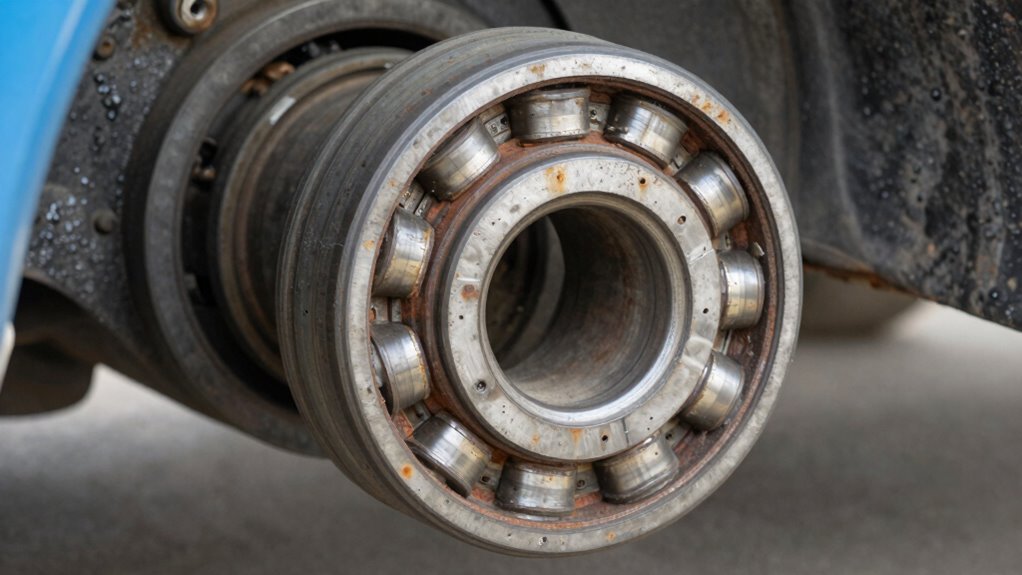

Carrier bearings support your driveshaft, helping it rotate smoothly and transfer power from the engine to your wheels. They handle rotational forces and keep your drivetrain aligned, preventing vibrations and uneven wear. Proper lubrication and alignment are key to avoiding failures like cracking or seizing. Over time, dirt, moisture, and misalignment can cause these bearings to wear out or fail. Keep watching for signs of trouble to learn how to keep them in good shape.
Key Takeaways
- Carrier bearings support the driveshaft, ensuring smooth rotation and efficient power transfer from engine to wheels.
- Proper drivetrain alignment reduces stress on the bearing, preventing vibrations, noise, and uneven wear.
- Lubrication creates a protective film that minimizes friction, heat, and wear, extending bearing lifespan.
- Signs of bearing failure include vibrations, unusual noises, increased heat, and cracking or seizing.
- Causes of failure include inadequate lubrication, dirt, moisture, debris, and misalignment, which can be prevented with regular maintenance.
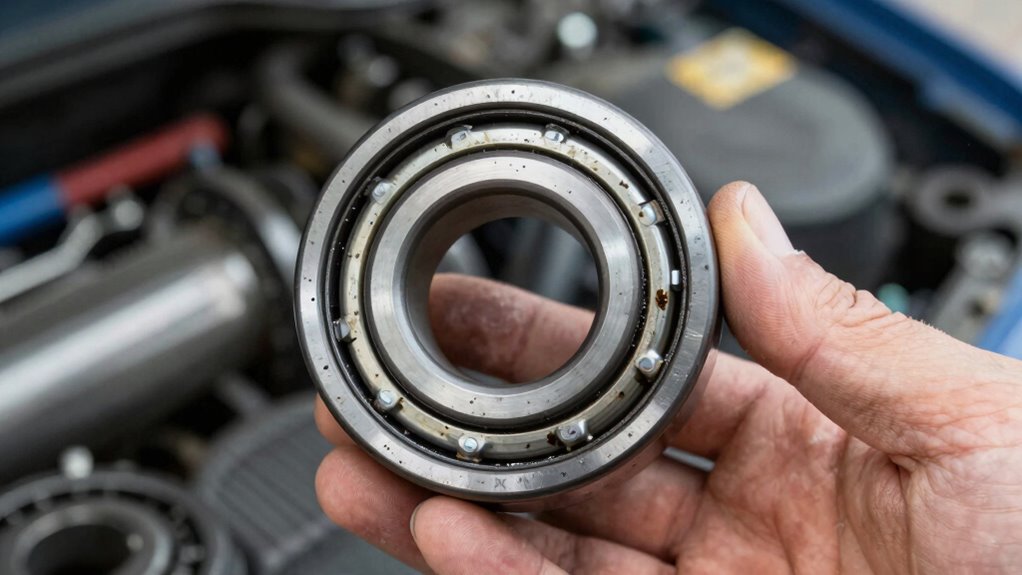
Have you ever wondered what keeps your vehicle’s driveshaft spinning smoothly? It all comes down to the carrier bearing, a critical component that supports the driveshaft and guarantees seamless power transfer from the engine to the wheels. Proper drivetrain alignment plays an essential role in this process, as it keeps the driveshaft in the correct position, reducing undue stress on the bearing and preventing vibrations. When everything is aligned correctly, the bearing lubrication remains effective, minimizing friction and wear. Without proper lubrication, the bearing can overheat and fail prematurely, leading to costly repairs. Ensuring the bearing is properly lubricated is vital for maintaining its durability and performance over time.
Proper driveshaft alignment and lubrication are key to preventing bearing failure and ensuring smooth vehicle operation.
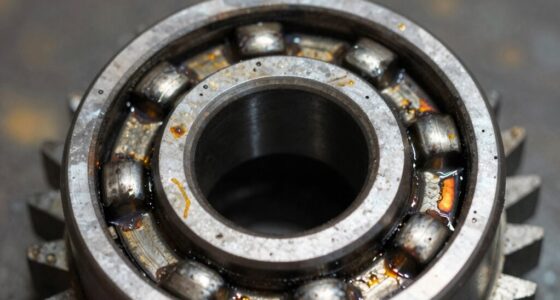
Your carrier bearing is designed to handle rotational forces while maintaining stability in the drivetrain. It typically consists of a bearing housed in a support assembly that allows the driveshaft to rotate smoothly. When the drivetrain is aligned properly, the forces are evenly distributed across the bearing, reducing the risk of uneven wear. If you notice vibrations or unusual noises while driving, it could be a sign that the carrier bearing is compromised. These symptoms often indicate that the bearing is no longer adequately lubricated or that it’s experiencing misalignment, which can cause increased friction and heat. Regular inspection of the bearing and guaranteeing proper lubrication can markedly extend its lifespan.
Bearing lubrication is essential because it creates a protective film that prevents metal-to-metal contact, which could otherwise lead to rapid deterioration. In many vehicles, the bearing is sealed and designed to retain grease, but over time, that grease can break down or leak out. When this happens, the bearing becomes vulnerable to dirt, moisture, and debris, all of which accelerate wear and corrosion. Proper drivetrain maintenance includes checking the bearing’s lubrication status and replacing or re-greasing if necessary. When the bearing is well-lubricated, it can absorb shocks and rotational forces better, maintaining smooth operation and minimizing vibrations that could otherwise cause discomfort and damage.
Misalignment of the drivetrain can also cause uneven bearing wear, leading to early failure. If your driveshaft isn’t aligned correctly, the bearing faces increased stress, which can cause it to seize or develop cracks. Regularly inspecting the alignment and ensuring it’s within manufacturer specifications helps prevent these issues. Combining proper drivetrain alignment with diligent bearing lubrication guarantees your vehicle’s driveshaft remains balanced and functional, avoiding costly repairs down the line. If you keep these components in check, you’ll enjoy a smoother ride and extend the lifespan of your vehicle’s drivetrain.

LicBund Differential Carrier Bearing Puller Kit Replacement for Dana 30 44 50 60 8” 9.5” Heavy Duty Pinion Bearing Tool (BPT-P22)
Compatibility: Compatible with Dana 30, 35, 40, 44, 50, 60, 70, 80 with extra large clamshell. Not fits…
As an affiliate, we earn on qualifying purchases.
As an affiliate, we earn on qualifying purchases.
Frequently Asked Questions
How Can I Tell if My Carrier Bearing Needs Replacement?
You can tell if your carrier bearing needs replacement by paying attention to vibration diagnosis and noise identification. If you notice excessive vibrations or a humming noise coming from your vehicle’s rear, it’s a sign the bearing may be worn or failing. Regularly check for uneven tire wear or looseness in the driveshaft. Addressing these signs promptly helps prevent further damage and ensures smooth, safe driving.
Are Carrier Bearings the Same for All Vehicle Types?
Not all carrier bearings are the same. While some offer universal compatibility, many are vehicle-specific in design, tailored to fit particular makes and models. This means you can’t just swap one out for another without risking improper fit or performance. Always check your vehicle’s specifications before replacing a carrier bearing, because the right part guarantees smooth operation and prevents costly failures down the line.
What Are the Signs of a Failing Carrier Bearing?
If your carrier bearing is failing, you’ll notice symptoms like vibrations, clunking noises, or uneven tire wear. Using diagnostic tools can help pinpoint the issue early. Also, pay attention to lubrication maintenance; lack of proper lubrication can accelerate bearing wear. Regular inspection and timely replacement prevent further damage, ensuring a smooth ride. If you detect these signs, get your carrier bearing checked promptly to avoid costly repairs.
How Often Should Carrier Bearings Be Inspected?
Did you know that regular inspections can extend carrier bearing life by up to 30%? You should inspect your carrier bearings every 12,000 to 15,000 miles or as recommended by your manufacturer. Follow proper lubrication schedules and check for signs of wear. Regular inspections help catch issues early, preventing costly repairs and ensuring your vehicle stays safe and smooth on the road.
Can I Replace a Carrier Bearing Myself?
Yes, you can replace a carrier bearing yourself if you have the right tools and mechanical skills. Start by removing the old bearing, paying attention to bearing lubrication and any signs of wear. During the process, listen for noise diagnosis cues to verify the bearing is the issue. Follow a repair manual carefully, and make sure to re-lubricate the new bearing properly to prevent future failure.
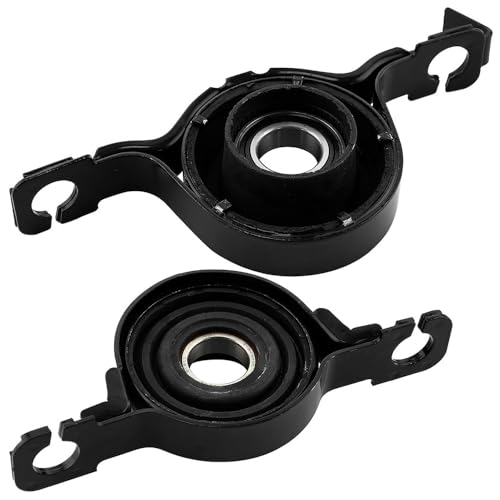
Front and Rear Drive Shaft Center Support Bearings for 2007 2008 2009 2010 2011 2012 2013 Ford Edge Mazda CX9 Driveshaft Center Support Bearing Carrier Bearing 2 PCS
These Drive Shaft Center Support Bearings are Made from High-Quality Steel and Rubber, Ensuring Excellent Durability and Effective…
As an affiliate, we earn on qualifying purchases.
As an affiliate, we earn on qualifying purchases.
Conclusion
Just like the steady hand guiding a ship through stormy seas, carrier bearings keep your vehicle balanced and smooth. When they fail, it’s like losing that hand—your ride becomes unstable, risking further damage. Paying attention to signs of wear isn’t just maintenance; it’s your way of steering clear of bigger storms ahead. Remember, even the strongest ships need their anchors—your carrier bearings are that anchor, ensuring your journey remains steady and safe.

AstraVox White Lithium Grease, Multi-Purpose Lubricant Lithium Grease with Brush for Hinges, Bearings, Gears, and Garage Doors, Ideal for Automotive, Marine, Industrial, and Household Use (1)
Superior Metal-to-Metal Lubrication: White lithium grease effectively reduces friction and ensures smooth operation. Lithium grease is ideal for…
As an affiliate, we earn on qualifying purchases.
As an affiliate, we earn on qualifying purchases.

Drive Shaft Center Support Bearing for 2005-2015 Nissan Frontier, 2004-2015 Nissan Titan Driveshaft Carrier Bearing
These Drive Shaft Center Support Bearings are Made from High-Quality Steel and Rubber, Ensuring Excellent Durability and Effective…
As an affiliate, we earn on qualifying purchases.
As an affiliate, we earn on qualifying purchases.