Understanding differentials is key to choosing the right setup for your vehicle. Open diffs are simple and smooth on paved roads but can lose traction off-road. Limited slip differentials improve grip during acceleration and cornering without complex setups. Lockers lock wheels together, offering maximum traction on tough terrain but are less smooth on regular roads. If you want to learn more about how each type fits your driving needs, keep exploring these options.
Key Takeaways
- Open differentials allow independent wheel rotation but can lose traction in low-traction conditions.
- Limited Slip Differentials (LSD) improve grip by distributing torque more effectively during challenging driving.
- Lockers physically connect wheels on an axle, providing maximum traction for off-road and rugged terrains.
- Open diffs are suitable for paved roads, while LSDs and lockers are better for off-road or slippery surfaces.
- Proper selection depends on vehicle use, terrain, and need for traction, with maintenance essential for optimal performance.
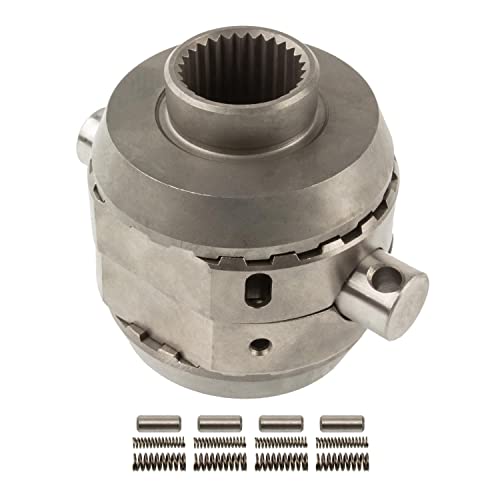
PowerTrax 1931-LR Lock-Right Differential Locker, 28 Spline, Fits GM 7.625", Open Differential, Compatible with Camaro, S10, Blazer, Astro, Firebird
✔ PowerTrax 1931-LR Differential Locker – Designed for GM 7.625" Open Differentials, 28 Spline; Drop-in locker for better…
As an affiliate, we earn on qualifying purchases.
As an affiliate, we earn on qualifying purchases.
What Are Vehicle Differentials and How Do They Work?
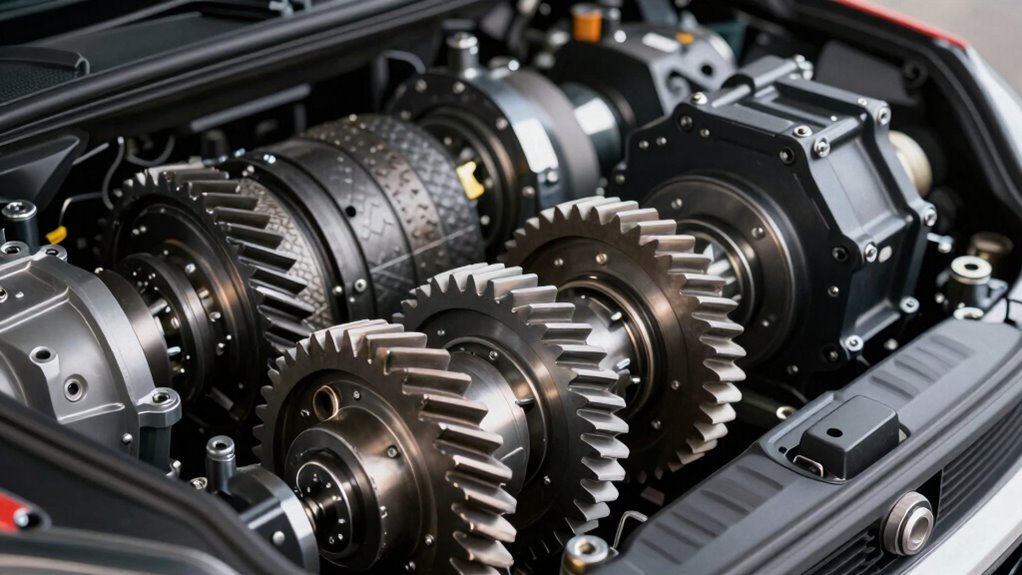
Have you ever wondered how your vehicle smoothly turns corners without skidding or dragging? That’s thanks to the differential, a key drivetrain component. It allows the wheels to rotate at different speeds during turns, preventing tire slip. Differentials work through various axle configurations, which determine how power is distributed to each wheel. In a typical setup, the differential splits torque between the wheels on an axle, accommodating differences in wheel speed when turning. This process ensures stability and control, especially on sharp turns or uneven surfaces. Without a properly functioning differential, your vehicle would struggle with handling, and tire wear would increase. Understanding how these components work helps you appreciate the importance of different types of differentials in maintaining smooth, safe driving.

Alloy USA Differential Lock Kit for Jeep Wrangler/Cherokee | Permanent Replacement | 451100 | Fits 1987-1995 Jeep Wrangler YJ; 1984-2001 Jeep Cherokee; 1994-2002 Dodge RAM 1500/2500/3500
Permanent Replacement For The Failure Prone One Vacuum Disconnect
As an affiliate, we earn on qualifying purchases.
As an affiliate, we earn on qualifying purchases.
Open Differentials: Pros, Cons, and When to Use Them
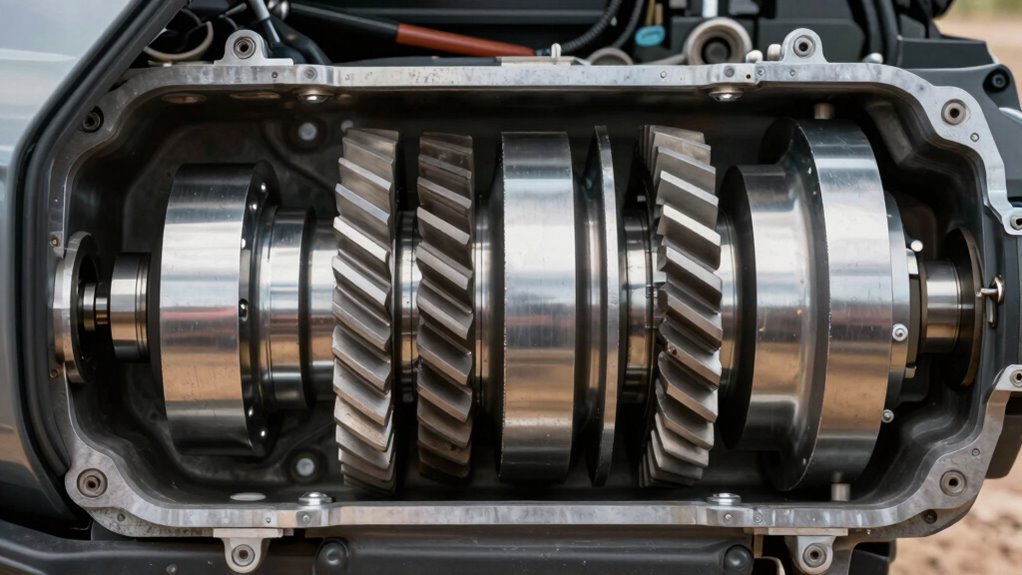
Open differentials are the most common type found in many vehicles, especially those designed for everyday driving. They work by allowing each wheel to rotate independently, which benefits handling and comfort. However, because power is split evenly, they can struggle with traction control in low-traction situations—when one wheel slips, the other may not receive enough torque. The axle design in open differentials is simple, making them affordable and lightweight. This simplicity also means less maintenance. You’ll find open differentials ideal for normal road conditions, where maximum traction isn’t critical. But if you’re tackling off-road terrain or snowy roads, their limitations become apparent, and other types like LSDs might serve you better.

Yukon Gear & Axle Dura Grip Limited Slip Differential Positraction, 30 Spline, 4.10-Down Ratio, Compatible with 14 Bolt 10.5" GM Axle, YDGGM14T-3-30-1
Precise Purpose: Designed to provide smooth yet aggressive traction, enhancing truck or car handling and stability in demanding…
As an affiliate, we earn on qualifying purchases.
As an affiliate, we earn on qualifying purchases.
Limited Slip Differentials (LSD): Benefits and Best Applications
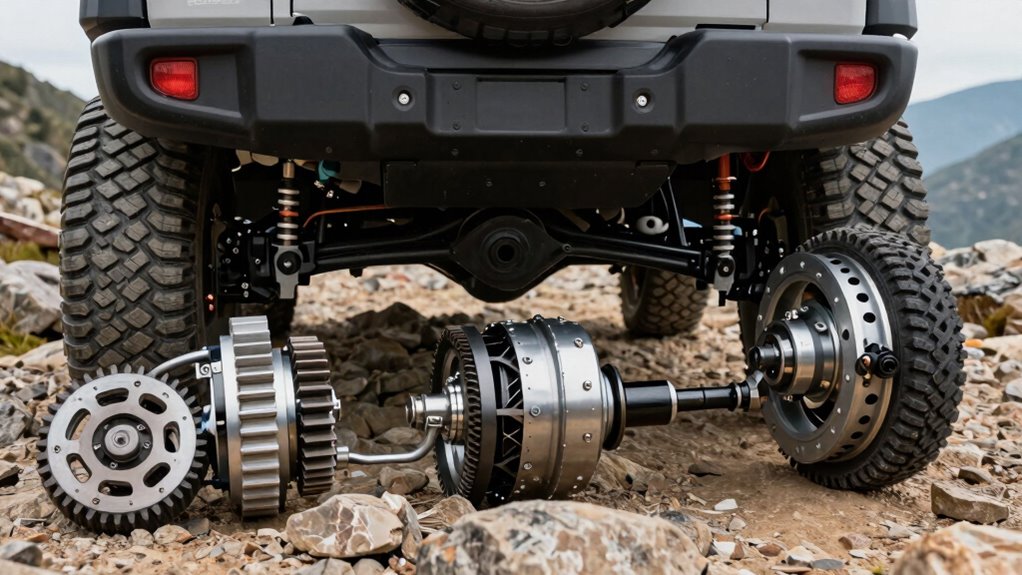
Limited Slip Differentials (LSDs) enhance traction by distributing torque more effectively than open differentials, especially when one wheel begins to slip. By providing better traction control, LSDs keep your vehicle moving smoothly through challenging conditions. They prevent wheel spin and improve stability during acceleration or cornering, making them ideal for sporty driving or off-road adventures. Upgrading to an LSD can be a smart differential upgrade, especially if you’re seeking improved handling without the complexity of lockers. LSDs are best suited for daily driving, track use, or light off-road terrains where maintaining traction is essential. They strike a balance between open differentials and full lockers, offering enhanced grip while remaining user-friendly and reliable. Additionally, the contrast ratio of your vehicle’s differential setup can influence how well it maintains traction in various driving environments.

Revolution Gear & Axle 4340 Chromoly Rear Axle Kit Compatible with 2007-2018 Jeep Wrangler JK Rubicon 32 Spline Dana 44, Fits Factory Locker, High-Strength Off-Road Replacement, Heavy-Duty Performance
UNMATCHED STRENGTH AND PERFORMANCE: Revolution Gear & Axle 4340 Chromoly Rear Axle Kit is meticulously engineered to deliver…
As an affiliate, we earn on qualifying purchases.
As an affiliate, we earn on qualifying purchases.
Differential Lockers: How They Boost Off-Road Traction
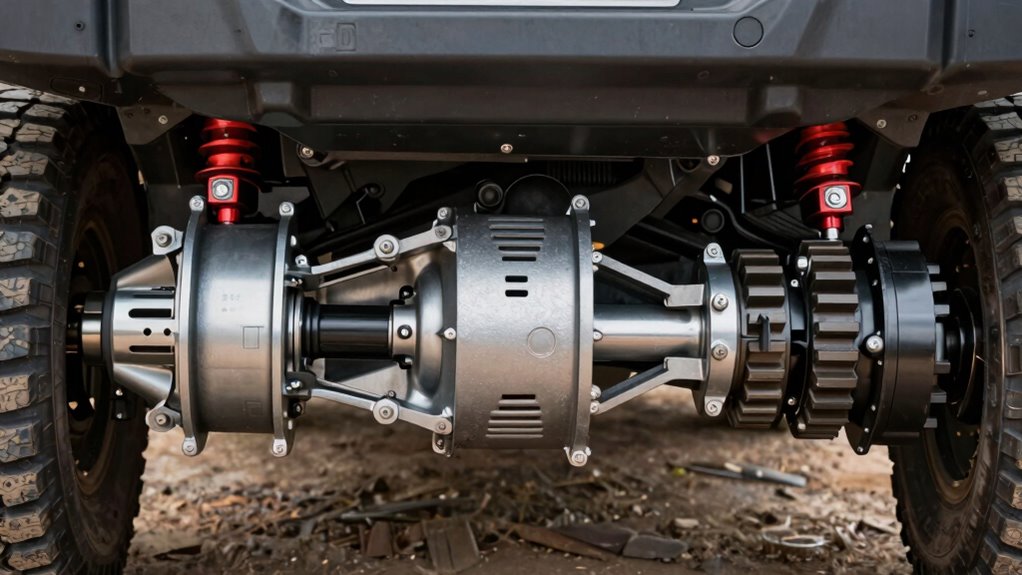
When tackling tough off-road terrain, differential lockers substantially boost your vehicle’s traction by locking the wheels on an axle together, forcing them to turn at the same speed. This provides significant traction advantages in challenging conditions, preventing wheel spin on slippery surfaces. Locker mechanisms work by physically connecting the wheels, ensuring both receive equal torque, which is essential when one wheel loses grip.
- Improve grip on uneven surfaces
- Prevent wheel slip during steep climbs
- Maintain consistent power delivery in mud or snow
Using lockers allows you to overcome obstacles that would stall an open differential or LSD. They are especially effective in situations where maximum traction is needed, giving you confidence to push through rough terrain without getting stuck.
How to Choose the Best Differential for Your Vehicle and Terrain
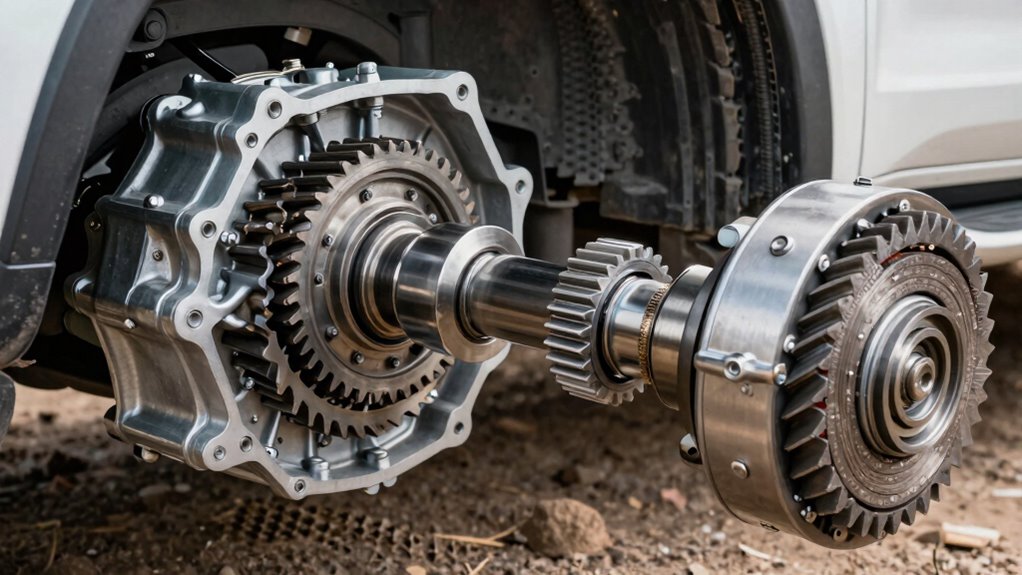
Choosing the right differential depends on your vehicle type and the terrain you frequently encounter. Start by considering the gear ratios; a higher gear ratio provides better torque for off-road climbs, while a lower ratio improves fuel efficiency and highway performance. For rocky or challenging terrains, a locker or limited-slip differential can enhance traction, especially if you often drive in conditions with uneven surfaces. On the other hand, an open differential offers smoother handling on paved roads. Maintenance tips are essential—regularly check and lubricate your differential to prevent wear and ensure maximum performance. Understanding differential types can help you make an informed decision tailored to your driving needs. Selecting the best differential involves balancing your driving needs with terrain demands, so evaluate your typical driving conditions and consider how gear ratios and maintenance requirements align with your vehicle’s capabilities.
Frequently Asked Questions
Can Differentials Be Repaired or Do They Need Replacement?
You can often repair a differential rather than replace it, especially if the issue involves worn gears or damaged bearings. Regularly changing the differential fluid can prevent many problems. Repair costs vary depending on the damage, but replacing parts is usually cheaper than a full replacement. If the differential is severely damaged, replacement might be necessary, but minor issues can often be fixed through repairs, saving you money in the long run.
How Do Differentials Affect Fuel Efficiency?
Ever wonder how your differential influences fuel efficiency? It directly impacts fuel consumption by affecting how power is distributed to your wheels. An open differential typically offers better efficiency, while limited-slip or lockers can increase drag, reducing overall efficiency. To optimize fuel savings, choose a differential suited to your driving needs and maintain it properly. Properly functioning differentials ensure smooth operation, helping you achieve better efficiency on every trip.
Are There Any Maintenance Tips for Differentials?
You should check your differential fluid and gear oil regularly, ideally every 30,000 to 50,000 miles, to keep your differential running smoothly. Look for any leaks or unusual noises, which can indicate issues. Change the fluid as recommended by your vehicle’s manual, using the correct type of gear oil. Proper maintenance prevents wear and extends the lifespan of your differential, ensuring peak performance and safety.
Which Differential Type Is Best for Daily City Driving?
Choosing the right differential for city driving is like finding the perfect dance partner—smooth, reliable, and easy to handle. An open differential is ideal for urban commuting and traffic navigation, offering predictable performance and minimal maintenance. It handles everyday stop-and-go traffic with grace, providing good traction without the added complexity of limited-slip or locker types. For daily city life, an open differential keeps your ride comfortable and hassle-free.
How Does a Differential Impact Vehicle Handling in Snow?
A differential impacts your vehicle’s handling in snow by influencing traction control and tire performance. An open differential may cause wheel spin if one tire loses grip, reducing control. Upgrading to an LSD or locker helps distribute power evenly, improving traction. Choosing the right tires, like snow tires with better grip, combined with a suitable differential, ensures safer, more confident handling in winter conditions.
Conclusion
Choosing the right differential depends on your driving style and terrain. Did you know that vehicles equipped with lockers can see a 50% increase in off-road traction? Understanding each type’s strengths helps you make smarter decisions, ensuring better performance and safety. So, assess your needs carefully, and you’ll enjoy smoother rides on any terrain—whether you’re on the road or tackling tough trails. Your vehicle’s differential choice can truly make all the difference.