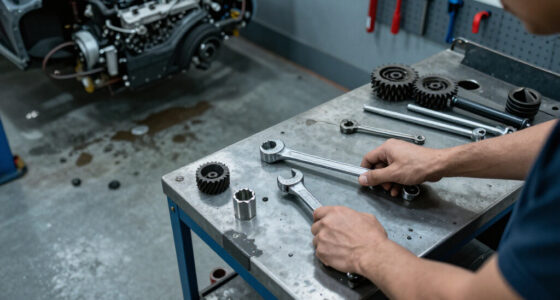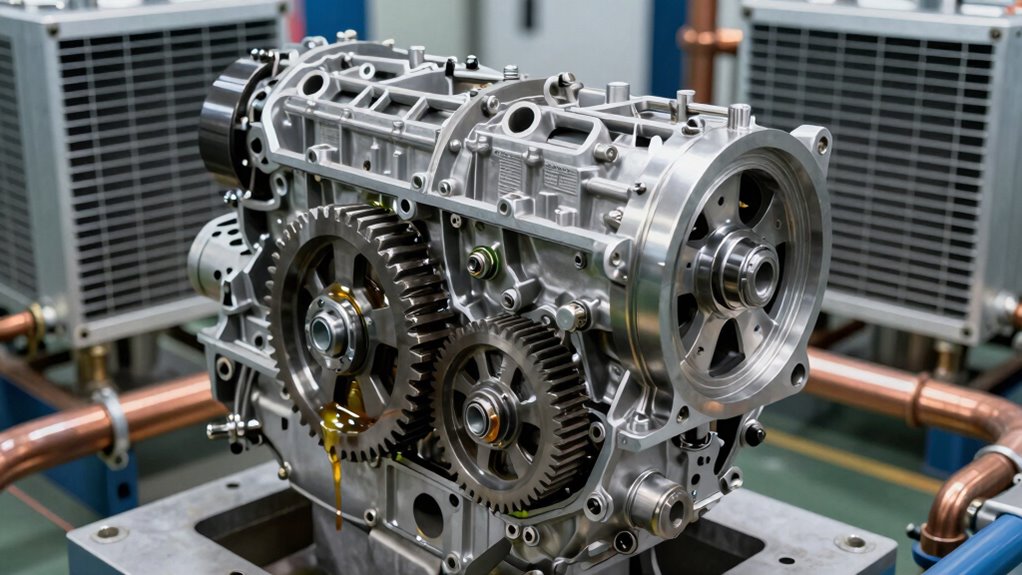
Cooling alone won’t solve mechanical losses because these issues come from material fatigue, design flaws, and friction, which temperature reductions can’t fix. Lowering the temperature may slow deterioration but doesn’t prevent wear from cyclic stresses or improve component design. In fact, excessive cooling can make materials more brittle, increasing internal stresses. To reduce mechanical losses effectively, you need better materials, proper maintenance, and smarter engineering—so explore these solutions to get a clearer picture.
Key Takeaways
- Mechanical losses like friction and misalignment are unaffected by temperature reductions.
- Cooling can introduce material brittleness and internal stresses, worsening fatigue.
- Fatigue and wear result from cyclic stresses, not temperature, requiring better materials and design.
- Thermal management addresses heat-related issues but does not eliminate fundamental mechanical inefficiencies.
- Effective loss reduction depends on engineering improvements, not solely on lowering temperatures.
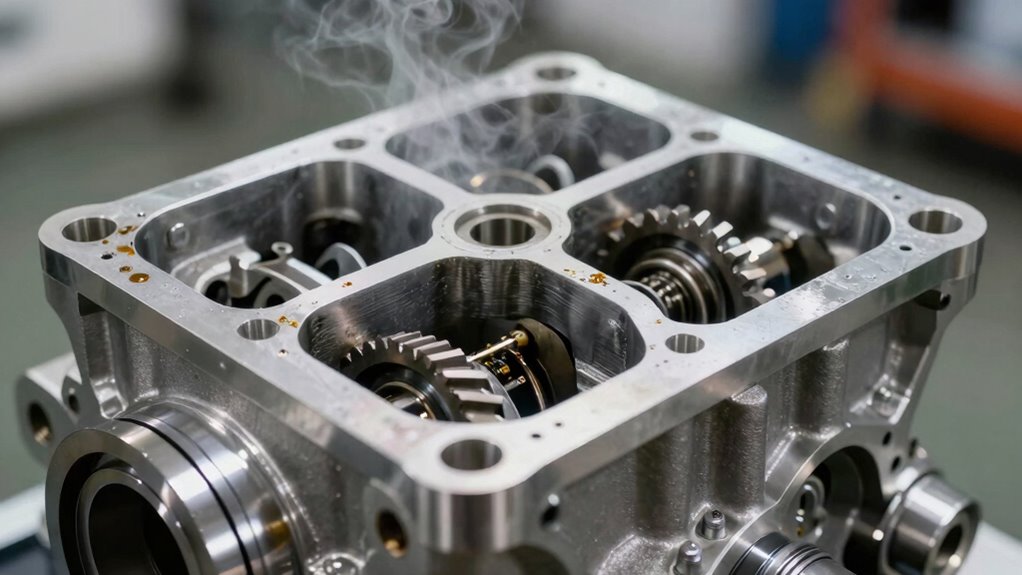
Many assume that cooling mechanical systems can reduce energy losses, but in reality, lowering temperature often doesn’t make a significant difference. While cooling is a common strategy to improve efficiency, it primarily targets heat-related issues rather than addressing the fundamental sources of mechanical inefficiencies. These losses are often rooted in the design and materials used within the system. As you explore thermal management, you’ll find that simply reducing temperature doesn’t necessarily prevent wear and tear on components, especially when material fatigue is involved. Material fatigue occurs over time as materials experience cyclic stresses, leading to microcracks and eventual failure. Cooler temperatures might slow down some degradation processes, but they don’t eliminate the root causes of fatigue caused by repeated mechanical stress. Additionally, understanding the material properties involved can help in selecting components better suited for long-term durability under cyclic loads.
In fact, focusing solely on thermal management can sometimes be counterproductive. When you lower temperatures, you might inadvertently introduce other problems like increased brittleness in certain materials, which can accelerate fatigue and failure. The thermal contraction of components can create additional stresses, especially if different materials expand and contract at different rates. This mismatch can lead to internal strain, further contributing to material fatigue. Consequently, effective management of mechanical losses involves understanding the interplay between thermal effects and the physical properties of materials.
You should recognize that many mechanical losses stem from friction, misalignment, and inherent design flaws, which cooling doesn’t address. For example, reducing temperature doesn’t prevent wear caused by frictional forces or vibrations. Instead, these issues require precise engineering, better lubrication, and improved component design. When you consider the longevity of a mechanical system, you realize that optimizing material selection for fatigue resistance and implementing robust maintenance protocols are more impactful than simply cooling the system. Proper thermal management can help control temperature-related issues, but it shouldn’t be mistaken for a cure-all for mechanical losses.

Plastic Round Bar, Nylon-Nylatron GSM, 3.5" Diameter, 48" Length, OnlineMetals
- Material: Nylon-Nylatron GSM
- Diameter: 3.5 inches
- Length: 48 inches
As an affiliate, we earn on qualifying purchases.
As an affiliate, we earn on qualifying purchases.
Frequently Asked Questions
How Can Mechanical Losses Be Reduced Without Cooling?
You can reduce mechanical losses without cooling by optimizing lubrication strategies to minimize friction and wear. Regularly maintaining and selecting appropriate lubricants guarantees smoother operation. Additionally, implementing vibration mitigation techniques helps prevent energy loss caused by unwanted vibrations. These approaches improve efficiency, decrease mechanical losses, and keep your machinery running smoothly without relying solely on cooling methods.
What Are the Signs of Mechanical Losses in Machinery?
You’ll notice mechanical losses through increased vibration levels detected via vibration analysis, which indicate imbalances or misalignments. Additionally, abnormal heat or noise may signal friction issues. To address these signs, you should review and optimize lubrication strategies, ensuring proper lubrication to reduce friction and wear. Regular monitoring with vibration analysis helps catch losses early, preventing further damage and maintaining machinery efficiency.
Are Certain Materials More Prone to Mechanical Losses?
Did you know that some materials experience up to 50% more mechanical losses than others? You’ll find that materials with higher susceptibility to mechanical losses often have lower inherent damping, making them less ideal for high-precision machinery. Metals like aluminum tend to be more prone to these losses, while composites and certain alloys offer better resistance. Choosing materials with lower susceptibility and higher inherent damping helps reduce mechanical losses effectively.
How Do Mechanical Losses Affect Long-Term Equipment Performance?
Mechanical losses can considerably reduce your equipment’s long-term performance by causing wear and inefficiency. Implementing proper lubrication strategies minimizes friction, slowing deterioration. Regular vibration analysis helps you detect early signs of mechanical issues, preventing costly failures. By addressing these losses proactively, you guarantee smoother operation, extend equipment lifespan, and uphold ideal performance over time. Consistent monitoring and maintenance are key to combating the negative effects of mechanical losses on your machinery.
Can Mechanical Losses Be Completely Eliminated?
Mechanical losses can’t be completely eliminated because frictional forces and material fatigue are inherent to moving parts. These factors cause energy dissipation over time, leading to wear and inefficiencies. While regular maintenance and improved materials can reduce these losses considerably, you won’t fully remove them. Instead, focus on minimizing friction and monitoring material wear to extend equipment lifespan and optimize performance as much as possible.

Starrett Tool and Instrument Oil – Extra-Fine Lubricant – Ideal for Measuring Tools, Precision Instruments and Light Machinery – 4 fl. oz – 1620
- Premium Instrument Oil: Meticulously crafted for precision tools
- Versatile Lubrication: Suitable for instruments and light machinery
- Maximum Protection: Protects against rust and corrosion
As an affiliate, we earn on qualifying purchases.
As an affiliate, we earn on qualifying purchases.
Conclusion
Even when cooling seems like the answer, some mechanical losses quietly linger, almost like a subtle whisper in the background. You might think you’ve tamed them, only to find they find new ways to persist. It’s a gentle reminder that not all challenges can be solved with temperature alone. Sometimes, embracing these hidden intricacies guides you toward deeper solutions, helping you navigate the delicate dance between effort and understanding in your quest for efficiency.

16 Pcs Rubber Isolation Pads Thick Rubber Washers 1.5 Inch OD 0.5 Inch ID 0.4'' Thick Mechanical Vibration Damping Pads Anti Vibration Isolation Isolator Washer
- Vibration Damping Pads: Absorbs shock and noise in equipment
- Versatile Applications: Use as foot pads, stoppers, and more
- Durable Rubber Material: Wear-resistant and long-lasting
As an affiliate, we earn on qualifying purchases.
As an affiliate, we earn on qualifying purchases.

Craftsman 262-Piece Mechanic Tool Set with 3-Drawer VERSASTACK Box, SAE and Metric Socket Set, Car and Motorcycle Tool Kit with Combination Wrenches and Spark Plug Sockets, 90-Tooth (CMMT45309)
- Low profile ratchet: Thinner head for tight spaces
- Complete mechanic set: Includes sockets, wrenches, and bits
- Tool count: 118 sockets, 3 ratchets, 24 wrenches, etc.
As an affiliate, we earn on qualifying purchases.
As an affiliate, we earn on qualifying purchases.