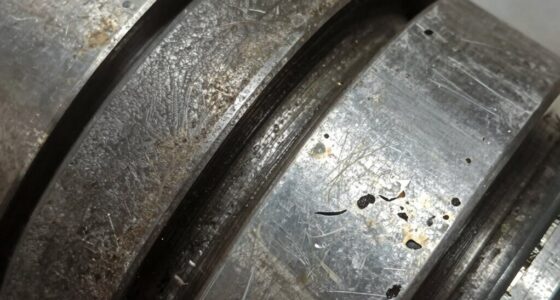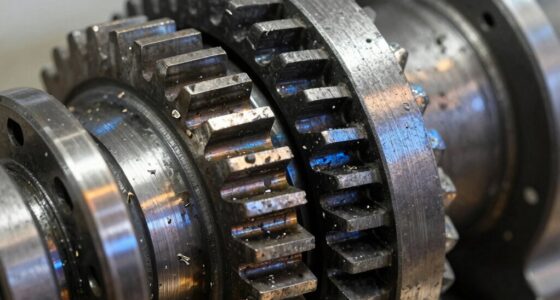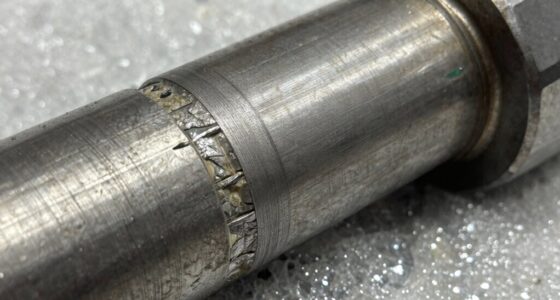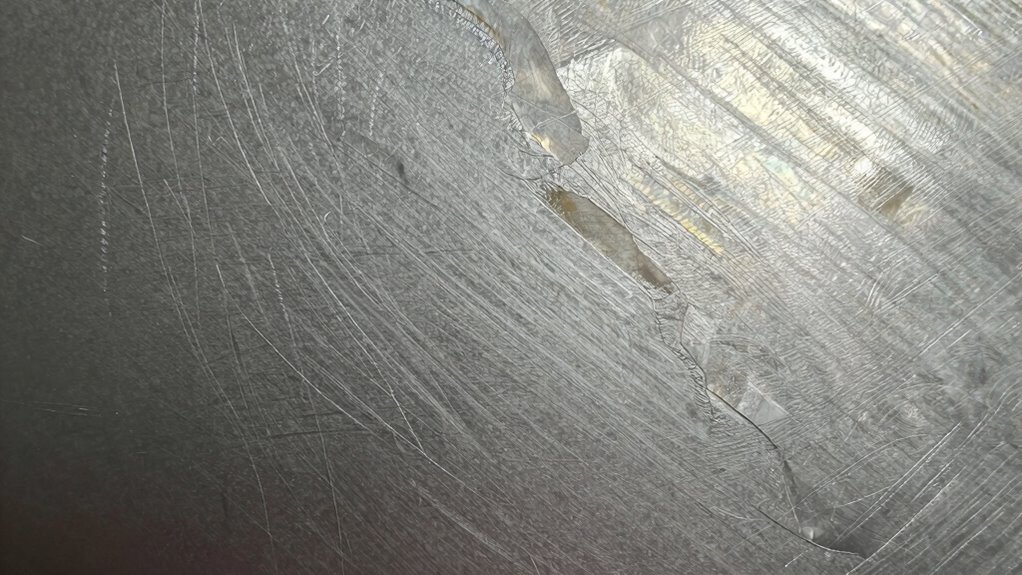

Scuffing occurs when surface asperities overheat and chemically bond under poor lubrication, leading to film failure and surface damage. Adhesive wear involves metals sticking together during sliding, causing transfer of material and gradual surface deterioration. While scuffing is driven by heat and lubrication breakdown, adhesive wear results from strong adhesive forces and surface compatibility. Understanding these differences helps in preventing surface failure; if you keep exploring, you’ll discover how proper coatings and lubrication can protect your components.

Get business pricing on garage and car supplies
- Business-only prices and quantity discounts
- Tax-exempt purchasing
- Multiple users, one account, clear invoices
Key Takeaways
- Scuffing is a surface damage caused by sudden, localized tearing of the material, often due to inadequate lubrication and high friction.
- Adhesive wear involves the transfer of material between surfaces caused by strong adhesive forces during sliding contact.
- Scuffing typically results in surface scoring or roughness, while adhesive wear leads to material transfer and surface deformation.
- Proper lubrication and surface coatings prevent both scuffing and adhesive wear, but their mechanisms differ.
- Scuffing occurs rapidly under extreme conditions, whereas adhesive wear develops gradually over time with repeated contact.
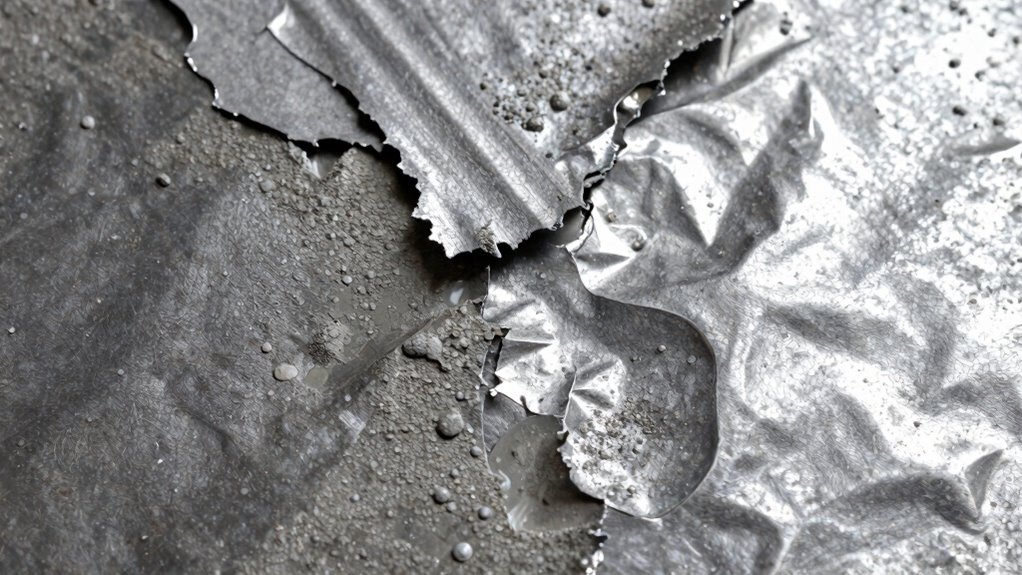
Understanding the difference between scuffing and adhesive wear is essential for maintaining the longevity of mechanical components. These two failure modes can substantially reduce equipment life if not properly managed. Recognizing how coating effects and lubrication impacts influence each type of wear helps you prevent costly damage and optimize performance.
Scuffing typically occurs when the surface conditions of moving parts are compromised, often due to inadequate lubrication or poor surface coatings. When the lubricant film is too thin or absent, direct metal-to-metal contact happens, leading to rapid surface deformation. Coating effects play a crucial role here; if protective coatings are worn down or damaged, the underlying metal becomes exposed, increasing susceptibility to scuffing. Similarly, lubrication impacts are vital—if lubricants fail to maintain a consistent film, the surfaces will grind against each other, generating heat and causing material transfer. This process results in a roughened surface and potential failure. To minimize scuffing, you should ensure proper lubrication application, regularly check the integrity of coatings, and select lubricants with appropriate viscosity. Proper lubrication reduces friction and heat buildup, while durable coatings act as a barrier, preventing direct contact and reducing the risk of scuffing. Additionally, understanding surface conditions is key to predicting and preventing this type of wear.
On the other hand, adhesive wear involves material transfer from one surface to another due to strong adhesive forces during sliding contact. Unlike scuffing, which often happens suddenly, adhesive wear tends to develop gradually over time. When surfaces are highly polished or have high surface energies, the adhesive forces between contacting materials increase. Coating effects become critical here—if coatings are not well-suited or are compromised, they may exacerbate adhesive tendencies by creating uneven surfaces or exposing reactive materials. Lubrication impacts adhesive wear substantially; insufficient or inappropriate lubricants can lead to increased metal-to-metal contact, fostering adhesion. Using lubricants with anti-adhesive properties, or adding boundary lubricants, can help reduce this type of wear. Proper surface preparation and choosing coatings that promote a low coefficient of friction are also effective strategies. When you understand these factors, you can better prevent the gradual buildup of material transfer and extend component life.
As an affiliate, we earn on qualifying purchases.
Frequently Asked Questions
Can Lubrication Prevent Both Scuffing and Adhesive Wear?
Lubrication can effectively prevent both scuffing and adhesive wear if you guarantee proper lubrication effectiveness and material compatibility. Using the right lubricant reduces friction and heat, minimizing the risk of surface damage. Additionally, selecting compatible materials helps prevent excessive wear and adhesion. Regular maintenance and choosing high-quality lubricants tailored to your equipment’s needs are key to protecting your machinery from both issues.
How Does Temperature Influence Scuffing Versus Adhesive Wear?
Temperature impacts scuffing more than adhesive wear because higher heat causes oxidation effects, weakening surfaces and increasing the risk of scuffing. Thermal expansion from elevated temperatures can also lead to misalignment and rough contact, promoting scuffing. Adhesive wear, however, is less sensitive to temperature changes, as it primarily depends on material properties and lubrication. Maintaining controlled temperatures helps prevent both types of wear, especially scuffing caused by thermal effects.
Are Certain Materials More Prone to One Type of Wear?
You’ll find that certain materials, like cast iron, are more prone to scuffing due to their high material susceptibility and wear tendencies under heavy loads. For example, in a hypothetical engine failure, metal parts with softer surfaces may experience adhesive wear, while harder surfaces resist scuffing. Understanding these tendencies helps you select materials wisely, reducing wear and extending component lifespan.
What Maintenance Practices Reduce the Risk of Scuffing?
To reduce the risk of scuffing, you should prioritize proper lubrication practices, ensuring surfaces are well-lubricated with the right type and amount of lubricant. Regularly inspect and maintain surface treatments, like coatings or hardening layers, to enhance wear resistance. Additionally, avoid abrupt load changes and excessive speeds, and keep equipment clean to prevent contaminants that can increase scuffing risk. These measures help maintain smooth contact and prolong equipment life.
How Can Manufacturers Detect Early Signs of Adhesive Wear?
You can detect early signs of adhesive wear through sensor analysis and wear particle analysis. Sensors monitor changes in vibration, temperature, and acoustic signals, revealing early wear patterns. Wear particle analysis examines lubricant samples for tiny metal fragments, indicating material transfer and surface breakdown. Combining these methods helps you identify adhesive wear early, allowing timely maintenance to prevent severe damage and prolong equipment life.
As an affiliate, we earn on qualifying purchases.
Conclusion
Understanding the difference between scuffing and adhesive wear helps you protect your machinery like a seasoned gardener tending to delicate plants. Think of scuffing as a scratch on your favorite book’s cover—more surface damage—while adhesive wear is like pages sticking together, causing deeper harm. By recognizing these signs early, you can prevent costly damage and keep your equipment running smoothly, much like a skilled captain steering through choppy waters—confident and in control.
As an affiliate, we earn on qualifying purchases.
wear-resistant coatings for machinery
As an affiliate, we earn on qualifying purchases.
As an affiliate, we earn on qualifying purchases.
Evergreen bestsellers Picks
bestsellers
As an affiliate, we earn on qualifying purchases.