
Boundary lubrication happens when two metal surfaces slide closely together with only a tiny layer of lubricant in between. This film is too thin to fully separate the metals, so they come into direct contact at some points. Molecules in the lubricant, especially additives, work to form protective layers that reduce metal-to-metal contact, friction, and wear. If you want to understand how these molecules interact and improve lubrication, keep exploring these essential mechanisms.
Key Takeaways
- Boundary lubrication occurs when two metal surfaces slide with a thin lubricant film insufficient to fully separate them.
- Lubricant molecules form a temporary protective layer that reduces direct metal contact.
- Additives enhance film strength by bonding with metal surfaces, preventing wear and metal-to-metal contact.
- Molecular interactions influence the lubricant’s ability to maintain a stable, low-friction boundary layer.
- Proper additives improve durability, reduce friction, and extend the lifespan of metal components under boundary conditions.
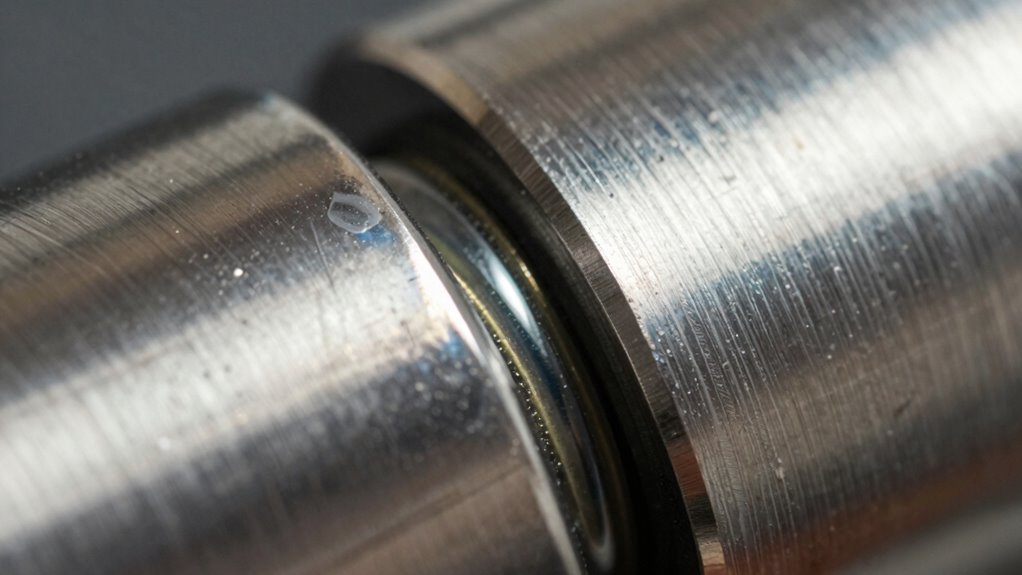
Boundary lubrication occurs when two surfaces slide against each other with a thin film of lubricant that is insufficient to fully separate them. In this state, the surfaces are close enough that their molecular interactions directly influence friction and wear. Instead of a complete barrier, the lubricant’s molecules form a delicate layer, which means that the behavior of these molecules determines how smoothly the surfaces move past each other. Your goal, thus, is to understand how the lubricant’s composition and molecular interactions impact this delicate balance, especially when metal surfaces are involved.
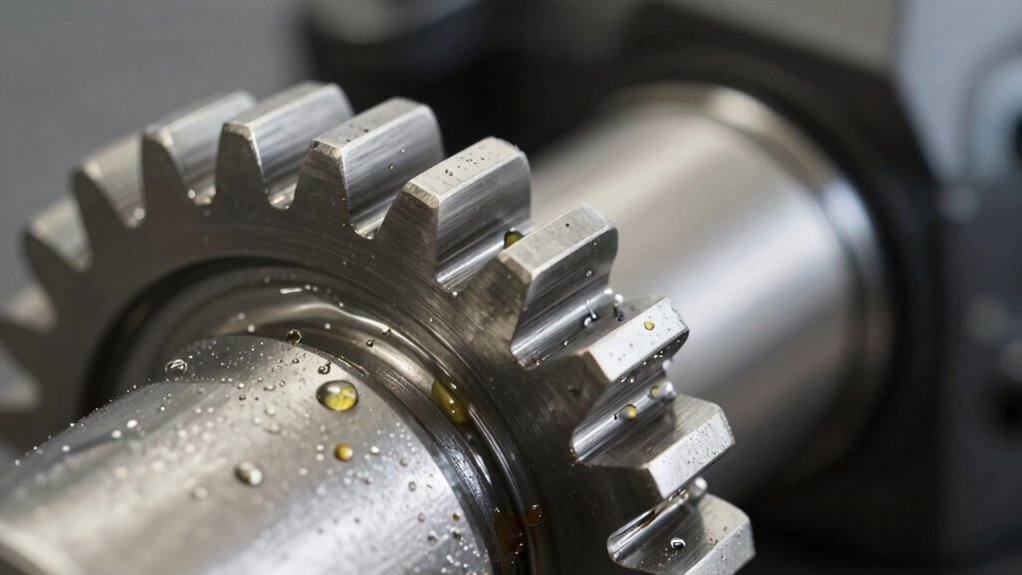
At the molecular level, the lubricant’s molecules interact with surface atoms, forming a temporary but essential barrier. These molecular interactions depend heavily on the chemical makeup of the lubricant, including any additives present. Additive performance becomes critical here because additives are engineered to enhance the lubricant’s ability to form strong, protective films. For example, some additives bond with metal surfaces, creating a barrier that reduces direct contact and minimizes wear. Others form anti-wear films under high pressure, preventing the metal surfaces from grinding against each other during operation. The effectiveness of these additives hinges on their ability to interact with the surface molecules and form a cohesive, durable layer. When well-designed, they improve the overall performance of the lubricant under boundary conditions by reducing friction and extending the lifespan of components.
Molecular interactions between additives and surface atoms create durable protective films, reducing wear and friction in boundary lubrication.
You’ll find that the molecular interactions also influence the lubricant’s viscosity, film strength, and ability to resist breakdown under stress. A lubricant with poor additive performance may fail to maintain a consistent protective layer when subjected to high pressure or temperature, leading to increased metal-to-metal contact. Conversely, high-quality additives optimize molecular interactions, ensuring that a stable, low-friction film remains intact even under demanding conditions. This stability is essential for preventing metal fatigue, scoring, or pitting caused by direct contact. Additionally, the choice of additive can impact the lubricant’s resistance to breakdown, which is crucial in maintaining boundary lubrication over extended periods.
Understanding how additives work at a molecular level allows you to select lubricants tailored for specific applications. Whether it’s engine oil, industrial grease, or specialized lubricants, the performance of additives directly influences boundary lubrication’s effectiveness. When additives perform well, they facilitate the formation of protective films that limit wear and friction. As a result, your machinery runs smoother, lasts longer, and requires less maintenance. By appreciating the role of molecular interactions and additive performance, you gain insight into how boundary lubrication can be optimized to protect metal surfaces during sliding contact, ensuring reliable operation even in challenging environments.

Ironton Air Operated Oil Transfer Pump - 5:1 Ratio, 4.76 GPM
5:1 gear ratio delivers a maximum flow rate up to 4.76 GPM
As an affiliate, we earn on qualifying purchases.
Frequently Asked Questions
How Can Boundary Lubrication Be Improved in Industrial Applications?
To improve boundary lubrication in industrial applications, you should focus on using advanced surface coatings that reduce metal-to-metal contact and enhance wear resistance. Additionally, selecting lubricants with ideal viscosity ensures a consistent film forms at contact points. Regular maintenance and monitoring fluid conditions help maintain effective boundary layers, preventing metal contact and reducing friction and wear, ultimately extending equipment lifespan and improving operational efficiency.
What Are Common Signs of Boundary Lubrication Failure?
You notice unusual noises, increased wear, or surface contamination—these are clear signs of boundary lubrication failure. When lubrication falters, metal surfaces start to contact directly, causing friction and damage. Watch for sudden increases in heat or vibration, as these warning signs indicate that the lubrication film isn’t enough to protect the surfaces. Catching these early can save equipment and prevent costly repairs.
How Does Temperature Affect Boundary Lubrication Performance?
Temperature critically impacts boundary lubrication performance through thermal effects and viscosity changes. As temperature rises, the lubricant’s viscosity decreases, making it less effective at reducing metal-to-metal contact. Conversely, colder temperatures increase viscosity, which can hinder flow and lubrication. You should monitor operating temperatures closely, as fluctuations can compromise boundary film strength, leading to increased wear and potential equipment failure. Proper lubricant selection and temperature management are essential for best boundary lubrication.
Are Synthetic Lubricants Better for Boundary Lubrication Than Mineral Oils?
Synthetic lubricants are generally better for boundary lubrication than mineral oils because of their synthetic advantages, such as better film strength, stability, and additive compatibility. Mineral limitations include poorer thermal stability and higher volatility, which can lead to reduced effectiveness under boundary conditions. You’ll find that synthetic lubricants often provide improved wear protection, lower friction, and longer-lasting performance in metal-to-metal contact scenarios.
What Role Do Additives Play in Boundary Lubrication Effectiveness?
Additives play a vital role in boundary lubrication by enhancing film formation and improving protective properties. You’ll find additive chemistry includes anti-wear agents, friction modifiers, and extreme pressure additives that create a thin, durable film between metal surfaces. This film minimizes direct contact, reducing wear and friction. When formulated effectively, additives help maintain lubrication under high pressure, ensuring smoother operation and longer equipment life.

LAUCO 3:1 Air-Operated Oil Pump Kit – Digital Meter Gun, 13ft Hose, Mobile Drum Trolley & Regulator – Complete System for SAE240 Oil Transfer from 55 Gallon Barrels (Not for Gasoline or Diesel)
ALL-IN-ONE OIL TRANSFER SYSTEM FOR 55-GALLON DRUMS: Complete setup includes a 3:1 air-operated oil pump, digital metered gun,...
As an affiliate, we earn on qualifying purchases.
Conclusion
Think of boundary lubrication like a thin protective shield between two metals. When they touch directly, it’s like sparks flying—wear and damage happen fast. But with boundary lubrication, a tiny film keeps them from grinding against each other, like a gentle hand guiding two dancers. Understanding this layer helps you grasp how machines run smoothly and last longer. Keep this in mind: boundary lubrication is your metal’s invisible armor, preventing the chaos of direct contact.
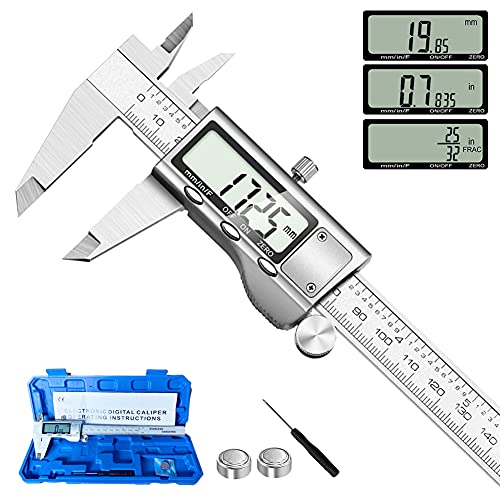
Digital Caliper Measuring Tool, Stainless Steel Vernier Caliper Digital Micrometer with Large LCD Screen, Easy Switch from Inch Metric Fraction, 6 Inch Caliper Tool for DIY/Household
【STAINLESS STEEL MATERIAL】The vernier caliper is made of high-strength stainless steel and is waterproof and dirt-proof. The service...
As an affiliate, we earn on qualifying purchases.

M14x1.5 Magnetic Oil Drain Plug, Magnetic Stainless Steel Oil Pan Drain Nut Bolt with 5PCS Copper Crush Washer Anti Leakage, Universal Leak-proof Replacement,Fits Most Cars,Motorcycles,Boats
HIGH QUALITY MATERIAL: Magnetic oil drain plugs are made of high quality strong stainless steel aluminum and powerful...
As an affiliate, we earn on qualifying purchases.