TL;DR
Elonroad and three partners have signed an MOU to evaluate automatic conductive charging for electric heavy vehicles in Singapore. The work will examine whether the technology can fit logistics operations, but no test results, deployment schedule or commercial rollout have been announced.
Elonroad and three Singapore partners have signed a memorandum of understanding to evaluate automatic conductive charging for electric heavy vehicles, testing whether the system can be integrated into logistics operations. The collaboration brings together NTU Singapore’s Energy Research Institute (ERI@N), ALBA W&H Smart City and Scania, but the announcement does not specify a test timetable or any planned commercial deployment.

Get business pricing on garage and car supplies
- Business-only prices and quantity discounts
- Tax-exempt purchasing
- Multiple users, one account, clear invoices
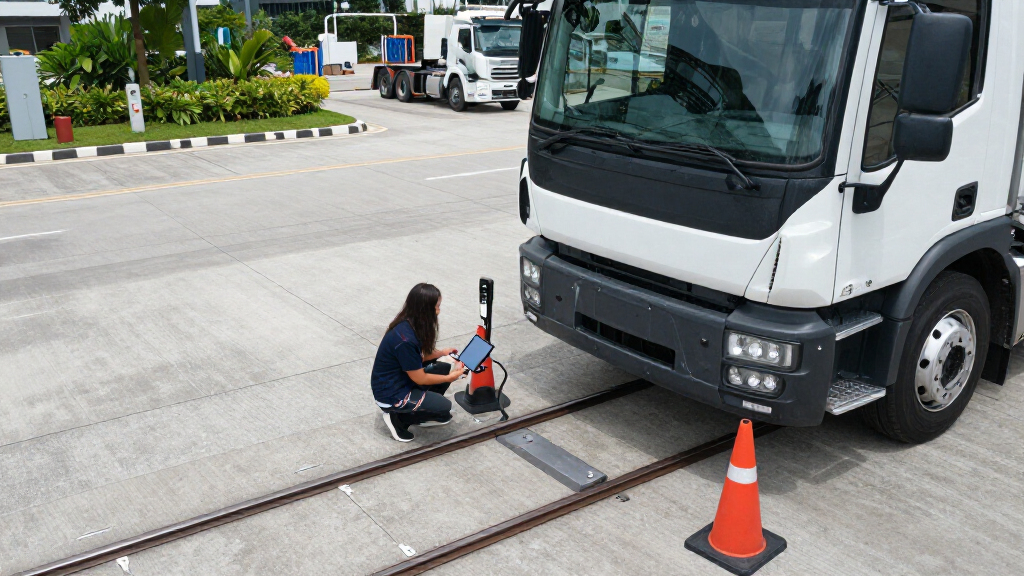
The planned evaluation concerns stationary charging: vehicles would connect to charging equipment automatically while stopped, rather than relying on a driver to plug in a cable. The partners describe the system as conductive, meaning it transfers power through physical electrical contact. The supplied announcement does not give technical specifications or explain the exact charging hardware and vehicle interface to be tested.
Each partner has a stated role. ERI@N will contribute research and compatibility testing; ALBA W&H Smart City will provide the operational environment for evaluation; and Scania will support installation on its vehicles. Elonroad is contributing the automated charging technology. The MOU sets out an evaluation collaboration, not confirmation that the system has passed testing or is ready for routine use.
The announcement frames the work around Singapore logistics operations and transport electrification. It does not report charging speeds, energy delivered, vehicle numbers, cost, reliability, or emissions results. No detailed test protocol, project budget or start date is provided in the source material.
Testing Charging in Logistics Operations
For heavy-vehicle operators, charging arrangements affect how electric trucks fit into daily schedules. An automatic connection at a suitable stop could reduce the need for drivers to handle charging cables and might allow charging to be incorporated into operational routines. Those are potential benefits to be tested, not outcomes established by this announcement.
The partnership also addresses a practical question beyond whether a charging device works in a laboratory: can it operate alongside real logistics activity and be compatible with vehicles used for that work? ERI@N’s testing role, ALBA’s operating environment and Scania’s vehicle support bring research and operational considerations into the evaluation. Results could inform whether further trials or deployment are justified, but no such next phase has been confirmed.
Products Worth Considering

Autel 50A Level 2 Hardwired EV Charger with 25 ft J1772 Cable

Chemical Guys 10-Piece Car Wash Kit with Foam Gun

Autel MaxiCOM MK900BT Bidirectional Automotive Diagnostic Scanner
As an affiliate, we earn on qualifying purchases.
The Partners’ Planned Roles
The announcement describes a collaboration among a technology company, a university research institute, an operations partner and a vehicle manufacturer. ERI@N is part of Nanyang Technological University, Singapore, and is contributing EV charging research and compatibility work. ALBA W&H Smart City is identified as the provider of the operational setting, while Scania will support fitting the system to its vehicles.
Elonroad CEO Karin Ebbinghaus presented the partnership as a way to bring research, technology and everyday operations together. ERI@N Executive Director Professor Madhavi Srinivasan described academia-industry partnerships as a means of testing and validating charging solutions. Those statements explain the partners’ aims; they do not constitute independent evidence of system performance or a commitment to wider adoption.
““Together with NTU, ALBA and Scania, we are bringing research, technology and everyday operations together in Singapore, with the ambition to make sustainable transport a more competitive choice.””
— Karin Ebbinghaus, CEO of Elonroad
Test Schedule and Results Pending
The announcement does not say when testing will begin, how long it will last, or how many vehicles and charging sites will be involved. It also gives no performance data, including charging power, connection reliability, safety findings, compatibility results or operating costs. The precise system design and the conditions under which vehicles will connect are not detailed.
It remains unclear what criteria will determine whether the technology is suitable for logistics use, whether the partners will publish results, and whether the MOU could lead to a larger pilot or commercial rollout. At this stage, the confirmed development is an agreement to evaluate the system, not a completed trial or proven operational deployment.
Evaluation Before Any Wider Rollout
The partners are expected to carry out the research, compatibility checks and operational evaluation described in the MOU. No public milestone or launch date was included in the source announcement, so the timing and sequence of testing remain unknown.
The next meaningful update would be details on the trial setup and its findings: which vehicles and sites were used, how consistently the connection worked, and whether the system met operational requirements. Any decision about expanding the trial or adopting the technology would depend on results that have not yet been reported.
Key Questions
What did Elonroad and its partners announce?
They signed an MOU to evaluate automatic conductive stationary charging for electric heavy vehicles in Singapore, with a focus on possible integration into logistics operations.
Which organizations are involved?
The partners are Elonroad, NTU Singapore’s Energy Research Institute (ERI@N), ALBA W&H Smart City and Scania.
How will the partners contribute?
ERI@N will support research and compatibility testing, ALBA W&H Smart City will provide an operating environment, and Scania will support installation on its vehicles. Elonroad is supplying the automated charging technology.
Has the system been proven or approved for commercial use?
The announcement does not report test results or approval for commercial use. It describes an evaluation agreement, and performance and deployment plans remain unconfirmed.
When will the tests take place?
The source announcement does not give a start date, duration or testing timetable.
Source: chargedevs.com