
TL;DR

Get garage and car supplies delivered free — and shop member deals
- Fast, free delivery on millions of items
- Access to Prime Big Deal Days deals on October 6–7
- Prime Video, Amazon Music and more included
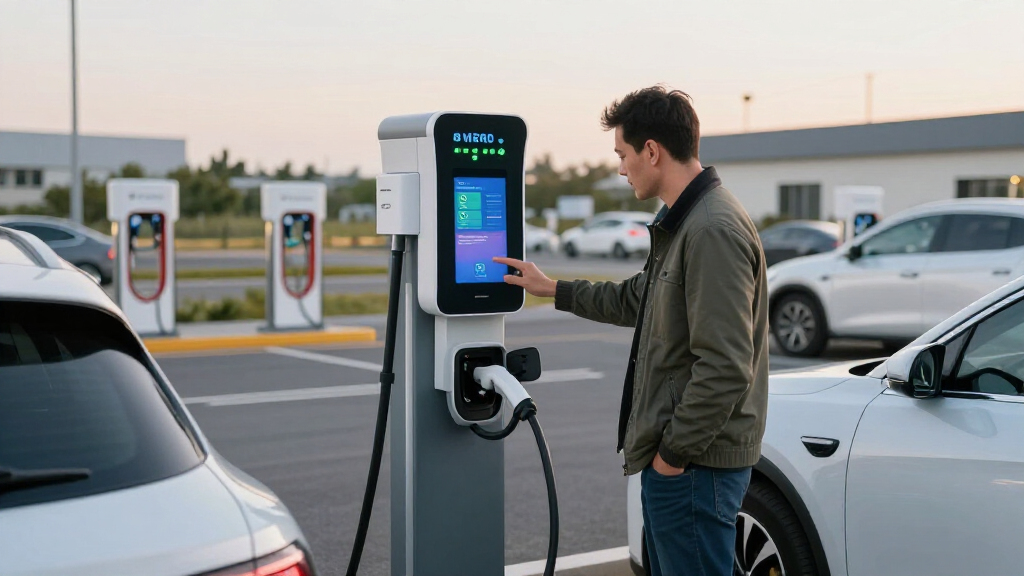
Ionna CEO Seth Cutler said the company must reach financial independence and profitability over time, arguing that EV charging infrastructure needs a for-profit model to endure. Ionna plans to grow its network from 80 sites at the start of the year, while exploring additional ways to earn revenue at some locations later, possibly beginning in 2027 or 2028.
Ionna CEO Seth Cutler said the charging network must become financially independent and profitable over time, arguing that for-profit charging infrastructure is necessary for the long-term survival of electric vehicles. In an interview on The Drivecast, Cutler also described a goal to triple Ionna’s network from the 80 sites it had at the start of the year.
“This is a for-profit business,” Cutler said of Ionna, which is backed by automakers and is building a network of EV fast-charging sites in the United States. He said the company has to reach financial independence and profitability over time. The report did not disclose how much money the automakers have invested or when Ionna expects to stop relying on that funding.
Cutler described Ionna’s expansion as a priority, with partnerships involving convenience-store operators including Circle K, Wawa, Sheetz and Casey’s. He said his goal was to triple the size of the network during the year from a starting point of 80 sites. The interview did not specify a precise deadline, define how Ionna counts a site, or give a current total that would confirm whether the goal has been met.
Ionna is also preparing some locations for possible future uses beyond charging. Cutler said the company has purchased land at several dozen sites, built amenities such as buildings with vending machines and bathrooms, and arranged some ground leases that could allow future additions or co-tenants. He said developing other revenue sources is not a current focus; the company is concentrating on driver experience and charging quality while expanding.
Profitability Shapes Ionna’s Expansion
Ionna’s plans hinge on more than installing chargers: the company must attract drivers and generate enough revenue to support ongoing operations and growth. Cutler’s comments make clear that profitability is a stated business objective, not a result the company has already achieved. The amount of time and capital needed to reach that point remains unknown.
The issue matters to drivers because the durability and reach of public charging networks affect whether EVs are practical for trips beyond home charging. Cutler framed the link strongly, saying infrastructure that cannot survive as a business puts EV adoption at risk. That is his assessment, not independent evidence that EV sales or adoption would stop if a particular network failed.
For Ionna’s automaker backers, a viable charging business could help sustain a network intended to support EV drivers. At the same time, Ionna is competing in a market where drivers weigh station availability and charging experience, and where other networks, including Tesla’s Supercharger system, already operate at scale. The interview offered no financial data with which to compare Ionna’s economics to competitors.
As an affiliate, we earn on qualifying purchases.
Ionna was formed as a joint venture by seven automakers—BMW, Mercedes-Benz, General Motors, Honda, Hyundai, Kia and Stellantis—to build a U.S. charging network. Toyota joined about a year later, according to The Drive’s report. The venture combines automaker support with a business model that Cutler says must ultimately stand on its own financially.
The company’s approach includes both partnerships with existing retailers and sites where Ionna has acquired land or built amenities itself. Cutler described those property investments as groundwork for options the company may develop later, rather than a shift away from its current focus on charging operations and driver quality.
Other companies are also building public fast-charging networks. The source report cited Rivian’s Adventure Network as another effort and compared its size with Ionna’s and Tesla’s. Those figures were described as a snapshot from the summer, not a current, independently verified count, so they do not establish the networks’ relative sizes today.
As an affiliate, we earn on qualifying purchases.
Funding, Revenue and Site Counts
The interview did not disclose Ionna’s investment total, operating costs, revenue, current financial position, or a timetable for reaching profitability. It is also unclear how much revenue the company earns from charging itself and what share may eventually come from retail, amenities, leases or other uses of its properties.
Cutler’s target to triple the network was expressed relative to 80 sites at the start of the year, but the source material does not state the interview date or a current count. It therefore does not confirm whether the target has been achieved. The company’s exact expansion schedule and the number of sites currently operating are not specified.
Cutler said other ways to monetize sites could receive investment in 2027, 2028 or later, while stressing that they are not a focus now. The details and expected financial contribution of those plans remain unknown. His broader assertion that EVs will not survive without profitable charging is an attributed opinion; the material provides no analysis establishing that outcome.
EV charging station vending machine
As an affiliate, we earn on qualifying purchases.
As an affiliate, we earn on qualifying purchases.
Network Growth and Later Site Investments
The near-term marker is whether Ionna can expand from its stated starting point of 80 sites toward Cutler’s goal of tripling the network during the year. The source material does not provide a dated progress update, so a subsequent company count or announcement would be needed to assess that goal.
For now, Cutler said Ionna is concentrating on scaling charging and improving the experience for drivers. He said the company could begin putting resources into additional ways to monetize or add value at locations in 2027, 2028 or beyond. Ionna has not specified which sites will receive those investments, what they will include, or when it expects to reach profitability.
As an affiliate, we earn on qualifying purchases.
Key Questions
What did Ionna’s CEO say about EV charging?
Seth Cutler said charging infrastructure must operate as a for-profit business to survive over time, and he argued that EVs depend on durable charging networks. That is his assessment; the interview did not provide evidence that EV adoption would end if a network failed.
Is Ionna profitable now?
The source material does not say that Ionna is profitable. Cutler said the company needs to reach financial independence and profitability over time, without giving a timetable or financial figures.
How quickly does Ionna plan to expand?
Cutler said his goal was to triple the network during the year, measured from 80 sites at the beginning of the year. The report does not give a current site count or confirm whether that target has been reached.
What other revenue sources might Ionna pursue?
Cutler cited amenities, possible buildings and co-tenants at some locations as options for later. He said the company could begin investing resources in other ways to monetize sites in 2027, 2028 or beyond, but that work is not a current focus.
Which automakers back Ionna?
The Drive report lists BMW, Mercedes-Benz, General Motors, Honda, Hyundai, Kia and Stellantis as the original joint-venture participants, with Toyota joining about a year later.
Source: rss
Halloween Picks
halloween
As an affiliate, we earn on qualifying purchases.