TL;DR

Get business pricing on garage and car supplies
- Business-only prices and quantity discounts
- Tax-exempt purchasing
- Multiple users, one account, clear invoices
California has expanded its program allowing more EV owners to get paid for feeding electricity back into the grid. The move aims to enhance grid stability and promote renewable energy use. Details on eligibility and program scope are still emerging.
California has announced an expansion of its vehicle-to-grid (V2G) program, allowing a larger number of electric vehicle (EV) owners to earn payments by supplying power back to the state’s electrical grid. This development aims to increase energy resilience and support renewable energy integration, making EV ownership more financially beneficial for participants.
The California Public Utilities Commission (CPUC) approved new rules that broaden eligibility for the state’s existing EV-to-grid pilot programs. Previously limited to a small group of fleet operators and select EV owners, the program now opens participation to a wider base, including individual consumers with compatible EVs. The initiative incentivizes EV owners to provide grid services during peak demand periods or emergencies, earning credits or payments in return. The expansion is part of California’s broader strategy to leverage electric vehicles as distributed energy resources (DERs) that can help stabilize the grid and reduce reliance on fossil fuels.According to the CPUC, the new rules will allow more EV owners to participate in pilot programs run by utilities such as Pacific Gas & Electric (PG&E), Southern California Edison (SCE), and San Diego Gas & Electric (SDG&E). These utilities are expected to develop or expand V2G projects that enable EV batteries to discharge electricity back into the grid when needed, such as during heatwaves or other peak load times. The program aims to demonstrate the economic viability of V2G technology and its potential to support California’s renewable energy goals.Officials emphasize that the expanded program will include incentives for EV owners, potentially offsetting charging costs and providing additional income streams. The move aligns with California’s climate policies, which aim to electrify transportation and increase grid flexibility to accommodate higher renewable penetration. While the program is still in pilot phases, industry experts see it as a significant step toward mainstreaming vehicle-to-grid integration.Details regarding the specific eligibility criteria, compensation rates, and the number of EV owners expected to participate are still being finalized. The utilities and regulators have indicated that the program will prioritize equitable access, including outreach to underserved communities. The rollout is expected to occur gradually over the coming months, with full-scale participation anticipated by late 2024 or early 2025.Why Expanded EV-to-Grid Payments Matter for California
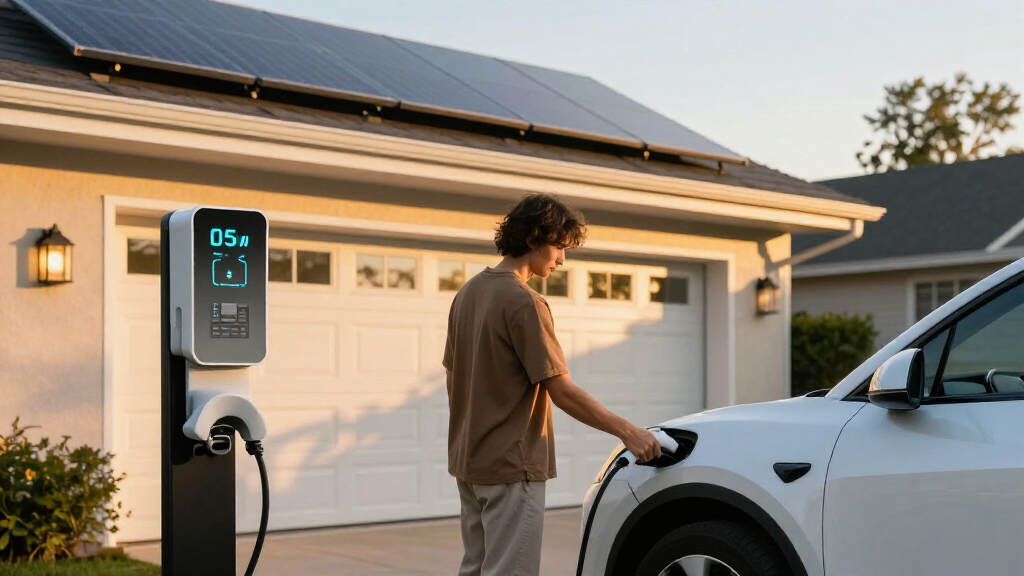
This expansion represents a notable shift in California’s energy strategy, recognizing electric vehicles as vital assets in managing grid stability and supporting renewable energy integration. By enabling more EV owners to get paid for feeding power back into the grid, the state aims to reduce peak demand pressures, lower greenhouse gas emissions, and accelerate the transition to cleaner transportation. The initiative also offers financial incentives to EV owners, potentially making electric vehicle ownership more economically attractive. As California pushes toward its ambitious climate targets, leveraging EV batteries as distributed energy resources could become a key component of its energy infrastructure. However, the scalability of V2G technology and the long-term economic viability remain subjects for ongoing assessment.EV vehicle-to-grid compatible charger
As an affiliate, we earn on qualifying purchases.
As an affiliate, we earn on qualifying purchases.
California’s Progress in Vehicle-to-Grid Technology and Policy
California has been a leader in promoting electric vehicles and renewable energy policies. The state’s first V2G pilot programs began in 2021, primarily involving fleet vehicles and large-scale testing. The recent expansion reflects a broader policy shift to integrate EVs more deeply into the grid as distributed energy resources. The California Energy Commission and CPUC have issued multiple reports highlighting the potential benefits of V2G, including grid balancing, emergency backup power, and renewable energy smoothing. Previous pilot programs faced limitations in scope and participant eligibility, which the new rules aim to address. The move aligns with California’s goal to have 100% clean electricity by 2045 and to electrify all transportation sectors.“Expanding vehicle-to-grid participation is a critical step in making California’s energy system more resilient and sustainable. We are unlocking the potential of EV batteries to serve as a vital resource for our grid.”
— California Public Utilities Commission Chair Alice Reynolds
home EV bidirectional charging station
As an affiliate, we earn on qualifying purchases.
As an affiliate, we earn on qualifying purchases.
Details on Participant Eligibility and Compensation Still Evolving
It is not yet clear how many EV owners will be able to participate initially, nor the specific compensation rates or technical requirements. The full scope of the program’s rollout and the criteria for equitable access are still being finalized by regulators and utilities.As an affiliate, we earn on qualifying purchases.
Next Steps in Program Expansion and Monitoring Outcomes
Utilities will develop detailed implementation plans over the next few months, with pilot projects launching gradually. Monitoring and evaluation of program impacts, including participant feedback and grid performance, are expected to inform future policy adjustments. Full-scale deployment could occur by late 2024 or early 2025, with ongoing efforts to expand access and refine incentives.As an affiliate, we earn on qualifying purchases.
Key Questions
Who qualifies to participate in the expanded EV-to-grid program?
The program is open to individual EV owners with compatible vehicles and charging equipment, with eligibility criteria being finalized by utilities and regulators as part of the rollout process.
How much can EV owners earn by participating?
While specific compensation rates are still being determined, pilot programs have offered payments that offset charging costs and provide additional income during grid peak times. Exact figures will be announced as the program develops.
Will this program be available statewide?
The initial expansion is focused on utility service areas in California, with plans to scale up as pilot results demonstrate viability and infrastructure is expanded.
Are there technical requirements for participating EVs?
Yes, participating vehicles typically need to have bidirectional charging capability, which allows power to flow both ways. Details will be provided by utilities as they implement the program.
What are the environmental benefits of this program?
By enabling EV batteries to support the grid, California aims to reduce reliance on fossil fuel-based power plants, lower greenhouse gas emissions, and facilitate a higher share of renewable energy sources.
Source: rss
Columbus Day / Indigenous Peoples' Day Picks
long weekend sales
As an affiliate, we earn on qualifying purchases.