
TL;DR

Get business pricing on garage and car supplies
- Business-only prices and quantity discounts
- Tax-exempt purchasing
- Multiple users, one account, clear invoices
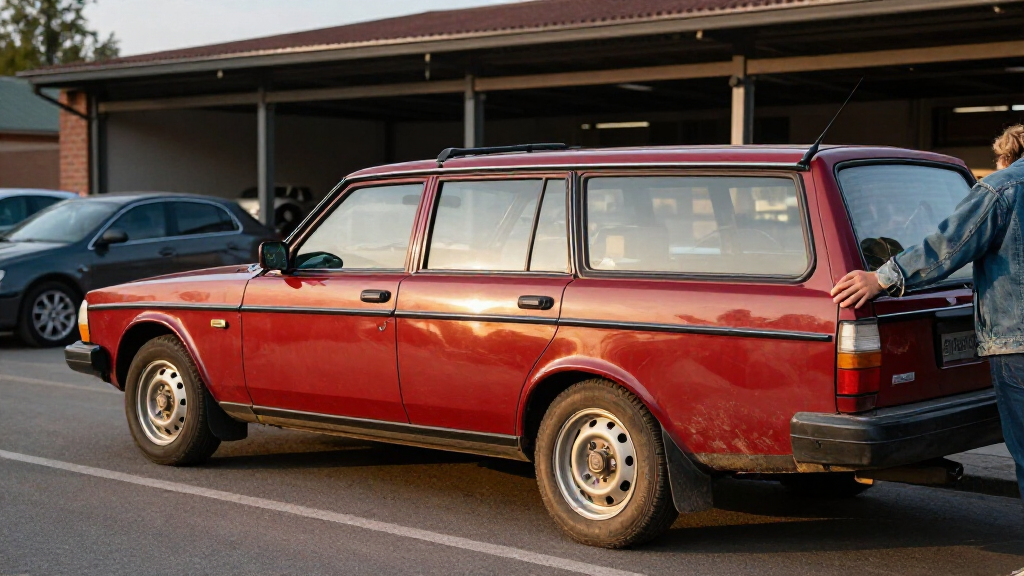
Volvo’s 245 Transfer was a factory-built, extended version of the 240 wagon, produced from 1977 to 1982 for work including taxi, ambulance and shuttle service. The car measured about 220 inches long and could seat seven in a passenger layout; a school-bus configuration reportedly accommodated up to 11 children. The reported production total is 280, while exact factory powertrain details remain unclear.
Volvo built a stretched version of its 240 wagon, the 245 Transfer, for taxi, ambulance, school transport and shuttle work, creating a roughly 220-inch-long vehicle far larger than the standard wagon. The model was produced from 1977 to 1982, and The Drive, citing a reported production figure, says just 280 were made.
The 245 Transfer was not simply a standard wagon modified after leaving the factory. The Drive describes it as a factory-built model, unlike vehicles that were later converted by specialist coachbuilders. Its Swedish brochure presented the car as a taxi, while the model was also marketed for rural ambulance and school transport duties, according to the report.
At about 220 inches long, it was around 30 inches longer than a standard 240 wagon, which the source puts at roughly 190 inches. The added space supported several layouts: a passenger version could seat seven, while a school-bus configuration reportedly carried as many as 11 children, in addition to the driver. Other uses included airport shuttles and sightseeing coaches.
Volvo also offered versions without the extra passenger seats. These left a cargo area described by The Drive as about six feet deep. The report says the Transfer was even available as a hearse. It notes that the extra length came with practical drawbacks: Teknikens Värld reported that the car was harder to maneuver and cost more to fuel in frequent urban driving.
A Wagon Built for Working Routes
The 245 Transfer shows how a wagon could serve as a purpose-built commercial and public-service vehicle, rather than only as family transport. Its range of configurations—from taxi and shuttle to school transport, ambulance and hearse—reflects a period when extended wagons filled roles now often associated with vans or large SUVs.
For collectors and Volvo enthusiasts, the reported production total of 280 vehicles helps explain the model’s rarity. That number is reported rather than supported here by production records, so it should be treated as an attributed figure, not a verified factory count. Still, the Transfer’s unusual factory configuration and multiple working uses distinguish it from the more familiar 240 wagon.
As an affiliate, we earn on qualifying purchases.
How Volvo Extended the 240
The 245 Transfer was built during the 240 series’ early years. The standard wagon already offered a long roof and practical cargo space, but the Transfer added substantial length to serve operators needing more passenger capacity. Its approximately 220-inch body was close in length to some modern full-size utility vehicles, although it was a wagon-based design from a different era.
Power was less imposing than the dimensions. The source says most 240s of the period used a 2.1-liter four-cylinder producing about 100 horsepower. Production of the Transfer overlapped with the introduction of a diesel engine to the 240 range, but the available account does not establish which engines were fitted to every Transfer or whether there was one standard powertrain.
“The added length made it both difficult to maneuver and more expensive to fill up if you drove it around town a lot.”
— The Drive, citing Teknikens Värld
As an affiliate, we earn on qualifying purchases.
Production and Engine Records
The source does not provide a factory production ledger to confirm the reported 280-unit total. It also says there is no consistent documentation in the material on exactly which powertrains were installed when individual 245 Transfers left the factory. The suggestion that Volvo would have offered engines with more torque is presented as an inference, not a confirmed specification.
The account does not identify a specific surviving vehicle, sale, auction or new company announcement. This is a retrospective report about the model, rather than news of a current production, ownership or market event.
extended wagon vehicle conversion kit
As an affiliate, we earn on qualifying purchases.
As an affiliate, we earn on qualifying purchases.
No New Model Update Reported
The supplied report describes the 245 Transfer’s history and does not announce a new development or future milestone. Confirmation of the production figure or the model’s factory engine options would require further documentation, such as Volvo records, period specifications or additional reporting. Until then, the rarity estimate and powertrain details should remain attributed to the available account.
Volvo 245 Transfer collector items
As an affiliate, we earn on qualifying purchases.
As an affiliate, we earn on qualifying purchases.
Key Questions
What was the Volvo 245 Transfer?
It was a factory-stretched Volvo 240 wagon built for uses such as taxi, ambulance, school transport and passenger shuttle work.
When was the 245 Transfer built?
The Drive reports that Volvo produced the model from 1977 to 1982.
How many people could it carry?
A passenger layout could seat seven. The school-bus configuration reportedly accommodated up to 11 children, plus the driver.
How many were made?
The report gives a total of 280, but describes that figure as reported. The supplied material does not include factory records confirming it.
What engine did the Volvo 245 Transfer use?
The exact factory powertrain for each Transfer is unclear. The source notes that many 240s used a 2.1-liter four-cylinder rated at about 100 horsepower, but it does not establish that as the engine in every 245 Transfer.
Source: rss
Halloween Picks
halloween
As an affiliate, we earn on qualifying purchases.