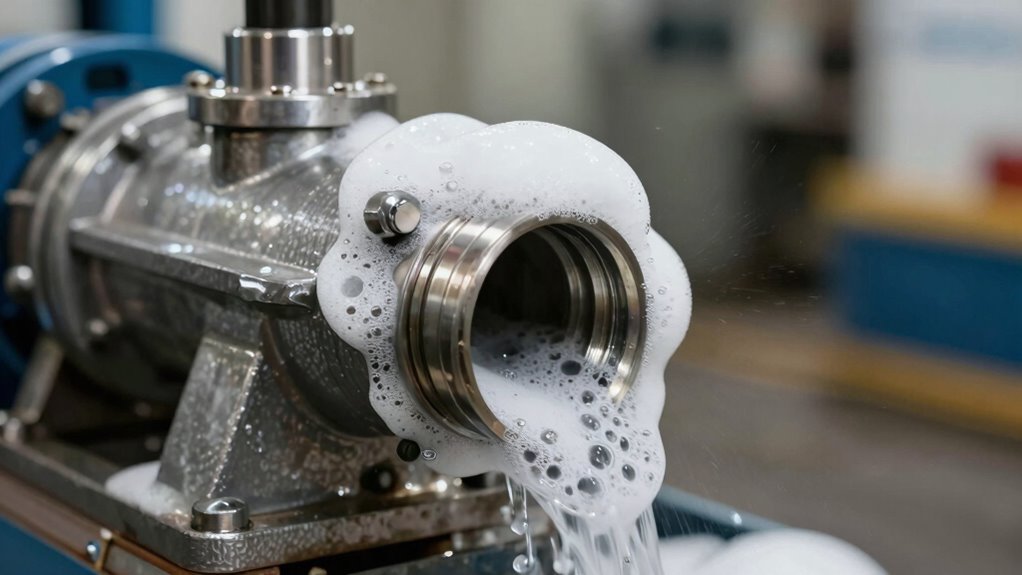

If your pumps suddenly get loud, foam and air entrapment in your gear oil are likely culprits. Foam forms when air gets trapped during handling or operation, disrupting lubrication and causing noise. Air release properties determine how quickly trapped air escapes, preventing aeration issues. Understanding the difference helps you select the right oils and maintain system health. Keep exploring to discover how to effectively prevent foam buildup and keep your equipment running quietly.
Listen free for 30 days with Audible
Thousands of audiobooks and originals — cancel anytime.
As an affiliate, we earn on qualifying purchases.
Key Takeaways
- Foam resistance prevents bubble formation during operation, reducing noise caused by unstable lubrication.
- Air release ability allows trapped air to escape quickly, preventing air pockets that cause loud pump noise.
- Poor air release properties lead to air entrapment, creating cavitation and increased pump noise.
- Inadequate foam resistance causes bubble buildup, disrupting flow and amplifying loudness in gear systems.
- Properly formulated oils with high air release and foam resistance minimize aeration-related noise and improve pump performance.
As an affiliate, we earn on qualifying purchases.
Why Does Foam Form in Gear Oils and How Does It Affect Pumps?

Foam forms in gear oils primarily because air becomes trapped during handling, agitation, or operation, creating bubbles within the lubricant. This trapped air can lead to hydraulic noise, making pumps sound louder than usual. When foam develops, it disrupts the oil’s viscosity stability, causing inconsistent lubrication. As the foam compresses or collapses, it can create pressure fluctuations that result in vibration and noise. Additionally, foam reduces effective lubrication, increasing wear on gears and bearings. Maintaining proper air release properties in your gear oil helps suppress foam formation, ensuring smooth pump operation. By choosing oils with good viscosity stability and low tendency to foam, you minimize hydraulic noise and safeguard your equipment’s reliability and lifespan. Proper fluid management techniques, such as avoiding overfilling and ensuring correct handling, further help prevent foam development and extend equipment life. Understanding the foam characteristics in gear oils enables better selection of lubricants tailored to your operational needs. Optimizing air release properties in gear oils is essential for preventing foam buildup and maintaining efficient equipment performance. Furthermore, selecting oils with superior air release qualities can significantly reduce foam formation and improve overall system stability. Regular adherence to oil maintenance practices also plays a crucial role in controlling foam levels and ensuring consistent lubrication.
As an affiliate, we earn on qualifying purchases.
How Air Entrapment Causes Loud Pumps and Vibration?

When air becomes trapped in gear oils, it can cause your pumps to produce loud noises and vibrations. Air pockets disrupt the smooth flow of oil, creating uneven pressure and fluctuating fluid movement. These pockets generate irregular vibration frequencies, which can amplify noise levels and cause the pump to rattle or shake more than usual. The presence of trapped air prevents efficient lubrication, leading to increased mechanical stress on pump components. As the air pockets move through the system, they cause sudden jolts and oscillations that contribute to noise and vibration. Over time, this can lead to premature wear or even failure of the pump. Proper fluid management and regular maintenance are essential to prevent air entrapment and ensure smooth pump operation. Recognizing and addressing air entrapment is vital to maintaining quiet, efficient, and reliable pump operation. Implementing air release mechanisms can significantly reduce these issues and extend equipment lifespan. Additionally, understanding the causes of air entrapment can help in designing more effective solutions for preventing these problems. Ensuring proper system design and vapour removal techniques can further minimize the risk of air entrapment and improve overall system performance.
industrial gear oil with low foam
As an affiliate, we earn on qualifying purchases.
As an affiliate, we earn on qualifying purchases.
Foam Resistance vs. Air Release: What’s the Difference in Gear Oils?

Understanding the difference between foam resistance and air release is essential for maintaining ideal gear oil performance. Foam resistance refers to the oil’s ability to resist foam formation during operation, often achieved through chemical additives that suppress foam bubbles. Air release, on the other hand, measures how quickly entrapped air escapes from the oil, which is vital for preventing pump noise and vibration. While both properties influence equipment reliability, they serve different functions. Proper chemical additives improve foam resistance without compromising viscosity stability, ensuring the oil remains consistent under varying temperatures and loads. Conversely, good air release characteristics help maintain smooth operation by eliminating trapped air. Recognizing these distinctions helps you select gear oils that optimize performance and minimize operational issues. Enhancing recovery and HRV with proper maintenance routines can further support equipment longevity and efficiency.
pump lubrication oil for air entrapment
As an affiliate, we earn on qualifying purchases.
As an affiliate, we earn on qualifying purchases.
How to Choose Gear Oils That Minimize Foam and Promote Air Release?

Choosing the right gear oil involves evaluating its ability to minimize foam and promote effective air release, both of which are crucial for ideal equipment performance. Start by considering lubricant viscosity; oils with appropriate viscosity help reduce foam formation and facilitate air escape. Lower viscosity oils typically release air more easily, preventing pump noise and vibration. Additionally, assess additive compatibility—select oils formulated with additives that improve foam resistance and air release properties without compromising lubricity. Look for gear oils specifically designed with anti-foam agents and air-release additives. These enhancements ensure the oil maintains proper lubrication, prevents aeration issues, and keeps equipment running smoothly. Furthermore, selecting oils with proven air-release properties can significantly reduce the likelihood of pump loudness caused by aeration. Proper formulation and additive technology can also help mitigate foam formation, ensuring a quieter and more efficient operation. Paying attention to viscosity and additive compatibility is essential to choose a gear oil that minimizes foam and promotes efficient air release, resulting in optimal equipment performance. Additionally, understanding the performance standards of different oils can guide you toward more reliable choices for your specific industrial needs. Being aware of testing methods for foam and air release can also help in selecting the most suitable lubricant for demanding conditions.
Troubleshooting Loud Pumps: Is Oil Foam or Air Entrapment the Cause?

Loud pump noise often signals issues with the oil’s ability to circulate smoothly, and two common culprits are foam buildup and air entrapment. Foam can form if lubricant additives are incompatible or if the oil’s air release properties aren’t optimized, leading to excessive aeration. Air entrapment, on the other hand, may result from poor pump design or improper filling procedures. To troubleshoot, start by inspecting the oil for foam using a test or visual check. Verify that the lubricant’s air release characteristics meet the system’s needs. Consider whether the pump design allows for proper venting and bubble removal. Ensuring that the oil’s air release properties are suitable can help minimize foam formation and trapped air. Proper system venting is essential to prevent air from being trapped during operation. Using air release testing methods can help confirm the oil’s performance and suitability. Addressing either foam or trapped air helps restore smooth operation, reducing noise and preventing pump damage caused by uneven pressure or cavitation. Additionally, selecting oils with optimal air release characteristics can significantly improve pump performance and longevity.
Best Practices to Prevent Foam and Air Bubbles in Industrial Gear Systems

To prevent foam and air bubbles in industrial gear systems, you should focus on proper system design and maintenance practices that promote effective air release and minimize aeration. Guarantee the lubricant’s viscosity is appropriate for your gear operating conditions, as too thick or thin oils can trap air or create foam. Regularly check additive compatibility; incompatible additives may produce foam or destabilize the oil’s properties. Use vented breathers and proper fill levels to allow trapped air to escape naturally. Maintain clean, smooth surfaces in oil chambers to reduce turbulence and aeration. Implement filtration to remove debris that can cause foaming. Consistent monitoring and timely oil changes help maintain ideal viscosity and additive balance, preventing foam formation and air entrapment that could lead to pump noise. Additionally, understanding heat buildup within the system is crucial, as excessive heat can increase foam formation and degrade oil properties over time. Ensuring proper ventilation can also help dissipate heat and reduce foam development, contributing to quieter operation. Monitoring system temperature regularly is essential to detect early signs of overheating and prevent foam-related issues. Proper system maintenance and adherence to manufacturer guidelines are key to sustaining optimal lubrication conditions and avoiding issues related to aeration. Regularly inspecting and maintaining venting mechanisms ensures that trapped air is efficiently expelled, reducing foam and noise.
Frequently Asked Questions
Can Additive Packages Influence Foam Formation in Gear Oils?
Yes, additive packages can influence foam formation in gear oils. Additive interactions, especially surfactant effects, play a key role in foam stability. Surfactants reduce surface tension, making foam formation easier and more persistent. If your additive package contains high levels of surfactants, expect increased foam. To minimize foam issues, select gear oils with additives designed to reduce surfactant effects and improve air release properties.
How Does Temperature Affect Foam Stability and Air Entrapment?
Temperature variability substantially impacts foam stability and air entrapment in gear oils. As temperature rises, foam tends to collapse because heat decreases the oil’s viscosity, allowing trapped air bubbles to escape more easily. Conversely, lower temperatures cause increased foam stability, trapping air longer. You should monitor temperature fluctuations closely, as improper temperature control can lead to persistent foam, which can cause loud pump noises and equipment inefficiency.
Are There Specific Gear Oil Formulations Better at Air Release?
Yes, some gear oil formulations are better at air release. You should look for oils with appropriate gear oil viscosity and additives that promote air release, reducing foam and entrapped air. These formulations often include air-release agents compatible with the oil’s additives, ensuring efficient venting of trapped air. Choosing the right formulation helps prevent pump noise and maintains smooth operation, especially under variable temperature conditions.
What Role Do Pump Designs Play in Foam and Air Management?
Your pump design considerably impacts foam and air management through its geometry and venting strategies. Pumps with optimized geometry facilitate smooth fluid flow, reducing turbulence that causes foam. Effective venting strategies allow trapped air to escape efficiently, preventing air accumulation that can lead to loud pumping noises. By choosing pumps with proper geometry and venting features, you can minimize foam formation and air entrapment, ensuring quieter, more reliable operation.
How Does Operating Pressure Impact Foam Development and Air Release?
Higher operating pressure increases pressure effects within the gear oil, which can suppress foam formation and improve air release. When pressure rises, it helps force trapped air bubbles to escape more quickly, reducing foam development. Conversely, low pressure can allow foam to build up, causing pump noise and inefficiency. Maintaining ideal pressure levels promotes better foam suppression and air release, ensuring smoother pump operation and quieter performance.
Conclusion
So, next time your pump throws a tantrum, remember: it’s just craving a little less foam and a bit more air release. Don’t blame the gear oil for being “moody”—maybe it’s just trying to tell you it’s overwhelmed with bubbles or trapped air. Treat it right, pick smarter oils, and keep the noise down. After all, silent pumps aren’t just quieter—they’re smarter, and they definitely don’t bubble over with drama.
Flea & tick season Picks
flea and tick prevention
As an affiliate, we earn on qualifying purchases.