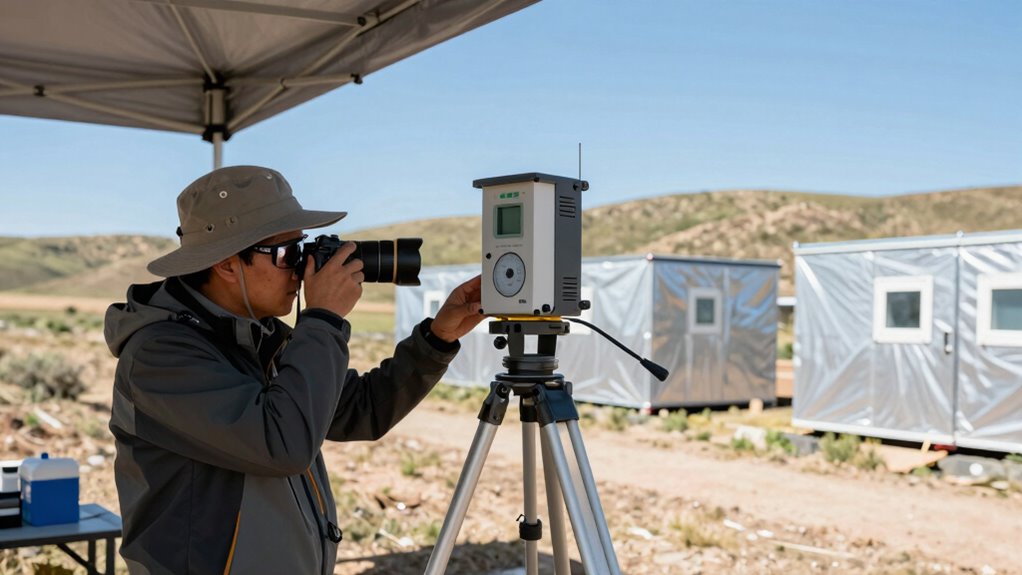
To control ambient conditions in field testing, you should monitor temperature, humidity, and airflow using weather stations or sensors placed near measurement points. Use portable shields or enclosures to reduce wind, sunlight, and precipitation impacts. Schedule tests during stable weather periods, like early morning or late afternoon, to minimize fluctuations. Keep detailed records of environmental conditions and calibrate your sensors regularly. If you continue, you’ll discover additional strategies to optimize measurement accuracy.
Key Takeaways
- Use portable enclosures or shields to minimize wind, sunlight, and precipitation effects during testing.
- Schedule tests during stable periods, such as early mornings or late afternoons, to reduce environmental variability.
- Employ environmental monitoring devices like weather stations and hygrometers to track real-time ambient conditions.
- Regularly calibrate sensors against known standards to prevent measurement drift influenced by ambient factors.
- Document all environmental conditions and calibration procedures to ensure data accuracy and reproducibility.
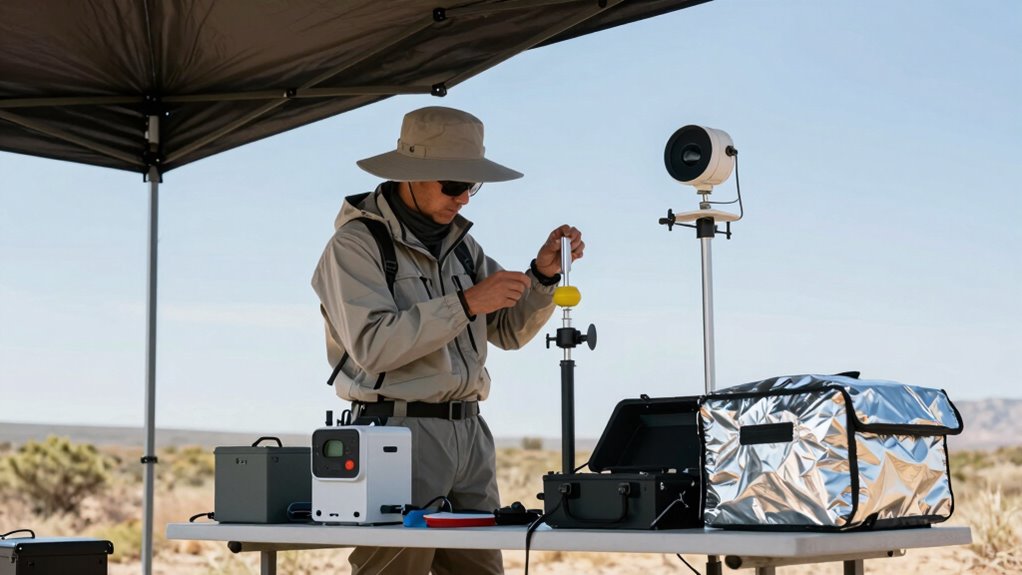
Controlling ambient conditions during field testing is essential to guarantee accurate and reliable results. When you’re out in the field, external factors like temperature, humidity, and air currents can influence your measurements, leading to inconsistent or skewed data. To mitigate these effects, you need to focus on proper sensor calibration and effective environmental monitoring. Sensor calibration ensures that your instruments provide precise readings, aligning them with known standards before you start collecting data. Regular calibration checks are crucial because sensors can drift over time or due to environmental exposure, which can compromise measurement accuracy. By calibrating your sensors properly, you minimize errors caused by sensor variability, helping you maintain data integrity throughout your testing process.
Environmental monitoring plays a vital role in controlling ambient conditions. It involves using specialized tools such as weather stations, hygrometers, or temperature probes to track real-time conditions around your testing site. This ongoing monitoring allows you to identify fluctuations that could impact your measurements. For example, sudden changes in temperature or humidity might require you to pause testing or adjust your methodology. You should set up environmental sensors at strategic locations close to your primary measurement points, ensuring you capture the conditions most relevant to your data collection. This information helps you interpret your results more accurately, considering how external factors may have influenced them. Additionally, understanding the sensor drift that can occur over time emphasizes the importance of regular calibration to maintain measurement accuracy.
Another key aspect is to establish a controlled environment whenever possible. If you have access to portable enclosures or shielding, use these to minimize exposure to wind, direct sunlight, or precipitation. This control reduces variability in your data caused by external environmental factors. Additionally, scheduling field tests during times of the day when environmental conditions are more stable can improve consistency. For instance, early mornings or late afternoons often feature less temperature fluctuation compared to midday. Implementing these practices helps you create a more stable testing environment, reducing the risk of environmental interference.
Finally, documenting all environmental data alongside your measurements is critical. Keep detailed records of calibration procedures, environmental conditions, and any adjustments you make during testing. This documentation not only enhances the reproducibility of your results but also provides context when analyzing data trends. When you combine sensor calibration with thorough environmental monitoring and controlled testing conditions, you substantially improve the reliability of your field test results. By paying close attention to ambient conditions, you safeguard against inaccuracies and ensure that your findings genuinely reflect the phenomena you’re studying.

Newentor Weather Station Wireless Indoor Outdoor Thermometer, Color Display Digital Weather Thermometer with Atomic Clock, Barometric Pressure, Forecast Station with Adjustable Backlight, Black
- Color LCD Display: Displays temperature, humidity, and more
- Multiple Power Options: Connects to wall or uses batteries
- Adjustable Backlight: Customizable brightness for day/night
As an affiliate, we earn on qualifying purchases.
As an affiliate, we earn on qualifying purchases.
Frequently Asked Questions
How Do Ambient Conditions Affect Measurement Accuracy?
Ambient conditions like humidity fluctuations and temperature variations can greatly impact your measurement accuracy. When humidity changes, it can affect sensor readings or material properties, leading to errors. Temperature variations may cause equipment to expand or contract, skewing results. To guarantee precise measurements, you need to monitor these conditions closely and account for their effects, either through calibration or by conducting tests under controlled environmental settings.
What Equipment Can Monitor Ambient Environmental Changes?
Did you know that over 60% of measurement errors come from environmental changes? To monitor ambient conditions, you can use environmental sensors like thermometers, hygrometers, and barometers. These sensors help you track temperature, humidity, and pressure, ensuring accurate readings. Regular sensor calibration is essential to maintain precision. By integrating reliable environmental sensors into your setup, you can effectively control ambient conditions and improve your field test accuracy.
Are There Specific Standards for Controlling Ambient Conditions?
Yes, there are specific standards for controlling ambient conditions, like ISO and ASTM protocols. You should follow these standard protocols to maintain consistency. Regular calibration procedures are essential; they guarantee your equipment accurately measures environmental factors. By adhering to these standards and calibration routines, you minimize variability caused by ambient conditions, leading to more reliable field test results and better data integrity.
How to Adjust Data for Uncontrollable Ambient Variations?
You can adjust data for uncontrollable ambient variations by applying calibration techniques that account for environmental changes. Use data normalization methods to standardize your measurements, making them comparable across different conditions. Regularly calibrate your instruments in the field to minimize discrepancies. When analyzing data, incorporate correction factors derived from calibration results, ensuring your results accurately reflect true measurements despite ambient fluctuations.
What Are Cost-Effective Methods to Control Ambient Conditions?
Did you know that environmental sensors can reduce testing errors by up to 30%? To control ambient conditions cost-effectively, you should use environmental sensors to monitor temperature, humidity, and light levels in real-time. These devices are affordable and easy to deploy, helping you gather accurate data without significant expenses. Incorporate these sensors into your testing process to improve reliability and guarantee consistent results across diverse field conditions.

Real-Time Environmental Monitoring: Sensors and Systems – Lab Manual
As an affiliate, we earn on qualifying purchases.
As an affiliate, we earn on qualifying purchases.
Conclusion
By mastering the art of controlling ambient conditions, you turn unpredictable elements into your allies, transforming chaos into clarity. Just like a skilled conductor guides an orchestra through a storm, you steer your field tests with confidence, ensuring your data remains pure and true. When you tame the environment, you release the melody of accurate results, empowering you to make confident decisions. Embrace this control, and let your testing journey shine with precision and purpose.
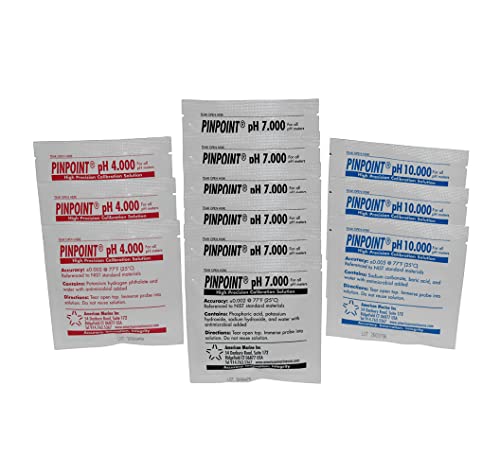
PINPOINT® High-Precision pH Calibration Fluids Kit (pH Buffer Solution), 12 piece Set – pH 4.000, 7.000, 10.000
- High-precision calibration fluids: Ensures accurate pH calibration
- Ready to use: No mixing required
- Field portable: Compact and easy to carry
As an affiliate, we earn on qualifying purchases.
As an affiliate, we earn on qualifying purchases.

2pack Portable Mini Inductor Tester, Type-C Powered High Precision Mainboard Coil Testing Tool, Fast Inductance Fault Detection Diagnosis Repair Tool for Mobile Phone Electronic Components (2, Black)
- Instant In-Circuit Testing: Detects coil faults without desoldering
- Type-C Powered: Operates from any Type-C power source
- Plug & Play: No drivers or calibration needed
As an affiliate, we earn on qualifying purchases.
As an affiliate, we earn on qualifying purchases.