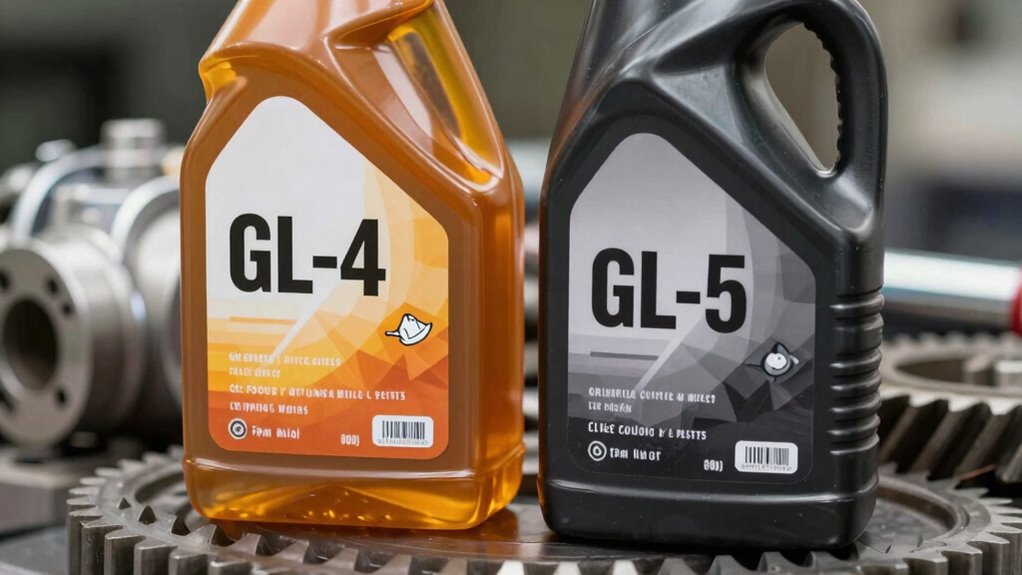

If you’re wondering about GL-4 versus GL-5 gear oils for your manual transmission, it’s essential to know they’re not interchangeable due to different additive packages and formulations. GL-4 offers moderate pressure protection suitable for most manual gearboxes, while GL-5 provides stronger extreme pressure additives for heavy loads. Using the wrong type can cause gear wear, shifting problems, or damage. Keep reading to discover how to choose the right oil for your vehicle’s specific needs.
Key Takeaways
- GL-4 is formulated for moderate-pressure gear contacts, while GL-5 offers stronger extreme pressure additives for heavy loads.
- They have different additive packages; mixing can cause compatibility issues and potential transmission damage.
- Always follow the vehicle manufacturer’s recommendation for gear oil type to ensure proper lubrication and performance.
- GL-4 typically uses mineral oils; GL-5 often incorporates synthetic oils, affecting compatibility with transmission components.
- Using the incorrect gear oil type can lead to shifting problems, increased wear, and reduced transmission lifespan.

Red Line 50305 MT-90 75W-90 GL-4 Manual Transmission and Transaxle Lubricant (MTL) – 1 Gallon
HIGH PERFORMANCE – gear protection and longer synchro life. Recommended for GL-1, GL-3, and GL-4 applications.
As an affiliate, we earn on qualifying purchases.
As an affiliate, we earn on qualifying purchases.
What’s the Difference Between GL-4 and GL-5 Gear Oil?
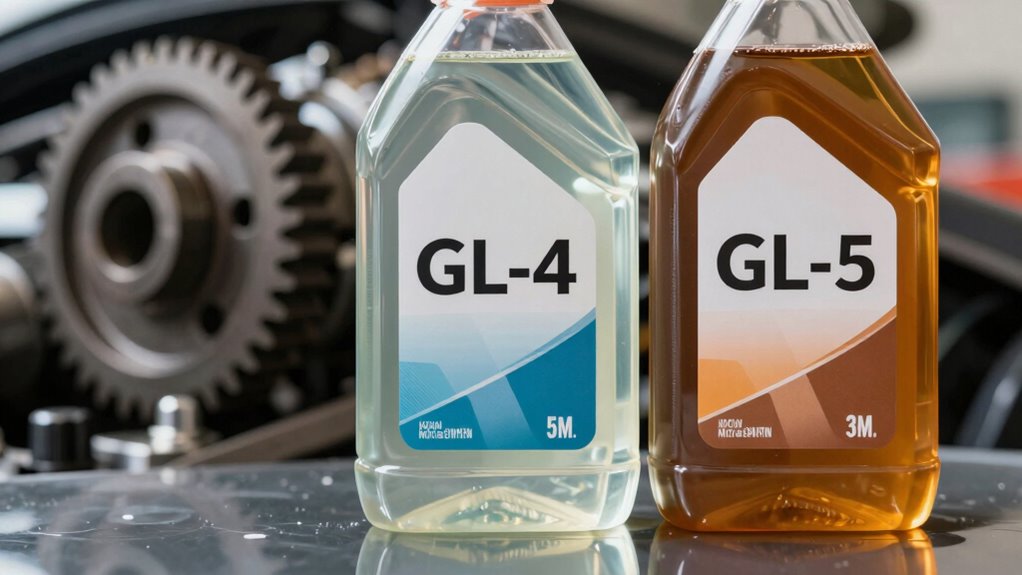
Have you ever wondered what sets GL-4 and GL-5 gear oils apart? The key difference lies in their formulation, especially the friction modifiers. GL-4 gear oil contains moderate friction modifiers, which help reduce wear and maintain gear durability under moderate loads. In contrast, GL-5 has stronger friction modifiers, making it more resistant to extreme pressures and better suited for heavily loaded gears. These additives influence how the oil interacts with gear surfaces, impacting gear durability and overall performance. Additionally, gear oil composition plays a crucial role in determining its effectiveness and suitability for specific applications. Understanding gear oil specifications is essential for selecting the right lubricant that meets your vehicle’s needs. Proper specification verification ensures that the lubricant meets the necessary standards for your vehicle’s requirements. Knowing the performance characteristics of each type can help you select the optimal gear oil for your needs.

CAM2 80W-90 LS GL-5 Gear Oil, 5 Gallon Pail
PREMIUM GEAR OIL: CAM2 80W-90 LS GL-5 gear oil formulated for superior protection of automotive differentials and manual…
As an affiliate, we earn on qualifying purchases.
As an affiliate, we earn on qualifying purchases.
How Do I Know Which Gear Oil My Transmission Needs?

Determining which gear oil your transmission needs starts with consulting your vehicle’s owner’s manual, as it specifies the recommended oil type and viscosity. Pay attention to the gear oil viscosity, which guarantees proper lubrication and performance. If your manual recommends a specific grade, like GL-4 or GL-5, follow that guidance to optimize manual transmission longevity. Using the correct gear oil helps reduce wear and prevents damage caused by incompatible oils. If you’re unsure, check your transmission’s service history or ask a mechanic. Avoid guessing, as the right viscosity and oil type are vital for smooth shifting and long-term durability. Additionally, understanding the differences between gear oil specifications can help you make informed choices. Recognizing how compatibility standards influence oil selection can further ensure your transmission’s health. It’s also beneficial to consider manufacturer recommendations for specific vehicle models to guarantee compatibility. Ultimately, following the manufacturer’s recommendations guarantees your transmission gets the appropriate protection it needs.

Valvoline Synchromesh Manual Transmission Fluid 1 Quart
Meets the demands of manual synchro transmissions and manual transaxles
As an affiliate, we earn on qualifying purchases.
As an affiliate, we earn on qualifying purchases.
Is GL-4 Compatible With GL-5?
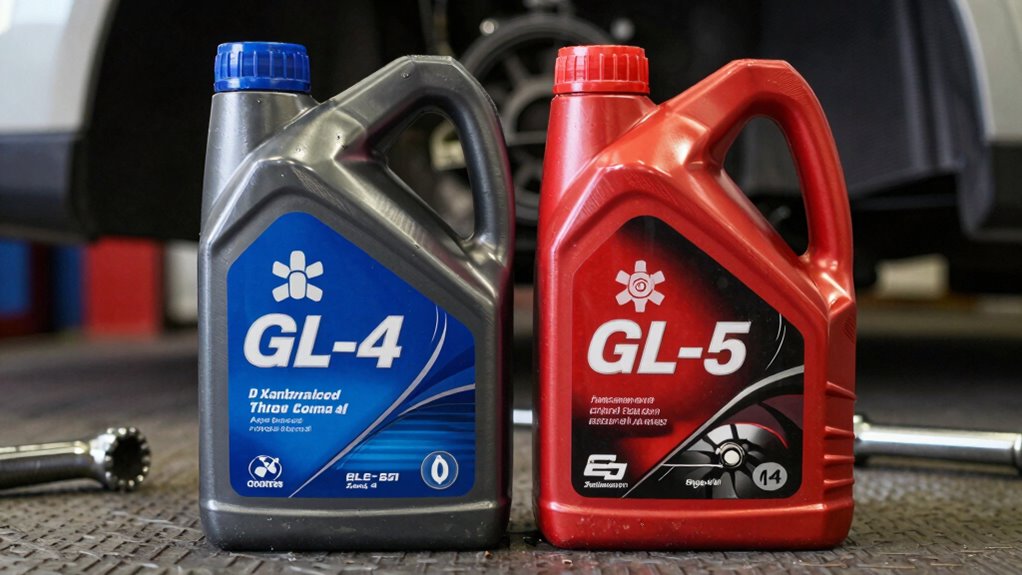
You might wonder if GL-4 and GL-5 gear oils can be mixed or used interchangeably. Since they have different additive formulations and base oil compatibilities, using one in place of the other can affect your transmission’s performance. Understanding these differences helps you choose the right oil to keep your gearbox running smoothly. Additionally, selecting the appropriate body jewelry materials is crucial, especially when considering the transmission fluid compatibility, as certain materials may react adversely in specific environments. Being aware of oil specifications can prevent potential damage and ensure optimal lubrication for your transmission system. Moreover, consulting manufacturer guidelines can provide valuable insights into which gear oil type is suitable for your vehicle’s specific needs.
Base Oil Compatibility
Is GL-4 compatible with GL-5 regarding base oil? Not entirely. GL-4 oils often use mineral oils, which tend to be less aggressive chemically, while GL-5 oils frequently incorporate synthetic oils for better durability. Mixing these can lead to compatibility issues, especially because synthetic oils have different properties that may not blend well with mineral oils. This can impact lubrication performance and gear protection. Here’s a quick comparison:
| Aspect | GL-4 | GL-5 |
|---|---|---|
| Base Oil | Mineral oils | Synthetic oils |
| Compatibility | More compatible with mineral oils | Less compatible with mineral oils |
| Usage | Moderate protection | Extreme conditions |
Stick to recommended oils to avoid problems—mixing different base oils isn’t always a good idea. Additionally, oil compatibility should always be considered to ensure optimal gear performance and longevity.
Additive Differences
Because GL-4 and GL-5 oils contain different additive packages, they aren’t fully compatible with each other. The key difference lies in their additive formulation, which impacts gear oil chemistry and performance. GL-4 oils typically have fewer extreme pressure (EP) additives, making them gentler on synchronizers and suitable for transmissions with delicate components. On the other hand, GL-5 oils include stronger EP additives, designed to handle higher pressure loads but potentially causing corrosion or wear in some transmission parts. Mixing these oils can alter the intended gear oil chemistry, reducing lubrication effectiveness or damaging sensitive components. Thus, understanding these additive differences is vital to choosing the right gear oil, ensuring your transmission’s longevity and best operation. Recognizing how gear oil chemistry affects component durability can help prevent costly repairs and extend transmission life.
Gearbox Performance
When considering gear oil compatibility, it’s important to understand how GL-4 and GL-5 perform in your transmission. Both types influence gearbox performance through their lubricant viscosity and additives, affecting how smoothly your transmission shifts and operates. GL-4 oils typically provide better gear engagement and less wear, supporting transmission longevity. GL-5 oils, with higher pressure additives, excel in handling extreme loads but may be slightly harsher on synchronizers. To optimize performance, consider:
- Proper lubricant viscosity for your transmission
- Compatibility with gear synchronizers
- Impact on gear shifting smoothness
- How additives influence wear and tear
- Long-term transmission health and durability
Choosing the right gear oil guarantees your transmission remains responsive and durable, whether you opt for GL-4 or GL-5. Additionally, selecting the appropriate gear oil can help prevent gear wear and extend the overall lifespan of your transmission components. Understanding lubricant compatibility can further support optimal gearbox function and reduce the risk of damage over time. Being aware of oil additive properties can help you select the best formulation for your specific driving conditions and transmission needs. Moreover, considering the performance ratings of different gear oils can assist in making an informed choice that aligns with your vehicle’s requirements. Proper maintenance and understanding of transmission lubrication are essential for ensuring smooth operation and avoiding costly repairs.
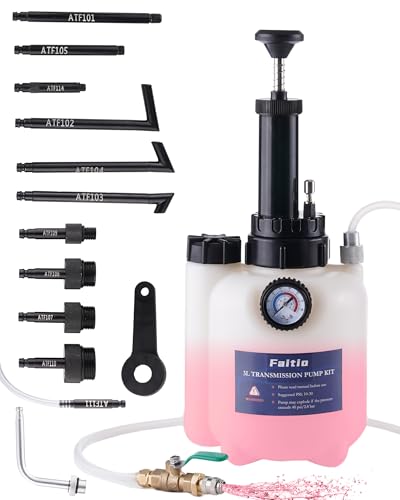
FAITIO 3L Transmission Fluid Transfer Pump w/ 12 ATF Adapters, Automotive Fluid Pressure Pump for Refilling Transmission, Differential and Gear Oil, Manual Car Oil Dispenser Pump
Mess-Free & Precise Filling: Eliminate mess and guess work with this transmission fluid transfer pump. Equipped with a…
As an affiliate, we earn on qualifying purchases.
As an affiliate, we earn on qualifying purchases.
What Are the Risks of Using the Wrong Gear Oil?

Using the wrong gear oil can lead to serious problems in your transmission. If you choose a synthetic blend or oil with incompatible viscosity ratings, it may not provide proper lubrication or protection. Incorrect oil can cause increased friction, leading to faster wear of gears and synchronizers. Over time, this can result in difficulty shifting, noise, and even transmission failure. Using an oil with too high or too low viscosity ratings compromises the oil’s ability to flow properly at operating temperatures, risking overheating or inadequate lubrication. Additionally, incompatible oils can break down or cause chemical reactions that damage seals and other components. To avoid these risks, always match your gear oil to your transmission manufacturer’s specifications, ensuring ideal performance and longevity. Proper oil compatibility is essential for maintaining transmission health and avoiding costly repairs.
Can I Swap GL-4 for GL-5 or Vice Versa?
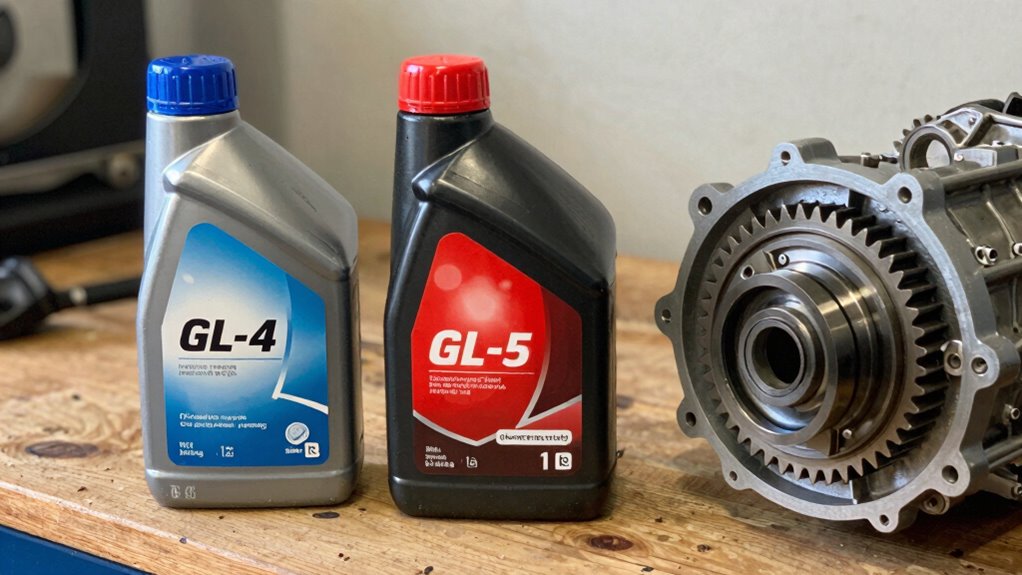
Can you swap GL-4 for GL-5 or vice versa without risking damage? Usually, it’s not recommended due to differences in additive formulations and viscosity ratings. GL-5 gear oils often contain extreme pressure additives that can harm transmission components designed for GL-4 oils. Using the wrong type may cause gear wear or seal damage. Consider these points before swapping:
- GL-4 oils are typically suitable for synchronized gears, while GL-5 is used for hypoid gears.
- Synthetic blends can sometimes bridge compatibility, but check manufacturer specs.
- Viscosity ratings impact how the oil flows at different temperatures.
- Mixing oils may dilute protective additives, reducing effectiveness.
- Always follow your vehicle manufacturer’s recommendations for gear oil types.
- Compatibility considerations are crucial to prevent potential damage, especially since incompatible oils can lead to gear wear or seal deterioration.
- Additionally, understanding the chemical composition of each oil type can help prevent unintended reactions within the transmission.
- Being aware of oil additive differences can further ensure you select the appropriate gear oil for your transmission’s longevity.
- Consulting with a professional or referring to your vehicle’s service manual can provide guidance on appropriate gear oil choices.
Stick to the recommended oil to maintain transmission health and avoid costly repairs.
Summary: Choosing the Right Gear Oil for Your Manual Transmission
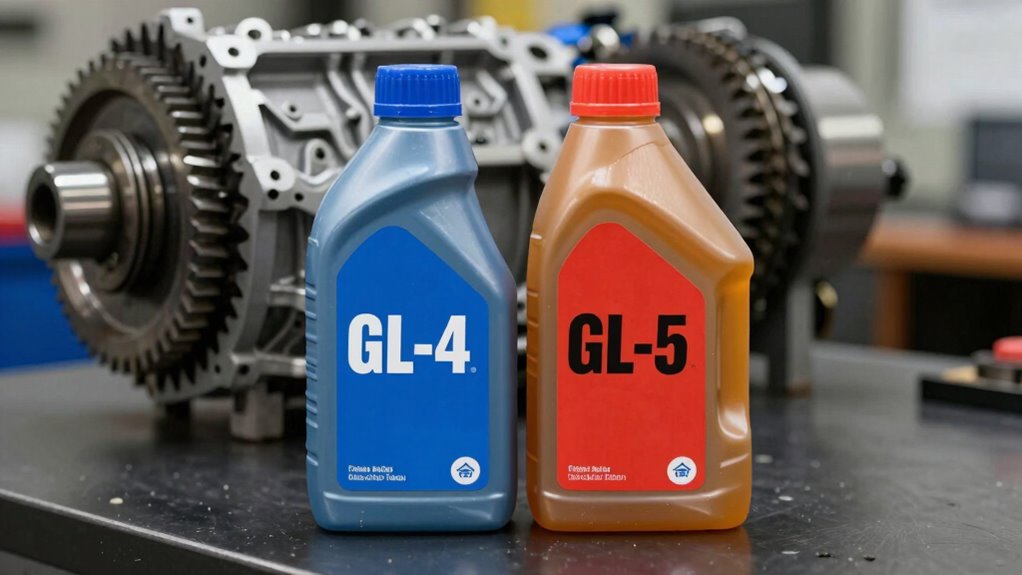
Choosing the right gear oil for your manual transmission is essential for peak performance and longevity. You need to contemplate factors like synthetic vs mineral oils and viscosity ratings. Synthetic oils often provide better protection at extreme temperatures and last longer, but can be pricier. Mineral oils are generally cheaper and suitable for older or less demanding transmissions. Viscosity ratings indicate how thick the oil is under different conditions, affecting shifting smoothness and gear protection.
| Feature | Recommendation |
|---|---|
| Synthetic vs Mineral | Choose synthetic for high-performance, mineral for budget-friendly or older models |
| Viscosity Ratings | Use the manufacturer’s recommended grade for optimal performance |
Frequently Asked Questions
Can Using the Wrong Gear Oil Cause Transmission Failure?
Using the wrong gear oil can definitely cause transmission damage. If the gear oil compatibility isn’t right, it can lead to inadequate lubrication, increased friction, and overheating. Over time, this may result in gear wear, slipping, or even transmission failure. Always check your vehicle’s manual to verify you’re using the correct gear oil type, whether GL-4 or GL-5, to protect your transmission from unnecessary damage.
Are There Specific Brands Recommended for GL-4 or GL-5 Oils?
You should look for brand recommendations that prioritize quality certifications like API or ACEA to guarantee reliability. Popular brands such as Mobil, Castrol, and Valvoline are often trusted for their consistent quality. These brands offer oils specifically formulated for GL-4 or GL-5 applications, helping you avoid compatibility issues and protect your transmission. Always check the product label for certification to guarantee you’re getting a high-quality, suitable gear oil.
How Often Should I Change My Manual Transmission Gear Oil?
You should change your manual transmission gear oil roughly every 30,000 to 60,000 miles, depending on your vehicle’s maintenance schedule. Keep an eye out for signs of degradation, like difficulty shifting or unusual noises. Regular oil changes help prevent gear wear and maintain smooth operation. If you notice any issues, it’s best to change the oil sooner to ensure your transmission stays in top condition.
Does Climate Affect Whether I Should Choose GL-4 or GL-5?
Climate considerations absolutely matter when choosing between GL-4 and GL-5. If you’re battling freezing temperatures or scorching heat, seasonal changes can turn your transmission into a drama queen. GL-4 is better for cold climates, ensuring smooth shifts in winter’s icy grip, while GL-5 handles hot, demanding conditions like a champ. Ignoring climate effects can turn your transmission into a meltdown, so pick wisely based on your seasonal weather extremes.
Are Synthetic Gear Oils Better Than Mineral-Based Options?
Synthetic gear oils are generally better than mineral-based options because synthetic benefits include superior lubrication, better temperature stability, and longer-lasting protection. Mineral limitations involve quicker breakdown and less resistance to extreme conditions. If you want enhanced performance and durability, especially in demanding driving conditions, synthetic gear oils are a smarter choice. However, they tend to be more expensive upfront, but their benefits often outweigh the initial cost.
Conclusion
So, here’s the irony: the wrong gear oil might not blow your transmission today, but it’s a ticking time bomb you’d rather ignore. Choosing the right fluid isn’t just about avoiding damage—it’s about keeping your ride smooth and reliable. Don’t fall for the temptation to cut corners; your manual transmission deserves the best. After all, a little care now saves a lot of hassle—and money—later.