
To safely break in your gears after setup, you should operate them at moderate speeds with light loads, ensuring proper lubrication throughout. Avoid heavy stops or sudden shifts that could cause damage. Gradually mesh the gear teeth to let them conform, and monitor temperature and noise for signs of issues. Proper lubrication based on gear materials is essential. If you keep these steps in mind, you’ll set the stage for long-lasting, smooth-running gears—more details await if you continue.
Key Takeaways
- Follow proper lubrication procedures with compatible high-quality gear oil or grease before operation.
- Operate gears at moderate speeds with light loads to allow smooth tooth engagement during break-in.
- Monitor temperature and noise levels; stop if excessive heat or unusual sounds occur.
- Gradually increase load and speed once initial mesh is established to ensure proper gear contact.
- Complete a thorough post break-in maintenance routine to ensure long-term gear performance.
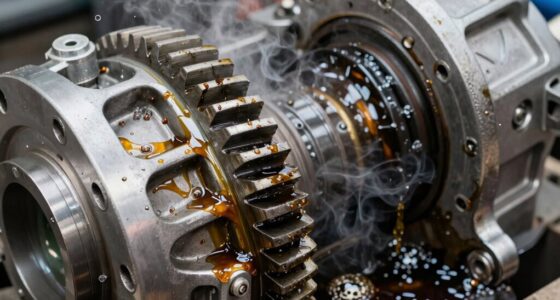
After installing new gears, it’s vital to perform a proper break-in to guarantee peak performance and longevity. This initial period allows the gears to settle into ideal contact patterns, reducing uneven wear and preventing premature failure. The key to a successful break-in lies in understanding lubrication techniques and ensuring gear material compatibility. Proper lubrication minimizes friction and heat, which are critical factors during this delicate phase. You should start with a light coating of high-quality gear oil or grease suited to your gear materials. Using the right lubrication techniques involves applying an even layer and periodically checking and replenishing it as needed. This helps prevent dry runs, which can cause scoring or pitting on gear teeth. Additionally, selecting the appropriate lubrication method based on best practices can significantly improve the break-in process. Gear material compatibility plays a crucial role in the break-in process. Different gear materials—such as steel, brass, or composite—have unique properties and respond differently to load and friction. For instance, steel gears typically require a different type of lubrication compared to softer materials like brass. Mixing incompatible materials without proper lubrication can lead to increased wear and damage during the initial run-in period. Before starting, always verify that your lubrication choices are suitable for the specific gear materials involved. Using a compatible lubricant ensures that the gears operate smoothly and reduces the risk of corrosion or chemical reactions that could compromise their integrity. During the break-in process, you should operate the gears at moderate speeds and avoid heavy loads. This gentle start allows the gear teeth to gradually mesh and conform to each other, creating a more uniform contact pattern. Keep an eye on temperature and noise levels, as elevated heat or unusual sounds can indicate improper lubrication or misalignment. If you notice any issues, stop and reassess your lubrication methods or gear alignment before proceeding. Consistency is key; maintain a steady, gentle operation for the recommended break-in period—usually a few hours—until the gears show signs of smooth engagement and consistent operation. Once the initial break-in is complete, you should switch to a more robust lubrication routine for regular use. However, the insights gained during this phase—such as how well the gears are meshing and how the lubrication is performing—will help you fine-tune your maintenance to maximize gear lifespan. Remember, rushing or neglecting this step can lead to costly repairs or replacements down the line. Proper lubrication techniques and gear material compatibility aren’t just recommendations—they’re essential for ensuring your gears perform reliably and last as long as possible. Taking the time to do it right now saves you trouble and money later.

Quicksilver SAE 90 High Performance Gear Lube for Outboards and Sterndrives, 32 oz
Lower unit gear oil formulated to protect against corrosion and excessive wear
As an affiliate, we earn on qualifying purchases.
As an affiliate, we earn on qualifying purchases.
Frequently Asked Questions
How Long Should I Wait Before Riding After Gear Installation?
You should wait at least a few rides, around 100-200 miles, before pushing your bike hard after gear installation. During this break-in period, gear wear occurs as parts settle, so monitor for smooth operation. Regularly check and re-lubricate your gears, especially in the first few rides, to maintain *best* lubrication frequency. This careful approach ensures your gears seat properly and last longer, preventing premature wear or damage.
Can I Accelerate the Break-In Process Safely?
You can’t rush the break-in process safely, but you can step it up carefully. Imagine gear friction melting away as lubrication works its magic—if you accelerate too fast, you risk damage. Stick to your lubrication schedule, avoid high speeds, and keep the load moderate. This way, you’ll quickly build a smooth, durable gear system without risking costly repairs or premature wear. Patience now saves trouble later.
What Signs Indicate My Gears Are Properly Broken In?
You’ll know your gears are properly broken in when you notice minimal gear wear and smooth operation. Check for consistent lubrication quality, as it’s essential for reducing friction and preventing premature wear. Listen for any unusual noises or resistance, which could indicate issues. If everything feels steady, with no grinding or slipping, and lubrication remains intact, your gears are likely well-broken-in and ready for regular use.
Is Special Lubrication Needed During the Break-In Period?
Yes, you should use special lubrication during the break-in period. Gear lubrication with break-in lubricants helps reduce metal-to-metal contact, preventing excessive wear as your gears settle. Make sure to apply fresh, high-quality break-in lubricants and check the lubricant level regularly. Proper lubrication guarantees smoother gear engagement, minimizes friction, and extends the lifespan of your gears, making your break-in process safer and more effective.
Are There Risks of Damaging Gears During Break-In?
You might wonder if gear noise or wear during break-in can cause damage. The truth is, improper break-in can lead to gear wear and increased noise, risking long-term damage. During this period, careful, gradual operation minimizes these risks. Using the right lubrication and avoiding high stress helps prevent gear damage, ensuring your gears stay smooth and quiet for miles to come. Proper break-in truly protects your investment.

AstraVox White Lithium Grease, Multi-Purpose Lubricant Lithium Grease with Brush for Hinges, Bearings, Gears, and Garage Doors, Ideal for Automotive, Marine, Industrial, and Household Use (1)
Superior Metal-to-Metal Lubrication: White lithium grease effectively reduces friction and ensures smooth operation. Lithium grease is ideal for…
As an affiliate, we earn on qualifying purchases.
As an affiliate, we earn on qualifying purchases.
Conclusion
Now that you’ve set up your gear, why rush the break-in process? Taking the time to do it safely guarantees your equipment performs at its best and lasts longer. Rushing might seem tempting, but isn’t it worth the effort to avoid damaging your gear or risking injury? Remember, patience pays off—so follow the proper break-in steps and enjoy smooth, reliable performance every time. After all, isn’t a little patience the key to getting the most out of your gear?

Yukon Gear & Axle (YGK068) Gear & Install Kit for Jeep JL and JT Rubicon D44 Rear & D44 Front 4:88 Ratio
Gear and Kit Package for Dana 44 Rear, Dana 44 Front
As an affiliate, we earn on qualifying purchases.
As an affiliate, we earn on qualifying purchases.

Yosoo Health Gear Multi Function Environment Tester, Digital Temperature Humidity Meter with Air Pressure Noise Detector for Indoor Outdoor Use DC 5V
Comprehensive Environmental Monitoring: This multifunction tester simultaneously measures six key parameters – temperature, humidity, altitude, air pressure, light…
As an affiliate, we earn on qualifying purchases.
As an affiliate, we earn on qualifying purchases.