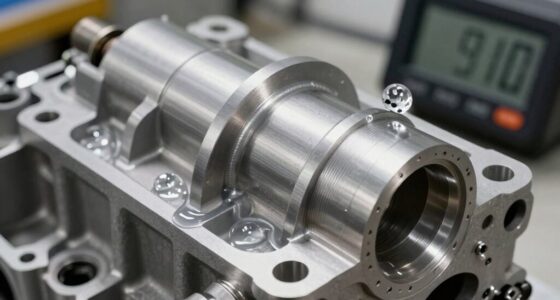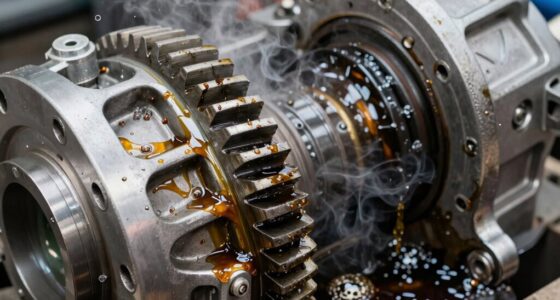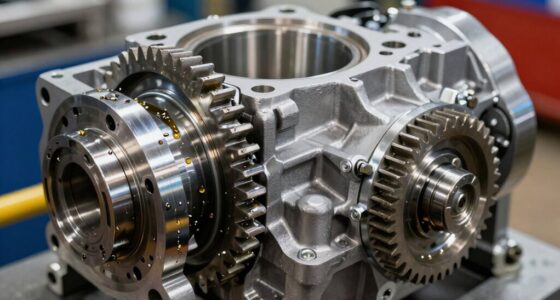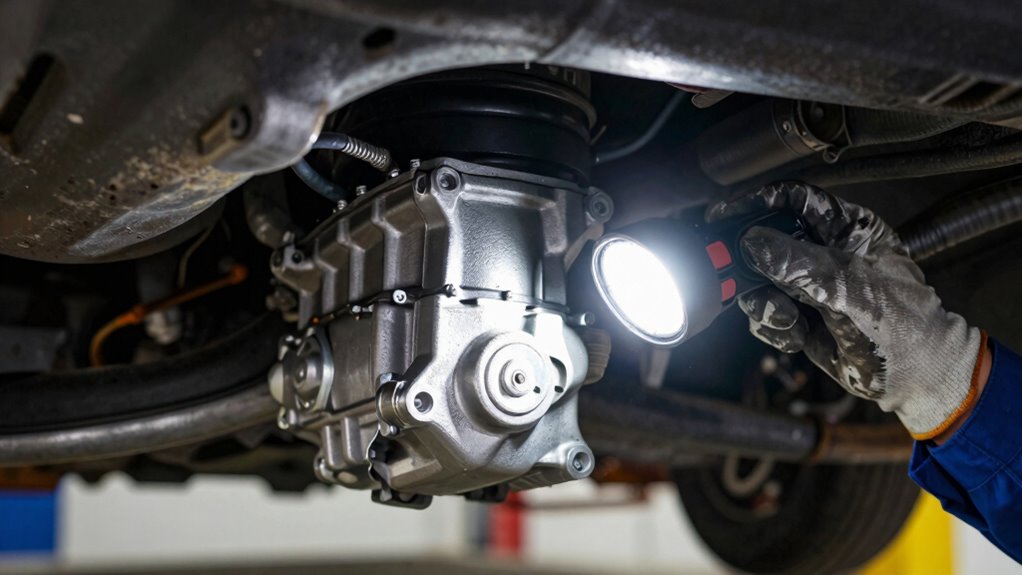

Neglecting transfer case service intervals can lead to serious drivetrain damage and costly repairs. To keep your vehicle running smoothly, check your transfer case fluid regularly, look for leaks, and follow the recommended fluid change schedule, usually every 30,000 to 60,000 miles. Pay attention to unusual noises or shifting issues, and address problems early. If you’re interested in maintaining your transfer case properly, you’ll find essential details below to help prevent breakdowns.
Key Takeaways
- Regularly check and change transfer case fluid every 30,000 to 60,000 miles to prevent internal wear.
- Inspect for leaks, contamination, or burnt smell during routine maintenance to avoid costly damage.
- Listen for abnormal noises or shifting issues as early signs of internal transfer case problems.
- Look for fluid spots or damaged seals to detect leaks before they cause significant damage.
- Incorporate transfer case inspection into scheduled maintenance, especially before off-road or towing activities.
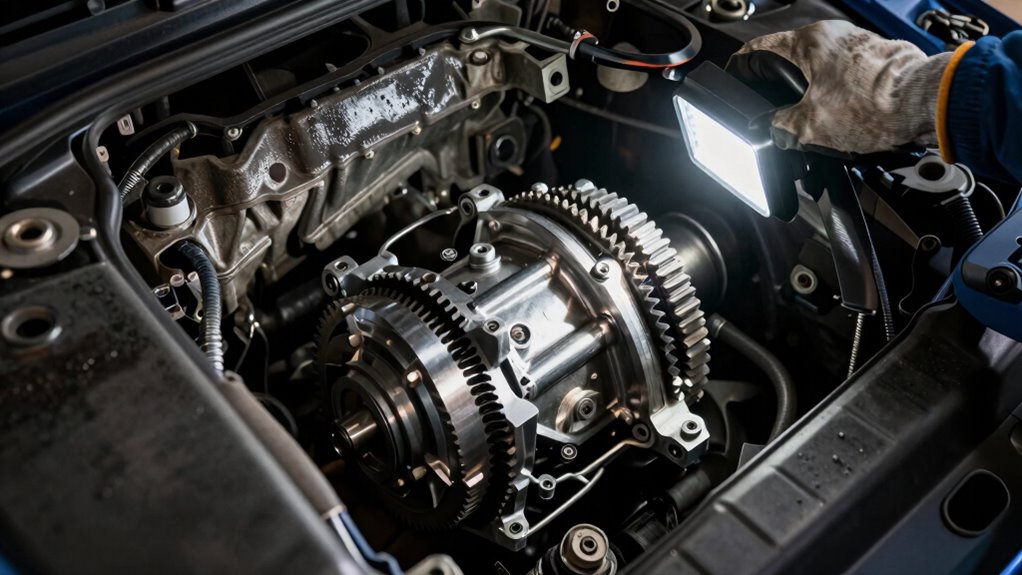
Keeping your transfer case properly maintained is essential for ensuring your vehicle’s off-road and four-wheel-drive performance. One of the most critical aspects of maintenance is regular lubrication maintenance. Without proper lubrication, the gears and bearings inside your transfer case can wear out quickly, leading to costly repairs or even complete failure. You should check your transfer case fluid level and quality at regular intervals, especially if you frequently drive off-road or in harsh conditions. Dirty, low, or degraded fluid can cause increased friction and heat, accelerating component wear. Many vehicle manufacturers recommend inspecting and changing the transfer case fluid every 30,000 to 60,000 miles, but this can vary depending on your driving habits and terrain.
In addition to lubrication maintenance, transfer case inspection is crucial to catching issues early. During an inspection, you should look for signs of leaks, which often appear as fluid spots underneath your vehicle or around the transfer case housing. Leaks can indicate damaged seals or gaskets, which, if left unaddressed, can lead to a loss of lubrication and severe damage. Besides checking for leaks, listen for abnormal noises like grinding or whining when engaging four-wheel drive; these sounds often point to internal components wearing out or needing attention. Visual inspection should also include examining the transfer case mountings and linkage for signs of damage or excessive wear. Ensuring that the transfer case is properly aligned and secured prevents unnecessary stress on internal parts. Additionally, understanding the importance of proper lubrication can significantly extend the lifespan of your transfer case components.
You should integrate transfer case inspection into your routine vehicle maintenance schedule, especially before undertaking long off-road trips or towing heavy loads. Many vehicle owners overlook this step because they’re focused on engine oil or tire health, but neglecting the transfer case can lead to breakdowns in remote areas where repairs are costly and inconvenient. Remember, a proactive approach saves you money and keeps your vehicle reliable. If you notice any irregularities during inspection, such as unusual noises, fluid leaks, or difficulty shifting into four-wheel drive, don’t delay getting it checked by a professional. Addressing problems early helps extend the life of your transfer case and maintains the essential performance of your vehicle’s drivetrain.

Ferianl Transmission Fluid Pump Kit, Fluid Transfer Pumps, Auto Brake Fluids Change Oil Push-Pump Kits, Car Lower Unit Gear Oil Pumps, with 3/8 inch Swivel, 8mm 10mm Adapters, 8cc Per Pumps Stroke
Efficient Pumping: This fluid transfer pump comes with two different height suction tubes for quart bottles of different…
As an affiliate, we earn on qualifying purchases.
As an affiliate, we earn on qualifying purchases.
Frequently Asked Questions
How Do I Know if My Transfer Case Needs Service?
You’ll know your transfer case needs service if you notice strange noises like grinding or whining, or if there’s difficulty shifting between 4WD modes. Check your transfer case fluid regularly—low or dirty fluid can signal the need for a service. Follow your vehicle’s service schedule, and consider having a professional inspect the transfer case if you experience any unusual symptoms or if it’s been a while since your last fluid change.
Are Transfer Case Services Necessary for All Vehicle Types?
Transfer case services aren’t necessary for all vehicle types, but if your vehicle has a four-wheel-drive or all-wheel-drive system, regular transfer case lubrication is essential. You should check your owner’s manual for transfer case fluid types and recommended service intervals. Proper maintenance with the correct transfer case fluid helps prevent damage, ensuring smooth operation and longevity. If you notice unusual noises or difficulty shifting, it’s time for a service.
What Are the Signs of Transfer Case Failure?
Ever wonder if your transfer case is struggling? Signs of failure include unusual transfer case noise, like grinding or whining, and contaminated or low transfer case fluid. You might also notice difficulty shifting between drive modes or a burning smell. These clues indicate your transfer case isn’t functioning properly. Ignoring them can lead to costly repairs. Regular inspections and fluid checks help keep your transfer case healthy and your vehicle running smoothly.
Can I Perform Transfer Case Maintenance Myself?
Yes, you can perform transfer case maintenance yourself if you’re comfortable with basic DIY tasks. Start by safely lifting your vehicle and locating the transfer case. Drain the old transfer case fluid, then refill it with the correct type of fluid specified in your vehicle’s manual. Regularly check the transfer case fluid levels and replace it according to the recommended intervals to guarantee smooth operation and prevent potential failure.
How Long Does a Transfer Case Service Typically Take?
A transfer case service usually takes about 1 to 2 hours, depending on your vehicle and experience level. During this time, you’ll drain and replace the transfer case fluid and inspect for any issues. Remember, following the recommended service frequency guarantees your transfer case stays in good shape, preventing costly repairs down the line. If you’re comfortable, you can do it yourself; otherwise, a professional can handle it efficiently.

Jeep Transfer Cases: How to Rebuild
As an affiliate, we earn on qualifying purchases.
As an affiliate, we earn on qualifying purchases.
Conclusion
Neglecting transfer case service can lead to costly repairs, yet many overlook its importance. Regular maintenance can extend your vehicle’s lifespan considerably—studies show that properly serviced transfer cases last up to 30% longer. By sticking to the recommended intervals, you not only prevent breakdowns but also save money in the long run. Keep this overlooked schedule in mind, and you’ll ensure smoother, more reliable off-road adventures or daily drives.
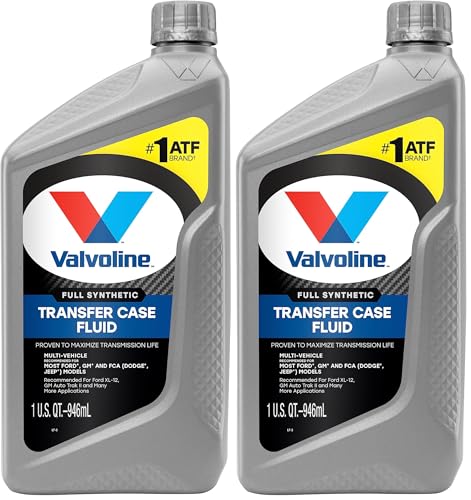
Valvoline Multi-Vehicle (TCF) Conventional Transfer Case Fluid 1 QT (Pack of 2)
The information below is per-pack only
As an affiliate, we earn on qualifying purchases.
As an affiliate, we earn on qualifying purchases.

BlueDevil Products Transmission Sealer – 16 oz | Seals Leaks in Automatic & Manual Transmissions | Restores Seals & Prevents Fluid Loss
Guaranteed Permanent Seal
As an affiliate, we earn on qualifying purchases.
As an affiliate, we earn on qualifying purchases.