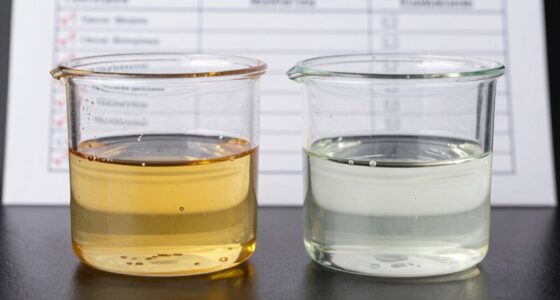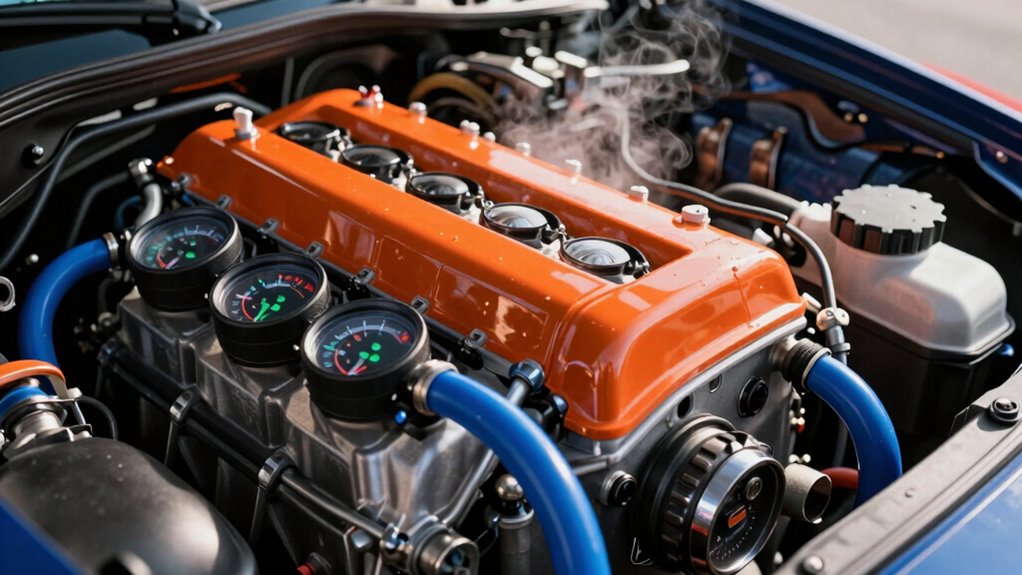

During track days, normal differential temperatures typically range from 170°F to 220°F, keeping your drivetrain safe. Temperatures above 250°F are risky, and hitting 300°F can cause serious damage or failure. Watch for signs like burning smells, unusual noises, or uneven tire wear to spot overheating early. Managing heat with proper cooling and maintenance helps prevent damage. If you want to stay safe and maximize performance, understanding these thresholds is key—keep exploring to learn more.
Key Takeaways
- Normal differential temperatures during track days typically range from 170°F to 220°F.
- Temperatures exceeding 250°F indicate overheating and potential risk to differential components.
- Over 300°F is considered lethal, risking gear failure, lubricant breakdown, and differential seizure.
- Regular monitoring with calibrated sensors helps detect rising temps early and prevent damage.
- Signs of dangerous temps include burnt smells, wheel heat, vibrations, and unusual noises.

BARTOO Universal 5/16" Transmission Oil Cooler Kit, Aluminium alloy 2 Pass Tube and Fin Oil Cooler Kit (Sliver)
【Transmission Cooler Kit】Usable to Cool Down Engine Oil, Transmission, and Rear-Differentials.Excellent for Modified Street Vehicles, which are Driven...
As an affiliate, we earn on qualifying purchases.
Why Differential Temperatures Matter During Track Days
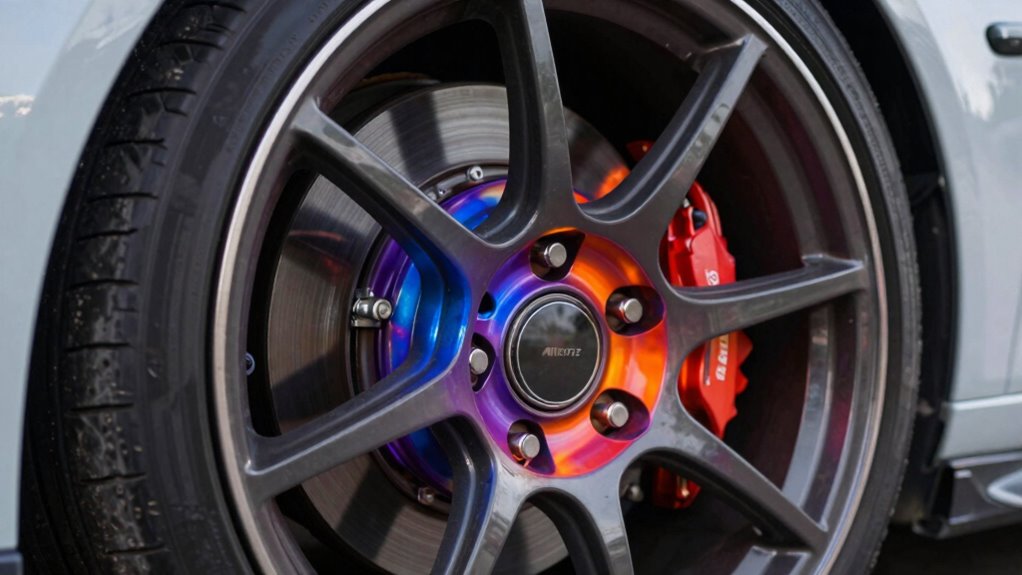
Understanding why differential temperatures matter during track days is crucial for maintaining ideal vehicle performance and safety. When differential temperatures rise unexpectedly, it can indicate issues like coolant leaks that compromise lubrication and cooling efficiency. High temperatures can lead to gear lubrication breakdown, increasing wear and risking gear failure. Monitoring these temperatures helps you catch problems early, preventing costly damage and maintaining optimal handling. If the differential gets too hot, it signals that the cooling system isn’t managing heat effectively, which can be exacerbated by coolant leaks or insufficient lubrication. Recognizing coolant management issues through temperature readings is vital for preventing long-term damage. Proper thermal regulation of the differential ensures consistent performance during track days. Keeping temperatures in check ensures your differential operates smoothly, prolonging its lifespan and preserving your car’s performance on the track. Since temperature monitoring is integral to understanding system health, it’s essential to regularly check these readings to avoid unexpected failures. Ignoring temperature fluctuations could turn minor issues into serious mechanical failures, emphasizing the importance of consistent system diagnostics.

A-Premium Transmission Oil Cooler, Universal Aluminium 8 Pass Tube and Fin, Oil Cooler Kit with Hose Mounting Kit
[Vehicle Fitment]: Suitable for most car
As an affiliate, we earn on qualifying purchases.
What Factors Influence Differential Temperatures on Track
Your differential temperatures are shaped by several key factors. The type of tire material, how well your brake system works, and the condition of the track surface all play a role. Understanding these influences can help you optimize your setup for better performance. Proper piercing care and hygiene are also essential to prevent infections that could impact overall vehicle safety and performance. Additionally, maintaining an appropriate cooling system is vital to manage heat levels and ensure consistent temperature readings during track sessions. Monitoring differential temperature fluctuations can also provide insights into potential mechanical issues that may need attention. Being aware of track surface conditions can help you adjust tire pressures and driving style for optimal results. To accurately assess these factors, using thermal imaging tools can give real-time feedback on heat distribution across your vehicle components.
Tire Material Composition
The composition of tire materials plays a crucial role in how temperatures differ across a track. Different rubber compounds and blends impact how heat is generated and dissipated during high-speed runs. For example, softer compounds tend to produce more grip but can overheat quickly, leading to uneven temperature distribution. Your choice of lubricant selection affects how effectively heat transfers within the tire, influencing overall temperature stability. Additionally, material durability determines how well tires withstand extreme conditions without degrading, helping maintain consistent temperatures. Understanding these factors allows you to select the right tires for your track day, optimizing performance and reducing the risk of dangerous temperature spikes. By focusing on tire material composition, you can better manage differential temps and improve your driving safety and efficiency.
Brake System Efficiency
Brake system efficiency substantially influences how temperatures vary across a track, as it determines how effectively heat is generated and managed during braking. Poor efficiency leads to uneven heat distribution, causing certain components to overheat while others stay cooler. Factors like worn brake pads, caliper issues, or insufficient drivetrain lubrication can reduce performance. Regular differential fluid change helps maintain ideal lubrication, preventing excess heat buildup that impacts braking. To maximize your brake system, monitor pad wear, ensure calipers move freely, and keep the drivetrain properly lubricated. Here’s a quick overview:
| Factor | Impact on Brake Efficiency |
|---|---|
| Drivetrain lubrication | Reduces heat buildup |
| Brake pad condition | Affects heat dissipation |
| Caliper operation | Ensures even pressure |
| Brake fluid quality | Maintains consistent performance |
| Differential fluid change | Prevents overheating |
Track Surface Conditions
Surface conditions play a significant role in determining differential temperatures during track sessions. A rough, uneven, or hot surface increases tire and brake temperatures unevenly, affecting grip and safety. If you’re practicing drift techniques, inconsistent surface grip can lead to unpredictable tire behavior, raising temperature disparities across tires. Suspension tuning also influences how your car responds to surface irregularities; softer setups can absorb bumps better, reducing temperature spikes, while stiffer suspensions might cause more heat buildup in specific areas. Track surfaces that are worn, dirty, or have varying grip levels can cause some tires to heat more than others, creating dangerous temperature differentials. Paying attention to surface conditions allows you to adapt your driving style, drift techniques, and suspension settings to maintain ideal, balanced tire temperatures. Additionally, understanding track surface properties can help optimize your driving strategy and improve overall safety.

EVIL ENERGY 16 Row Oil Cooler Kit, 10AN Transmission Engine Cooler British Radiator Universal Aluminium Black
Universal Fit & Compatibility: Designed to fit most vehicles and compatible with 330mm engine oil cooler brackets. Please...
As an affiliate, we earn on qualifying purchases.
What Are Normal Differential Temperatures for Safe Driving
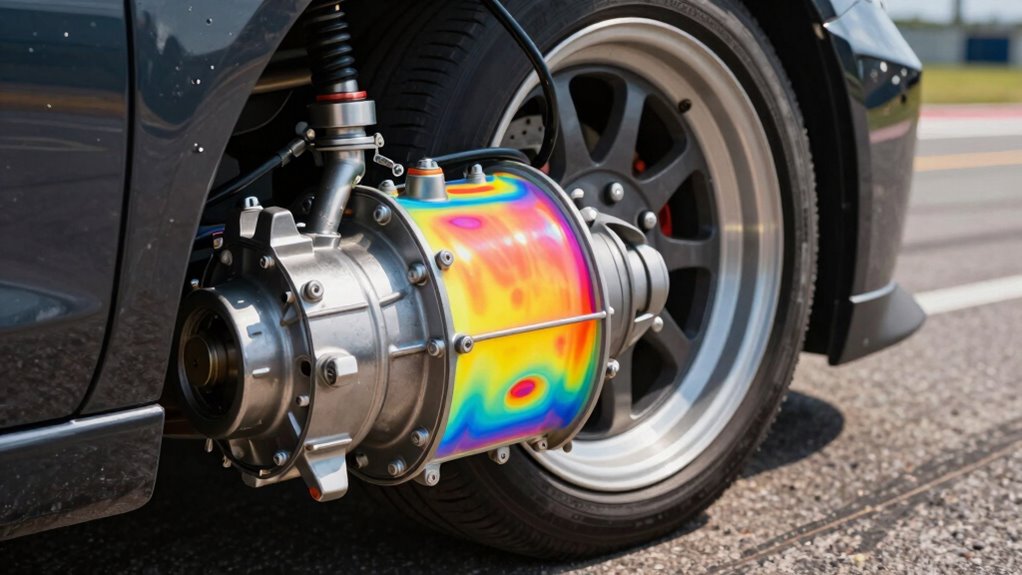
Understanding the normal differential temperatures is essential for safe driving, especially during track days. Typically, your differential should operate between 170°F and 220°F under normal conditions. If the differential fluid temperature exceeds 250°F, it indicates overheating, which can damage internal components. The differential’s temperature is influenced by factors like gear ratios, which determine how much torque is transferred to the wheels, and how hard you’re pushing the car. Higher gear ratios can generate more heat, especially during aggressive driving or cornering. Monitoring these temperatures helps you gauge when your differential is operating safely. Keeping temperatures within the recommended range ensures the differential fluid lubricates effectively, reducing wear and preventing costly repairs. Regular checks during track days help you avoid overheating and potential mechanical failure.

Heat Exchanger, Oil Cooler Heat Exchanger 17217600553 Replace for F31 F30 320i 328i F32 F33 428i
OEM Compatibility: Oil Cooler Heat Exchanger is designed to replace OEM numbers 17217600553, providing a fit for F31...
As an affiliate, we earn on qualifying purchases.
How to Recognize Signs Your Differential Is Overheating
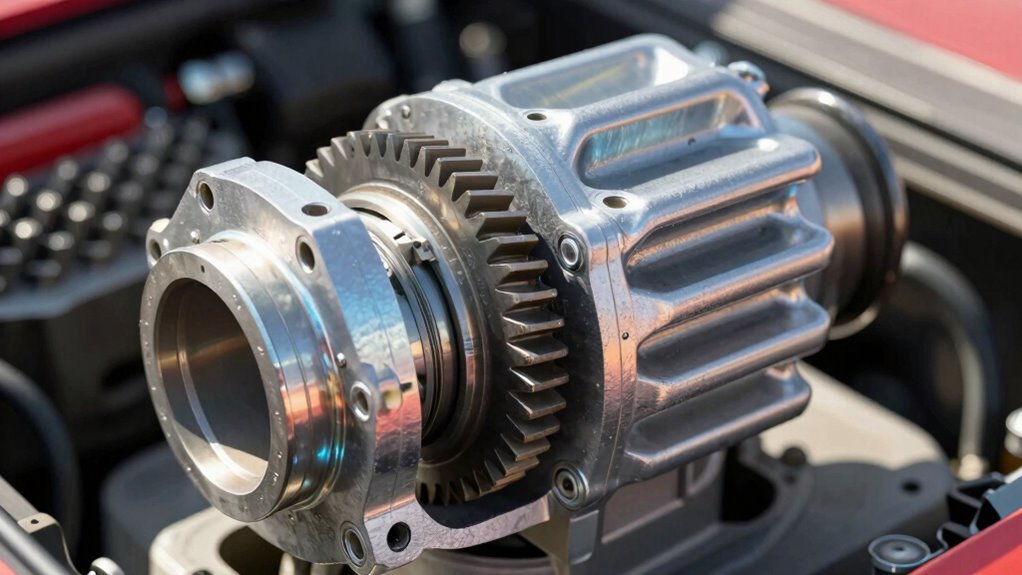
If your differential is overheating, you’ll notice unusual smells burning from the area. You might also feel excessive heat coming from the wheels or hear strange noises when the differential operates. Recognizing these signs early can help prevent serious damage and keep your track day safe. Be aware that proper maintenance can significantly reduce the risk of overheating and ensure optimal performance. Additionally, understanding vehicle systems can help you better identify these issues before they become critical. Regular inspections and awareness of warning signs are essential for maintaining safety during high-performance driving. Staying informed about indoor air quality can also provide insights into how vehicle emissions and dust might affect your environment, especially in enclosed spaces. Monitoring engine temperatures can further aid in early detection of cooling system failures that may lead to differential overheating.
Unusual Smells Emanating
When your differential overheats, one of the clearest warning signs is a strange, burnt smell. This odor often indicates that the differential fluid has reached a high temperature, breaking down and emitting a burnt scent. Pay close attention to this smell, especially after intense driving or track sessions. If the seal integrity is compromised, it can lead to fluid leaks, reducing lubrication and causing further overheating. A burnt smell suggests that the differential is under excessive stress, and ignoring it can cause severe damage. Regularly check the differential fluid level and condition, and look for any signs of leaks. Recognizing this unusual smell early helps you prevent costly repairs and guarantees your differential remains in excellent working condition.
Excessive Wheel Heat
Excessive heat in your wheels is a clear sign that your differential might be overheating. When this happens, you may notice uneven tire wear or a burning smell. To prevent damage, check for these signs:
- Strange Smells – Overheated differential lubrication can produce burning odors.
- Reduced Axle Cooling Efficiency – When cooling systems fail, heat accumulates quickly. Proper heat dissipation techniques are vital for maintaining optimal temperatures.
- Wheel Warping or Warped Disc – Excess heat can cause uneven brake disc temperatures.
- Vibrations or Unusual Noises – Overheating can lead to differential components expanding or seizing. Regularly inspecting cooling system performance is essential to keep your differential from overheating. Additionally, monitoring heat dissipation techniques can help maintain optimal operating temperatures. Proper airflow management around the differential and wheels can significantly improve heat reduction. Monitoring wheel heat helps you catch issues early. Proper axle cooling and ensuring differential lubrication remain crucial to prevent overheating and keep your drivetrain functioning smoothly during track days. Incorporating sector performance evaluation strategies can also assist in identifying underlying issues that might contribute to excessive heat buildup.
Noisy Differential Operation
A noisy differential is a clear warning sign that your unit may be overheating. When you hear differential noise or notice noisy gears, it’s a sign something’s wrong. Overheating causes the gears inside your differential to expand and wear prematurely, leading to increased noise. You might notice a whining or grinding sound during acceleration or deceleration. These sounds often indicate that the lubricant has broken down or become too thin, reducing its ability to lubricate properly. Ignoring these signs can lead to more severe damage, including gear failure. Additionally, natural ingredients in lubricants can promote better heat dissipation and prolong component life. Proper differential maintenance is crucial for preventing overheating and ensuring smooth operation. Using high-quality lubricants with heat-resistant properties can help prevent such issues. Regularly checking the differential temperature with a thermometer can help catch overheating early before significant damage occurs. If you hear noisy gears or a loud differential, stop driving immediately and check the temperature. Addressing overheating early can prevent costly repairs and keep your differential operating smoothly on the track.
What Are the Dangerous Temperature Thresholds (Lethal Diff Temps)
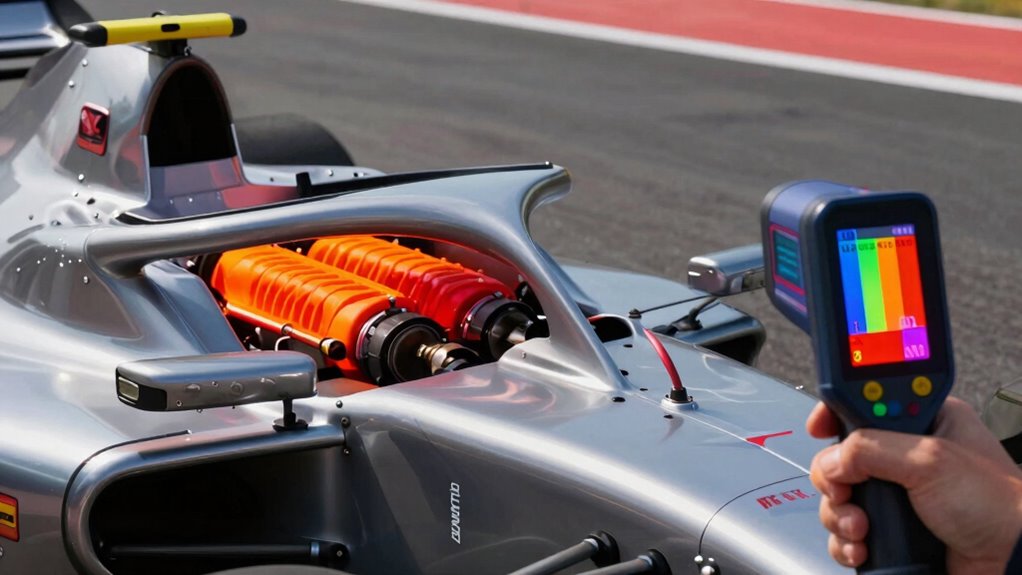
Understanding the dangerous temperature thresholds, or lethal differential temperatures, is crucial for maintaining safe track conditions. When differential fluid and cooling systems overheat, they risk severe damage or failure. Typically, differential temps above 250°F (121°C) are dangerous, with temps nearing 300°F (149°C) considered lethal. Recognizing these thresholds helps prevent catastrophic failures. Key points include:
- Excessive heat can cause differential fluid breakdown, reducing lubrication and increasing wear.
- Overheated cooling systems may fail to regulate differential temps, risking melting or warping.
- Lethal temps can lead to differential seizure, locking up wheels mid-corner.
- Monitoring these thresholds ensures you catch early warning signs before damage occurs, maintaining safe and reliable performance during track days.
How to Monitor Differential Temperatures Effectively
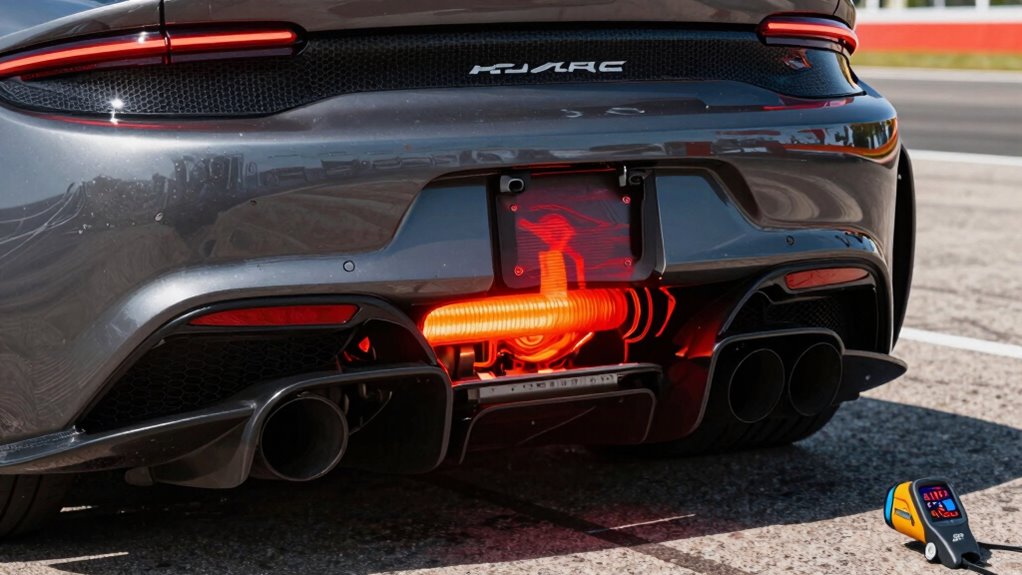
To monitor differential temperatures effectively, you need to use proper sensors that provide accurate readings. Make it a habit to check temperatures regularly, especially during track sessions, to catch any issues early. Staying attentive to these points helps guarantee your differential stays within safe operating limits.
Use Proper Sensors
Choosing the right sensors is essential for accurately monitoring differential temperatures during a track day. You need reliable temperature sensors that are properly calibrated to guarantee accurate readings. Proper sensor calibration guarantees your data reflects real conditions, preventing false alarms or missed issues. When selecting sensors, consider durability and compatibility with your vehicle’s systems. To maximize effectiveness:
- Use high-quality temperature sensors designed for automotive use.
- Regularly calibrate sensors to maintain accuracy.
- Ensure sensors are securely mounted for consistent readings.
- Verify sensor calibration before every track day.
Using the correct sensors and maintaining calibration helps you track differential temps precisely, avoiding misinterpretation of data that could lead to overheating or damage. Accurate monitoring allows you to make informed decisions and keep your car safe on the track.
Regular Temperature Checks
Regular temperature checks are essential for maintaining ideal differential temps and preventing potential issues during a track day. Consistently monitor your differential’s temperature with reliable sensors, especially if you notice coolant leaks or changes in oil viscosity. Coolant leaks can signal cooling system problems, causing temperature spikes that threaten your differential’s health. Keep an eye on oil viscosity, as thickening oil may indicate overheating or contamination, leading to increased wear. Use an infrared thermometer or digital sensors to get accurate readings during pit stops or after laps. Regular checks help you spot early signs of trouble before they escalate. Staying vigilant ensures your differential operates within safe temperature ranges, reducing the risk of damage and keeping your track day safe and enjoyable.
Tips to Keep Differential Temperatures in the Safe Range
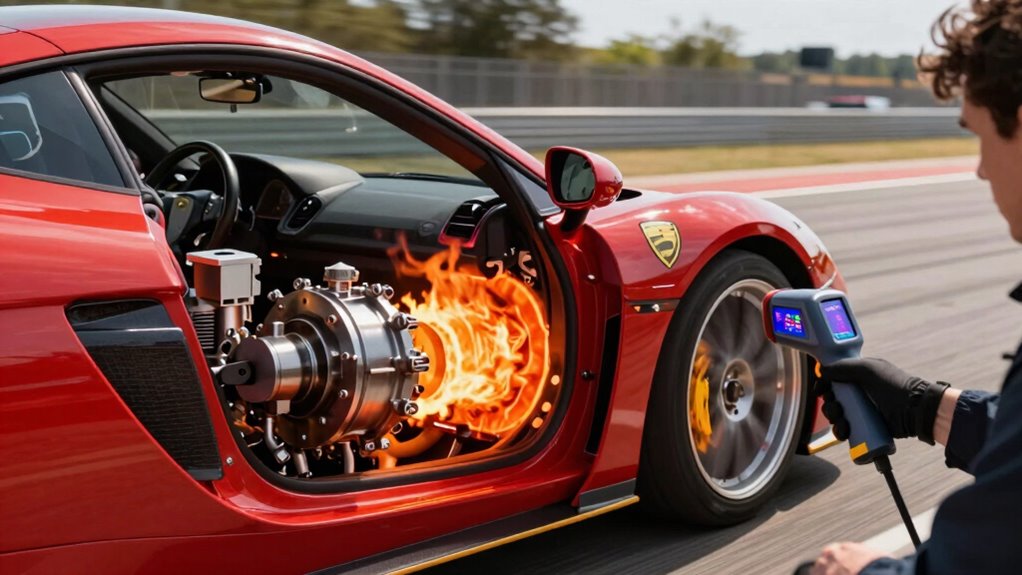
Keeping differential temperatures in the safe range is essential for preventing overheating and ensuring your drivetrain performs reliably during track days. To do this, focus on proper differential lubrication, as it reduces friction and heat buildup. Consider gear ratio considerations, since taller ratios can increase heat due to higher torque stress. Here are four tips:
Maintaining proper differential temperatures prevents overheating and enhances track day reliability.
- Regularly check and maintain proper differential fluid levels and quality.
- Use high-quality, heat-resistant lubricants suited for track conditions.
- Optimize gear ratios for your driving style and track layout to minimize excessive gear engagement.
- Monitor differential temperatures closely during sessions to catch early signs of overheating.
Implementing these strategies helps keep temperatures in check, extending your drivetrain’s lifespan and maximizing performance on track.
Common Causes of Excessive Differential Heat
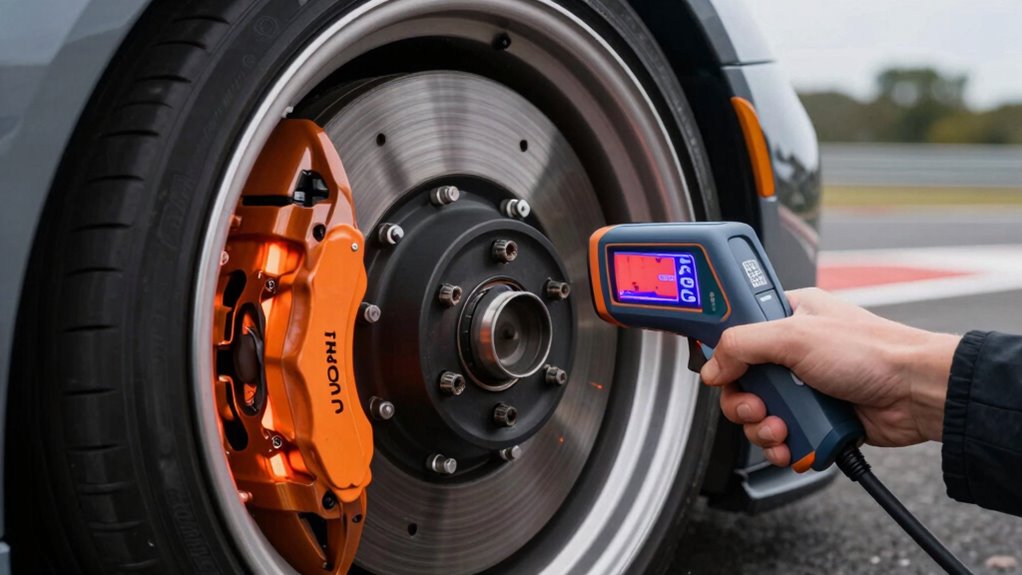
Excessive differential heat often results from specific driving behaviors and mechanical issues that increase friction and torque stress. One common cause is improper lubricant selection; using the wrong type or insufficient lubrication causes increased friction, leading to higher temperatures. Additionally, the differential design itself can influence heat buildup—older or poorly designed differentials may not dissipate heat efficiently under strenuous conditions. Aggressive driving, such as hard cornering or heavy acceleration, also amplifies heat generation by stressing the gears and bearings. Regular maintenance and understanding your differential’s design help prevent heat buildup. Ensuring proper lubricant selection tailored to track conditions and your differential’s specifications reduces friction and keeps temperatures in check, helping you avoid overheating and potential damage during track days.
What to Do if Your Differential Is Overheating
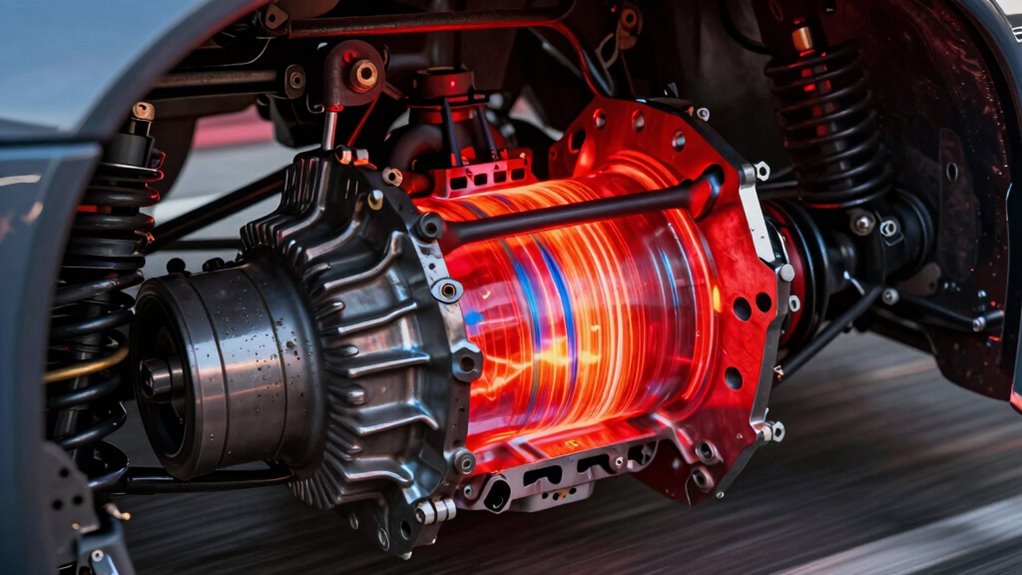
When you notice your differential overheating during a track session, it’s crucial to act quickly to prevent serious damage. First, safely reduce your speed and avoid aggressive maneuvers to lower heat buildup. Next, check your differential fluid level; low or degraded fluid impairs cooling. If possible, pull into a shaded area or pit stop to allow your cooling systems to work effectively. Finally, consider these steps:
- Stop driving if temperatures stay high despite cooling efforts.
- Allow your differential to cool down completely before further driving.
- Inspect your differential fluid and top it off if needed.
- Plan a thorough check of your cooling systems to prevent future overheating issues.
Taking these actions minimizes damage and keeps your differential operating within safe limits.
Long-Term Strategies to Prevent Diff Damage and Maintain Performance
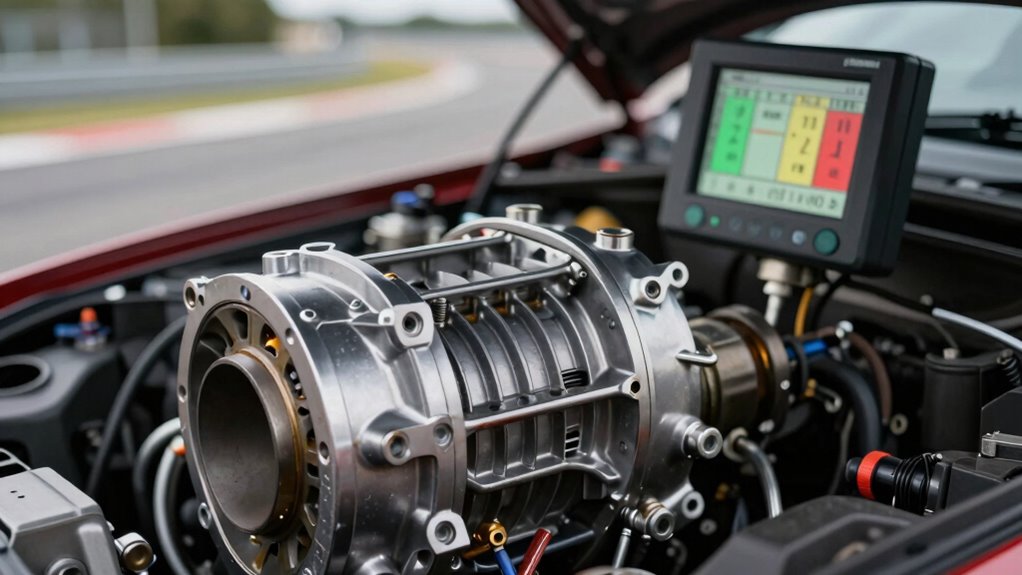
To prevent differential damage and guarantee consistent performance on the track, adopting long-term maintenance practices is essential. Regularly check and maintain proper differential lubrication to reduce friction and heat buildup, which can cause long-term wear. Adjusting your gear ratio can help optimize load distribution and reduce stress on the differential during high-performance driving. Consider these strategies:
| Differential Lubrication | Gear Ratio Adjustment | Inspection Frequency |
|---|---|---|
| Use high-quality oil | Tailor for track use | Weekly checks |
| Change oil regularly | Match driving style | After each session |
| Monitor for leaks | Prevent overloading | Monthly |
Implementing these measures helps extend differential life, maintaining performance and preventing costly damage.
Frequently Asked Questions
Can Differential Temperature Readings Predict Future Mechanical Failures?
Yes, differential temperature readings can help predict future mechanical failures. By using thermal imaging, you can monitor the differential temps of your drivetrain components regularly, spotting abnormal heat patterns early. This proactive approach, part of predictive maintenance, alerts you to potential issues before they become serious, saving money and preventing breakdowns. Staying vigilant with thermal imaging guarantees your differential stays healthy and your track days remain safe.
How Do Ambient Temperatures Affect Differential Heat During Track Days?
Ambient influence markedly impacts differential heat during track days. Higher ambient temperatures cause the differential to run hotter, increasing the risk of overheating. To combat this, you should prioritize temperature mitigation strategies like improved cooling systems, better ventilation, and selecting track days during cooler parts of the day. Monitoring differential temps closely helps you adjust your driving or cooling methods, ensuring your differential stays within safe limits regardless of ambient conditions.
Are There Specific Types of Oils Better for Managing Differential Temps?
You should consider synthetic oils for managing differential temps because they handle heat better and resist breakdown at high temperatures. Mineral oils, while cheaper, tend to degrade faster under intense heat, risking overheating. Synthetic oils provide better lubrication, reduce friction, and help keep differential temps in check during track days. Switching to synthetic can improve your differential’s performance and longevity, especially when pushing your car to its limits.
How Often Should I Check Differential Temperatures During a Track Session?
Did you know that checking differential temperatures every 10-15 minutes during a track session can prevent overheating? You should monitor these temps regularly, especially if your cooling systems are strained. Proper sensor placement is key—install sensors near the differential’s hottest spots for accurate readings. Frequent checks help catch issues early, allowing you to adjust driving style or cooling measures, ultimately protecting your drivetrain and ensuring a safer, more enjoyable track day.
What Are the Long-Term Effects of Consistently High Differential Temperatures?
If you keep your differential temps high over time, you risk increased differential wear and lubrication breakdown. This can lead to accelerated component damage, costly repairs, and reduced drivetrain reliability. Consistently high temps strain the differential’s lubrication, causing it to degrade faster. To protect your car, monitor temps regularly, guarantee proper cooling, and address any overheating issues promptly, preventing long-term damage and maintaining ideal performance.
Conclusion
Staying on top of your differential temps keeps your track day safe and your car performing at its best. Don’t dismiss signs of overheating — ignoring them can lead to costly damage or breakdowns. Even if you think your car’s fine, regular checks and proper maintenance are key. Remember, a little prevention goes a long way. You don’t have to be a mechanic to protect your ride — just stay vigilant and proactive.