
To make later data meaningful, start by establishing a precise and reliable initial baseline through accurate calibration and consistent sampling. Guarantee your first data set reflects the system’s natural state by controlling environmental factors and thoroughly documenting procedures. High-quality, noise-free data will serve as a trustworthy reference point for future comparisons. Regularly review and update your baseline to account for any changes. Continuing with these practices will help you maintain data integrity over time.
Key Takeaways
- Establish a precise and accurate initial baseline through thorough calibration and noise-free data collection.
- Document calibration procedures, environmental conditions, and anomalies to ensure data traceability.
- Use consistent sampling methods to improve data reliability and reduce variability over time.
- Regularly review and update the baseline to account for calibration drift and environmental changes.
- Ensure the initial data reflects the system’s natural state, providing a trustworthy reference for future analysis.

When starting any new project, establishing a reliable baseline is essential, and the First Sample Baseline serves as your foundation. This initial step determines the quality and usefulness of all subsequent data, making calibration accuracy and initial data quality critical factors. If your baseline isn’t accurate, later data points can become misleading, leading to flawed conclusions and ineffective decisions. That’s why you need to focus on collecting the highest quality initial data possible, ensuring your baseline truly reflects the system’s natural state.
Achieving good calibration accuracy during this phase is crucial. Calibration aligns your measurement tools with known standards, reducing errors and variability. When your instruments are correctly calibrated, you get consistent readings that form a trustworthy reference point. Without proper calibration, even a large amount of data might be inaccurate or inconsistent, making it difficult to identify real trends or changes over time. Keep calibration checks frequent and precise, especially when working with sensitive measurements, to maintain the integrity of your baseline.
Consistent calibration ensures accurate, reliable data and trustworthy baseline measurements over time.
Initial data quality is another cornerstone of a strong First Sample Baseline. High-quality data is accurate, complete, and free from noise or anomalies. It requires careful planning—know what variables matter, control environmental factors, and ensure your sampling methods are consistent. When your initial data is clean and reliable, it provides a solid foundation for detecting future deviations or improvements. Conversely, if your first data set contains errors or inconsistencies, it can distort your understanding of the system’s normal behavior, making it more difficult to interpret subsequent data correctly.
You also want to document every step of your initial data collection process. Record calibration procedures, environmental conditions, and any anomalies you observe. This documentation helps you verify data quality later and troubleshoot if discrepancies arise. Remember, the goal is to create a baseline that accurately reflects the system’s natural state, with minimal noise and maximum consistency. Additionally, understanding the content formats you use can influence how effectively your baseline captures the true state of your system, ensuring more meaningful comparisons over time.
Finally, periodically review and update your baseline as needed. As your project progresses, calibration accuracy might drift, or environmental conditions might change. Regularly reassessing your initial data quality ensures your baseline remains relevant and reliable. By doing so, you maintain the integrity of your measurements and ensure that later data truly provides meaningful insights. When you start with a solid, well-calibrated, and high-quality initial dataset, you set the stage for more accurate analysis, better decision-making, and ultimately, a more successful project.
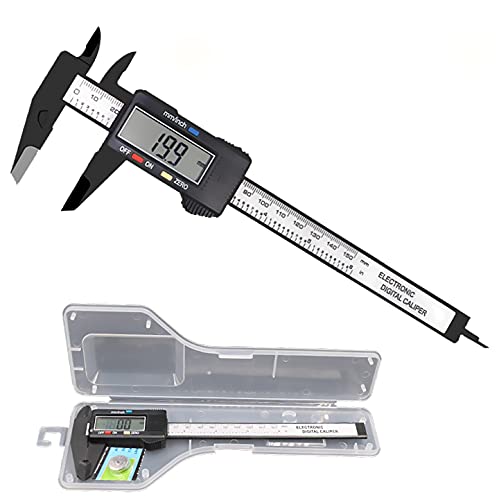
Simhevn Electronic Digital Calipers, inch and Millimeter Conversion,LCD Screen displays 0-6" Caliper Measuring Tool, Automatic Shutdown, Suitable for DIY/Jewelry Measurement (New150mm Black Plastic)
- Multiple Measurement Modes: Inner, outer, depth, and step measurements
- Safe Plastic Pins: No short circuit risk during measurement
- Precise Measurement Range: 0-6 inches / 0-150mm with high accuracy
As an affiliate, we earn on qualifying purchases.
As an affiliate, we earn on qualifying purchases.
Frequently Asked Questions
How Do I Choose the Initial Sample for Baseline Creation?
You should focus on careful sample selection for your initial analysis by choosing a representative group that reflects your target population. Guarantee the sample is diverse enough to capture key variations, and avoid biases that could skew results. Random sampling often works well, but stratified sampling can be more precise. This solid initial baseline helps you accurately interpret later data, making your analyses more meaningful and reliable.
What Are Common Pitfalls in Establishing a Baseline?
Imagine building a sturdy bridge; if your sample size is too small or your data lacks consistency, the structure weakens, risking collapse. Common pitfalls include choosing an inadequate sample size that skews results and ignoring data consistency, which introduces noise. These issues can lead to false conclusions, wasting effort. Always guarantee your sample is large enough and data remains uniform to maintain the integrity of your baseline.
How Often Should I Update the Baseline Data?
You should update your baseline data regularly, ideally aligning with your sampling frequency and update intervals. This means reviewing and revitalizing your data whenever you notice significant changes or at consistent periods, such as monthly or quarterly. Doing so helps ensure your baseline remains relevant, accurate, and reflective of current conditions, which improves your ability to detect meaningful deviations and make informed decisions.
Can Baselines Be Applied Across Different Datasets?
You might think baselines can’t be applied across different datasets, but with proper focus on cross dataset consistency, they can. Baseline transferability depends on aligning your data’s features and metrics, guaranteeing comparable conditions. This way, you can use a baseline established on one dataset to evaluate or monitor others, saving time and maintaining accuracy. Just make certain your datasets share relevant characteristics for meaningful and reliable application.
What Tools Are Best for Analyzing Baseline Data?
You should use robust tools like Tableau or Power BI for data visualization, as they help you see patterns clearly. Combine these with statistical methods like regression analysis or hypothesis testing to analyze baseline data effectively. These tools enable you to identify trends and anomalies, making your data more meaningful. By integrating visualization and statistical techniques, you get actionable insights that support informed decision-making.

Maxell 648200, Premium Quality Noise free Surface Playback Recordable CDs 700Mb Storage – 2x to 48x, Write Speed 80 minutes – Blank CDs, CD Storage & Reusable Spindle Case Holder – 100 Pack
- Premium Quality Surface: Noise-free, high-fidelity playback
- Universal Compatibility: Works with most CD/DVD/Blu-ray players
- Reliable Data Storage: Stores up to 700MB or 80 minutes
As an affiliate, we earn on qualifying purchases.
As an affiliate, we earn on qualifying purchases.
Conclusion
Now that you’ve built your first sample baseline, remember it’s just the starting point. Like a rough sketch before the masterpiece, it may seem simple, but it sets the foundation. As you gather more data, you’ll turn that initial outline into a detailed story. Don’t dismiss the early steps—they’re the contrast that highlights your progress. Embrace this journey from basic to meaningful, knowing each step brings clarity in the chaos.

REED Instruments R4700SD-KIT Data Logging Environmental Meter with Power Adapter and SD Card
- Includes environmental meter: REED R4700SD Data Logging Meter
- Includes SD card and adapter: 16GB Micro SD Card with Adapter
As an affiliate, we earn on qualifying purchases.
As an affiliate, we earn on qualifying purchases.

Baseline 12-1116 Skinfold Caliper, Accessory, Calibration Block only
- Package Dimensions: 8 x 5 x 7 inches
- Package Weight: 1 pound
- Country of Origin: United States
As an affiliate, we earn on qualifying purchases.
As an affiliate, we earn on qualifying purchases.