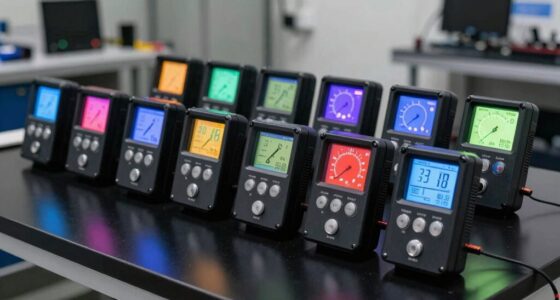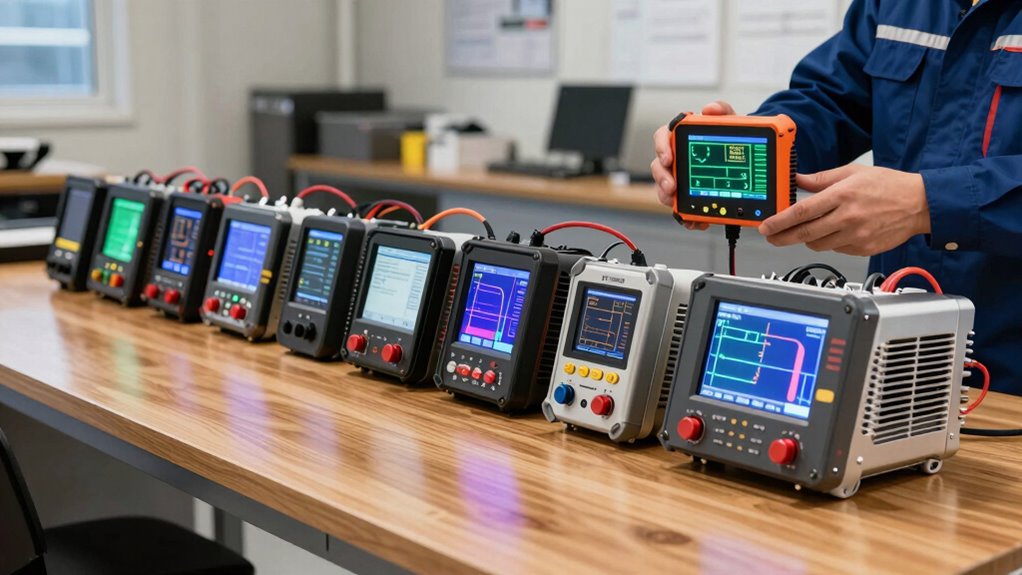

When it comes to diagnosing automotive electrical issues, an alternator tester is an essential tool. The best models provide quick, accurate results and are easy to use for both professionals and DIY enthusiasts. The TOPDON BT100 stands out as the overall best due to its reliable testing features, while options like the FOXWELL BT301 excel in digital readability. Buyers often face tradeoffs between price, complexity, and versatility—more advanced testers tend to cost more but save time, whereas simpler models suit casual users. Continue reading for a detailed comparison that will help you find the perfect alternator tester for your needs.

Get business pricing on garage and car supplies
- Business-only prices and quantity discounts
- Tax-exempt purchasing
- Multiple users, one account, clear invoices
Complete the kit


Key Takeaways
- The top picks balance accuracy, ease of use, and durability, making them suitable for various skill levels.
- Digital displays and auto-test features are common in higher-ranked models, improving user experience.
- Price ranges significantly, with premium testers offering more comprehensive diagnostics, while budget options focus on basic functionality.
- Compatibility with different vehicle voltages (12V vs 24V) is a key factor for versatility in professional settings.
- Most models include additional features like battery testing and charging system analysis, adding value beyond simple alternator checks.
| TOPDON BT100 12V Car Battery Tester |  | Best Overall for Comprehensive Battery Evaluation | Battery Compatibility: 100-2000CCA lead-acid batteries including flooded, AGM, EFB, GEL | Testing Functions: Battery health, cranking, charging system | Power Source: Passive testing via clamps | VIEW ON AMAZON | See Our Full Breakdown |
| 12V Car Battery and Alternator Tester |  | Best for Simple, Reliable Alternator and Battery Checks | Voltage: 12V | Battery Types: Flooded, AGM flat plate, AGM spiral, GEL | Indicators: 6 LED lights | VIEW ON AMAZON | See Our Full Breakdown |
| ANENG 12V Car Battery Tester, Automotive Voltmeter and Alternator Analyzer |  | Best for Accurate Voltage and Versatile Vehicle Compatibility | Voltage Range: 4-30V DC | Accuracy: 0.01V | Protection Features: Reverse connection protection | VIEW ON AMAZON | See Our Full Breakdown |
| 12V Car Battery Tester and Alternator Charging System Analyzer |  | Best for Multi-Vehicle Compatibility and Ease of Use | Voltage Range: 12V | Display: Digital LED | Protection Features: Reverse connection, over-voltage | VIEW ON AMAZON | See Our Full Breakdown |
| FOXWELL BT301 12V Car Battery Tester, Digital Alternator and Starter Tester |  | Best for High-Precision, Extended Testing Flexibility | Battery Compatibility: 12V lead-acid batteries (flooded, AGM, EFB, GEL) | Display: 2.8-inch color screen | Cable Length: 6.5 feet | VIEW ON AMAZON | See Our Full Breakdown |
| TOPDON BT200 Car Battery Tester, 12V/24V, 100-2000 CCA Load Tester |  | Best for Professional-Grade Diagnostics in Extreme Conditions | Voltage Compatibility: 12V/24V | CCA Range: 100-2000 CCA | Display: 2.4-inch color LCD | VIEW ON AMAZON | See Our Full Breakdown |
| alternator tester for automotive electrical | Battery Compatibility | Display |
|---|---|---|
| TOPDON BT100 12V Car Battery T | 100-2000CCA lead-acid batteries including flooded, AGM, EFB, GEL | — |
| 12V Car Battery and Alternator | — | — |
| ANENG 12V Car Battery Tester | — | — |
| 12V Car Battery Tester and Alt | — | Digital LED |
| FOXWELL BT301 12V Car Battery | 12V lead-acid batteries (flooded, AGM, EFB, GEL) | 2.8-inch color screen |
| TOPDON BT200 Car Battery Teste | Flooded, AGM, GEL, Deep-cycle | 2.4-inch color LCD |
More Details on Our Top Picks
TOPDON BT100 12V Car Battery Tester
The TOPDON BT100 stands out for its ability to deliver detailed insights into battery health, charge, and performance, making it ideal for both DIY enthusiasts and professionals who need reliable diagnostics. Compared with the FOXWELL BT301, it offers more granular data on battery state of health and state of charge, but at the cost of a slightly smaller display and fewer advanced features. Its compatibility with 100-2000 CCA lead-acid batteries ensures it covers most common vehicle types, yet it can’t test lithium or other battery chemistries. The LED indicators and spark-proof clamps make it safe and straightforward to use, especially for those familiar with battery testing. However, users unfamiliar with CCA ratings might find its operational nuances a bit challenging. Overall, this pick makes the most sense for users seeking a balance between detailed diagnostics and ease of use, especially in a workshop setting.
Pros:- Provides detailed battery analysis including SOH, SOC, voltage, and current
- Easy to operate with clear LED indicators and intuitive menu
- Safe, spark-proof clamps ensure reliable connections
Cons:- Limited to 12V lead-acid batteries, excluding other chemistries
- Requires proper attachment; might challenge beginners unfamiliar with testing procedures
Best for: DIY car owners and auto technicians needing comprehensive battery health analysis
Not ideal for: Casual users or those with primarily lithium batteries, as it doesn’t support non-lead-acid chemistries
- Battery Compatibility:100-2000CCA lead-acid batteries including flooded, AGM, EFB, GEL
- Testing Functions:Battery health, cranking, charging system
- Power Source:Passive testing via clamps
- Dimensions:Small and compact for easy storage
- Features:LED indicators, polarity reverse prevention, spark proof clamps
Our verdict“This tester suits users who need detailed, reliable diagnostics for lead-acid batteries in a professional or serious DIY context.”
12V Car Battery and Alternator Tester
This 12V Car Battery and Alternator Tester offers straightforward testing with six LED indicators, making it a practical choice for users who prefer manual, visual assessments. Unlike the more advanced TOPDON BT100, it lacks detailed diagnostic data but compensates with durability and ease of use, especially for quick checks on flooded, AGM, or GEL batteries. Its reverse protection adds a layer of safety, and its robust copper wire construction ensures durability in busy garage environments. However, its manual connection process can be less convenient than digital options like the FOXWELL BT301. It’s best suited for users who need a durable, no-frills device to verify battery and alternator status regularly, but not for those seeking detailed diagnostics or modern digital interfaces.
Pros:- Clear LED indicators provide quick status at a glance
- Durable construction with reverse protection prevents accidental damage
- Suitable for a variety of 12V vehicle batteries, including hybrids and boats
Cons:- Limited to 12V systems, not adaptable for higher voltages
- Requires manual connection, which might slow down workflow
Best for: Home mechanics and fleet operators needing quick, reliable checks without complex features
Not ideal for: Tech-savvy users who want detailed data or for testing higher voltage systems beyond 12V
- Voltage:12V
- Battery Types:Flooded, AGM flat plate, AGM spiral, GEL
- Indicators:6 LED lights
- Protection:Reverse protection
- Material:Pure copper wire and clips
Our verdict“This tester is perfect for users who prioritize durability and simplicity over detailed diagnostics in everyday vehicle checks.”
ANENG 12V Car Battery Tester, Automotive Voltmeter and Alternator Analyzer
The ANENG BT172 offers precise voltage readings and reliable alternator testing, making it a strong choice for users needing accurate data in a variety of vehicle types. Its wide voltage range (4-30V) surpasses many simple testers, providing flexibility for different systems, including some non-standard setups. Compared to the more basic 12V-only testers, it offers higher accuracy (0.01V) and includes reverse connection protection, adding safety. Its LCD display and LED indicators make it accessible, though proper connection becomes critical to avoid inaccurate readings—a potential downside for less experienced users. While it doesn’t support lithium batteries or other chemistries, it excels in providing trustworthy voltage data for typical automotive systems, especially where precision matters.
Pros:- Highly accurate voltage measurement (0.01V)
- Wide voltage range supports various vehicles
- Includes reverse connection protection for safety
Cons:- Limited to 12V systems, not suitable for lithium batteries
- Requires proper connection; incorrect setup can lead to errors
Best for: Automotive technicians and knowledgeable DIYers focused on precise voltage and alternator diagnostics
Not ideal for: Casual users or those testing non-12V systems, as it requires correct connection and understanding of voltage readings
- Voltage Range:4-30V DC
- Accuracy:0.01V
- Protection Features:Reverse connection protection
- Includes:Battery tester, alligator clamps, adapter cable, user manual
Our verdict“This device is well-suited for users needing precise voltage data and safe operation across multiple vehicle types, but less so for beginners.”
12V Car Battery Tester and Alternator Charging System Analyzer
The 12V Car Battery Tester and Alternator Charging System Analyzer offers a straightforward approach to assessing both battery health and alternator output, with an easy-to-read LED display. Its compatibility with a broad range of vehicles—including cars, trucks, motorcycles, and even boats—makes it versatile for diverse needs. Unlike more complex units, it emphasizes simplicity, with protection features like reverse connection and over-voltage safeguards, ensuring safe operation. However, its focus on 12V systems limits its use with higher voltage or lithium-based batteries. Its reliance on correct wiring for accurate readings can be a drawback for less experienced users, but overall, it delivers reliable, quick diagnostics for everyday use.
Pros:- Accurately tests battery health and alternator output
- Simple interface with clear LED indicators
- Wide vehicle compatibility including motorcycles and marine craft
Cons:- Limited to 12V batteries, excluding other chemistries
- Requires proper wiring; inaccurate results possible if connections are off
Best for: Small business fleet owners and hobbyists seeking a simple yet reliable testing tool for multiple vehicle types
Not ideal for: Users needing detailed diagnostic data or testing for non-12V systems like lithium or high-voltage batteries
- Voltage Range:12V
- Display:Digital LED
- Protection Features:Reverse connection, over-voltage
- Suitable For:Cars, trucks, motorcycles, ships, golf carts
Our verdict“This analyzer is ideal for users who want a quick, reliable check of 12V systems across various vehicle types without complex features.”
FOXWELL BT301 12V Car Battery Tester, Digital Alternator and Starter Tester
The FOXWELL BT301 elevates automotive testing with its 2.8-inch color display, extended 6.5-foot cable, and support for various battery types, including flooded, AGM, EFB, and GEL. Its high diagnostic accuracy—up to 99.9%—outperforms simpler testers like the TOPDON BT100 or ANENG BT172, making it suitable for professional environments. The long cable allows testing from the driver’s seat or outside the vehicle, adding convenience. While it doesn’t support lithium batteries and has a slightly higher price point, the durability and safety features, like reverse polarity protection, justify the investment for serious users. Compared to basic models, it offers a richer feature set for detailed diagnostics, though the display’s visibility in bright sunlight could be improved.
Pros:- Highly accurate diagnostics (up to 99.9%)
- Extended cable facilitates flexible testing positions
- Supports a broad range of battery types and vehicle applications
Cons:- Not compatible with lithium batteries
- Display may be hard to read in strong sunlight
Best for: Auto repair shops and advanced enthusiasts needing detailed, versatile diagnostics for multiple vehicle types
Not ideal for: Casual users or hobbyists who prefer simple, budget-friendly tools without extensive features
- Battery Compatibility:12V lead-acid batteries (flooded, AGM, EFB, GEL)
- Display:2.8-inch color screen
- Cable Length:6.5 feet
- Accuracy:up to 99.9%
- Protection:Reverse polarity
Our verdict“This tester is best suited for professionals and serious hobbyists who demand precise, flexible diagnostics with durable design features.”
TOPDON BT200 Car Battery Tester, 12V/24V, 100-2000 CCA Load Tester
The TOPDON BT200 stands out for its comprehensive compatibility with a wide range of battery types, including flooded, AGM, GEL, and deep-cycle, making it ideal for those who need detailed diagnostics across different vehicle and equipment types. Compared with the simpler TOPDON BT100, the BT200 offers a larger, sunlight-readable color display and supports testing both 12V and 24V systems, which broadens its utility. Its accurate CCA readings up to 2000 CCA and ability to operate reliably in temperatures from -4°F to 140°F make it suitable for professional use or serious DIYers working in challenging environments. However, this versatility comes with a learning curve, as some technical knowledge is necessary to interpret results correctly. Its higher price may also be a barrier for casual users who need quick, straightforward checks. Despite these tradeoffs, this model’s detailed diagnostics and durability make it the best choice for those who demand reliability and precision in demanding conditions.
Pros:- Highly accurate diagnostics for multiple battery types
- Supports both 12V and 24V systems
- Operates reliably in extreme temperatures
- Sunlight-readable color display
Cons:- Requires some technical knowledge for proper use
- Price may be higher than basic testers
Best for: Professional automotive technicians or advanced DIYers needing detailed diagnostics for various battery types and extreme conditions
Not ideal for: Casual car owners seeking a simple, plug-and-play tester without extensive features or technical complexity
- Voltage Compatibility:12V/24V
- CCA Range:100-2000 CCA
- Display:2.4-inch color LCD
- Temperature Range:-4°F to 140°F (-20°C to 60°C)
- Warranty:1 year
- Battery Compatibility:Flooded, AGM, GEL, Deep-cycle
Our verdict“This tester is ideal for professionals and experienced users who need precise, versatile diagnostics in tough environments.”

How We Picked
The products were evaluated based on several key factors: testing accuracy, user interface, build quality, versatility, and value for money. We prioritized models that deliver reliable results quickly and are durable enough for frequent use. Ease of operation was also crucial—features like automatic testing and clear digital readouts enhance usability. We considered the range of vehicle compatibility, including different voltage requirements, to ensure options suit both DIYers and professionals. Rankings reflect a balance between performance and affordability, highlighting models that stand out in real-world scenarios rather than just specifications.Factors to Consider When Choosing Alternator Tester For Automotive Electrical
Choosing the right alternator tester involves considering several factors beyond basic features. Understanding your specific needs—whether for occasional DIY checks or professional diagnostics—will help narrow your options. Reliability and ease of use often outweigh fancy features for casual users, while professionals should prioritize durability and comprehensive testing capabilities. Budget constraints can influence whether you opt for a simple, affordable model or a high-end device with advanced features. This guide explores key factors to keep in mind to make an informed purchase that offers lasting value.Accuracy and Reliability
Accuracy is the cornerstone of any testing tool. An alternator tester must provide precise readings to correctly diagnose electrical issues. Look for models with proven measurement standards and clear, easy-to-interpret results. Reliable testers reduce false positives and negatives, saving time and preventing unnecessary repairs. Cheaper models may sacrifice accuracy, so invest in a well-reviewed device if you need dependable diagnostics for ongoing use.
Ease of Use and Interface
A user-friendly interface speeds up testing and reduces errors. Digital displays with large, clear readings are preferable, especially for quick assessments. Features like automatic testing, simple buttons, and multi-language support can make the process smoother. Avoid overly complicated models if you’re a beginner, but professionals might value advanced controls and detailed readouts for more in-depth analysis.
Versatility and Compatibility
Many vehicles operate on different voltages, primarily 12V or 24V systems. An ideal alternator tester should accommodate both, especially if you work on a variety of vehicle types. Additionally, some models test both the alternator and battery, providing a more comprehensive picture of the electrical system. Consider your typical use case: a versatile device saves money and space by replacing multiple testers.
Build Quality and Durability
These tools are often used in demanding environments, making robustness important. Look for testers with sturdy casing, reliable probes, and good reviews on longevity. Cheaper plastic models might break or malfunction after repeated use, especially in workshop settings. Investing in a well-built device can prevent costly replacements and ensure consistent performance over time.
Value and Additional Features
While price is a factor, the best value often comes from models offering extra features like charging system analysis, battery testing, and data storage. These capabilities can provide a more complete assessment of the vehicle’s electrical health. Be cautious of overly complex devices if you only need basic alternator testing; for advanced diagnostics, investing in premium models pays off. Balance your budget with the features that will genuinely improve your workflow or DIY projects.
Frequently Asked Questions
Do I need a special alternator tester for different vehicle makes?
Most modern alternator testers are designed to be universal, especially those operating at standard voltages like 12V or 24V. However, some specialized vehicles or heavy-duty applications may require specific adapters or more advanced testing features. For typical passenger cars, a versatile tester that supports both voltages and provides comprehensive readings will suffice. Always check the product specifications to confirm compatibility with your vehicle types.
Can I use an alternator tester to diagnose other electrical issues?
Many alternator testers also include functions to test the battery and charging system as a whole. This makes them valuable tools for diagnosing broader electrical problems, such as poor battery connections or faulty wiring. However, they are not substitutes for advanced diagnostic equipment like oscilloscopes or automotive scanners. For most DIYers and technicians, a good multi-function tester simplifies troubleshooting without the need for multiple tools.
How often should I test my vehicle’s alternator?
If you notice symptoms like dimming headlights, slow cranking, or dashboard warning lights, testing your alternator is advisable. Regular checks, especially before long trips or during seasonal changes, can prevent breakdowns. For vehicles with high mileage or older batteries, annual testing can catch issues early. Keep in mind that testing is quick and inexpensive compared to potential roadside failures or repairs.
Are digital or analog testers better for automotive use?
Digital testers generally provide clearer, more precise readings and often include auto-test features that simplify the process. They are easier to read in various lighting conditions and can store data for future reference. Analog testers, while more durable and sometimes cheaper, require interpretation of needle movements, which can lead to errors. Overall, digital models tend to be more user-friendly and accurate for most users.
Is it worth paying more for a premium alternator tester?
Higher-priced models usually offer increased durability, advanced diagnostic features, and greater versatility, making them suitable for professional use. If you frequently work on multiple vehicles or need detailed analysis, investing in a premium tester can save time and improve diagnostic accuracy. Conversely, for casual or occasional use, a mid-range or budget model may provide sufficient performance at a better value. Consider your specific needs and usage frequency when evaluating the price premium.
Conclusion
For most users, the TOPDON BT100 offers the best overall balance of accuracy, ease of use, and durability, making it ideal for DIYers and professionals alike. If you’re seeking the best value, the 12V Car Battery and Alternator Tester provides reliable performance at an affordable price. Professionals or heavy users should consider the TOPDON BT200 for its advanced features and robust build. Beginners will benefit from models like the FOXWELL BT301 with simple interfaces. For those with specific vehicle requirements or high-volume use, investing in a premium, versatile model ensures long-term reliability and comprehensive diagnostics.
Halloween Picks
halloween
As an affiliate, we earn on qualifying purchases.