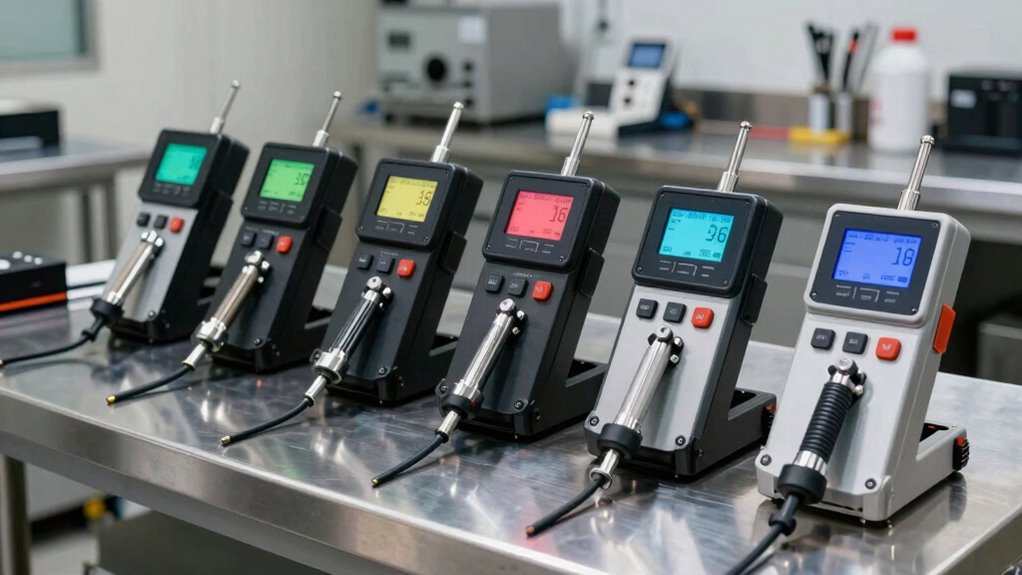
Finding the right torque wrench calibration tester kit is essential for maintaining accuracy and reliability in torque applications. The Neiko 20741A Digital Torque Adapter stands out as the best overall due to its versatile digital and analog modes, offering precise calibration for a wide range of torque wrenches. The HP-100 Intelligent Torque Tester is a notable alternative with its advanced digital testing features and ease of use, making it ideal for professional settings. However, buyers often face tradeoffs between cost, ease of calibration, and feature set, especially when balancing simplicity against advanced diagnostics. Continue reading to explore the full lineup and find the best fit for your needs.

Get business pricing on garage and car supplies
- Business-only prices and quantity discounts
- Tax-exempt purchasing
- Multiple users, one account, clear invoices
Complete the kit


Key Takeaways
- The top picks are distinguished by their accuracy, ease of use, and data storage capabilities.
- Digital adapters generally offer more precise readings and easier calibration compared to analog options.
- High-end models provide extensive data management, but often come at a higher price point.
- Simpler, more affordable kits are suitable for occasional use but may lack advanced features.
- Battery life and durability are critical factors for frequent calibration tasks.
| Neiko 20741A 1/2” Digital Torque Adapter, 29.5-147.5 Ft-Lb, Digital & Analog Calibration, Bi-Directional |  | Best Overall for Versatile Digital Calibration | Torque Range: 29.5-147.5 Ft-Lb | Accuracy: +-2% | Units: Ft-Lb, N-m, kg-m | VIEW ON AMAZON | See Our Full Breakdown |
| HP-100 Intelligent Torque Tester Cap Torque Meter Digital Testing Machine |  | Best for Multi-Industry Precision Testing | Units: lbf.in, kgf.cm, N.m | Peak measurement range: 0.5-90.0 lbf.in (0.5-100.0 kgf.cm / 0.05-10.00 N.m) | Measurement accuracy: ±0.5% FS | VIEW ON AMAZON | See Our Full Breakdown |
| Precision Instruments PRE-TC3F175F Torque Comparator |  | Best for Quick Wrench Verification in Maintenance Settings | Calibration: Certified torque testers | Standards: Meets or exceeds GGG-W-686C and ANSI B107 14M | VIEW ON AMAZON | See Our Full Breakdown | |
| CDI Torque 2503-F-DTC Digital Torque Checker |  | Best for High-Range, User-Friendly Calibration | Head Style: Square Drive | Item Torque: 250 ft-lb | Operation Mode: Mechanical | VIEW ON AMAZON | See Our Full Breakdown |
| 1/2″ Digital Torque Adapter with Color Display and Smart Alerts |  | Best for Auto and Precision Work with Visual Alerts | Torque Range: 7.5-150 ft-lb / 10.2–203.4 Nm | Accuracy: ±1% clockwise, ±2% counterclockwise | Display: Color LCD | VIEW ON AMAZON | See Our Full Breakdown |
| Digital Torque Calibrator Tester 550Nm Torque Calibration Tool with 55.0-550.0 N.m ±1% Accuracy and 2000 Data Storage |  | Best for High-Precision, Data-Intensive Calibration | Torque Range: 55.0-550.0 N.m | Accuracy: ±1% | Data Storage: 2000 groups | VIEW ON AMAZON | See Our Full Breakdown |
| torque wrench calibration tester kit | Torque Range | Accuracy | Units |
|---|---|---|---|
| Neiko 20741A 1/2” Digital Torq | 29.5-147.5 Ft-Lb | +-2% | Ft-Lb, N-m, kg-m |
| HP-100 Intelligent Torque Test | — | — | lbf.in, kgf.cm, N.m |
| Precision Instruments PRE-TC3F | — | — | — |
| CDI Torque 2503-F-DTC Digital | — | — | — |
| 1/2" Digital Torque Adapter wi | 7.5-150 ft-lb / 10.2–203.4 Nm | ±1% clockwise, ±2% counterclockwise | — |
| Digital Torque Calibrator Test | 55.0-550.0 N.m | ±1% | Nm, Kgf.cm, lbf.in |
More Details on Our Top Picks
Neiko 20741A 1/2” Digital Torque Adapter, 29.5-147.5 Ft-Lb, Digital & Analog Calibration, Bi-Directional
The Neiko 20741A stands out for transforming any ratchet into a digital torque measuring tool with dual modes and bi-directional support, making it ideal for precision calibration. Compared to the HP-100, it offers a straightforward digital readout with LED alerts, but its torque range is narrower, limiting use in very high-torque applications. Its built-in memory and audible alerts boost accuracy and workflow efficiency. The main tradeoff is its reliance on 2 AA batteries, which need replacement over time, and it doesn’t handle extremely high torques well. This pick makes the most sense for technicians seeking a reliable, easy-to-use digital adapter for routine calibration tasks, especially if their torque needs stay within its range.
Pros:- Transforms any ratchet into a digital torque wrench
- Supports multiple units and bi-directional measurement
- Includes audible alerts and LED indicators for accuracy
Cons:- Limited to 29.5-147.5 Ft-Lb torque range, not suitable for very high torques
- Requires 2 AA batteries that need periodic replacement
Best for: Professional mechanics and calibration technicians needing flexible, digital torque measurement for common applications
Not ideal for: Heavy-duty industrial use requiring higher torque ranges or rugged battery life, as it’s limited to 147.5 Ft-Lb and depends on AA batteries
- Torque Range:29.5-147.5 Ft-Lb
- Accuracy:+-2%
- Units:Ft-Lb, N-m, kg-m
- Drive Size:1/2 inch
- Batteries:2 AA
- Memory:50
Our verdict“Ideal for professionals needing precise digital calibration within moderate torque ranges, with easy digital readouts and alerts.”
HP-100 Intelligent Torque Tester Cap Torque Meter Digital Testing Machine
The HP-100 Torque Tester excels in providing high-precision measurements across various industries, including electronics and automotive, with an accuracy of ±0.5%. Unlike the Neiko adapter, it offers a broader measurement range and intelligent data management features like auto shutdown and data averaging, making it suitable for detailed diagnostics. While it’s more complex and potentially overwhelming for beginners, its versatility and accuracy are unmatched for professional calibration labs. The absence of specific pricing and durability details may be a concern for those seeking long-term reliability. This device is best for technicians needing comprehensive, high-accuracy testing and data handling across multiple tools and applications.
Pros:- High measurement accuracy of ±0.5% FS
- Supports multiple units including lbf.in, kgf.cm, N.m
- Features intelligent data management like auto shutdown and averaging
Cons:- No detailed info on battery life or robustness
- Potentially complex for users without prior experience
Best for: Calibration specialists and industrial technicians requiring detailed, multi-unit torque analysis and data management
Not ideal for: Casual DIYers or those looking for simple, portable calibration tools, as its complexity and price may be prohibitive
- Units:lbf.in, kgf.cm, N.m
- Peak measurement range:0.5-90.0 lbf.in (0.5-100.0 kgf.cm / 0.05-10.00 N.m)
- Measurement accuracy:±0.5% FS
- Display:LCD
- Power:Automatic shutdown
Our verdict“Best suited for professionals needing precise, multi-unit torque testing with advanced data features in industrial environments.”
Precision Instruments PRE-TC3F175F Torque Comparator
The PRE-TC3F175F Torque Comparator is a certified calibration tool designed for rapid checks of wrench accuracy, especially in tool trucks and maintenance facilities. Unlike digital adapters, it relies on certified torque testers to verify wrench calibration, ensuring compliance with standards like GGG-W-686C and ANSI B107 14M. It’s a straightforward device ideal for quick, routine verification rather than detailed measurements or calibration adjustments. The main limitation is the lack of detailed info on tool compatibility and usability beyond verification. This makes it perfect for setups where verifying tools quickly and reliably is needed without complex digital readouts.
Pros:- Provides certified, standards-compliant verification
- Quick and easy to use for wrench accuracy checks
- Ensures tools meet calibration standards before use
Cons:- Limited information on tool compatibility
- Not designed for detailed calibration or adjustment
Best for: Maintenance crews and tool inspectors needing quick, certified verification of torque wrenches
Not ideal for: Users requiring detailed digital calibration or recording, as this is a verification device, not a calibration system
- Calibration:Certified torque testers
- Standards:Meets or exceeds GGG-W-686C and ANSI B107 14M
Our verdict“Perfect for quick, certified verification of wrench accuracy in maintenance and inspection environments.”
CDI Torque 2503-F-DTC Digital Torque Checker
The CDI Torque 2503-F-DTC offers a broad measurement range of 25-250 ft-lb, making it suitable for heavy-duty applications, especially compared to smaller adapters like the Neiko. Its mechanical operation combined with a digital display provides straightforward, reliable readings. The inclusion of a calibration certificate adds confidence in measurement accuracy. However, it’s heavier at 5 pounds, which could reduce portability, and it requires periodic calibration itself to maintain precision. This makes it well-suited for workshops needing a robust, easy-to-use calibration tool for larger torque ranges, but less ideal for portable or lightweight setups.
Pros:- Wide torque range of 25-250 ft-lb
- Includes calibration certificate for traceability
- Mechanical operation with digital readout for reliability
Cons:- Heavy at 5 pounds, less portable
- Requires calibration over time for sustained accuracy
Best for: Workshops and calibration labs that regularly handle high-torque wrenches and require straightforward, accurate testing
Not ideal for: Field technicians needing lightweight, portable tools or those working with lower torque ranges, as it’s bulky and over-spec for small jobs
- Head Style:Square Drive
- Item Torque:250 ft-lb
- Operation Mode:Mechanical
- Measurement Standard:Metric, SAE
- Item Weight:5 pounds
- Materials:Chrome Vanadium Steel
Our verdict“Best for professional workshops needing a high-range, durable, and straightforward calibration tool for large torque wrenches.”
1/2″ Digital Torque Adapter with Color Display and Smart Alerts
The Digital Torque Adapter with Color Display combines visual smart alerts with a bright LCD to make torque monitoring intuitive, especially useful in auto repair or detailed assembly tasks. Its 30 preset groups and storage of up to 500 data sets provide high flexibility, surpassing the Neiko adapter in data management. The color alerts and buzzer notifications simplify accurate torque application, but it requires manual setup and calibration, and its battery life may diminish with frequent use. Its moderate weight and sturdy construction make it suitable for mobile auto technicians who need quick, clear visual cues during torque application.
Pros:- Bright color display with smart alerts for easy torque monitoring
- Supports 30 preset groups and up to 500 data sets
- Durable construction with high-precision calibration
Cons:- Requires manual setup and calibration for optimal accuracy
- Limited to 7.5-150 ft-lb range, not suitable for very high or very low torques
Best for: Auto repair professionals and technicians performing detailed, repetitive torque tasks requiring visual feedback and data storage
Not ideal for: Users seeking a simple, plug-and-play calibration device or those working outside the 7.5-150 ft-lb range, as it is limited to this torque window
- Torque Range:7.5-150 ft-lb / 10.2–203.4 Nm
- Accuracy:±1% clockwise, ±2% counterclockwise
- Display:Color LCD
- Measurement Standard:Metric, SAE
- Item Weight:0.5 kg
Our verdict“Ideal for auto technicians and detailed assembly work needing visual cues, preset storage, and high accuracy within its range.”
Digital Torque Calibrator Tester 550Nm Torque Calibration Tool with 55.0-550.0 N.m ±1% Accuracy and 2000 Data Storage
This digital torque calibrator stands out for its impressive combination of accuracy, versatile operation modes, and extensive data storage, making it ideal for professionals who need detailed records for calibration reports. Compared with the Neiko 20741A, which offers more straightforward digital and analog functions, this model provides advanced features like peak hold, track mode, and warnings, but at the cost of increased complexity. Its large data capacity of 2000 groups ensures comprehensive record-keeping, essential for automotive and industrial settings. However, its weight and bulkiness make portability less convenient, and the complexity might demand prior training. This pick best suits calibration specialists managing multiple sensors or fasteners regularly, especially where detailed data logging is critical. Conversely, hobbyists or occasional users might find it overly sophisticated and cumbersome.
Pros:- Highly accurate with ±1% precision for demanding calibration tasks
- Supports multiple units (Nm, Kgf.cm, lbf.in) for flexible applications
- Large 2000 data group storage for thorough record keeping
- Includes warning alerts with buzzer and LED indicators for safety
Cons:- Complex operation may require dedicated training or experience
- Bulkier and heavier than simpler models, reducing portability
- Lack of specific pricing info could impact budget considerations
Best for: Professional calibration labs, automotive technicians, and industrial maintenance teams requiring detailed data tracking and high precision
Not ideal for: Occasional users or those needing a lightweight, portable calibration tool without complex features
- Torque Range:55.0-550.0 N.m
- Accuracy:±1%
- Data Storage:2000 groups
- Units:Nm, Kgf.cm, lbf.in
- Operation Modes:Peak Hold, MAX, Track
- Power Features:Preset sleep time, automatic shutdown
- Application:Calibration of torque sensors and fasteners
Our verdict“This calibrator is ideal for professionals who prioritize precision and data management over portability or simplicity.”

How We Picked
The products in this roundup were selected based on their calibration accuracy, build quality, ease of use, and feature set. We prioritized kits that provide reliable measurements, clear data outputs, and user-friendly interfaces. Cost-effectiveness and versatility across different torque ranges also played key roles. To ensure real-world relevance, only products with consistent performance and positive user feedback were included. Our ranking reflects a balance of performance, value, and suitability for different levels of users, from hobbyists to professionals.| torque wrench calibration tester kit | Accuracy | Units |
|---|---|---|
| Neiko 20741A 1/2” Digital Torq | +-2% | Ft-Lb, N-m, kg-m |
| HP-100 Intelligent Torque Test | — | lbf.in, kgf.cm, N.m |
| Precision Instruments PRE-TC3F | — | — |
| CDI Torque 2503-F-DTC Digital | — | — |
| 1/2" Digital Torque Adapter wi | ±1% clockwise, ±2% counterclockwise | — |
| Digital Torque Calibrator Test | ±1% | Nm, Kgf.cm, lbf.in |
Factors to Consider When Choosing Torque Wrench Calibration Tester Kit
Choosing the right torque wrench calibration tester kit requires understanding several key factors. Beyond basic accuracy, consider how user-friendly the device is, especially if you’ll need to calibrate frequently. Durability and data management features can add significant value, particularly in professional environments. Balancing cost against features is essential—more advanced kits tend to be pricier but offer better long-term value for frequent use. Keep in mind the range of torque your needs cover and whether the device supports that spectrum reliably.Accuracy and Calibration Range
Precision is at the core of any calibration kit. Look for products with a proven ±1% accuracy or better, especially if your work demands high standards. Additionally, ensure the device covers the torque range you need; some kits excel in low ranges but falter at higher settings. Choosing a kit with a broad calibration spectrum can save you from needing multiple tools, streamlining your workflow and reducing overall costs.
Ease of Use and Interface
Intuitive interfaces, clear displays, and straightforward calibration procedures make a significant difference, especially for users who calibrate frequently. Digital models with color displays and smart alerts tend to reduce errors and speed up the process. Conversely, analog-only options might be less user-friendly but are often more durable and simpler to maintain. Consider your comfort level with digital technology when selecting a kit.
Build Quality and Durability
Durability matters more if you’ll be using your calibration kit regularly or in demanding environments. Look for sturdy construction, weather resistance, and reliable internal components. Cheaper models may save money upfront but can be prone to calibration drift or damage over time. Investing in a well-built kit can be more cost-effective in the long run by maintaining accuracy and reducing replacement needs.
Data Storage and Connectivity
Advanced calibration kits often include data logging, making it easier to track calibration history and maintain compliance standards. Features like Bluetooth or USB connectivity can streamline data transfer to your computer or mobile device. However, these features come with increased complexity and cost, so assess whether they align with your workflow or regulatory requirements.
Price and Value
While budget options can suffice for occasional calibration, they often lack the precision or durability needed for frequent use. Premium kits provide accuracy, data management, and long-term reliability but at a higher price. Striking a balance between cost and features depends on your specific needs—if calibration is critical to your work, investing in a more capable kit can prevent costly errors and rework.
Frequently Asked Questions
How often should I calibrate my torque wrench?
The frequency of calibration depends on how often and how intensively you use your torque wrench. For professional use, calibrating every 6 to 12 months is common, especially if the tool is used in critical applications. For hobbyist or occasional use, annual calibration may suffice. Regular calibration helps maintain accuracy and prevents potential damage or misapplication of torque values.
Can I calibrate different types of torque wrenches with one kit?
Many calibration kits are versatile enough to work with various torque wrench types, including beam, click, and digital models. However, it’s important to verify the kit’s calibration range and compatibility with your specific tools. Some kits are optimized for certain ranges or styles, so selecting a universal or adjustable kit can save time and money while ensuring accurate calibration across your collection.
What is the typical cost of a reliable torque wrench calibration tester kit?
Reliable kits generally range from around $200 to over $1000, depending on features, accuracy, and data management capabilities. Entry-level digital adapters or analog options tend to be more affordable but may lack advanced features like data logging or smart alerts. High-end models with extensive data storage and connectivity come at a premium but are worthwhile if frequent, precise calibration is required.
Are digital calibration kits more accurate than analog ones?
Digital calibration kits often provide more precise, easy-to-read measurements with features like real-time feedback and data logging. However, the core accuracy depends on the internal sensors and calibration quality, not just digital display. Analog kits can be very accurate if well-made but typically lack the convenience and detailed data tracking of digital options. Your choice should reflect your need for ease, data management, and calibration precision.
What maintenance is required for calibration tester kits?
Most calibration kits require minimal maintenance but should be stored in a protective environment to prevent damage. Regularly checking battery health, cleaning the sensors, and recalibrating the device itself according to the manufacturer’s recommendations will help maintain accuracy. Some high-end models might need periodic professional calibration or servicing to stay reliable over time.
Conclusion
For those seeking an all-around reliable choice, the Neiko 20741A Digital Torque Adapter offers excellent accuracy and versatility, making it suitable for both hobbyists and professionals. Budget-conscious buyers or those new to calibration might prefer the 1/2″ Digital Torque Adapter with Color Display for its straightforward interface at a lower cost. Professionals requiring extensive data logging and high precision should consider the Digital Torque Calibrator Tester 550Nm, despite its higher price. For casual users, a simpler analog kit can suffice, but investing in a digital model generally pays off in ease and accuracy over time.