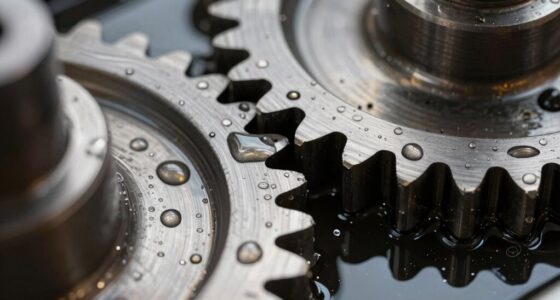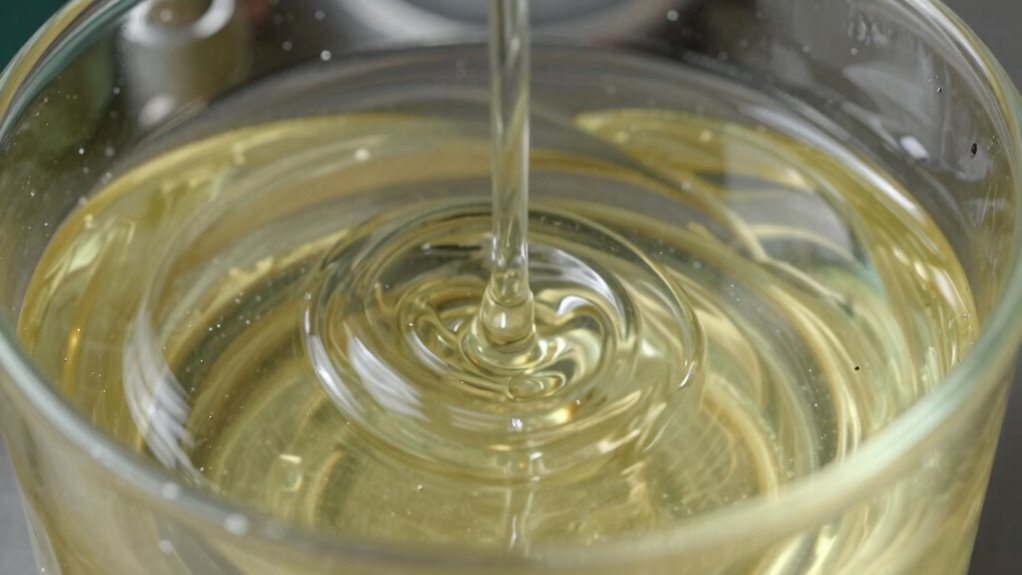

Viscosity shifts in gear oil mainly happen due to shear forces, high temperatures, and contamination. Shear stress causes the oil molecules to slide past each other, thinning the oil over time. Excessive heat breaks down additives and the oil’s chemistry, leading to degradation. Contaminants like dirt, water, and metal particles can also alter viscosity, either increasing or decreasing it. Understanding these factors helps you prevent gear wear—stick around to learn more.
Key Takeaways
- Shear forces break down thickening agents, reducing viscosity and causing shear thinning in gear oil.
- Excessive heat accelerates oil oxidation and thermal breakdown, leading to viscosity loss and degradation.
- Contaminants like dirt and water can alter viscosity by increasing or decreasing oil thickness.
- Metal particles act abrasively, thinning oil and contributing to viscosity shifts.
- Regular testing helps identify whether shear, heat, or contamination is causing viscosity changes.

MOLUCKFU Engine Oil Comparator Tool and Transmission Oil Viscosity Tester Acrylic Stand for Accurate Car Maintenance and Quality Testing
Versatile functionality: not only compares engine oil but also tests the viscosity of transmission oil, providing comprehensive oil…
As an affiliate, we earn on qualifying purchases.
As an affiliate, we earn on qualifying purchases.
Why Does Gear Oil Viscosity Matter?
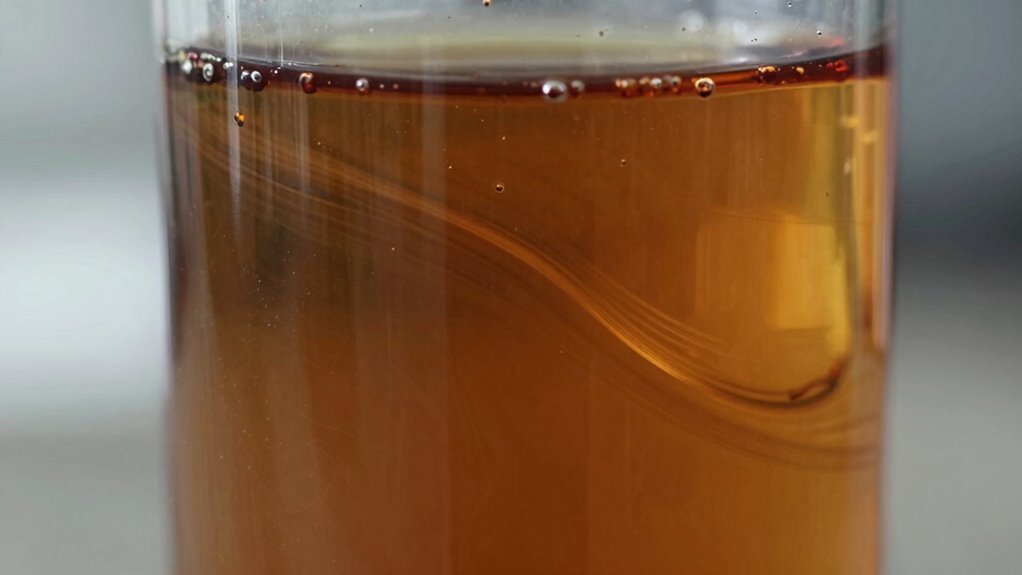
Understanding why gear oil viscosity matters is essential because it directly affects how well your gear system performs. Proper viscosity guarantees ideal lubrication performance, reducing friction and preventing metal-to-metal contact. If the oil is too thick, it can cause sluggish movement and increased energy consumption. Conversely, if it’s too thin, it won’t provide sufficient film strength to protect components. Maintaining the correct viscosity helps extend equipment longevity by minimizing wear and tear. Regularly testing viscosity with accurate measurement tools ensures your machinery operates within optimal parameters. Additionally, contamination control is crucial since dirt or water ingress can alter viscosity and impair performance. For example, contaminant ingress can significantly impact oil viscosity and lead to equipment failure. Incorporating viscosity monitoring into your maintenance routine can help detect changes early and prevent costly repairs. Paying attention to oil condition and viscosity is a simple yet vital step in protecting your investment and ensuring long-term equipment reliability.
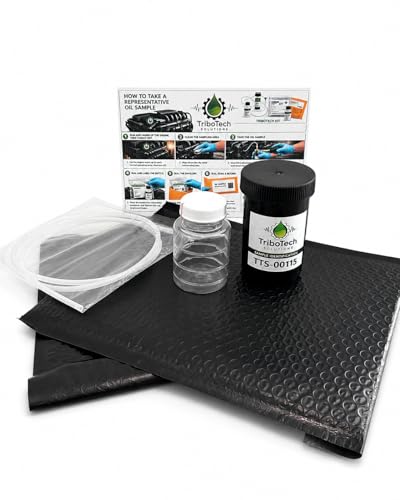
TriboTech Basic Oil Analysis Kit, Return Shipping Included, Oil Test Kit for Engines, Transmissions, Gearboxes and Hydraulic Systems
BASIC OIL ANALYSIS KIT Designed for routine oil condition, wear metal, and contamination monitoring in engines, transmissions, gearboxes,…
As an affiliate, we earn on qualifying purchases.
As an affiliate, we earn on qualifying purchases.
What Causes Viscosity Changes in Gear Oil?
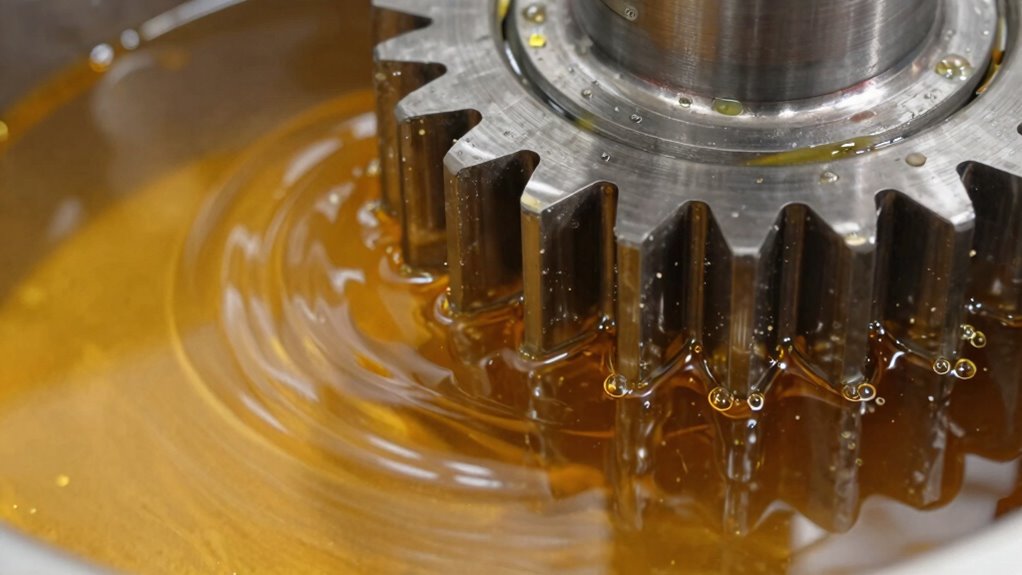
Your gear oil’s viscosity can change due to mechanical shear, contamination, or degradation over time. When the oil experiences intense use, it can break down or become contaminated with dirt and metal particles. These factors directly impact the oil’s ability to lubricate effectively.
Mechanical Shear Effects
Mechanical shear occurs when gear oil is subjected to high forces within the gear assembly, causing the oil’s thickening agents to break down. This process, known as oil shearing, reduces viscosity and affects lubrication performance. Frictional heating from intense gear contact accelerates oil shearing, further thinning the oil. As the oil shears, its ability to maintain a protective film diminishes, risking increased wear. The table below highlights key factors influencing shear effects:
| Factor | Impact |
|---|---|
| Shear Rate | Higher shear rates cause more oil shearing |
| Oil Viscosity | Lower viscosity oils shear more easily |
| Load Conditions | Heavy loads increase shear forces |
| Temperature | Elevated temps enhance oil shearing |
| Gear Speed | Faster speeds promote frictional heating |
Understanding these factors helps you anticipate viscosity shifts caused by mechanical shear. Lubrication quality can significantly influence how well your gear oil withstands shear forces over time.
Contamination and Degradation
Contamination and degradation are primary factors that cause viscosity changes in gear oil. Contamination sources like dirt, water, metal particles, and sludge introduce unwanted substances that alter the oil’s properties. These contaminants can lead to increased viscosity or thinning, depending on their nature and amount. contaminants can also accelerate chemical reactions within the oil, further contributing to its breakdown. Degradation processes, such as oxidation, thermal breakdown, and additive depletion, also weaken the oil’s structure, causing viscosity shifts over time. As the oil degrades, its molecular composition changes, reducing its ability to lubricate effectively. Regular monitoring helps identify contamination and degradation early, preventing costly damage. Maintaining clean operating conditions and following proper oil change intervals are vital steps to minimize these factors and preserve the gear oil’s viscosity stability. Additionally, understanding shear forces and their impact on oil viscosity can help in selecting appropriate lubricants for specific applications. Recognizing oil degradation mechanisms enables proactive maintenance strategies that extend equipment lifespan. A comprehensive approach to oil maintenance ensures the longevity and performance of gear systems by addressing both contamination and degradation proactively. Being aware of Contamination sources and actively controlling them can significantly reduce the risk of viscosity instability and equipment failure.

Quicksilver SAE 90 High Performance Gear Lube for Outboards and Sterndrives, 32 oz
Lower unit gear oil formulated to protect against corrosion and excessive wear
As an affiliate, we earn on qualifying purchases.
As an affiliate, we earn on qualifying purchases.
How Do Shear Forces Affect Gear Oil Viscosity?
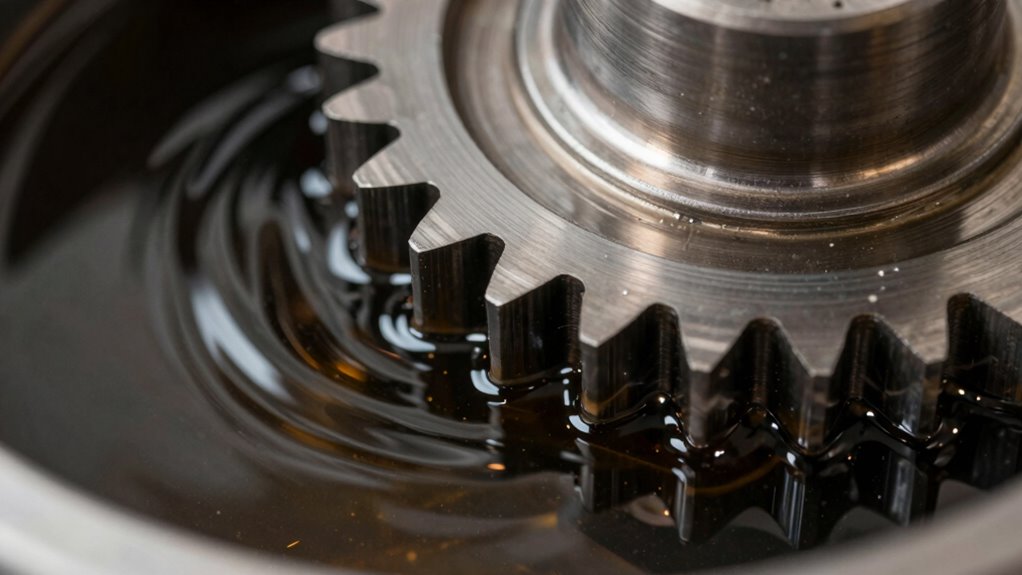
Shear forces directly influence gear oil viscosity by causing the oil molecules to slide past each other more rapidly under high stress. This process, driven by shear stress, alters the oil’s viscosity behavior, often leading to a reduction known as shear thinning. When shear stress exceeds a certain point, the oil’s molecules align in the direction of flow, decreasing resistance. To understand this better:
- Increased shear stress weakens the molecular bonds, lowering viscosity.
- Repeated shear forces can cause irreversible changes, leading to viscosity shift.
- Consistent high shear rates may accelerate oil degradation, impacting performance.
- Molecular dynamics helps in understanding how shear forces impact viscosity at a microscopic level.
Additionally, ongoing shear exposure can influence the formation of deposits and contaminants within the oil, further affecting its viscosity and overall functionality. Shear forces can also induce chemical changes that compromise the oil’s protective qualities, leading to increased wear on gear components.
Furthermore, lubricant additives may be depleted or altered due to sustained shear, reducing the oil’s effectiveness over time, while shear-induced degradation can accelerate the breakdown of the lubricant’s protective properties.

Valvoline Daily Protection 80W-90 Gear Oil 1 Quart
Extreme pressure additives deliver outstanding high pressure performance, load carrying capacity and durability for towing and hauling
As an affiliate, we earn on qualifying purchases.
As an affiliate, we earn on qualifying purchases.
How Does Excessive Heat Impact Your Gear Oil?
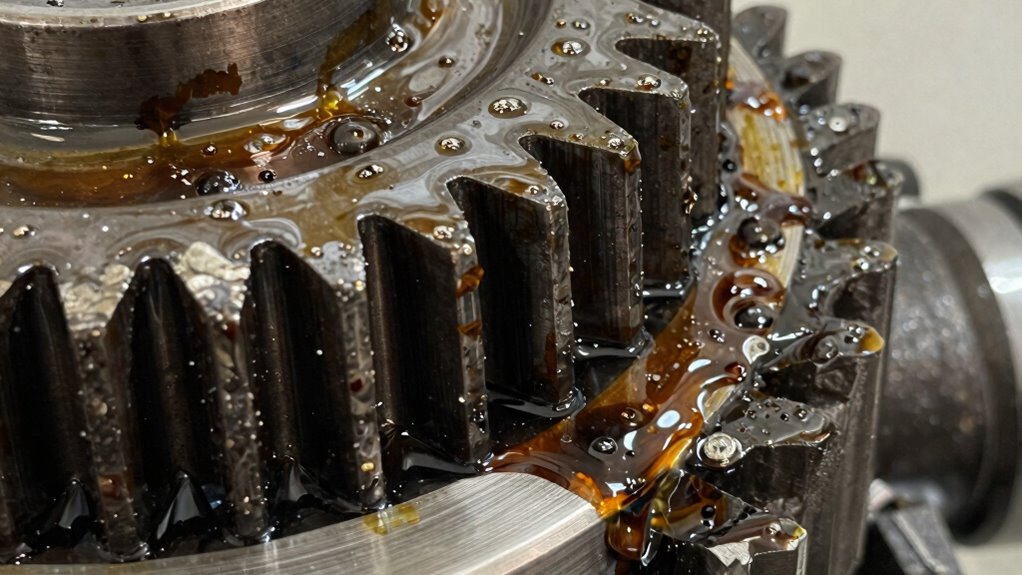
Excessive heat can cause your gear oil to break down faster, increasing the risk of oil degradation. When the oil deteriorates, it loses its ability to lubricate effectively, leading to increased wear and potential damage. Keeping temperatures in check is vital to maintaining ideal lubrication and preventing costly repairs. Proper storage and handling of gear oil can help prevent premature breakdown caused by heat. Additionally, ensuring proper temperature regulation during operation is essential for maintaining oil viscosity and performance. Extreme weather conditions may exceed the gear oil’s capacity, emphasizing the importance of selecting a high-performance lubricant designed for challenging environments. Monitoring microplastics in dust can also help assess the overall health of your machinery and environment, indirectly supporting optimal gear oil performance. Understanding how heat affects viscosity can further guide you in choosing the right lubricant and protective measures.
Oil Breakdown Risks
When your gear operates under high temperatures, the oil’s protective properties can quickly deteriorate. Excessive heat accelerates oil breakdown by weakening the lubricant formulation and diminishing additive effects. This process leads to:
- Reduced film strength, increasing metal-to-metal contact and wear.
- Chemical decomposition of additives, which compromises corrosion resistance.
- Formation of sludge and varnish, blocking vital passages and impairing function. Maintaining proper lubrication intervals can help prevent overheating and extend gear life.
- Proper planning of lubrication intervals can help prevent overheating and extend gear life. Additionally, selecting oils with heat-resistant formulations can significantly reduce the risk of breakdown in high-temperature environments.
As these changes occur, the oil loses its ability to protect your gear effectively, risking costly damage. High temperatures cause the lubricant’s chemistry to break down faster, making it essential to monitor oil condition. Choosing oils with stable additive effects and heat-resistant formulations can help mitigate these risks and extend gear life.
Reduced Lubrication Efficiency
High temperatures can considerably reduce your gear oil’s ability to lubricate effectively, leading to increased friction and wear. When heat causes the oil’s viscosity to drop, it can’t create a proper film between gear surfaces, increasing the risk of lubrication failure. This results in accelerated equipment wear, potential damage, and costly repairs. To understand this better:
| Effect of Excessive Heat | Consequence |
|---|---|
| Viscosity reduction | Poor lubrication, increased wear |
| Oxidation | Oil breakdown, debris formation |
| Thinning of oil | Increased metal-to-metal contact |
| Accelerated aging | Shortened oil lifespan |
Maintaining proper heat levels guarantees your gear oil continues to protect your equipment efficiently.
How Can Contaminants Alter Gear Oil Viscosity?
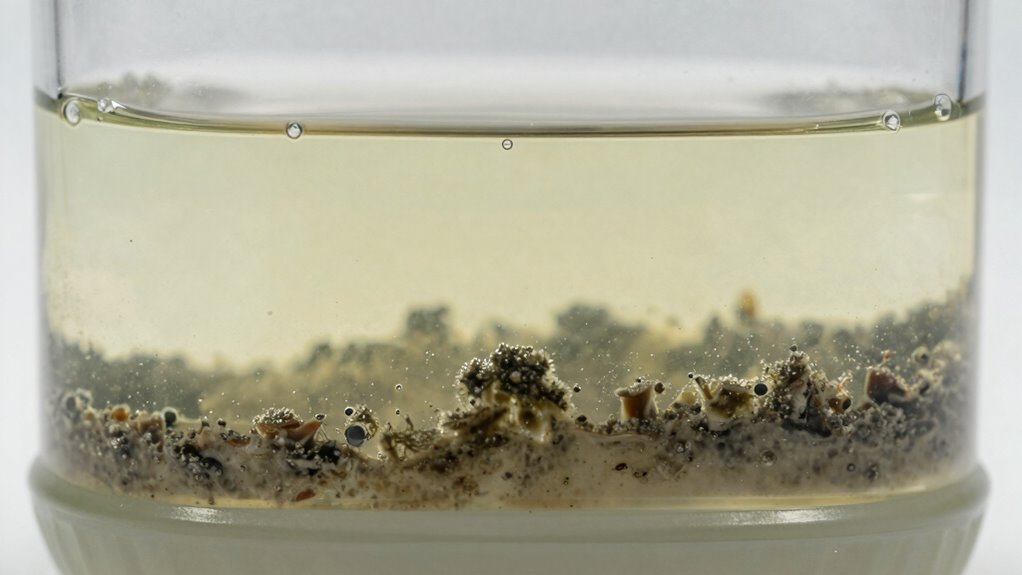
Contaminants such as dirt, water, and metal particles can considerably change the viscosity of gear oil. These contaminant types interfere with the oil’s ability to flow smoothly, leading to viscosity alteration. To understand this better, consider:
- Dirt and debris increase viscosity, making the oil thicker and harder to circulate.
- Water reduces viscosity initially but can cause breakdowns, leading to inconsistent lubrication.
- Metal particles act like abrasives, thinning the oil and causing unpredictable viscosity shifts.
These contaminants compromise oil performance and can accelerate wear. Recognizing how different contaminant types influence viscosity helps you identify potential issues early and maintain proper gear lubrication. Keeping gear oil clean prevents unwanted viscosity changes and prolongs equipment life.
How Do You Know If Your Gear Oil Viscosity Is Degrading?
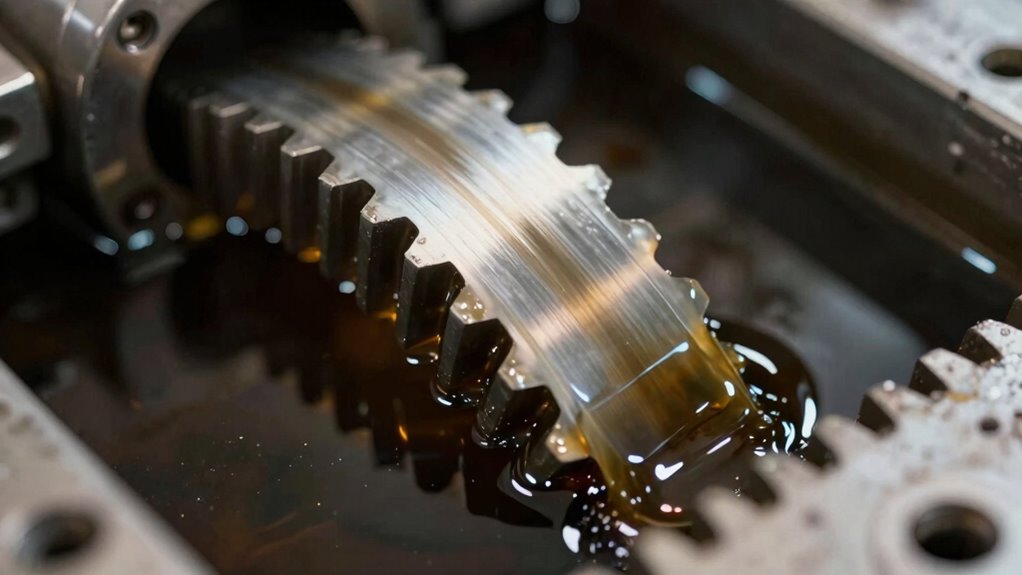
If your gear oil starts to lose its effectiveness, you’ll likely notice signs that its viscosity is degrading. One common indicator is increased gear noise or rough shifting, suggesting the oil isn’t providing proper lubrication. You might also observe higher operating temperatures, which can point to thinning oil. Synthetic formulations are designed to resist viscosity changes, but over time, additive packages can break down, leading to viscosity shifts. If the oil appears thinner or thicker than when new, it’s a sign that its properties are deteriorating. Regularly checking oil condition and noting any changes in performance can help you catch viscosity issues early. This way, you can replace or top up your gear oil before it causes damage.
How Can You Test and Prevent Viscosity Shifts in Gear Oil?
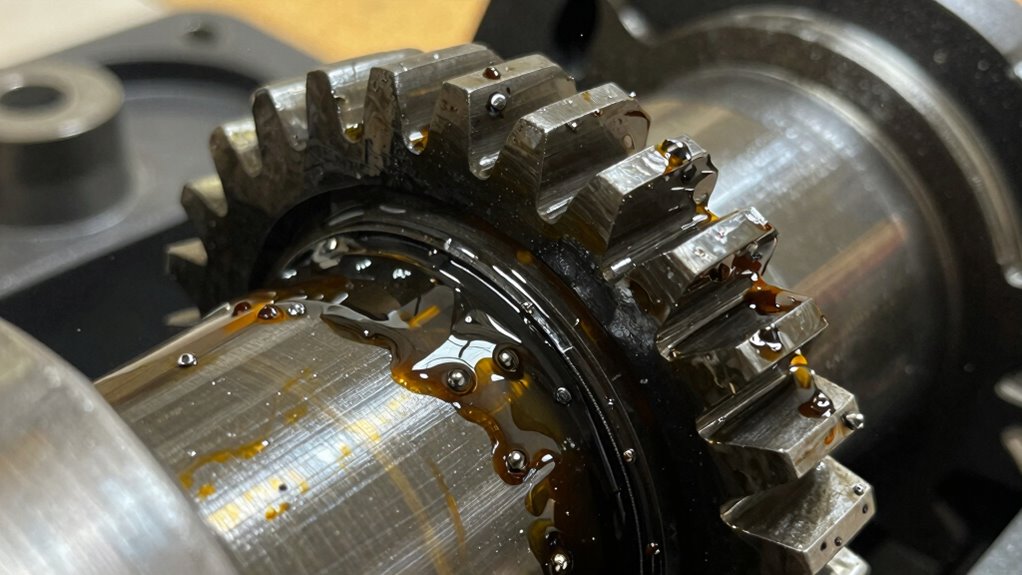
To effectively test and prevent viscosity shifts in gear oil, regular analysis and maintenance are essential. Start by performing viscosity testing periodically to detect any changes early. Consider these steps:
- Use proper oil filtration to remove contaminants that can cause viscosity degradation.
- Schedule routine viscosity testing to monitor oil performance and identify shifts before equipment damage occurs.
- Implement a proactive maintenance plan that includes replacing oil when tests indicate viscosity loss or contamination.
Frequently Asked Questions
Can Additives in Gear Oil Influence Viscosity Changes?
Yes, additives in gear oil can influence viscosity changes. Additive interactions, especially with viscosity modifiers, can either enhance or diminish the oil’s ability to maintain its viscosity under stress. Over time, shear forces or contamination may break down these additives, leading to viscosity shifts. Proper formulation and regular oil checks help guarantee that additives work effectively, maintaining ideal gear performance and protecting your equipment.
How Does Gear Material Wear Affect Oil Viscosity?
Gear wear causes tiny particles and debris to enter your oil, leading to increased oil contamination. As these particles circulate, they can break down the oil’s viscosity, making it thinner or less effective. Over time, this wear accelerates viscosity shifts, reducing lubrication and risking gear damage. To maintain ideal viscosity, regularly check for gear wear and contamination, and change your oil when particles or debris become excessive.
Are There Specific Operating Conditions That Accelerate Viscosity Shift?
High operating temperatures, intense mechanical stress, and frequent overloads accelerate viscosity shifts in gear oil. When gears run hotter, the oil thins faster; with increased mechanical stress, shear forces break down the oil’s structure. You notice these effects more under extreme conditions, where continuous heat and stress cause viscosity to decrease or fluctuate, leading to reduced lubrication and potential gear wear. Staying within recommended temperature and load limits helps maintain oil stability.
Does Storage Duration Impact Gear Oil Viscosity Stability?
Storage duration can impact gear oil viscosity stability, especially if storage conditions aren’t ideal. Over time, storage stability decreases, leading to potential viscosity shifts. You should regularly check for container contamination, as dirt or water can alter oil properties. Properly sealed, clean containers and a cool, dry environment help maintain viscosity stability, ensuring your gear oil performs efficiently and reduces the risk of premature wear or equipment failure.
Can Synthetic Gear Oils Resist Viscosity Shifts Better Than Mineral Oils?
Sure, synthetic gear oils are like the superheroes of lubrication—they resist viscosity shifts better than mineral oils. Thanks to synthetic advantages, they hold up against shear, heat, and contamination, unlike mineral limitations that leave you stranded when conditions get tough. So, if you want your gear oil to stay consistent and keep your machine running smoothly, go synthetic. It’s the smarter, more reliable choice for demanding environments.
Conclusion
So, here’s the irony: all those tiny shear forces, heat clusters, and sneaky contaminants can quietly turn your gear oil into a sluggish mess. You’d think, with all the fuss about viscosity, you’d catch the signs early, but sometimes it takes a breakdown to remind you. Keep a close eye, test regularly, and stay ahead—after all, a little vigilance now saves a lot of trouble later. Don’t wait for breakdown—be proactive!