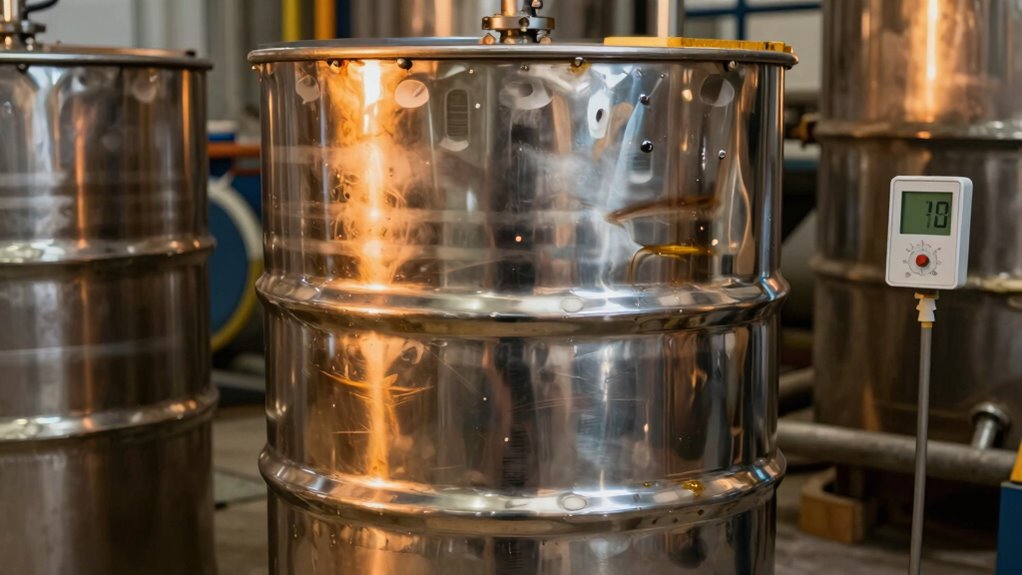
Warming thick oils in drums helps improve flow, making pouring and handling easier, especially when viscosity causes sluggishness or residues. However, over-heating can lead to chemical degradation, equipment damage, or safety hazards from fumes and leaks. It’s vital to monitor temperatures carefully with reliable tools and use proper insulation. When done correctly, heating enhances efficiency without risk. To guarantee safe, effective warming, explore the key signs and best practices ahead.
Key Takeaways
- Warming thick oils reduces viscosity, improving flow, pouring, and transfer efficiency during handling.
- Overheating can cause chemical degradation, harmful fumes, and damage to drum materials, risking safety and product quality.
- Proper temperature control and insulation ensure safe, energy-efficient heating without damaging the oil or equipment.
- Using compatible, regulated heating equipment and regular monitoring prevents overheating and maintains optimal viscosity.
- Alternative methods like chemical modifications or blending can reduce viscosity without the risks associated with excessive heating.

Metal Drum Heater 55 Gallon, 110V 1200W Barrel Band Heater, Heavy Duty Insulated Bucket Heater, Silicone Rubber Heating Band with Temperature Controller, for Metal Oil Drum Grease Keg (68.5" x 5")
Adjustable Thermostat: to control heating temperature up to 250°C, fit for metal and plastic drums
As an affiliate, we earn on qualifying purchases.
As an affiliate, we earn on qualifying purchases.
When Do Thick Oils Need Drum Heating? Key Signs and Criteria
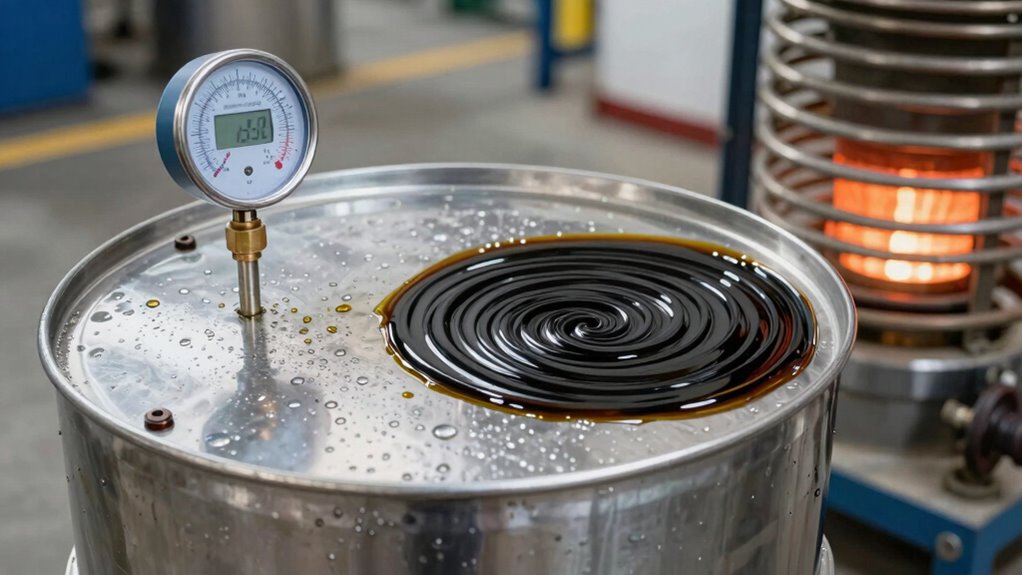
Thick oils often require drum heating when their viscosity becomes too high to pour or process efficiently. When oils reach certain temperature thresholds, their viscosity decreases, making handling easier. You’ll notice that if the oil resists flow or leaves thick residues, it’s a sign that viscosity reduction is needed. Temperature plays an essential role; if the oil remains stubbornly thick despite ambient warmth, heating can bring it to a more manageable state. Keep an eye on flowability and pouring ease—these are practical indicators that your oil has hit its viscosity limit. Heating helps maintain ideal processing conditions, preventing blockages and ensuring smooth transfer. Recognizing these signs early ensures you apply heat only when necessary, avoiding unnecessary energy use or potential damage. Additionally, monitoring the oil’s temperature with a thermal sensor can help prevent overheating and preserve oil quality. Using viscosity measurement techniques can further ensure the oil is at the optimal temperature for processing. Regularly assessing viscosity behavior can aid in determining when drum heating is truly needed, and incorporating temperature control methods can improve safety and efficiency during heating procedures. Understanding the relationship between temperature and viscosity can optimize the heating process and enhance operational safety.

QWORK Drum Heater Band 2 Pack, 800W 120V 5 Gallon Pail/Barrel Wrap with Adjustable Thermostat 80-300°F, Insulated Silicone Heating Blanket with Spring Fit for Metal Oil Drum/Grease Keg
FAST DRUM HEATER BAND: 800W 120V barrel band heater wraps around most 5-gallon drums to warm oils, grease…
As an affiliate, we earn on qualifying purchases.
As an affiliate, we earn on qualifying purchases.
How Heating Improves Oil Flow and Handling
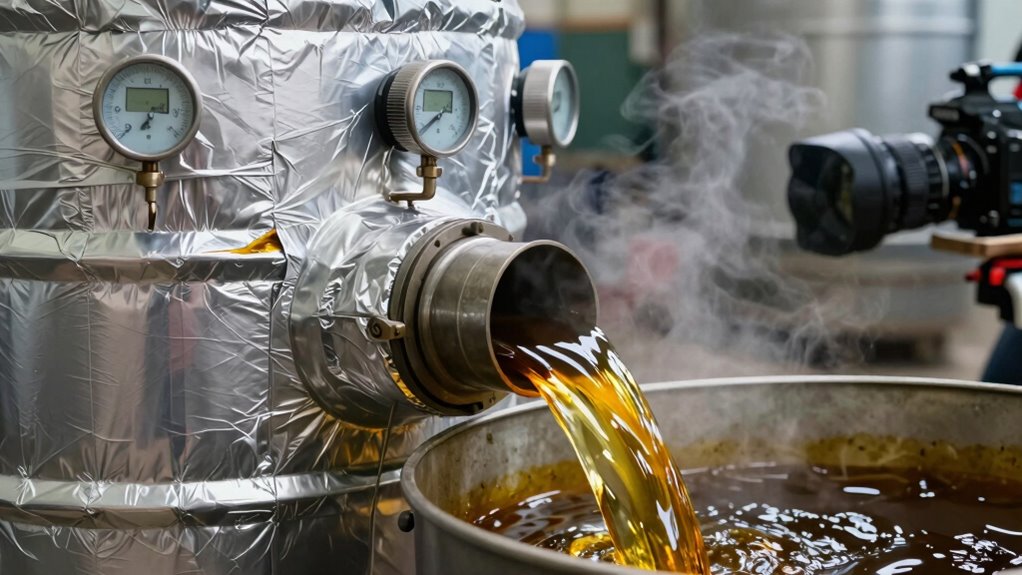
Heating substantially enhances oil flow and handling by lowering its viscosity, making it easier to pour, pump, and transfer. When oil’s viscosity decreases, it flows more freely, reducing strain on equipment and minimizing delays. Effective heat transfer guarantees uniform warming, preventing cold spots that could hinder flow. By controlling temperature, you can optimize oil’s consistency for easy handling while maintaining safety. Proper heating reduces the effort required to move thick oils, improves pump efficiency, and minimizes clogging risks. Keep in mind that consistent heat transfer is key to maintaining a manageable viscosity throughout the process. Additionally, understanding emerging trends in digital monitoring technologies can help optimize heating processes and prevent issues caused by uneven heating. Implementing advanced temperature control systems ensures more precise management of oil temperature, further streamlining operations and preventing overheating. This not only streamlines operations but also helps prevent issues associated with overly thick oils, making your handling tasks smoother and more efficient. Incorporating temperature sensors can provide real-time feedback, enabling better adjustments and safer handling. Furthermore, adopting automated temperature regulation can enhance consistency and reduce manual oversight. Recognizing digital integration in temperature management allows for more responsive and efficient control of heating systems.

Precision Digital Temperature Controller with Adjustable Thermostat (0-155℉) for Drum Heaters & Propane Tanks, FCC/UL/CSA Certified
Precision 0-155°F Adjustable Thermostat:Dual-display controller with ±1°F accuracy maintains optimal temperatures for drum heaters and propane tank blankets….
As an affiliate, we earn on qualifying purchases.
As an affiliate, we earn on qualifying purchases.
What Are the Risks of Overheating Your Drum? Safety and Equipment Concerns
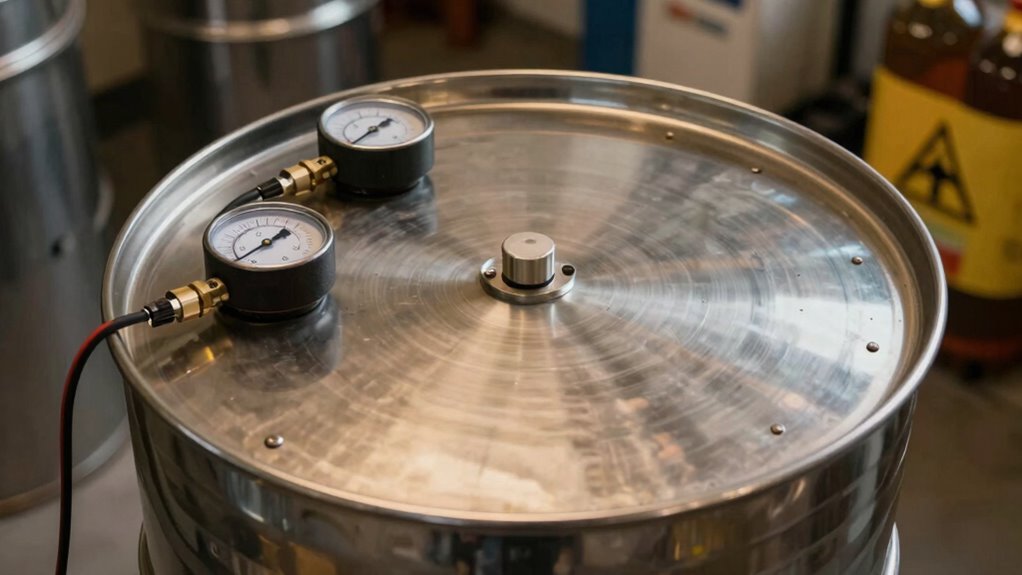
Overheating your drum can pose serious safety and equipment risks, so it’s crucial to monitor temperature carefully. Excessive heat can trigger unwanted chemical reactions within the oil, potentially leading to dangerous fumes or explosions. It also accelerates material degradation of the drum and its components, weakening structural integrity and increasing the risk of leaks or spills. Overheated oils may produce harmful vapors that compromise workplace safety and violate regulations. Additionally, overheating can damage heating equipment, causing malfunctions or fires. Maintaining proper temperature control isn’t just about product quality; it’s essential for your safety and equipment longevity. Always use reliable temperature monitoring tools and stay within recommended limits to avoid these hazards and ensure safe, efficient drum heating. Proper equipment maintenance can help prevent overheating issues and extend the lifespan of your heating system. Implementing temperature regulation techniques can further safeguard against overheating and its associated risks, including preventative measures to keep your process safe and efficient. Incorporating regular safety inspections can also identify potential issues before they escalate into serious hazards.

MOLUCKFU Engine Oil Comparator Tool and Transmission Oil Viscosity Tester Acrylic Stand for Accurate Car Maintenance and Quality Testing
Versatile functionality: not only compares engine oil but also tests the viscosity of transmission oil, providing comprehensive oil…
As an affiliate, we earn on qualifying purchases.
As an affiliate, we earn on qualifying purchases.
How to Choose the Right Drum Heating Equipment Safely
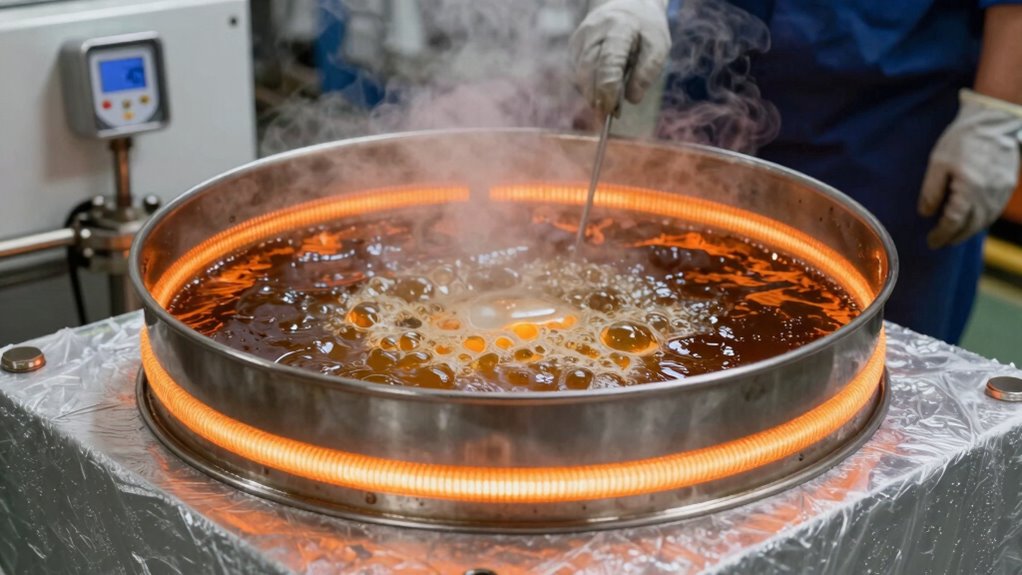
Selecting the right drum heating equipment is essential for guaranteeing safety and efficiency during the process. First, consider material compatibility to prevent damage or safety hazards. Make sure the heating method suits your drum’s material—whether steel, plastic, or stainless steel—to avoid melting or corrosion. Next, prioritize energy efficiency to keep operational costs low and reduce environmental impact. Choose equipment with proper insulation and adjustable temperature controls, so you can heat only as much as needed without wasting energy. Ensure the heating device meets safety standards and is designed for your specific drum size and type. Additionally, verifying material compatibility helps prevent damage to the drum or safety hazards during heating. Understanding early warning signs can also help prevent overheating and potential accidents. Incorporating proper maintenance practices ensures the longevity and safe operation of your heating equipment. Being aware of temperature regulation techniques can further optimize safety and energy use. By evaluating material compatibility and energy efficiency, you’ll select equipment that heats safely, effectively, and sustainably.
How to Monitor and Control Drum Temperatures Effectively
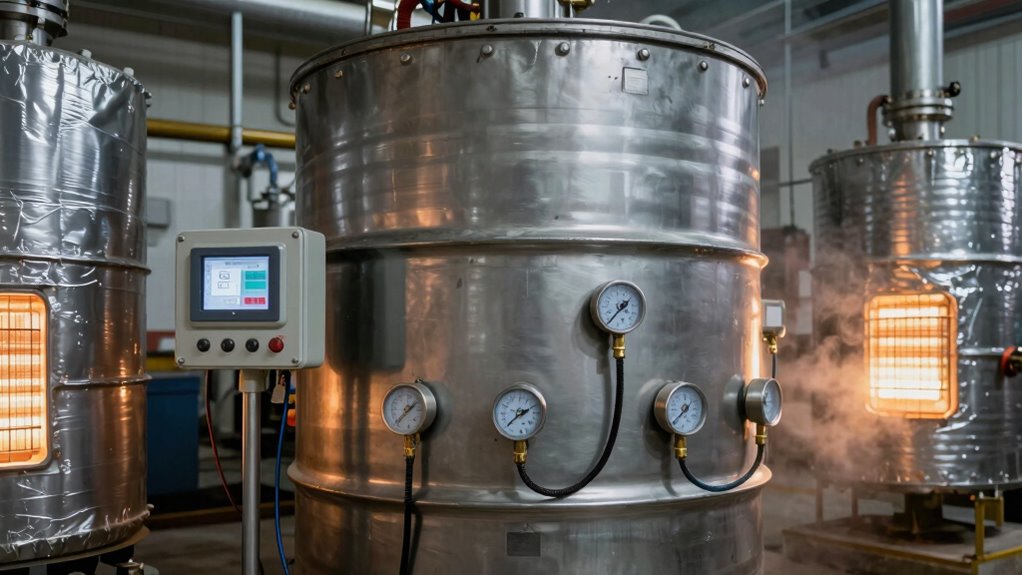
To keep your thick oils at the right temperature, you need accurate measurement tools that provide reliable readings. Effective heating controls help you adjust temperatures quickly and prevent overheating or underheating. By focusing on precise monitoring and responsive control systems, you guarantee safe and efficient drum heating. Incorporating robust data storage and backup solutions can also ensure that temperature records are preserved securely for compliance and analysis. Additionally, implementing temperature regulation protocols can further optimize heating efficiency and safety. Regular calibration of digital thermometers can improve measurement accuracy, further enhancing your temperature control efforts. Embracing emotional skills such as patience and attentiveness can also improve your ability to monitor and respond to equipment needs effectively.
Accurate Temperature Measurement
Accurate temperature measurement is essential for maintaining ideal heating conditions in drums containing thick oils. Precise readings help prevent overheating, which can cause excessive thermal expansion, or underheating, hindering viscosity reduction. To guarantee reliability:
- Use thermocouples or infrared sensors placed at multiple points for consistent data.
- Regularly calibrate your temperature devices to avoid inaccuracies.
- Avoid contact with the oil directly to prevent false readings due to surface variations.
- Monitor temperature trends over time to detect fluctuations that could impact oil viscosity and consistency.
Effective Heating Controls
Effective heating controls are crucial for maintaining consistent drum temperatures and ensuring ideal oil processing. Properly managing heat transfer depends on your drum insulation and control systems. Insulation helps reduce heat loss, allowing you to better regulate temperature without excessive energy use. Use reliable sensors to monitor the drum’s surface and internal temperatures continuously. Automated controls can adjust heating elements based on real-time data, preventing overheating or underheating. Regularly check insulation integrity and calibrate sensors to ensure accurate readings. Understanding energy efficiency can further optimize your heating process and reduce operational costs. By optimizing heat transfer and maintaining stable temperatures, you avoid damaging thick oils or compromising product quality. Precise control not only improves efficiency but also prolongs equipment lifespan, making effective heating controls essential for safe, reliable drum heating operations.
Should You Heat Your Drums? Expert Tips and Alternative Solutions
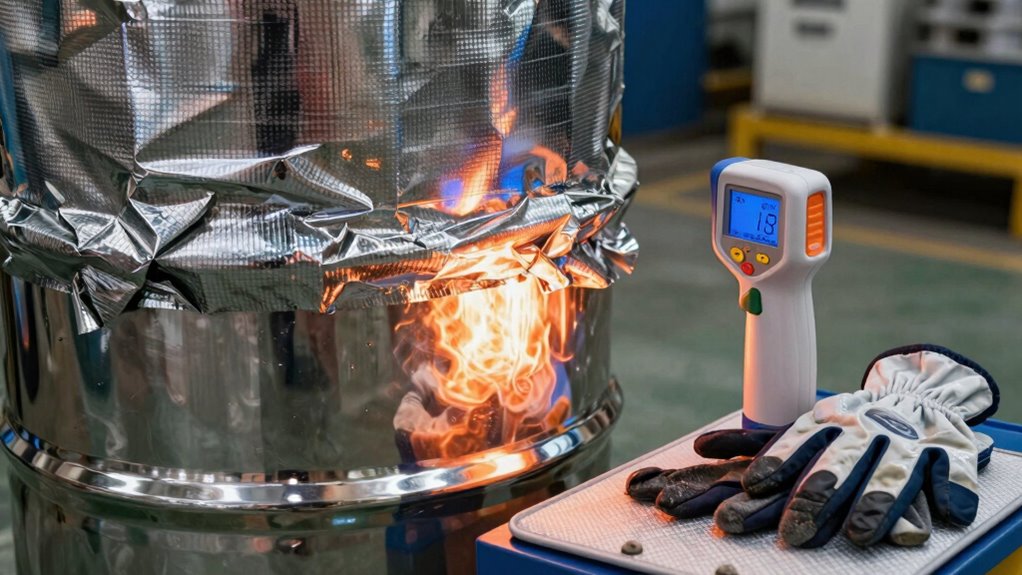
Deciding whether to heat your drums depends on the viscosity of the oil and your specific application. If the oil is thick and flow issues hinder your process, heating can be beneficial. However, over-heating may damage the oil or compromise safety. Consider these expert tips and alternatives:
- Use proper drum insulation to maintain temperature without excessive energy use.
- Assess oil viscosity regularly to determine if heating is necessary.
- Opt for indirect heating methods to avoid contamination.
- Explore chemical or blending solutions as alternatives to thermal heating.
These strategies help you balance the benefits of heating with potential risks, ensuring your process remains efficient and safe. Always tailor your approach based on the oil’s properties and your operational requirements.
Frequently Asked Questions
Can Heating Damage the Chemical Properties of Thick Oils?
Heating thick oils can cause chemical alteration if you use excessive temperatures or heat them too long. This process can lead to property degradation, changing viscosity, consistency, and other essential qualities. You should monitor temperature carefully to prevent damaging the oil’s chemical properties. Proper heating ensures the oil remains effective and safe for use, but overdoing it risks compromising its chemical integrity and performance.
How Energy-Efficient Is Drum Heating Compared to Other Methods?
Drum heating is insanely energy-efficient compared to other methods, saving you a ton on energy bills! It uses targeted heat, minimizing waste and maximizing cost savings. Unlike indirect heating or chemical methods, drum heating delivers quick, consistent warmth with less energy consumption. When you compare costs, you’ll see it slashes expenses dramatically, making it the smartest, most economical choice for warming thick oils.
What Maintenance Is Required for Drum Heating Equipment?
You need to regularly inspect your drum heating equipment for proper temperature regulation and wear. Clean heating elements and sensors to prevent malfunctions. Follow safety protocols, like checking insulation and grounding, to avoid hazards. Replace worn components promptly, and calibrate temperature controls to ensure consistent heating. Proper maintenance keeps your system efficient, safe, and prolongs its lifespan, helping you avoid costly breakdowns or safety issues.
Are There Environmental Concerns With Drum Heating Processes?
Yes, there are environmental concerns with drum heating processes. You should consider the environmental impact of increased energy consumption, which can lead to higher greenhouse gas emissions. To minimize this, optimize your heating operations by using energy-efficient equipment and maintaining proper insulation. Being mindful of these factors helps reduce your carbon footprint and promotes sustainable practices while ensuring effective heating of thick oils.
How Does Ambient Temperature Affect Heating Effectiveness?
Ambient temperature markedly impacts your heating efficiency. When the environment is cold, your drum heater works harder to warm thick oils, slowing the process. Conversely, warmer ambient temperatures aid heat transfer, making your heating more effective and energy-efficient. To optimize results, consider controlling ambient conditions or insulating drums, ensuring that heat isn’t lost quickly and that your heating system operates at peak efficiency regardless of external temperatures.
Conclusion
Think of drum heating like tending a campfire—you want enough warmth to keep things flowing smoothly, but not so much that it burns out of control. I once saw a worker hastily heat thick oil, only to warp the drum and cause spills. With proper monitoring and care, you can keep your oils flowing like a well-tuned engine. When in doubt, listen to your equipment and prioritize safety—your success depends on it.