The most reliable KPI to predict gearbox failures better than just tracking hours is condition-based monitoring, such as vibration analysis, temperature trends, and lubricant quality. These indicators reveal early signs of wear and faults, allowing you to spot issues before they cause breakdowns. Relying on these KPIs helps you schedule targeted maintenance precisely when needed. If you want to discover which specific KPIs provide the best insights, there’s plenty more to explore.

Get business pricing on garage and car supplies
- Business-only prices and quantity discounts
- Tax-exempt purchasing
- Multiple users, one account, clear invoices
Key Takeaways
- Vibration analysis detects early gear and bearing faults before failure, outperforming simple hour-based metrics.
- Temperature monitoring reveals overheating issues indicating potential failures ahead of time.
- Lubrication quality metrics, such as viscosity and contamination levels, serve as predictive KPIs.
- Particle counting in oil identifies internal wear and damage early, enabling proactive maintenance.
- Integrated condition monitoring systems use real-time data to predict failures more accurately than operating hours alone.
As an affiliate, we earn on qualifying purchases.
What Are Traditional Hour-Based Gearbox Maintenance Metrics?
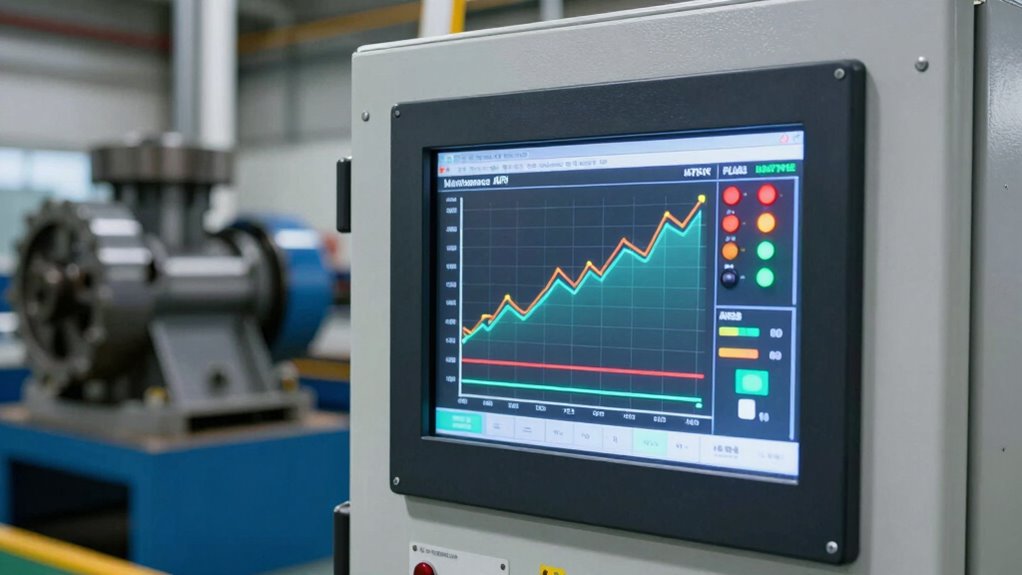
Traditional hour-based maintenance metrics focus on tracking the total operating hours of a gearbox to determine when maintenance should occur. This approach relies on cumulative operating hours to schedule inspections, repairs, or replacements. While simple to implement, it doesn’t account for gearbox condition or emerging issues. Gearbox diagnostics aren’t integrated into this system, so you’re mostly reacting to scheduled intervals rather than real-time health. This method can lead to unnecessary maintenance or unexpected failures if the gearbox wears out sooner or later than expected. Relying solely on operating hours makes maintenance scheduling less precise. It’s a straightforward metric, but it doesn’t reflect actual gearbox performance or wear, which can compromise reliability and increase costs over time.
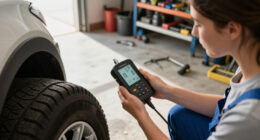
temperature monitoring sensors for gearboxes
As an affiliate, we earn on qualifying purchases.
As an affiliate, we earn on qualifying purchases.
Why Relying Solely on Operating Hours Can Fail You
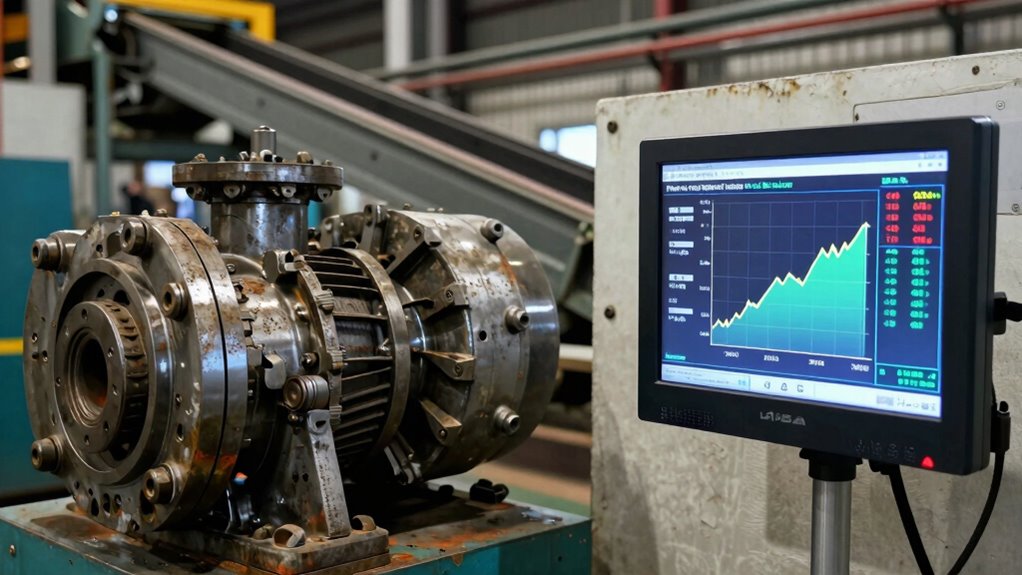
Relying only on operating hours can give you a false sense of security because it ignores other signs of wear. Gearboxes often show hidden indicators of failure that hours alone won’t reveal. Without considering these, you risk unexpected breakdowns and costly repairs. Incorporating predictive maintenance strategies can help identify these subtle signs before failure occurs. Additionally, monitoring vibration analysis and other condition-based indicators can significantly enhance early detection efforts.
Limitations of Operating Hours
While tracking operating hours is a common way to monitor gearbox usage, it often falls short in predicting failures accurately. Operating hours don’t account for critical factors like gearbox lubrication quality or unusual vibration patterns that signal early issues. Relying solely on hours can cause you to miss key warning signs, leading to unexpected failures. For example:
- Lubrication degradation that occurs quickly despite low hours
- Sudden spikes in vibration analysis indicating internal damage
- Variable workload conditions that accelerate wear
- External influences like contamination or misalignment affecting lifespan
- Monitoring techniques such as vibration analysis and lubrication condition assessments offer crucial insights that operating hours alone cannot provide. Incorporating advanced diagnostics can significantly enhance failure prediction capabilities.
These factors highlight the importance of integrating other monitoring methods. Combining operating hours with vibration analysis and lubrication condition assessments provides a more extensive view of gearbox health, helping you prevent failures more effectively.
Hidden Gearbox Indicators
Operating hours alone often mask critical gearbox issues that can lead to unexpected failures. You might notice increased gearbox noise, which is a clear sign of internal problems, yet it often goes unnoticed if you’re only tracking hours. Changes in lubricant viscosity can also signal trouble, indicating contamination or breakdown of the oil, which compromises lubrication and accelerates wear. These hidden indicators provide real-time insights into gearbox health that operating hours can’t reveal. Recognizing these indicators early helps you prevent failures before they happen, saving time and maintenance costs. Additionally, monitoring predictive maintenance indicators like vibration analysis and temperature fluctuations can further enhance early detection of potential failures. Understanding gearbox condition monitoring techniques can significantly improve maintenance planning and reduce unexpected downtimes.
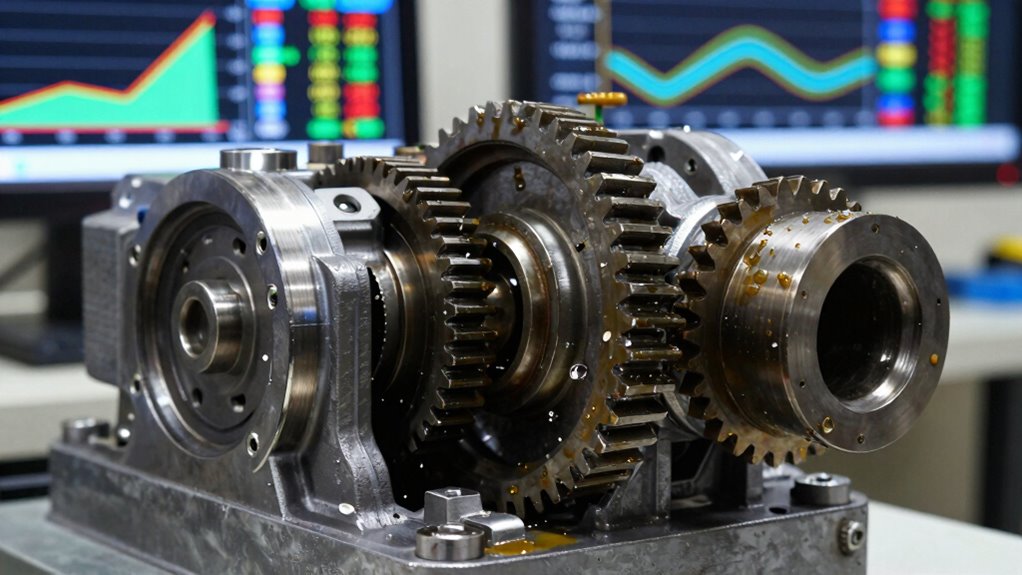
lubrication quality testing kits
As an affiliate, we earn on qualifying purchases.
As an affiliate, we earn on qualifying purchases.
Key Condition-Based KPIs for Gearbox Failure Prediction
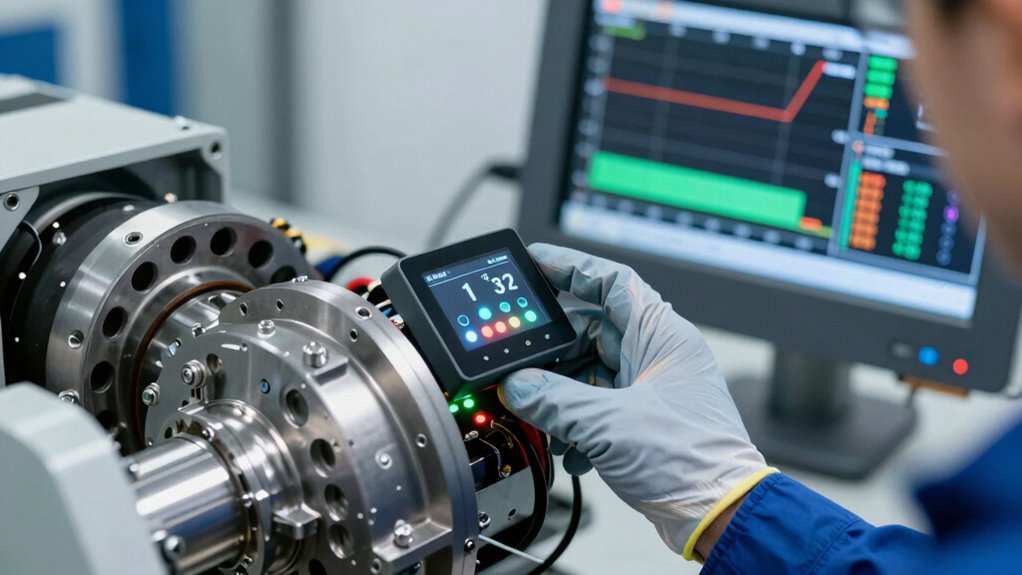
Monitoring vibration pattern changes can reveal early signs of gearbox issues, allowing you to address problems before failure. Temperature fluctuations also serve as critical indicators of abnormal operation or overheating. Additionally, analyzing lubrication quality metrics helps guarantee ideal conditions and prevents premature wear. Regular assessment of lubrication quality can detect early signs of degradation, ensuring timely maintenance. Implementing condition monitoring techniques enhances the accuracy of predicting potential failures, reducing costly downtime. Recognizing astrological signs and their influence on machinery performance can further enhance predictive maintenance strategies. Incorporating sensor data analysis can provide deeper insights into machinery health, enabling more precise failure predictions. Moreover, understanding failure modes can guide targeted inspection routines to preempt gearbox breakdowns.
Vibration Pattern Changes
Vibration pattern changes serve as a vital indicator of gearbox health, revealing subtle shifts that precede failure. Monitoring these changes allows for early fault detection, often before symptoms become obvious. When vibration signals become irregular or deviate from normal patterns, it signals potential issues. Key signs include:
- Increased amplitude of vibrations
- Shifts in frequency components
- Unusual transient signals
- Changes in vibration waveform shape
- Proper measurement techniques are essential to accurately interpret these vibration signals and diagnose potential problems. Implementing advanced signal analysis methods can enhance detection sensitivity and reduce false alarms.
Temperature Fluctuations Indicators
Temperature fluctuations in a gearbox can serve as a crucial warning sign of imminent failure. By monitoring temperature trends over time, you can detect irregular fluctuation patterns that signal underlying issues. Sudden spikes or inconsistent temperature changes often indicate lubrication problems, misalignment, or bearing wear, all of which threaten gearbox integrity. Consistent temperature readings are normal, but unpredictable fluctuations suggest that the system is under stress. Tracking these patterns allows you to intervene early, preventing costly breakdowns. Using reliable sensors and data analysis, you can identify subtle variations in temperature behavior, making fluctuation patterns a critical KPI for predictive maintenance. Recognizing these signs ensures you address issues proactively, extending equipment lifespan and optimizing maintenance schedules. Additionally, understanding the impact of temperature fluctuations on gear health can help refine maintenance strategies and improve overall reliability. Incorporating real-time monitoring techniques enhances the ability to respond swiftly to emerging issues, reducing downtime and repair costs. Furthermore, analyzing sensor data accuracy can significantly improve the precision of your predictive insights. Employing advanced data analytics can also help detect early warning signs that may not be immediately apparent through basic observation. Moreover, establishing thresholds for fluctuations enables more effective alerts and response protocols to mitigate risks before failure occurs.
Lubrication Quality Metrics
Lubrication quality metrics are essential condition-based KPIs for predicting gearbox failures. Monitoring these metrics helps you catch issues early and avoid costly downtime. Key indicators include:
- Lubricant contamination levels, which signal dirt, debris, or water ingress that can accelerate wear. Regular testing of contamination levels can also aid in early detection of potential issues preventing catastrophic failure. Implementing preventative maintenance strategies based on contamination data can further enhance gearbox reliability. Additionally, establishing contamination thresholds can guide maintenance decisions more effectively.
- Oil viscosity, indicating whether lubricant properties remain within prime ranges for proper gear protection.
- Particle counts, reflecting wear debris that points to internal damage.
- Oxidation levels, revealing lubricant breakdown that can impair lubrication effectiveness.
- Incorporating environmentally friendly craft ideas into maintenance practices can also promote sustainable operation and reduce ecological impact.
oil particle counter for machinery
As an affiliate, we earn on qualifying purchases.
As an affiliate, we earn on qualifying purchases.
How Vibration Analysis Helps Predict Gearbox Failures
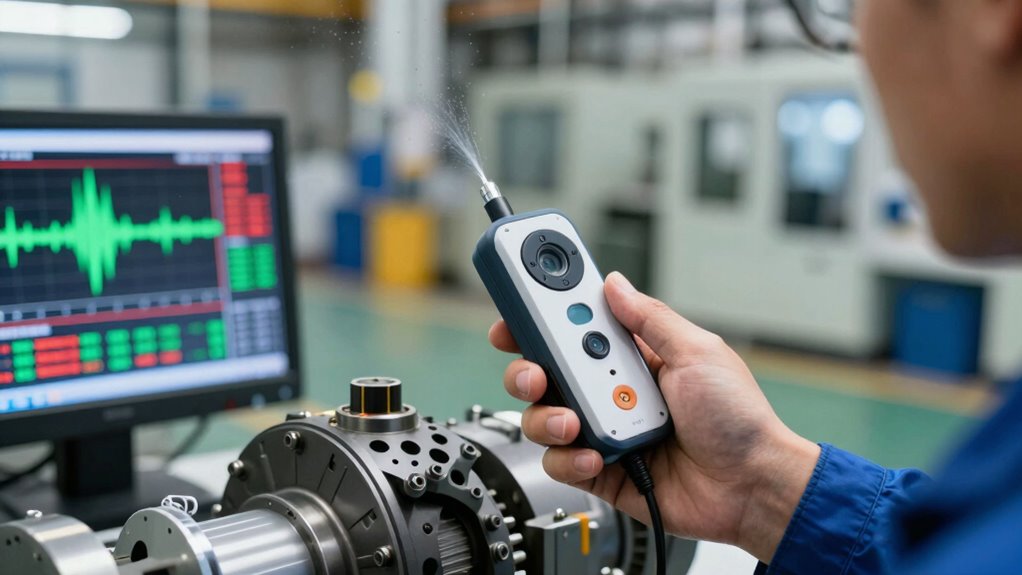
Because gearbox failures often originate from developing faults that are difficult to detect visually, vibration analysis has become an essential predictive tool. By analyzing vibration signatures, you can identify subtle changes indicating early-stage issues like misalignment, gear wear, or bearing faults. These signatures reveal abnormal vibrations that are invisible to the naked eye but signal potential failure points. Vibration signatures enable proactive fault detection, allowing you to schedule maintenance before a catastrophic breakdown occurs. Regular monitoring helps you catch issues early, reducing downtime and repair costs. It’s a powerful way to assess the condition of your gearbox continuously, giving you confidence that you’re addressing problems at their root rather than reacting to failures after they happen. Incorporating condition monitoring techniques further enhances the reliability of your predictive maintenance strategies.
Oil Quality and Degradation Metrics as Failure Indicators

Monitoring oil quality and degradation metrics provides a direct insight into gearbox health, as changes in oil properties often precede mechanical failures. By tracking oil degradation and contaminant levels, you can detect early signs of wear and potential breakdowns. Elevated contaminant levels indicate dirt, metal particles, or water intrusion, which accelerate damage. Key indicators include:
- Increased oxidation levels that weaken the oil’s protective properties
- Rising acid numbers signaling oil breakdown
- Higher levels of metal particles pointing to gear or bearing wear
- Changes in viscosity revealing thermal degradation
These metrics help you identify issues before they escalate, enabling timely maintenance. Focusing on oil quality offers a proactive approach that often predicts failures more accurately than hours operated alone.
Comparing Time-Based Metrics to Accurate Gearbox Failure KPIs
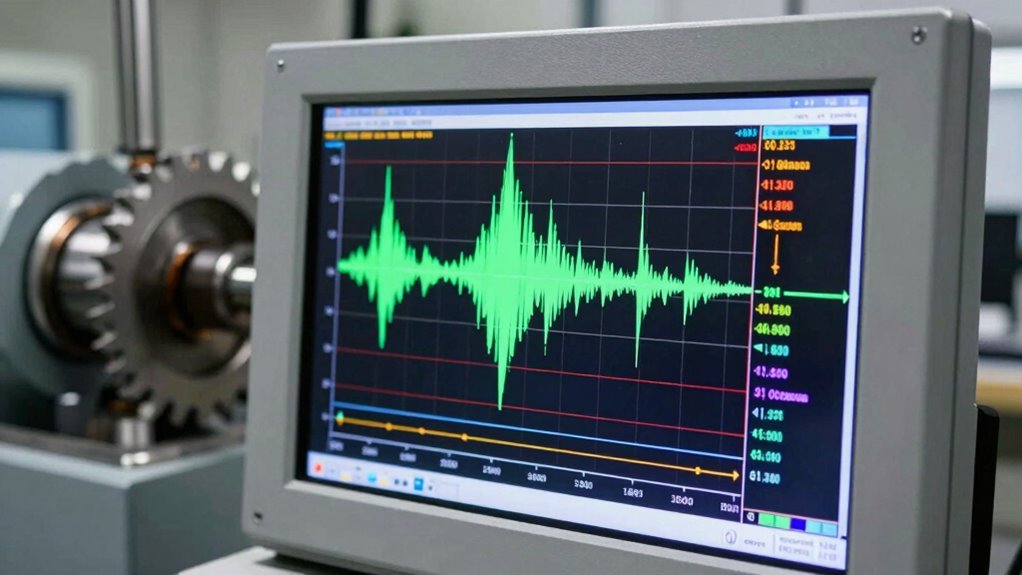
While time-based metrics like operating hours and calendar intervals are commonly used for scheduling maintenance, they often fall short in accurately predicting gearbox failures. These metrics don’t consider the specific condition of gearbox lubrication or uncover the failure root cause. Relying solely on hours worked can lead to unnecessary maintenance or unexpected breakdowns. Accurate gearbox failure KPIs focus on real-time data, such as vibration analysis, temperature, and lubrication quality, which directly indicate wear or damage. By tracking these KPIs, you gain a clearer picture of the gearbox’s health. This approach enables targeted interventions, reduces downtime, and prevents failures rooted in lubrication issues or other underlying causes that time-based metrics might overlook.
How to Implement Gearbox Failure Prediction KPIs in Your Maintenance Program
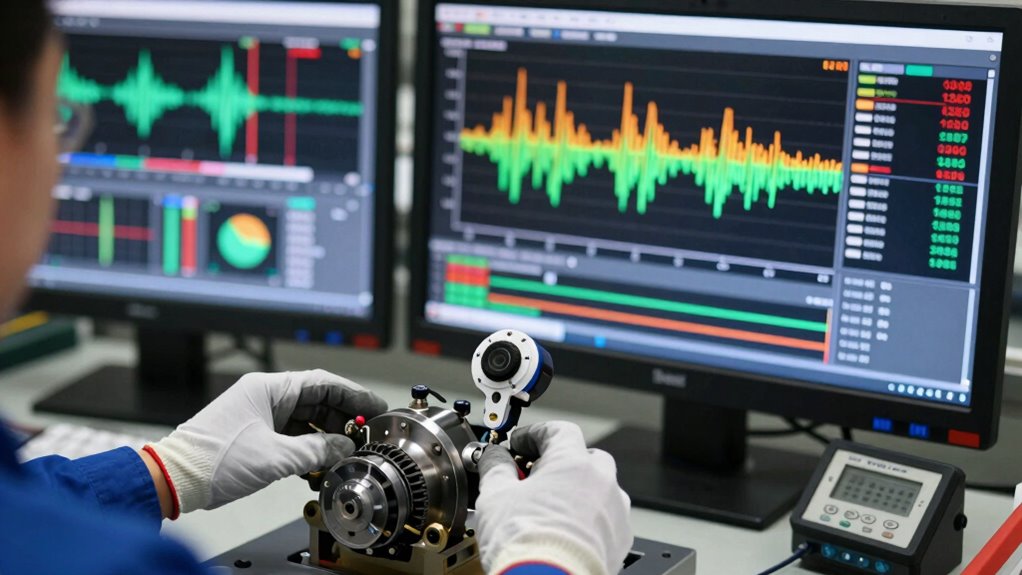
To effectively implement gearbox failure prediction KPIs, you need to choose metrics that truly reflect your equipment’s condition. Next, guarantee your data systems are integrated so you can gather real-time insights seamlessly. Finally, continuously monitor these KPIs and adjust your maintenance strategies as needed to prevent unexpected failures.
Selecting Relevant KPIs
Choosing the right KPIs is essential for effectively predicting gearbox failures and improving your maintenance strategies. To do this, you must select indicators that truly reflect gearbox health, such as vibration levels or temperature trends. Consider how sensor calibration impacts data accuracy, ensuring your measurements are reliable. Relevant KPIs also streamline maintenance scheduling by highlighting when interventions are needed before failures occur. Focus on metrics like early fault detection signals or trend deviations over time. These KPIs help you prioritize tasks, avoid unnecessary downtime, and optimize resources. Remember, not all data points are equally useful; pick those that directly relate to gearbox condition. By honing in on meaningful KPIs, you’ll make smarter decisions and enhance your predictive maintenance efforts.
Integrating Data Systems
Effective integration of data systems is essential for implementing gearbox failure prediction KPIs seamlessly into your maintenance program. You need to connect sensors and analytics platforms to gather real-time data reliably. This enables predictive analytics to identify early signs of failure accurately. To streamline this process, consider how sensor integration and data management work together:
| Sensor Integration | Data Management |
|---|---|
| Connect sensors directly to your system | Store data securely for analysis |
| Ensure sensors are calibrated | Automate data collection and processing |
| Use compatible hardware | Implement data validation protocols |
| Regularly review sensor performance | Update predictive models as needed |
Monitoring and Adjusting
Monitoring and adjusting your gearbox failure prediction KPIs is crucial for maintaining an effective maintenance program. Regular review helps guarantee your KPIs accurately reflect gearbox health, enabling timely interventions. By tracking indicators like vibration levels, temperature, and gearbox lubrication quality, you can fine-tune your maintenance scheduling to prevent failures. Keep an eye on shifting patterns and thresholds, and adjust them based on recent data to improve accuracy. Implement continuous feedback loops to identify false alarms or missed signs early. Consider automating data collection for real-time insights. Regular calibration and validation of KPIs ensure they stay aligned with actual gearbox performance. This proactive approach minimizes downtime and extends equipment lifespan, keeping your maintenance strategy responsive and effective.
Real-World Success Stories Using Predictive KPIs
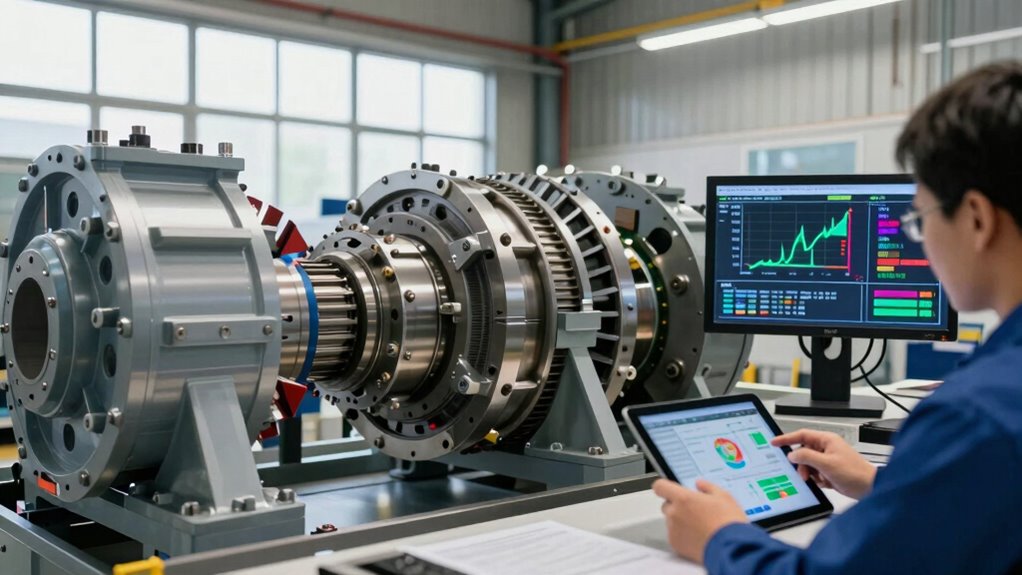
Many companies have achieved remarkable results by leveraging predictive KPIs to prevent gearbox failures. They rely on predictive analytics to analyze real-time data, enabling accurate failure forecasting. For example, a manufacturing plant implemented KPI-driven monitoring, which identified early signs of wear before traditional hours-based metrics could detect issues. This proactive approach reduced unplanned downtime by over 30%, saving significant maintenance costs. Another success story involves a mining operation that used predictive KPIs to pinpoint potential failures weeks in advance, allowing scheduled repairs rather than emergency fixes. These companies demonstrate how predictive analytics, combined with failure forecasting, can transform maintenance strategies. By focusing on the right KPIs, they improve reliability, extend equipment lifespan, and optimize operational efficiency—showing the power of data-driven maintenance decisions.
How Accurate KPIs Can Save You Time and Money
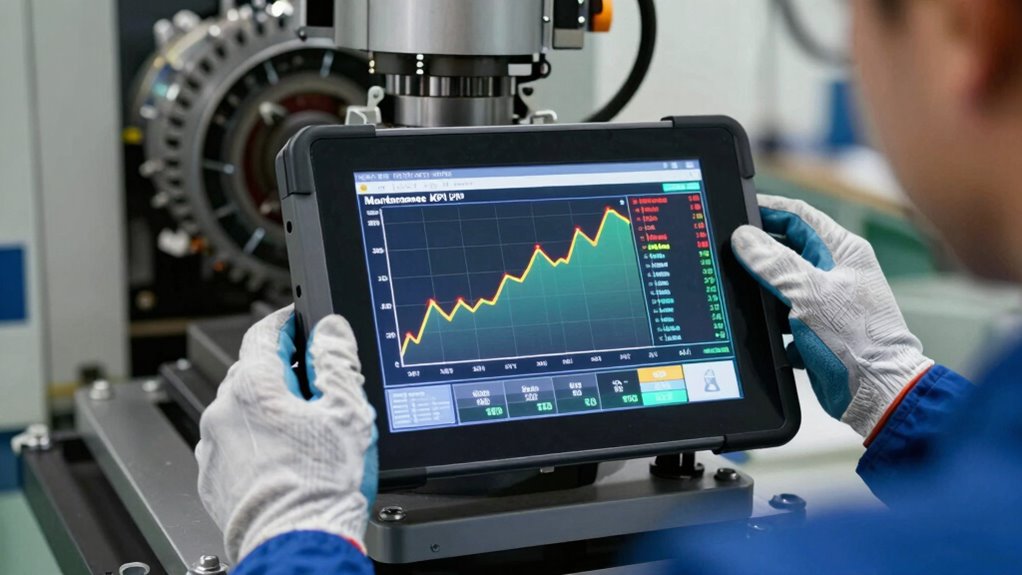
When your KPIs are accurate, you can identify potential gearbox issues early enough to prevent costly breakdowns and unplanned downtime. Precise sensor calibration guarantees data reliability, making your KPIs trustworthy. Effective data visualization transforms complex data into clear insights, enabling quick decision-making. With accurate KPIs, you avoid unnecessary maintenance costs by acting only when needed. This focus reduces downtime, extends equipment lifespan, and improves overall efficiency. Consider these key benefits:
Accurate KPIs enable early fault detection, reduce downtime, and optimize maintenance for better equipment performance.
- Early detection of faults, avoiding major repairs
- Optimized maintenance schedules based on real-time insights
- Cost savings through targeted interventions
- Increased equipment availability and productivity
Accurate KPIs empower you to make smarter maintenance choices, saving time and money while keeping your gearboxes running smoothly.
Future Trends in Gearbox Monitoring and Predictive Maintenance

As technology advances, the future of gearbox monitoring and predictive maintenance is increasingly driven by integration of artificial intelligence, machine learning, and IoT devices. You’ll see smarter systems leveraging predictive analytics to identify failure patterns before they occur, reducing downtime and costs. Sensor integration plays a vital role, providing real-time data on vibration, temperature, and other critical parameters. These sensors feed data into AI algorithms that analyze conditions continuously, enabling proactive maintenance decisions. Expect more compact, wireless sensors that are easier to install and maintain. Additionally, cloud-based platforms will facilitate remote monitoring and data sharing across sites. This synergy of advanced analytics and sensor integration will make predictive maintenance more accurate, efficient, and accessible, transforming how you predict and prevent gearbox failures in the future.
Frequently Asked Questions
What Are the Limitations of Traditional Maintenance Metrics?
Traditional maintenance metrics often rely on historical data and fixed schedules, which can lead to inefficiencies. They don’t account for real-time equipment conditions, risking unexpected failures. You might schedule maintenance too early or too late, wasting resources or causing downtime. These metrics overlook the dynamic nature of machinery, making maintenance scheduling less accurate. As a result, you miss opportunities for predictive insights, reducing overall operational efficiency.
How Do Environmental Factors Influence Gearbox Failure Predictions?
Environmental impact and contamination sources substantially influence gearbox failure predictions. You need to monitor environmental conditions like dust, moisture, and temperature, as they can accelerate wear or cause corrosion. Contamination sources such as dirt or oil ingress compromise lubricant quality, increasing failure risk. By tracking these factors, you can better anticipate issues, implement targeted maintenance, and extend your gearbox’s lifespan, ultimately reducing unexpected breakdowns and costly repairs.
Can Predictive KPIS Be Integrated With Existing Maintenance Systems?
Yes, you can integrate predictive KPIs with your existing maintenance systems. By leveraging predictive analytics, you enable maintenance integration that enhances decision-making and reduces downtime. Confirm your systems support data sharing and real-time updates, allowing seamless incorporation of new KPIs. This approach helps you proactively address potential gearbox failures, optimize maintenance schedules, and improve overall equipment reliability. Proper integration ultimately empowers you to make smarter, data-driven maintenance decisions.
What Training Is Required for Staff to Utilize New KPIS Effectively?
To utilize new KPIs effectively, you need to provide targeted training that covers their calculation, interpretation, and application in maintenance decisions. Focus on enhancing staff proficiency with these metrics through hands-on workshops and real-world scenarios. Guarantee training requirements are tailored to different roles, so everyone understands how to leverage KPIs for predictive insights, ultimately improving maintenance efficiency and reducing failures.
How Do Predictive KPIS Perform Across Different Gearbox Types?
Did you know predictive KPIs accurately forecast gearbox failures in over 85% of cases? They perform well across various gearbox types, especially when monitoring gearbox material and lubrication quality. You’ll find that tailored KPIs adapt to different materials and lubrication conditions, providing early warnings. By analyzing these factors, you can optimize maintenance schedules, reduce downtime, and extend gearboxes’ lifespan, regardless of their specific design or application.
Conclusion
By adopting condition-based KPIs like vibration and oil analysis, you can catch gearbox issues early—much like a skilled doctor detects problems before symptoms appear. Relying solely on hours is like waiting for a warning light that might never come. Embrace these smarter, predictive metrics to save time, cut costs, and keep your equipment running smoothly. Don’t wait for failure; stay ahead and keep your gear in peak condition.
Columbus Day / Indigenous Peoples' Day Picks
long weekend sales
As an affiliate, we earn on qualifying purchases.