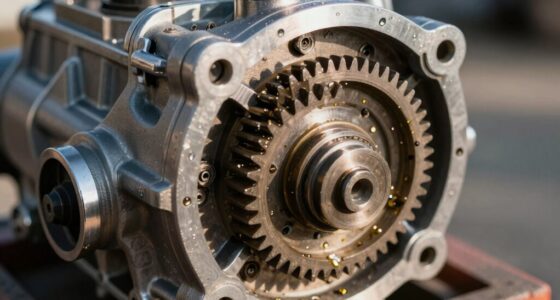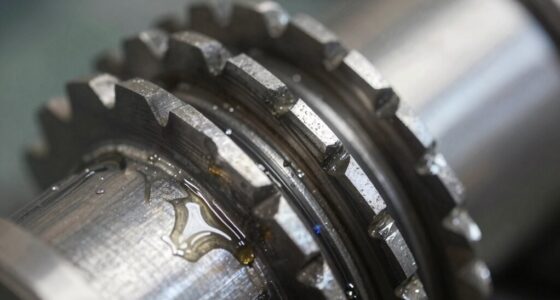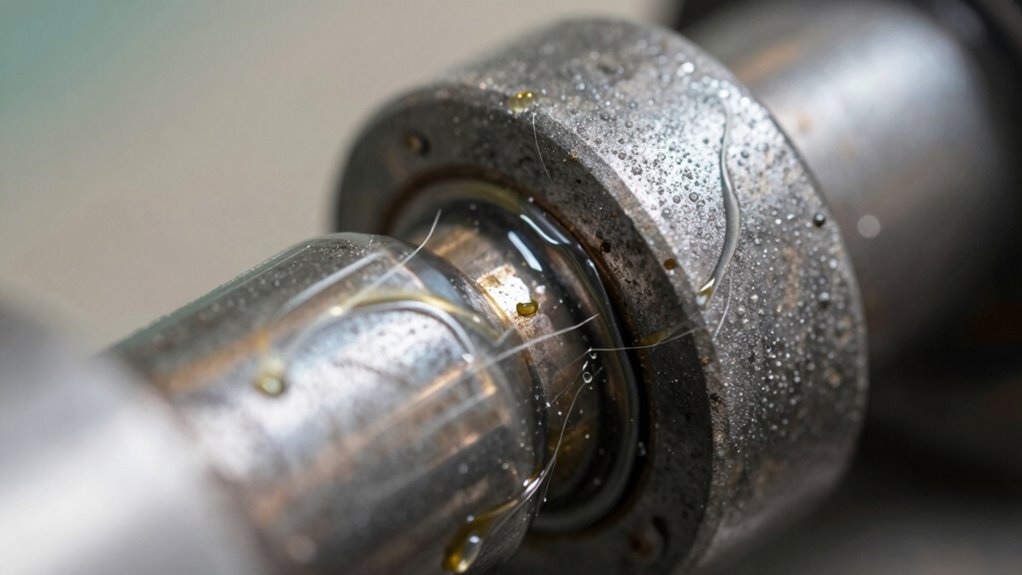

Mixed lubrication occurs when your surfaces are partly protected by a fluid film and partly by boundary layers, creating a fragile balance. In this state, the boundary film provides some protection, but it’s easily damaged under high stress or contamination, making surfaces vulnerable to increased friction and wear. If the lubricant film thins further, metal-to-metal contact can happen, accelerating damage. Exploring how to maintain this balance can help you prevent premature wear and prolong your equipment’s life.

Get garage and car supplies delivered free — and shop member deals
- Fast, free delivery on millions of items
- Access to Prime Big Deal Days deals on October 6–7
- Prime Video, Amazon Music and more included
Key Takeaways
- Mixed lubrication occurs when both fluid film and boundary films share load, increasing the risk of surface contact.
- Boundary films act as protective layers but are vulnerable to damage under high stress or contamination.
- Thinner lubricant films in mixed regimes make surfaces more prone to wear due to boundary film breakdown.
- Stability of boundary films is crucial; their failure exposes metal surfaces to direct contact and increased wear.
- Proper lubrication maintenance and control of operating conditions help prevent boundary film deterioration and associated wear.
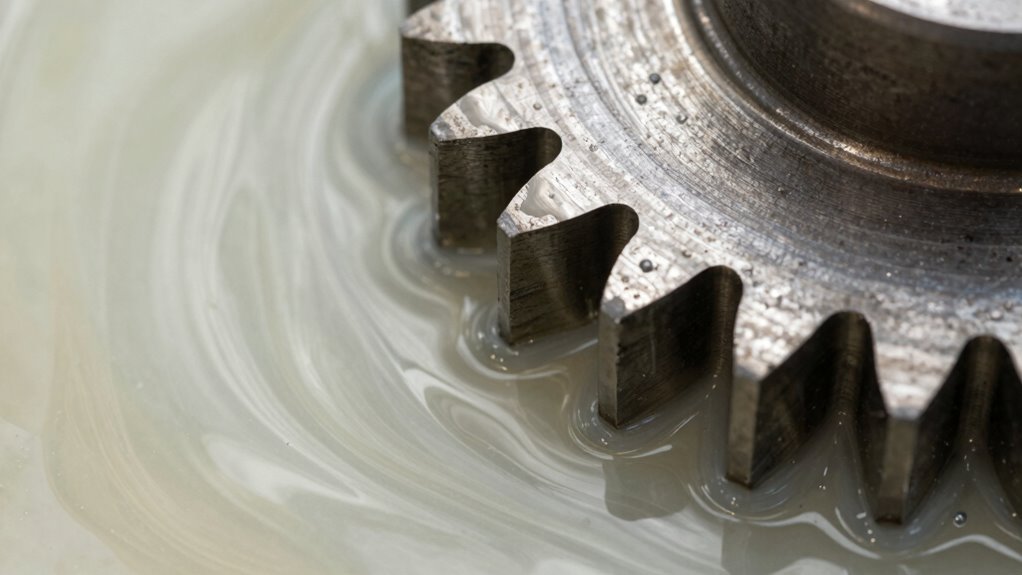
Have you ever wondered how machines keep moving smoothly even when different types of lubrication work together? The secret lies in understanding the complex interactions within lubrication regimes, especially when transitioning between full fluid film and boundary lubrication. In these moments, a boundary film forms—a thin layer of lubricant molecules that adheres to the surfaces in contact. This boundary film acts as a protective barrier, reducing direct metal-to-metal contact and minimizing wear. But when lubrication isn’t fully established, and the boundary film becomes the primary protective layer, things get tricky. This intermediate state, known as mixed lubrication, is where the real challenge lies.
In mixed lubrication, the load on the contact surfaces is shared between the fluid film and the boundary film. The fluid film, which is thicker and provides full separation, isn’t always enough to handle the entire load, especially under high pressure or rapid movement. As the lubricant film becomes thinner, the boundary film takes on a more significant role. It’s composed of molecules that bond to metal surfaces, forming a protective, film-like layer. This layer isn’t as robust as a full fluid film, so it’s more susceptible to damage or breakdown under stress. That’s where wear can start to occur, especially if the boundary film isn’t maintained or if contamination disrupts its integrity. Additionally, lubrication regimes influence how well these boundary films can form and stay intact.
Understanding lubrication regimes is crucial because they dictate how and when boundary films form. In the initial contact stages, boundary lubrication dominates, and the boundary film plays a critical role in preventing damage. As speeds increase or loads decrease, the lubricant can develop a thicker fluid film, progressing into elastohydrodynamic or full fluid film lubrication. But in the mixed regime, neither regime is fully dominant, which means your machine is in a delicate balance—one that’s prone to wear if conditions change even slightly.
The key to managing mixed lubrication is ensuring that boundary films are as stable and durable as possible. Proper lubrication maintenance, choosing the right lubricant with good boundary film-forming properties, and controlling operating conditions all contribute to keeping the boundary film intact. When the boundary film breaks down or wears away, parts are exposed to direct contact, increasing friction and accelerating wear. This wear not only shortens component life but can also lead to costly repairs and downtime.
machine boundary lubrication products
As an affiliate, we earn on qualifying purchases.
As an affiliate, we earn on qualifying purchases.
Frequently Asked Questions
How Does Mixed Lubrication Differ From Hydrodynamic and Boundary Lubrication?
Mixed lubrication combines elements of hydrodynamic and boundary lubrication regimes, so you get a mix of fluid film and direct surface contact. This causes increased wear mechanisms because the lubrication isn’t fully separating surfaces, unlike in hydrodynamic, or fully protecting them, like in boundary. You need to recognize mixed lubrication as a intermediate state that can accelerate wear, emphasizing the importance of proper lubrication management to prevent premature component failure.
What Materials Are Most Susceptible to Wear in Mixed Lubrication?
You’ll find that materials like cast iron, bronze, and certain steels are most susceptible to wear in mixed lubrication. Their surface roughness and material fatigue make them vulnerable when oil film thickness decreases, exposing them to direct contact. This increases friction and wear, especially as surface imperfections trap debris and concentrate stress. To minimize damage, smooth surfaces and durable materials are vital in reducing wear during these in-between lubrication states.
How Can Mixed Lubrication Be Detected During Operation?
You can detect mixed lubrication during operation through sensor analysis and real-time monitoring. Keep an eye on vibrations, temperature spikes, or unusual noise patterns, which often signal this in-between state. By continuously analyzing data, you catch subtle shifts that indicate mixed lubrication before damage occurs. This proactive approach helps you maintain ideal conditions, preventing wear and extending equipment life—suspense builds until you identify the signs early enough to act.
What Maintenance Practices Help Prevent Mixed Lubrication Conditions?
To prevent mixed lubrication, you should regularly inspect and maintain your equipment by ensuring proper lubricant additives are used, which help reduce wear and promote film strength. Keep an eye on surface finish quality, as rough surfaces are more prone to mixed lubrication conditions. Consistently changing lubricants at recommended intervals and monitoring operating conditions also help maintain a stable lubricating film, minimizing the risk of wear caused by mixed lubrication.
Are There Specific Industries More Prone to Issues Caused by Mixed Lubrication?
Think of automotive engines and manufacturing equipment like delicate dance partners; when lubrication isn’t perfect, they stumble. These industries are more prone to mixed lubrication issues because they operate under high loads and variable speeds, which challenge oil film stability. If you neglect proper maintenance, wear accelerates, leading to costly repairs. Regular oil analysis and timely changes help prevent this “dance stumble,” ensuring smooth, efficient operation.
high pressure lubricant for machinery
As an affiliate, we earn on qualifying purchases.
As an affiliate, we earn on qualifying purchases.
Conclusion
In the domain of machinery, mixed lubrication is like a knight caught between two worlds—neither fully protected nor entirely exposed. If you ignore its significance, you risk the wear and tear that could ground your operations faster than a runaway chariot. Remember, maintaining proper lubrication is your modern-day Excalibur, safeguarding your equipment from unnecessary damage. Stay vigilant, for in neglecting this “in between” state, you invite chaos—much like a ship lost without its compass in uncharted waters.
lubricant with boundary film forming properties
As an affiliate, we earn on qualifying purchases.
As an affiliate, we earn on qualifying purchases.
mixed lubrication maintenance supplies
As an affiliate, we earn on qualifying purchases.
As an affiliate, we earn on qualifying purchases.
Fall Picks
fall essentials
As an affiliate, we earn on qualifying purchases.