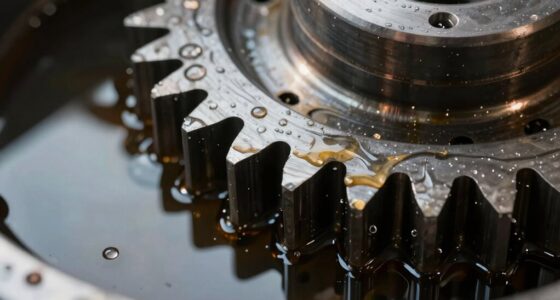
Viscosity improvers in gear oils help keep the oil’s flow consistent under load, even when machinery is working hard. They respond to temperature changes by thickening in cold conditions and thinning at high temperatures, ensuring your gears stay protected. This stability reduces wear, prevents damage, and maintains smooth operation. If you want to understand how these additives work and why they matter, keep exploring this topic further.

Get business pricing on garage and car supplies
- Business-only prices and quantity discounts
- Tax-exempt purchasing
- Multiple users, one account, clear invoices
Key Takeaways
- Viscosity improvers maintain stable oil thickness under load, preventing thinning during high-pressure operation.
- They enhance the oil’s ability to form a protective film, reducing metal-to-metal contact under heavy loads.
- Under load, these additives respond to temperature changes, ensuring consistent lubrication performance.
- They help prevent increased friction and wear caused by viscosity fluctuations when machinery is under stress.
- Viscosity stabilizers support smooth gear operation by maintaining optimal oil flow and film strength during demanding conditions.
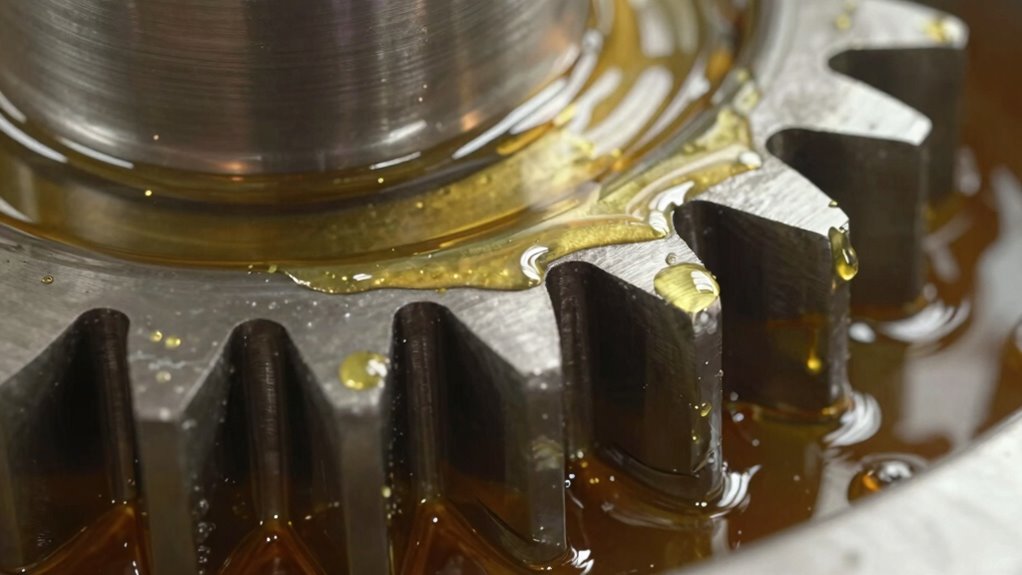
Viscosity improvers play an essential role in ensuring gear oils perform effectively across a wide range of temperatures. These additives are designed to modify the oil’s viscosity, helping it maintain ideal lubrication under varying conditions. As you operate machinery, you need to trust that your gear oil will provide consistent protection, regardless of whether it’s cold start-up or running at high temperatures. That’s where viscosity improvers come into play, enhancing additive performance by ensuring the oil remains neither too thick nor too thin as temperatures fluctuate. Their ability to stabilize viscosity directly impacts how well your gear system resists wear and tear, especially under heavy load conditions.
When you consider temperature stability, it becomes clear how essential viscosity improvers are. During cold starts, oil tends to thicken, making it harder for your gear system to lubricate properly. Without effective viscosity control, this can lead to increased friction, wear, and even damage. Conversely, at high temperatures, oil can thin out, losing its ability to form a protective film between moving parts. Viscosity improvers address both issues by dynamically adjusting the oil’s flow characteristics. They swell or contract depending on the temperature, ensuring the oil maintains a consistent viscosity. This stability means your gear system remains protected and operates smoothly, even under demanding conditions.
In practical terms, viscosity improvers are polymeric compounds that respond to temperature changes by altering their molecular structure. When exposed to cold, they expand, thickening the oil to improve flow; when heated, they contract, preventing the oil from becoming too thin. This process preserves the oil’s lubricating film, reducing metal-to-metal contact and minimizing wear during load-bearing operations. As a result, gear oils with well-formulated viscosity improvers deliver superior additive performance, ensuring your equipment operates reliably and efficiently. You don’t have to worry about drastic viscosity changes that could compromise lubrication, especially when machinery runs under heavy load or high stress. Understanding how viscosity stabilizers work is crucial for selecting optimal gear oils.
As an affiliate, we earn on qualifying purchases.
Frequently Asked Questions
How Do Viscosity Improvers Affect Gear Oil Lifespan?
Viscosity improvers can extend your gear oil’s lifespan by maintaining oxidation stability and shear stability. They help prevent the oil from breaking down under high temperatures and mechanical stress, reducing sludge and deposit formation. This means your gear oil stays effective longer, providing better protection for your gears. Proper formulation with stable viscosity improvers guarantees your gear oil resists degradation, ultimately prolonging its service life and keeping your equipment running smoothly.
Are Viscosity Improvers Compatible With All Gear Oil Types?
You should check if viscosity improvers are compatible with your gear oil type, as they may not suit all formulations. Synthetic oils often need additives with good synthetic compatibility, ensuring they mix well without separating. Additionally, look for additive stability to prevent breakdown over time. Using incompatible viscosity improvers can cause performance issues, so always verify compatibility with your specific gear oil to maintain ideal protection and durability.
Can Viscosity Improvers Cause Gear Noise or Vibration?
Viscosity improvers can sometimes cause gear noise or vibration issues, especially if they don’t match your gear oil’s specifications or degrade over time. You might notice increased gear noise or vibrations, which could signal compatibility problems or oil breakdown. To prevent this, confirm you select the right viscosity improver for your gear system and maintain regular oil changes, helping keep noise levels low and vibrations minimized.
How Do Temperature Changes Influence Viscosity Improvers’ Performance?
Like a seasoned sailor weathering storms, your gear oil’s viscosity improvers face temperature shifts that test their thermal stability and shear resistance. As temperatures rise, these additives may lose effectiveness, thinning the oil and risking gear wear. Conversely, cold temperatures can cause them to become too thick, hindering movement. Properly formulated viscosity improvers maintain consistent performance, ensuring your gears stay protected across all thermal conditions.
Do Viscosity Improvers Impact Fuel Efficiency or Emissions?
Viscosity improvers can positively impact fuel economy and emission reduction by maintaining ideal oil viscosity across temperature changes. When your gear oil stays consistent, your engine runs smoother and more efficiently, using less fuel. This efficiency reduces emissions. So, by choosing gear oils with viscosity improvers, you help improve your vehicle’s fuel economy and contribute to lowering harmful emissions, benefiting both your wallet and the environment.
high temperature gear oil additive
As an affiliate, we earn on qualifying purchases.
As an affiliate, we earn on qualifying purchases.
Conclusion
Understanding viscosity improvers helps you see how gear oils adapt under pressure, ensuring your gears glide smoothly through life’s twists and turns. Think of these additives as gentle guardians, softly adjusting to keep everything flowing without a hitch. When you choose the right gear oil, you’re inviting a quiet harmony that works behind the scenes, whispering reassurance as your vehicle moves effortlessly forward. It’s these subtle touches that keep your journey seamless and worry-free.
gear oil stabilizer for heavy loads
As an affiliate, we earn on qualifying purchases.
As an affiliate, we earn on qualifying purchases.
viscosity stabilizer for gear oils
As an affiliate, we earn on qualifying purchases.
As an affiliate, we earn on qualifying purchases.
Fall Picks
fall essentials
As an affiliate, we earn on qualifying purchases.