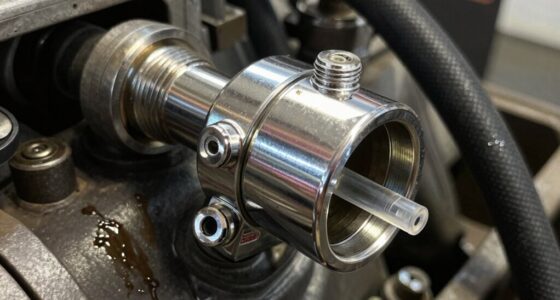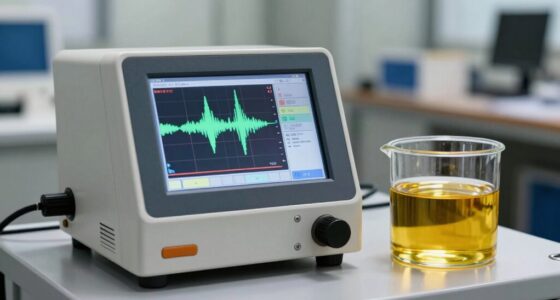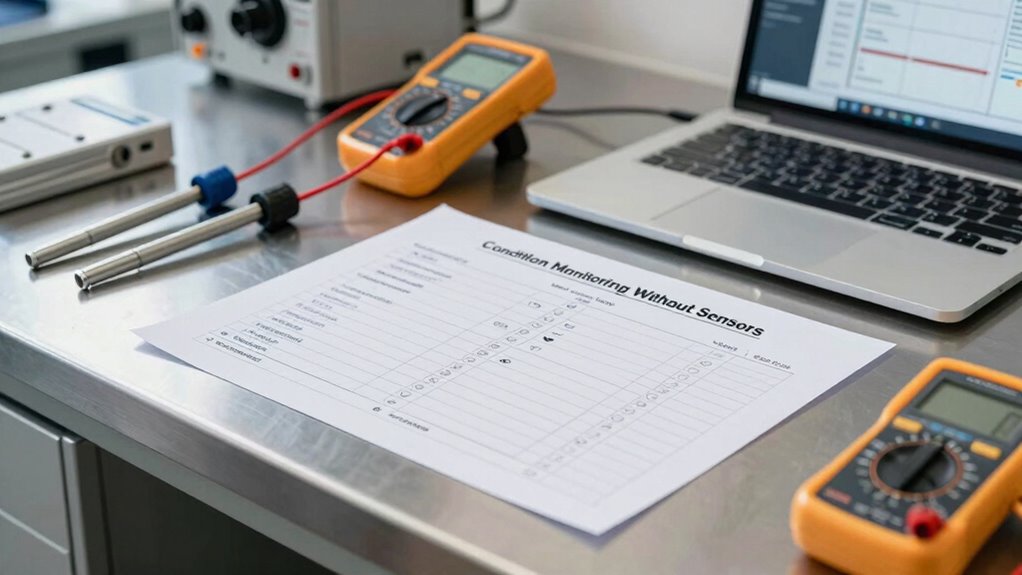

To monitor machine health without sensors, focus on leveraging existing signals like vibration, sound, or temperature patterns that are naturally generated during operation. Use non-contact methods such as laser vibrometry or ambient noise analysis to gather insights. Develop models that distinguish normal variations from potential issues, ensuring continuous, cost-effective oversight. By adopting these strategies, you’ll enable smarter maintenance decisions and reduce equipment downtime—discover more ways to optimize without sensors as you explore further.
Key Takeaways
- Utilize existing ambient signals like sound, temperature, or electrical variations to assess equipment health indirectly.
- Implement non-contact vibration analysis methods, such as laser vibrometry, to detect anomalies without physical sensors.
- Develop data models that differentiate normal operational variations from potential machinery faults using indirect data sources.
- Integrate ambient noise and operational signals into predictive maintenance strategies for early fault detection.
- Focus on leveraging infrastructure and environmental signals to enable cost-effective, continuous condition monitoring without additional sensors.
Have you ever wondered if condition monitoring can be done without relying on traditional sensors? The idea might seem unconventional, but advances in techniques like vibration analysis are proving that it’s possible to assess equipment health without direct contact sensors. Instead of attaching sensors to machinery, you can leverage data sources such as existing operational signals, acoustic emissions, or even remote sensing methods. This approach not only reduces installation costs but also minimizes potential points of failure. Vibration analysis, in particular, can be performed using non-contact methods like laser vibrometry or analyzing ambient noise patterns, making it a powerful tool in predictive maintenance strategies. By interpreting these signals, you gain insights into the machinery’s condition and can detect early signs of wear, misalignment, or imbalance.
In the domain of predictive maintenance, this approach shifts the focus from scheduled repairs to data-driven decisions. You no longer need to wait for a machine to fail or rely solely on traditional sensors that might be prone to damage or calibration issues. Instead, you monitor the machine’s behavior through indirect measurements, which can be gathered remotely or from existing infrastructure. This allows for continuous health assessment, ensuring maintenance is only performed when truly necessary, saving time and resources. Plus, because the process relies on analyzing natural or ambient signals, it can be integrated into existing plant operations without significant modifications.
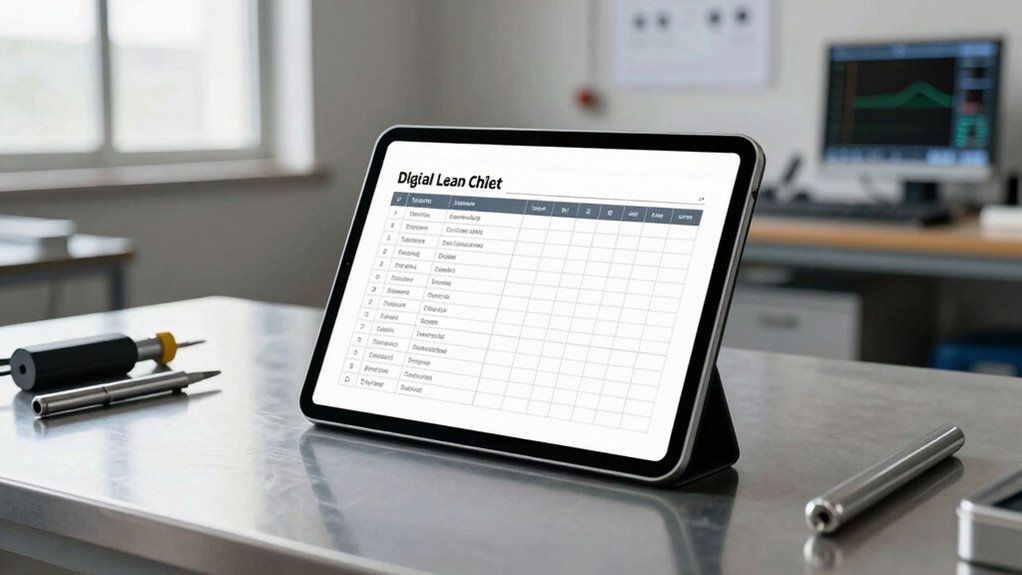
Additionally, understanding the operational environment is crucial for accurately interpreting these indirect data sources and avoiding false alarms. Implementing sensorless condition monitoring requires a clear understanding of the machinery’s operational environment. You should identify potential sources of indirect data—like sound, temperature fluctuations, or electrical signals—that correlate with equipment health. Advanced algorithms can process this data to detect anomalies, track trends, and predict failures. This approach emphasizes a lean checklist: ensure you have reliable data sources, understand the normal operating signatures, and develop models that can distinguish between normal variation and genuine issues. By doing so, you create a robust predictive maintenance program that reduces downtime and extends equipment lifespan.
Ultimately, sensorless condition monitoring is about being resourceful and leveraging existing data streams to keep your machinery running smoothly. Vibration analysis plays a vital role here, offering a non-intrusive way to monitor equipment health. When combined with predictive maintenance principles, it empowers you to make smarter, more timely decisions—preventing failures before they happen without the need for intrusive sensors. This lean approach not only cuts costs but also enhances operational efficiency, making it an attractive strategy for modern maintenance teams seeking innovation and reliability.

Rotating Machinery, Vibro-Acoustics & Laser Vibrometry, Volume 7: Proceedings of the 36th IMAC, A Conference and Exposition on Structural Dynamics … Society for Experimental Mechanics Series)
As an affiliate, we earn on qualifying purchases.
As an affiliate, we earn on qualifying purchases.
Frequently Asked Questions
Can Condition Monitoring Replace All Sensor-Based Methods?
No, condition monitoring without sensors can’t replace all sensor-based methods. Sensor limitations like placement issues and environmental factors still exist, but technological advancements are improving their capabilities. You can use non-sensor techniques for certain conditions, but for thorough monitoring, combining both approaches is best. This way, you leverage innovative solutions while addressing sensor limitations, ensuring more accurate and reliable maintenance insights.
What Industries Benefit Most From Sensorless Condition Monitoring?
Did you know that over 60% of manufacturing plants report improved efficiency with sensorless condition monitoring? You’ll find industries like manufacturing, aerospace, and energy benefit the most, as they focus on boosting manufacturing efficiency and extending equipment longevity. By using sensorless methods, you can reduce costs, simplify maintenance, and gain real-time insights without relying on complex sensor networks, ultimately optimizing your operations and preventing costly downtime.
How Accurate Is Lean Checklist Monitoring Compared to Traditional Sensors?
You’ll find that lean checklist monitoring offers good sensor accuracy and monitoring reliability, especially for detecting obvious issues quickly. While it may not match the precision of traditional sensors for detailed diagnostics, it provides a cost-effective, straightforward approach to maintenance. For basic condition assessments, you can rely on its effectiveness, but for complex or critical systems, combining it with sensor-based methods enhances overall accuracy and reliability.
What Are Common Challenges in Implementing Sensorless Condition Monitoring?
You might face challenges like sensor calibration, which can affect the accuracy of sensorless monitoring. Data interpretation also proves tricky, as you need to distinguish between normal variations and actual issues without direct sensor input. Additionally, environmental factors may interfere with data quality. Overcoming these hurdles requires careful analysis and calibration, but with practice, you can improve reliability and make informed maintenance decisions without relying solely on sensors.
How Does Maintenance Planning Change With Sensorless Condition Monitoring?
Think of maintenance planning as a chess game where sensorless condition monitoring is your secret move. You’ll rely more on predictive analytics and less on scheduled checks, making your maintenance schedule smarter and more dynamic. This approach helps you prioritize repairs based on real-time insights, optimizing maintenance tasks and minimizing downtime. As a result, your strategies become more agile, aligning proactive maintenance with actual equipment needs for better efficiency.

Better Available Light Digital Photography: How to Make the Most of Your Night and Low-Light Shots
New
As an affiliate, we earn on qualifying purchases.
As an affiliate, we earn on qualifying purchases.
Conclusion
By embracing this sensorless approach, you become the vigilant captain steering through a foggy sea, trusting your keen eye and sharp intuition over high-tech instruments. The lean checklist acts as your compass, guiding you past unseen storms and hidden icebergs. With this disciplined vigilance, you’ll navigate maintenance with the grace of a dancer, catching issues before they strike. Ultimately, you turn your condition monitoring into an art, blending simplicity and insight into a powerful, unwavering force.

iHealth No-Touch Digital Forehead Thermometer for Adults, Babies, Kids, 3 Ultra-Sensitive Sensors, Quiet Vibration Feedback, Large LED Digits, Easy to Use for Home, PT3 Black
Non-Contact Technology for Hygienic Use: Utilizing the built-in infrared temperature sensor, the iHealth PT3 thermometer can read a…
As an affiliate, we earn on qualifying purchases.
As an affiliate, we earn on qualifying purchases.

The Operational Excellence Library; Mastering Predictive Maintenance Tools
As an affiliate, we earn on qualifying purchases.
As an affiliate, we earn on qualifying purchases.