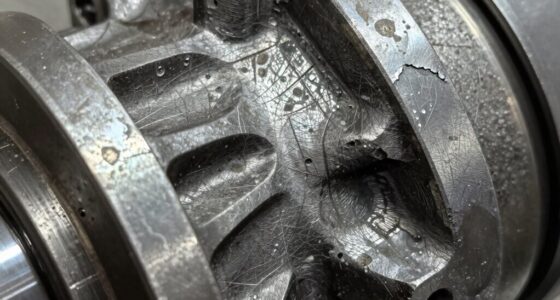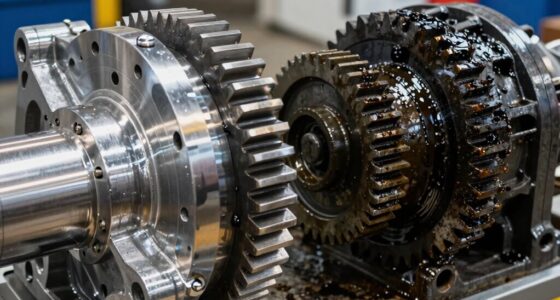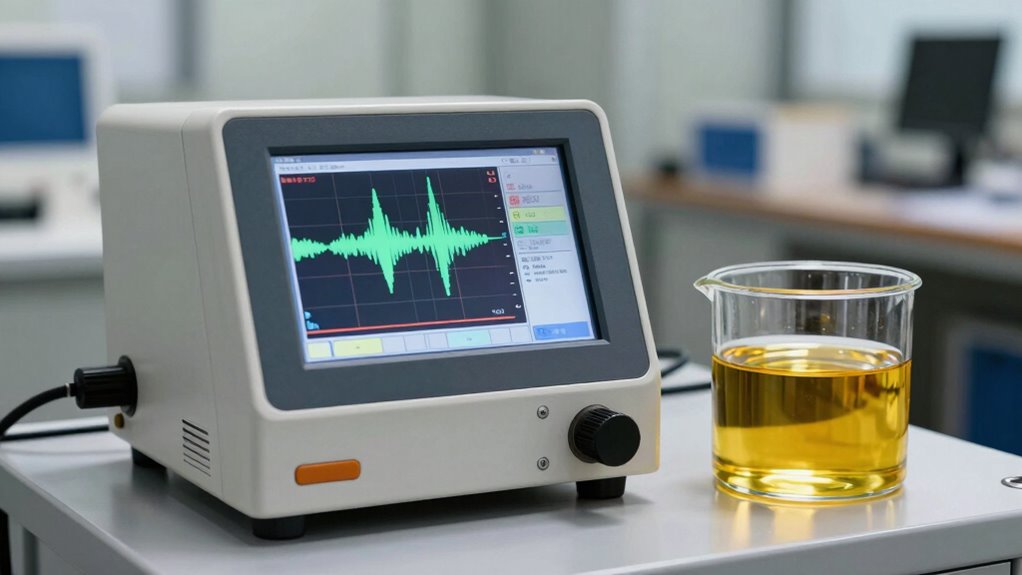
To combine vibration and oil analysis effectively, place sensors strategically near high-stress parts and make certain all are properly calibrated to prevent data drift. Synchronize data collection so signals and oil results align, giving you a clearer view of machine health. Use integrated software to overlay data, making it easier to spot patterns. Following these steps reduces confusion and boosts diagnostic confidence—stick with us, and you’ll discover how to optimize your monitoring system even further.
Key Takeaways
- Synchronize data collection times to ensure accurate correlation between vibration and oil analysis results.
- Use integrated software platforms to overlay and compare vibration spectra with oil analysis data visually.
- Calibrate sensors regularly to maintain data accuracy and prevent discrepancies between datasets.
- Establish standardized protocols for sensor placement and data handling to ensure consistency and clarity.
- Train personnel on combined data interpretation to avoid misdiagnosis and reduce confusion during analysis.
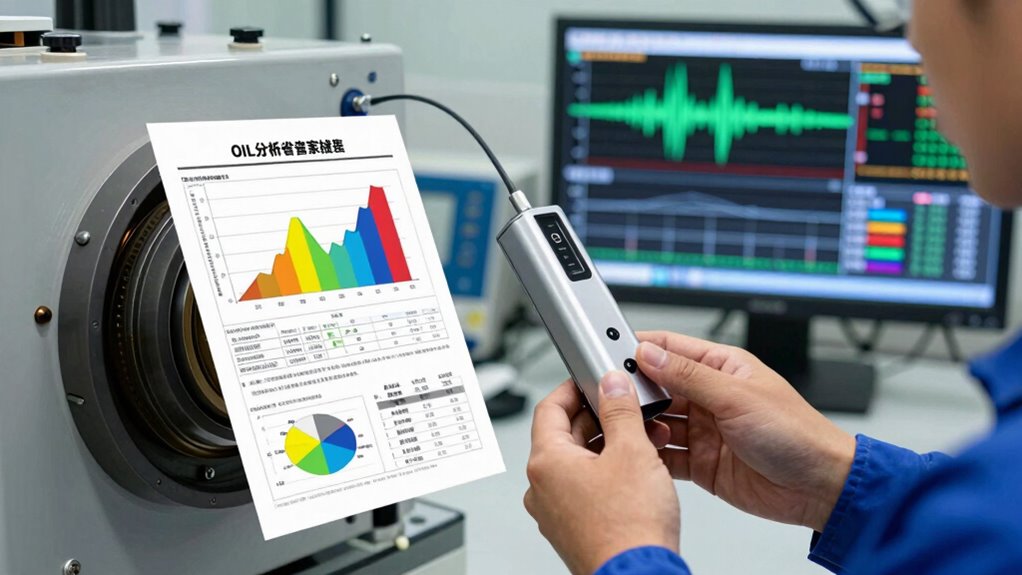
Combining vibration and oil analysis offers a thorough approach to machinery condition monitoring, allowing you to detect potential issues before they lead to failure. To make the most of these tools, you need to focus on effective sensor placement and seamless data integration. Proper sensor placement is essential; you want sensors positioned where they can capture the most relevant signals without interference. For vibration analysis, this means mounting accelerometers on bearings or housings that experience the highest stress, ensuring you’re collecting accurate data on machine imbalances, misalignments, or looseness. With oil analysis, sampling points should be chosen based on oil flow paths, typically near filters or drain points, to get representative samples that reflect the machine’s internal condition. When sensors are correctly placed, you reduce noise and improve the reliability of your data, which is vital for accurate diagnostics. Additionally, understanding sensor calibration ensures that data remains consistent over time, preventing drift that could lead to misinterpretation. Data integration is where your analysis truly becomes powerful. Instead of viewing vibration and oil data as separate entities, you need to combine them into a unified system. This means using software that can synchronize data streams, allowing you to analyze correlations and patterns more effectively. When both datasets are integrated, you can identify early signs of issues that might be missed if you rely on just one method. For example, a subtle increase in vibration amplitude combined with abnormalities in oil analysis—such as metal particles or viscosity changes—can point to specific problems like bearing wear or gear failure. This integrated view minimizes confusion by providing a comprehensive picture of machine health, helping you prioritize maintenance actions. To keep the process straightforward, establish clear protocols for data collection and analysis. Regularly calibrate sensors and validate data quality to prevent false alarms or missed detections. Use visualization tools that can overlay vibration spectra with oil analysis results, making it easier to interpret complex data sets. When you adopt a systematic approach—placing sensors thoughtfully and integrating data effectively—you create a reliable monitoring system that reduces confusion and enhances predictive maintenance. This way, you stay ahead of potential failures, optimize maintenance schedules, and extend equipment lifespan. Remember, the key is consistency and clarity: accurate sensor placement combined with robust data integration ensures you’re making informed decisions based on comprehensive, reliable insights.
![[BLE Vibration Sensor] WTVB01-BT50 Smart Vibration Module Ar-duino, 3-axis Vibration(Amplitude+Frequency+Displacement+Speed) Detector, Wireless Acceleration Shock Motor Monitor](https://m.media-amazon.com/images/I/41va7oLvGmL._SL500_.jpg)
[BLE Vibration Sensor] WTVB01-BT50 Smart Vibration Module Ar-duino, 3-axis Vibration(Amplitude+Frequency+Displacement+Speed) Detector, Wireless Acceleration Shock Motor Monitor
- Integrated 3-Axis Vibration and Temp: Real-time vibration and temperature data
- Long-Range Bluetooth 5.0: 50m transmission, 8-hour battery life
- Universal Smartphone Compatibility: Supports Android and iOS devices
As an affiliate, we earn on qualifying purchases.
As an affiliate, we earn on qualifying purchases.
Frequently Asked Questions
How Often Should Vibration and Oil Analysis Be Performed Together?
You should perform vibration and oil analysis together during your maintenance scheduling every 3 to 6 months, depending on equipment criticality. Regular combined testing helps you identify emerging issues early. Use data integration to streamline results, ensuring you get an all-encompassing view of machine health. This approach allows you to optimize maintenance, reduce downtime, and extend equipment lifespan by making informed decisions based on synchronized data.
What Equipment Is Required for Combined Vibration and Oil Analysis?
You need specialized equipment like calibrated vibration sensors and oil analysis tools, such as portable spectrometers. To guarantee accuracy, regularly calibrate your equipment. Data integration software is essential to combine vibration and oil analysis results seamlessly, allowing you to monitor equipment health effectively. This setup helps detect issues early, reduce downtime, and optimize maintenance strategies by providing an extensive view of machinery condition.
Can Vibration and Oil Analysis Detect the Same Types of Faults?
Vibration and oil analysis can both detect faults, but they target different issues. Vibration analysis excels at identifying mechanical faults like imbalance, misalignment, or bearing problems through fault detection and data correlation. Oil analysis, on the other hand, uncovers lubrication issues, contamination, and wear particles. By combining these methods, you get a holistic view of machine health, ensuring more accurate fault detection and proactive maintenance.
How Do I Interpret Conflicting Results From Both Analyses?
When you face conflicting results from vibration and oil analysis, focus on fault correlation and data integration. Cross-reference the findings to identify common fault indicators, and consider the context of each analysis. Look for patterns or discrepancies that can clarify the situation. By combining insights, you’ll get a clearer picture of the machinery’s condition, helping you make informed maintenance decisions and avoid unnecessary repairs or downtime.
What Training Is Needed to Accurately Perform Combined Analysis?
Think of combining vibration and oil analysis as tuning a fine instrument—you need the right skills. To do this accurately, you should undergo specialized training that covers both methods, focusing on understanding equipment, measurement techniques, and interpretation. Certification standards like ISO or API guide your training requirements. By meeting these standards, you guarantee your analysis is precise, helping you make confident maintenance decisions and avoid costly errors.

Under My Hood Oil Analysis Kit – Oil Test Kit for Gasoline & Diesel Engines
- Aircraft Use Warning: Not for aircraft engine testing
- Monitor Equipment Health: Detects wear metals and contamination
- Universal Compatibility: Suitable for gasoline and diesel engines
As an affiliate, we earn on qualifying purchases.
As an affiliate, we earn on qualifying purchases.
Conclusion
By integrating vibration and oil analysis, you open a clearer picture of your machinery’s health, much like the watchful eye of Horus guarding ancient secrets. When you combine these methods thoughtfully, you prevent surprises and extend equipment life. Remember, neglecting this synergy risks missing the subtle whispers of impending failure. Embrace both tools as your vigilant allies, and you’ll navigate maintenance with the precision of a seasoned explorer, avoiding confusion and ensuring smooth operation every time.

AS63B Portable LCD Vibration Analyzer Tester Meter Vibrometer Gauge Tester Analyzer 0.1-199.9m/s Vibration Tester Analyzer
- Vibration measurement method: Piezoelectric acceleration transducer
- Displayed data: Acceleration, speed, distance
- Screen type: Large LCD with backlight
As an affiliate, we earn on qualifying purchases.
As an affiliate, we earn on qualifying purchases.
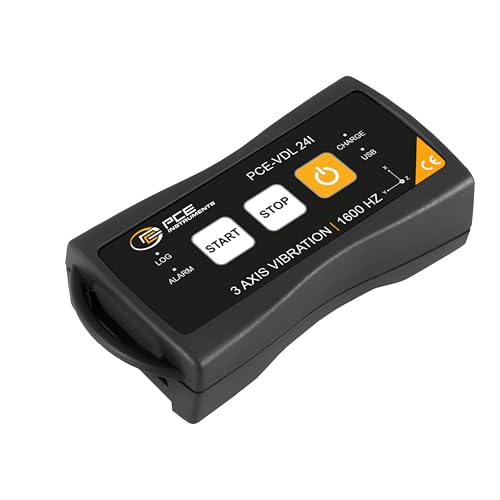
PCE Instruments PCE-VDL 24I Vibration Analyzer, for Machine Condition Monitoring, Measures 3-axis Vibration (Acceleration) and Temperature, with high-Rate Logging, USB & Analysis Software
- Axis Acceleration Frequency: Up to 1600 Hz
- Storage Capacity: 32 GB SD card
- Compact Size: 86.8 x 44.1 x 22.2 mm
As an affiliate, we earn on qualifying purchases.
As an affiliate, we earn on qualifying purchases.