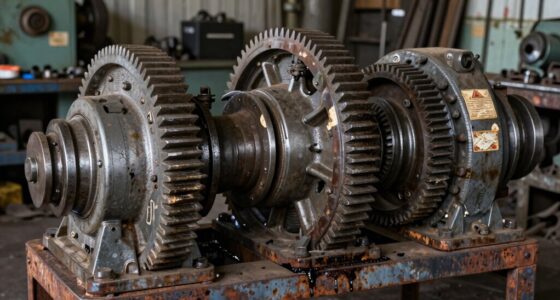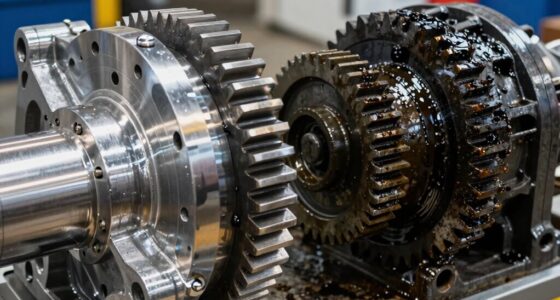

Load cycles considerably alter your gearbox’s wear signatures by causing internal shifts, temperature fluctuations, and lubrication breakdowns. Each load application and release creates fatigue patterns and micro-damage, speeding up wear processes. These cycles also lead to lubricant degradation and thermal stresses that increase overall damage. Recognizing how load cycles influence wear can help you better predict failures and optimize maintenance. Keep exploring to discover how understanding these changes can improve your gearbox’s longevity.
Key Takeaways
- Repeated load cycles induce internal component shifts, creating distinctive wear patterns that evolve over time.
- Load fluctuations accelerate lubricant degradation, leading to changes in wear signatures detectable through diagnostics.
- Temperature fluctuations from load cycles cause thermal expansion and contraction, influencing wear signatures and fatigue development.
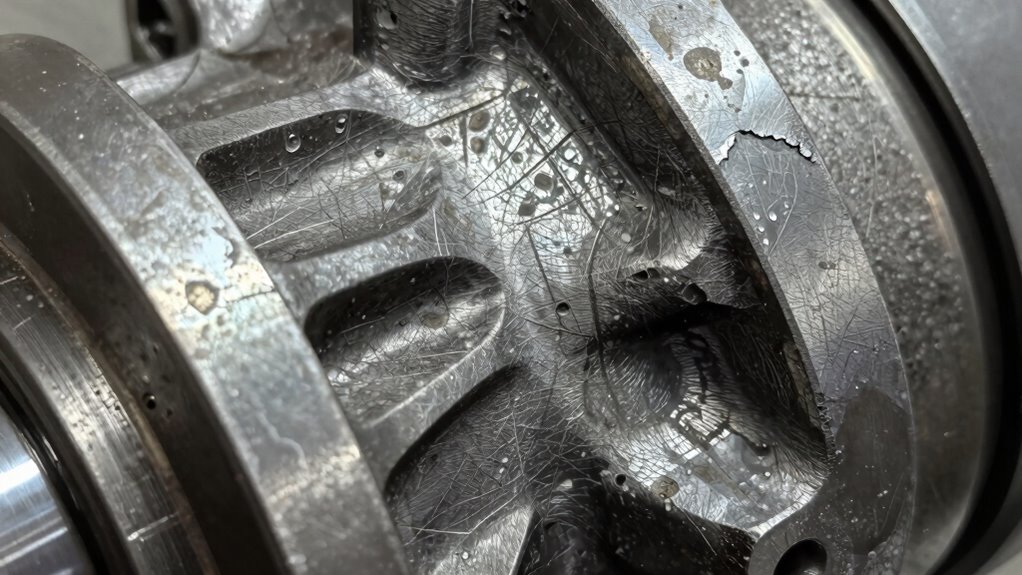
- Cyclic stresses contribute to micro-cracks and fatigue, altering gear surface signatures and increasing the likelihood of specific wear patterns.
- Recognizing load-induced wear signatures enables targeted maintenance, reducing long-term damage and extending gearbox lifespan.
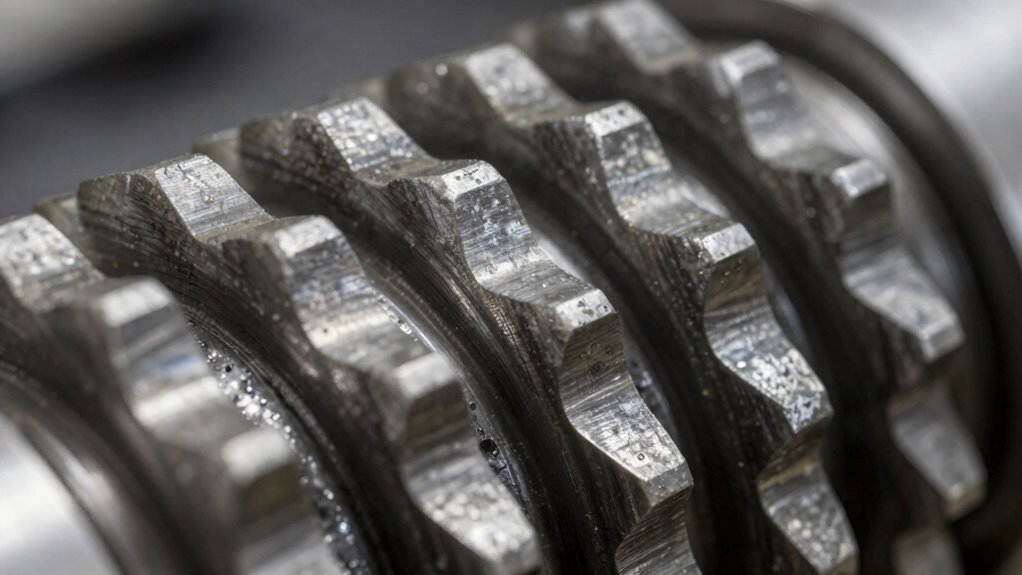
Understanding how load cycles impact your gearbox is essential for maintaining its longevity. When your equipment undergoes repeated load cycles, it subjects the gearbox to varying stresses that influence wear patterns over time. Each time a load is applied and then released, it causes subtle shifts in the internal components, leading to changes in how wear signatures develop. Recognizing how these cycles affect your gearbox helps you anticipate potential issues before they become costly repairs. Additionally, the cyclical nature of loads can lead to specific fatigue patterns that are characteristic of load-induced wear.
One critical aspect to contemplate is lubrication degradation. During load cycles, the pressure and heat within the gearbox fluctuate, which accelerates the breakdown of lubricants. As the lubricant degrades, its ability to form a protective film diminishes, exposing metal surfaces to increased friction and wear. Repeated load and unload events cause temperature fluctuations that further influence lubrication stability. Elevated temperatures, especially during heavy load periods, can cause the lubricant to thin out or break down more quickly, reducing its effectiveness over time. This process creates a cycle where degraded lubrication accelerates wear, which in turn generates more heat, perpetuating the problem. Regularly monitoring lubricant condition and maintaining proper lubrication schedules can markedly reduce wear signatures associated with load cycles.
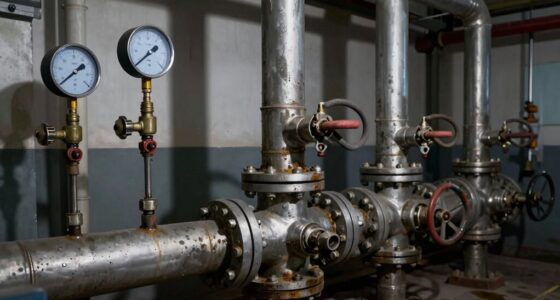
Temperature fluctuations play an important role in how your gearbox endures repetitive loading. When your machinery is under load, friction and mechanical work produce heat, causing temperature spikes within the gearbox. During the unload phase, these temperatures drop, but the cycle of heating and cooling can cause thermal expansion and contraction of gear components. Over time, these temperature swings induce micro-cracks and fatigue in the gear material, leading to characteristic wear signatures like pitting or spalling. These temperature variations also influence the material’s hardness and resilience, making the gears more susceptible to damage with each load cycle. By controlling operating temperatures through cooling systems or load management, you can mitigate the adverse effects of temperature fluctuations on wear patterns. Moreover, understanding the influence of load cycles on wear signatures enables more accurate diagnostics and maintenance planning.
Understanding how load cycles influence your gearbox’s wear signatures enables you to develop better maintenance strategies. Frequent load cycles accelerate lubrication degradation and exacerbate temperature fluctuations, both of which contribute to different wear patterns. Recognizing these effects allows you to implement targeted interventions, such as improved lubrication practices or thermal management, to extend the lifespan of your gearbox. Ultimately, being proactive about these factors helps prevent unexpected failures, reduces downtime, and preserves the performance and reliability of your equipment over the long term.

FOXWELL NT301 OBD2 Scanner Live Data Professional Mechanic OBDII Diagnostic Code Reader Tool for Check Engine Light
【Read Fault Codes】About the read code funtion needs to be in the ignition on state and if the…
As an affiliate, we earn on qualifying purchases.
As an affiliate, we earn on qualifying purchases.
Frequently Asked Questions
How Do Load Cycles Affect Gearbox Lubrication Requirements?
Load cycles directly impact your gearbox’s lubrication needs. As load cycles increase, you should shorten lubrication intervals to guarantee proper wear prevention. Frequent cycling causes more heat and friction, which can degrade lubricant faster. By adjusting lubrication schedules based on load patterns, you maintain ideal gear protection, extend your gearbox’s lifespan, and prevent costly repairs. Always monitor load cycles and adapt lubrication practices accordingly for best performance.
Can Load Cycle Variations Predict Imminent Gearbox Failure?
Yes, load cycle variations can help predict imminent gearbox failure through load cycle monitoring and failure prediction modeling. By analyzing changes in load patterns over time, you can identify abnormal wear signatures that signal potential issues. Incorporating these tools allows you to proactively address problems before failure occurs, minimizing downtime and extending gearbox life. Regular monitoring and advanced modeling are essential for accurate failure prediction and effective maintenance planning.
What Is the Impact of Load Cycle Frequency on Gearbox Lifespan?
You might not realize it, but increasing load cycle frequency can drastically shorten your gearbox’s lifespan. Load variability accelerates fatigue analysis, causing quicker wear and tear. Every rapid load change puts stress on components, leading to early failure. Staying aware of this impact helps you manage maintenance schedules better, ensuring your gearbox endures longer. Ignoring load cycle frequency could mean costly repairs or replacements down the line—so monitor it closely.
How Do Different Load Cycle Patterns Influence Gear Tooth Fatigue?
Different load cycle patterns markedly influence gear tooth fatigue by varying the stress levels experienced during operation. Rapid or irregular cycles can cause unpredictable stress peaks, accelerating gear fatigue. Through cycle analysis, you can identify these patterns and assess their impact on gear longevity. By understanding how load cycle patterns affect fatigue, you can optimize maintenance schedules and design improvements to prolong gearbox life and reduce failure risks.
Are There Industry Standards for Measuring Load Cycles in Gearboxes?
You might think there’s a universal standard for measuring load cycles in gearboxes, but surprise, there isn’t. Industry benchmarks and measurement protocols vary widely, making it tricky to compare data across different applications. While some standards exist, many companies develop their own methods tailored to specific equipment and conditions. So, don’t be surprised if your gearbox analysis requires customizing measurement protocols rather than relying solely on industry-wide standards.

Planetary Gear Grease 1 oz Low Noise Anti-Wear
LONG-LASTING PLANETARY GEAR LUBRICATION – Specially formulated planetary gear grease provides extended lubrication performance for sealed and semi-sealed…
As an affiliate, we earn on qualifying purchases.
As an affiliate, we earn on qualifying purchases.
Conclusion
As you navigate the relentless dance of load cycles within your gearbox, each twist and turn etches its story into the metal’s memory. These cycles are like a symphony of whispers, slowly carving wear signatures into the gears’ soul. By understanding this intricate rhythm, you can anticipate the silent erosion before it becomes a roar. Embrace this knowledge as your shield, turning the gearbox’s silent song into a melody of longevity and resilience.

U760E U761E Transmission Temperature Sensor for Toyota Avalon Camry ES350 82125-33090 8212533090
Manufacturer Part Number: 82125-33090 82125-33091
As an affiliate, we earn on qualifying purchases.
As an affiliate, we earn on qualifying purchases.
gearbox wear pattern analysis kit
As an affiliate, we earn on qualifying purchases.
As an affiliate, we earn on qualifying purchases.