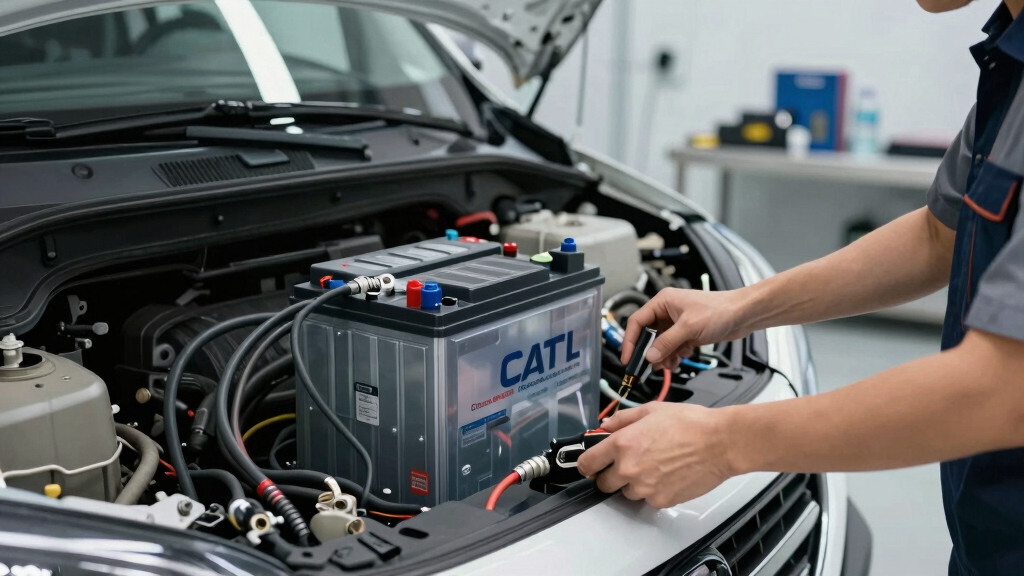

TL;DR
CATL has introduced a new battery technology enabling delivery vans to recharge fully in only 7 minutes. This breakthrough could significantly reduce downtime for electric commercial vehicles, boosting adoption in logistics. The company claims the battery maintains high performance and safety standards, but real-world testing is still underway.
CATL, a leading battery manufacturer, has unveiled a new battery technology that allows electric delivery vans to be fully recharged in just 7 minutes. This development aims to address one of the biggest barriers to wider adoption of electric commercial vehicles: long charging times. The company states that the battery maintains high performance and safety standards, making it suitable for logistics and delivery services.
The new battery, developed by CATL, features advanced fast-charging capabilities designed specifically for delivery vans and similar commercial vehicles. According to the company, the battery can reach full charge in 7 minutes using a high-current charging station, significantly reducing vehicle downtime compared to traditional electric batteries, which often require 30 minutes or more to charge fully.
CATL claims that the battery employs proprietary materials and thermal management systems that enable rapid charging without compromising safety or battery longevity. The company has conducted initial tests showing the battery can sustain multiple fast-charging cycles with minimal capacity loss, though full long-term durability data is still pending. The battery’s energy density and weight are comparable to existing high-performance EV batteries, ensuring it remains practical for commercial use.
While the announcement focuses on delivery vans, CATL indicates that this technology could be adapted for other commercial electric vehicles, including trucks and buses, in the future. The company is currently engaging with several logistics firms to pilot the new batteries in real-world fleet operations, with larger-scale deployment expected later this year.
Potential Impact on Electric Commercial Vehicle Operations
This breakthrough could drastically reduce charging times for delivery fleets, enabling faster turnaround and higher vehicle utilization. Shorter charging intervals may also lessen the need for large on-site charging infrastructure, lowering operational costs for logistics companies. If the battery proves durable and safe in long-term use, it could accelerate the transition to electric vehicles in the commercial sector, contributing to emission reductions and sustainability goals.

CYBPULTE Portable Power Station 1000W 1008Wh LiFePO4 140W USB-C 3AC 8Port
- Portable Power for Any Location: Indoor and outdoor use with multiple devices
- High-Capacity LiFePO4 Battery: 1008Wh capacity with pure sine wave output
- Multiple Outlets for Convenience: 3 AC outlets and 8 total ports
As an affiliate, we earn on qualifying purchases.
As an affiliate, we earn on qualifying purchases.
Current Challenges in Fast Charging for Delivery Vans
Electric delivery vans currently face limitations due to lengthy charging times, which can disrupt delivery schedules and increase costs. Most existing fast-charging solutions provide about 80% charge in 30 minutes, which is still a significant downtime for fleet operations. Battery manufacturers have been working to improve energy density and charging speed, but achieving both simultaneously remains challenging. CATL’s new battery claims to push this boundary further, addressing a key bottleneck in the electrification of commercial vehicles.
Previous developments in fast-charging batteries have shown promise but often involve trade-offs in safety, battery lifespan, or cost. CATL, as one of the world’s largest battery suppliers, has a track record of innovation, making this announcement noteworthy. The company’s focus on commercial vehicle applications aligns with industry trends toward electrification of logistics fleets, which are under increasing pressure to reduce carbon emissions.
“Our new battery technology represents a significant step forward in electric vehicle charging, enabling delivery vans to recharge in just 7 minutes without compromising safety or performance.”
— Robin Zeng, CEO of CATL

16A Portable Level 1&2 EV Charger-ETL Certified,110V-240V Car Charger
- Fast Charging Power: Supports 240V, 16A, 3.84kW output
- Universal Compatibility: Works with NEMA 5-15 and 6-20 plugs
- Dual-Level Charging: Supports Level 1 and Level 2 charging
As an affiliate, we earn on qualifying purchases.
As an affiliate, we earn on qualifying purchases.
Long-Term Durability and Safety Confirmations Pending
While initial tests are promising, it is still unclear how the battery will perform over thousands of charging cycles in real-world conditions. Data on long-term durability, safety under extreme conditions, and cost implications are not yet available. The company has announced pilot programs, but widespread deployment depends on further validation and regulatory approvals.

OPTIMA® Batteries High Performance DH7 YELLOWTOP® Sealed AGM Battery
- Voltage and Cold Cranking Amps: 12V, 880 CCA
- Battery Dimensions: 12.44" x 6.88" x 7.5"
- Weight: 54 pounds
As an affiliate, we earn on qualifying purchases.
As an affiliate, we earn on qualifying purchases.
Upcoming Pilot Programs and Industry Adoption Timeline
CATL plans to collaborate with logistics firms to pilot the new batteries in selected delivery vans later this year. Results from these pilots will inform larger-scale deployment and potential commercialization. Industry analysts expect that, if successful, this technology could see broader adoption within the next 12-18 months, transforming electric fleet management and charging infrastructure planning.

SmartSign 18 x 12 inch “Charging Station – Electric Car Parking Only While Charging” Sign, 63 mil Aluminum, 3M Laminated Engineer Grade Reflective Material, Green and White, Made in USA
- Material: 63 mil rustproof aluminum with reflective coating
- Durability: Lasts over 10 years outdoors
- Installation: Pre-drilled holes for easy mounting
As an affiliate, we earn on qualifying purchases.
As an affiliate, we earn on qualifying purchases.
Key Questions
How does the 7-minute recharge compare to existing fast-charging solutions?
Most current fast-charging stations can provide about 80% charge in 30 minutes, whereas CATL’s new battery claims a full recharge in just 7 minutes, significantly reducing downtime for delivery vans.
Is this battery safe for long-term use?
While initial tests indicate safety and durability, long-term performance data is still pending. Widespread adoption will depend on further validation and regulatory approval.
Will this technology be available for all types of electric vehicles?
Currently, the focus is on delivery vans, but CATL suggests that the technology could be adapted for other commercial vehicles like trucks and buses in the future.
When can we expect this battery to be commercially available?
If pilot programs are successful, industry experts estimate broader commercial availability could occur within 12 to 18 months.
What are the potential challenges in deploying this technology widely?
Key challenges include ensuring long-term durability, safety under various conditions, and building sufficient high-current charging infrastructure.
Source: rss