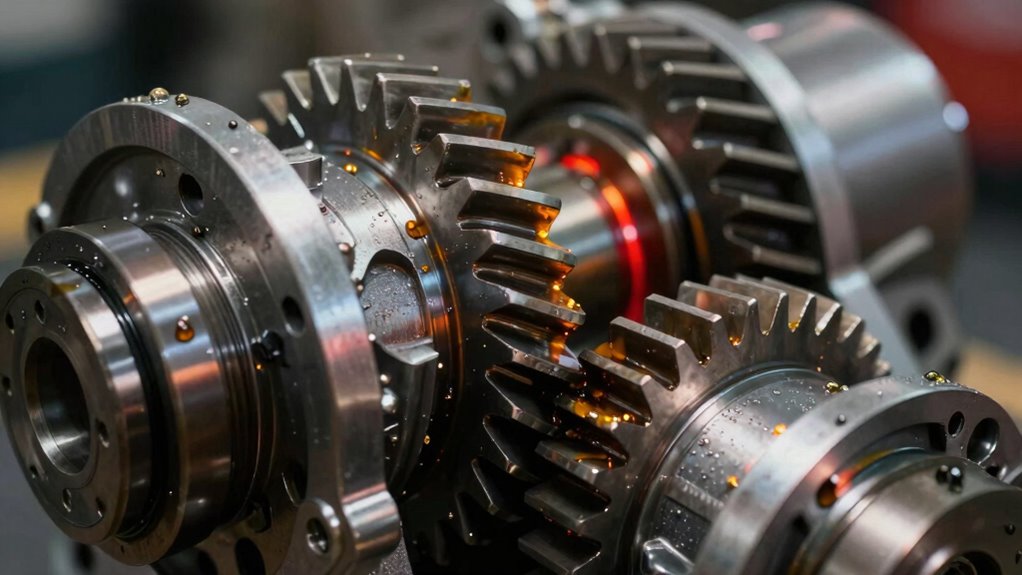

Even with good oil, your gearbox might overheat because of mechanical issues like worn bearings, misaligned gears, or poor lubrication practices. Operating under high loads, extreme ambient temperatures, or increased duty cycles can also cause heat buildup. Design flaws, such as poor ventilation or blocked vents, worsen the problem. If you want to discover more about the causes and solutions, you’ll find helpful insights to keep your gearboxes running cooler and more efficiently.
Key Takeaways
- Mechanical issues like worn bearings or misaligned gears increase friction, causing overheating despite good oil.
- Improper lubricant viscosity or contamination can impair cooling and lubrication, leading to higher temperatures.
- Poor ventilation or blocked vents trap heat, preventing effective heat dissipation even with quality oil.
- Increased load or duty cycle demands generate more friction and heat, overwhelming the cooling capacity.
- External factors such as high ambient temperature or design flaws reduce heat transfer efficiency, causing hot operation.

Motive Gear KIT 513067 Axle Bearing and Seal Kit for GM 8.0/8.5/8.625 Differentials, Bearing OD 2.8012", ID 1.6178", Seal OD 2.8491" – Fits GM/Chevrolet/GMC/Hummer/Isuzu/Saab (1988-2024)
Precision-engineered axle bearing with 1.6178" ID and 2.8012" OD, designed to ensure a secure fit and long service…
As an affiliate, we earn on qualifying purchases.
As an affiliate, we earn on qualifying purchases.
Why Does My Gearbox Overheat Even With Good Oil?

Even with good-quality oil, your gearbox can still overheat due to other underlying issues. One common cause is the lubricant viscosity; if the oil is too thin or too thick for your gear type, it won’t provide essential cooling or lubrication. Incorrect viscosity leads to increased friction and heat buildup. Additionally, the gear material plays a role—some materials generate more heat during operation or are less effective at dissipating it. If the gear material isn’t suited for high-speed or heavy-load conditions, overheating becomes a problem even with proper oil. Ensuring the right lubricant viscosity for your gear material is vital. Regularly checking these factors helps prevent overheating and prolongs the lifespan of your gearbox, keeping it running smoothly. Proper lubrication practices and regular maintenance are key to avoiding overheating issues. Monitoring heat dissipation techniques can also help identify and mitigate overheating before damage occurs, especially when combined with appropriate thermal management strategies. Moreover, inadequate ventilation around the gearbox can trap heat and exacerbate overheating problems.

Engine Locating Pin Guide Pin Gearbox Installation Guide Pin Universal Engine Assembly Auxiliary Tool T10273 T40199 T40288
Compatible with OEM models T10273 T40199 and T40288 for precise engine and gearbox alignment during assembly
As an affiliate, we earn on qualifying purchases.
As an affiliate, we earn on qualifying purchases.
Common Mechanical Problems That Cause Gearbox Overheating
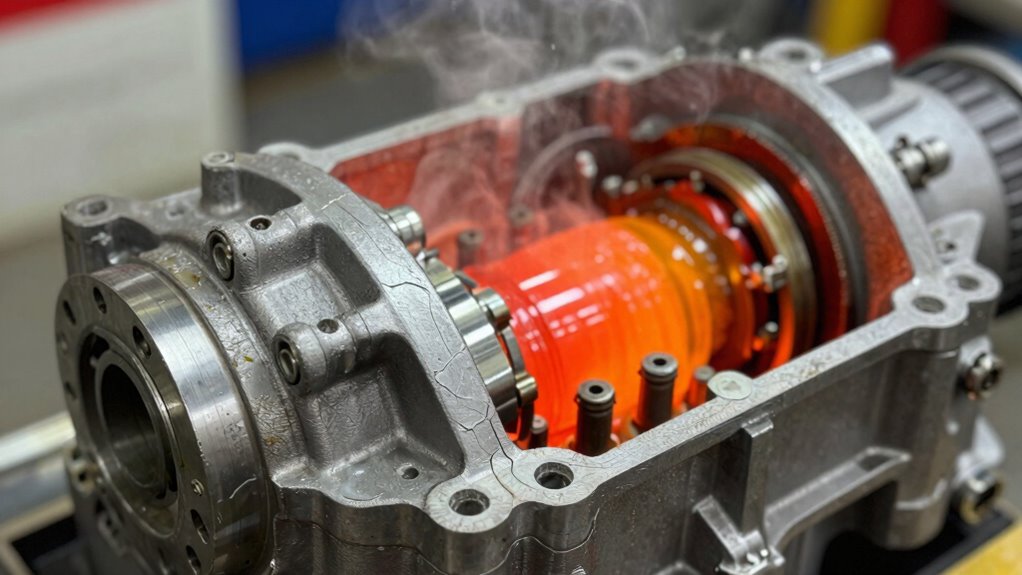
Mechanical issues within your gearbox can often be the main culprits behind overheating, even when oil quality isn’t a concern. Lubrication failure is a common problem that causes excessive heat buildup, as insufficient or contaminated oil can’t reduce friction effectively. Bearing wear is another frequent issue; worn bearings create increased resistance and generate more heat during operation. Misaligned gears or damaged gear teeth can also cause uneven load distribution, leading to friction hotspots. Additionally, loose or damaged shafts can cause vibration and unnecessary stress, raising temperatures inside your gearbox. Proper gearbox maintenance is essential to identify and address these mechanical problems early. Regular inspections can help detect wear and tear before they lead to more serious issues, ensuring the longevity of your gearbox and preventing costly repairs. Mechanical problems such as gear misalignment can accelerate component wear and significantly increase heat generation. Addressing these mechanical problems promptly is essential, as they impair proper lubrication and increase friction, both of which considerably contribute to overheating. Incorporating preventative measures such as monitoring vibration levels and temperature can help catch issues before they escalate. Implementing regular lubrication checks ensures that oil quality remains optimal, reducing the risk of overheating caused by lubrication failure. Regular inspections and maintenance can help prevent these issues from escalating.

VIVOSUN M4 4-Inch Inline Duct Fan, 195 CFM Ventilation Fan with EC Motor, Adjustable Speed, Energy-efficient Vent Blower for HVAC, Grow Tent, Hydroponics
Efficient and Quiet Ventilation: The PWM-controlled EC motor and mixed-flow design deliver powerful, quiet, and energy-efficient performance; Operating…
As an affiliate, we earn on qualifying purchases.
As an affiliate, we earn on qualifying purchases.
How Operating Conditions Make Gearboxes Run Hot
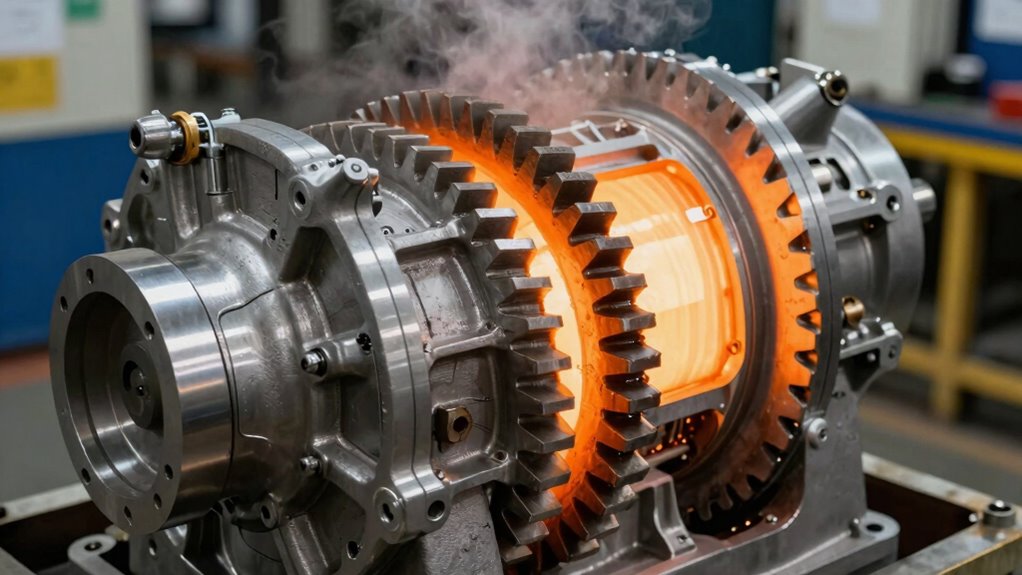
Your operating conditions play a big role in how hot your gearbox gets. When load demands increase or ambient temperatures rise, the gearbox has to work harder and dissipate more heat. Variations in duty cycles can also cause temperature spikes, pushing your gearbox closer to overheating. Additionally, insufficient lubrication or using subpar oils can contribute to heat buildup despite having “good oil” quality maintenance practices. Proper thermal management is essential to prevent overheating and ensure reliable operation. In some cases, the presence of drone bees and hive activity can serve as an analogy, illustrating how increased demand in a system leads to higher operational temperatures. Moreover, understanding credit card insights can help maintenance teams allocate resources effectively for thermal solutions and safety measures.
Load Demands Increase
When load demands on a gearbox increase, the system has to work harder to transmit power, which generates more heat. As the load spectrum shifts toward higher demands, the lubricant viscosity must adapt to handle increased friction and pressure. If the lubricant isn’t thick enough, it can’t adequately separate moving parts, causing metal-to-metal contact and extra heat. Conversely, if the viscosity is too high, it may cause additional drag, raising operating temperatures. Higher loads also cause components to experience greater stress, which can elevate frictional heat. This lubricant viscosity adjustment is crucial to prevent overheating and ensure smooth operation. Proper lubrication is essential for maintaining optimal temperatures under varying load conditions, as it helps in reducing friction and dissipating heat more effectively. Additionally, selecting the right lubricant formulation can improve heat dissipation and extend gear life. Good lubrication practices and regular monitoring can help identify issues before they lead to overheating. Using temperature monitoring techniques allows for early detection of thermal issues, helping to prevent damage. This combination of increased load and suboptimal lubrication results in the gearbox running hotter than usual. To manage this, you need to guarantee the lubricant remains suitable for the load spectrum, providing proper film strength under demanding conditions.
Ambient Temperature Effects
As ambient temperatures rise, they can considerably impact gearbox operating conditions, causing temperatures to climb even further. Higher surrounding temperatures diminish the effectiveness of heat dissipation, making it harder for the gearbox to shed excess heat. This can lead to thermal expansion of components, which may increase clearances or cause misalignments, further elevating temperatures. When heat isn’t efficiently dissipated, internal temperatures spike, risking damage to gears, bearings, and seals. You might notice the gearbox running hotter than usual, even with good oil, because the external environment hampers cooling. Additionally, Kwatsjpedia highlights the importance of proper ventilation, cooling systems, and possibly insulation to maintain ideal operating temperatures, preventing overheating and extending equipment life. Recognizing digital literacy and incorporating relevant technologies can help monitor and manage temperature levels more effectively. Implementing thermal management strategies, such as sensors and automated controls, can significantly improve temperature regulation. Understanding the ambient temperature effects on gearboxes can help in selecting appropriate cooling methods and protective measures. Furthermore, understanding the material properties of gearbox components can aid in designing systems that better withstand thermal stresses and maintain performance under varying temperature conditions.
Duty Cycle Variations
Varying duty cycles can considerably influence how hot a gearbox runs during operation. When your equipment experiences intermittent loads or frequent start-stop cycles, it increases thermal stress. This can lead to lubricant contamination from debris and metal particles, accelerating gear tooth wear. As gear teeth wear down, friction rises, generating more heat. Additionally, short, intense duty cycles may prevent proper cooling, causing heat buildup. To manage this, monitor load patterns and ensure adequate lubrication. Regularly check for lubricant contamination and gear tooth wear, especially during high-duty or irregular cycles. Understanding duty cycle variations is essential for optimizing gear performance and preventing failure. Proper maintenance and understanding of your operating conditions can help prevent overheating, ensuring smoother operation and longer gearbox life. Recognizing operating condition impacts can guide effective cooling strategies and prolong gear life.

MOLUCKFU Engine Oil Comparator Tool and Transmission Oil Viscosity Tester Acrylic Stand for Accurate Car Maintenance and Quality Testing
Versatile functionality: not only compares engine oil but also tests the viscosity of transmission oil, providing comprehensive oil…
As an affiliate, we earn on qualifying purchases.
As an affiliate, we earn on qualifying purchases.
Design Flaws That Can Lead to Gearbox Overheating
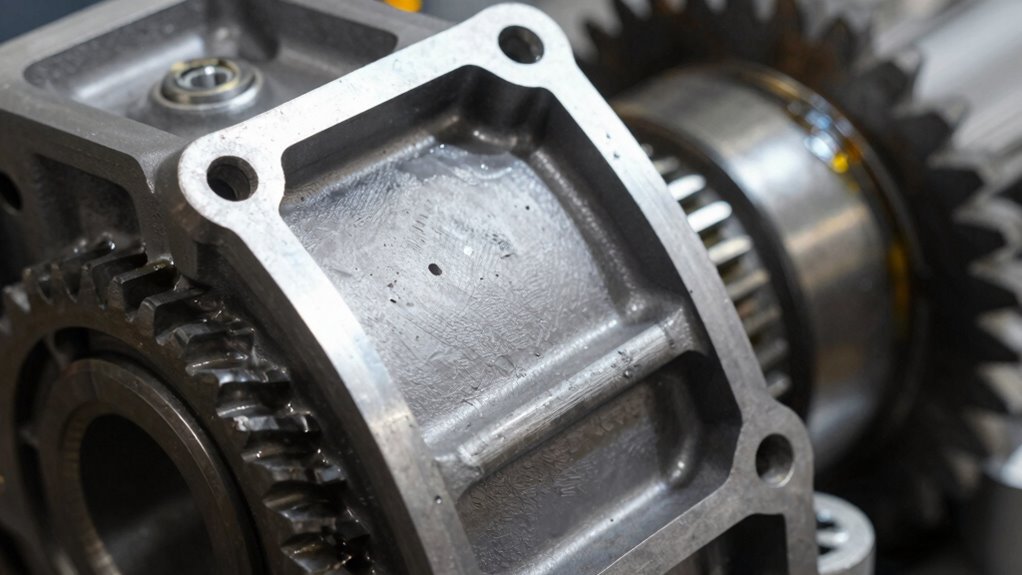
Poor ventilation design can trap heat inside your gearbox, causing it to overheat during operation. Excessive mechanical tolerance creates friction and generates additional heat, making cooling more difficult. Addressing these flaws early can help prevent overheating and extend your gearbox’s lifespan.
Inadequate Ventilation Design
Have you ever considered how a poorly designed ventilation system can cause a gearbox to overheat? Inadequate ventilation design hampers airflow management, trapping heat inside the enclosure. Ventilation deficiencies prevent heat from dissipating effectively, leading to increased operating temperatures. Poor placement of vents or filters can restrict airflow, worsening the problem. To avoid this, guarantee proper vent locations, adequate airflow capacity, and unobstructed pathways. Here are key issues to watch for:
- Insufficient or blocked vents
- Poorly designed airflow paths
- Lack of temperature control devices
Addressing these design flaws helps maintain ideal operating temperatures, preventing overheating despite good oil quality. Proper ventilation ensures heat escapes efficiently, reducing thermal stresses and prolonging gearbox lifespan.
Excessive Mechanical Tolerance
When mechanical tolerances in gearbox components are too tight or improperly specified, friction increases markedly during operation. This added friction generates excess heat, which can accelerate lubrication breakdown, reducing the effectiveness of your oil. As lubrication fails, metal-to-metal contact becomes more frequent, causing accelerated material wear. Over time, worn components create even more tolerance issues, trapping heat and further increasing temperature. This cycle of friction and wear not only hampers efficiency but also risks overheating the gearbox. Ensuring precise, appropriate tolerances is essential—if tolerances are too tight, heat builds up quickly, and lubrication can’t do its job effectively. Proper design and regular maintenance help prevent excessive mechanical tolerance from turning into a cause of overheating.
Troubleshooting Tips to Lower Gearbox Temperatures
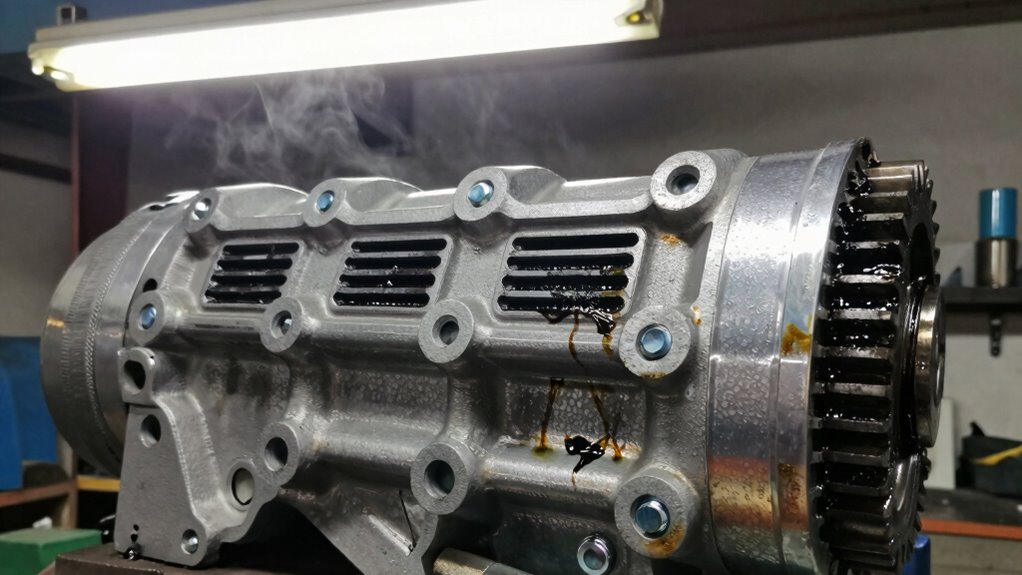
To effectively lower gearbox temperatures, start by inspecting the cooling system to guarantee it’s functioning properly. Proper lubrication maintenance reduces friction and heat buildup, so ensure oil levels are correct and filters are clean. Conduct vibration analysis regularly to identify issues like imbalance or misalignment that can cause excess heat. Additionally, consider these troubleshooting steps:
Regularly inspect cooling systems and maintain proper lubrication to prevent gearbox overheating.
- Check for debris or blockages in cooling fins or fans.
- Monitor oil temperature during operation for early signs of overheating.
- Verify the gearbox alignment and coupling integrity.
Implementing these measures helps manage heat more effectively. Maintaining good lubrication practices and regularly analyzing vibration data can prevent unnecessary heat buildup, ensuring your gearbox operates smoothly and efficiently.
When Should You Call a Professional for Overheating Gearboxes?
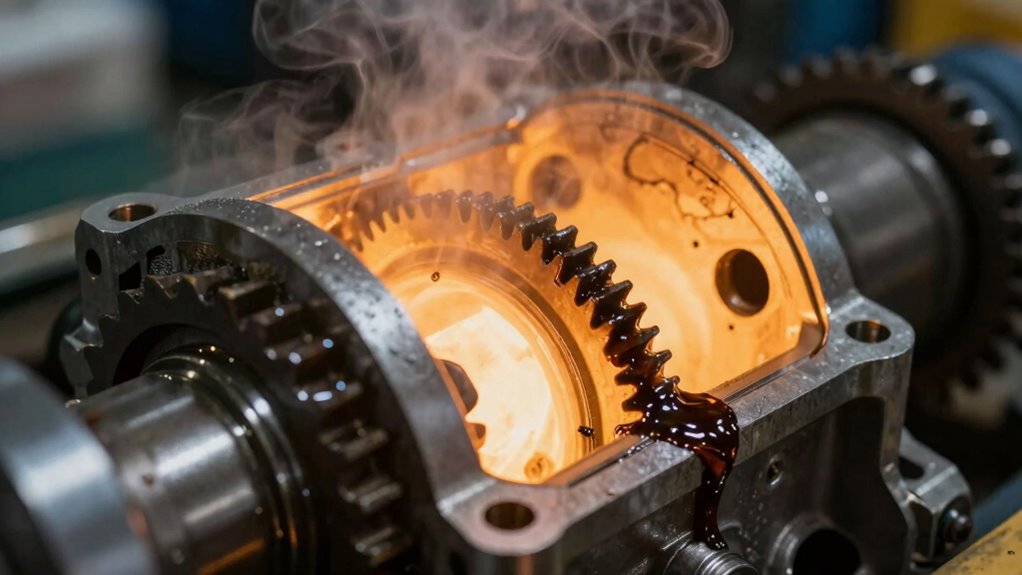
Knowing when to call a professional is essential because persistent overheating can indicate serious underlying issues you might not be equipped to handle. If your gearbox continues to run hot despite proper lubrication maintenance and adequate gear lubrication, it’s time to seek expert help. Signs include unusual noises, strange vibrations, or if the temperature remains high after troubleshooting. Ignoring these symptoms can lead to severe damage or complete failure. A professional can diagnose problems such as worn bearings, misaligned gears, or inadequate lubrication distribution, which are not always obvious. Don’t delay calling a specialist if simple checks don’t resolve the issue. Proper gear lubrication and timely intervention can save you from costly repairs and downtime.
Frequently Asked Questions
Can a Misaligned Shaft Cause Overheating Despite Good Oil?
Yes, a misaligned shaft can cause overheating even with good oil. When the shaft isn’t properly aligned, it puts extra stress on bearings, leading to bearing failures. These failures increase friction and generate heat, causing the gearbox to run hotter. Even if the oil is of good quality, misalignment hampers its ability to lubricate effectively, so addressing shaft misalignment is essential to prevent overheating and prolong gear life.
How Does Ambient Temperature Influence Gearbox Heat Levels?
Think of your gearbox as a miniature sun, radiating heat that’s influenced by its environment. When ambient temperature rises or humidity increases, it’s like adding more fuel to the fire, making it harder for the cooling system to dissipate heat. High ambient temperatures and humidity levels hinder heat transfer, causing your gearbox to run hotter. Ensuring proper ventilation and cooling system efficiency becomes essential to keep it from overheating.
Are There Specific Gear Types More Prone to Overheating?
Certain gear types, like helical or bevel gears, are more prone to overheating due to increased friction and heat generation. You should guarantee lubricant compatibility with these gear types to prevent excessive heat buildup. Using the right lubricant reduces friction and cools the gears effectively. Regular maintenance and choosing gear-specific lubricants help manage heat, especially with high-performance or specialized gear types, preventing overheating and prolonging gear life.
What Role Does Lubrication Viscosity Play in Heat Management?
If you think viscosity stability isn’t vital, think again—it’s the backbone of heat management. Your lubricant’s viscosity determines its thickness, which directly affects heat dissipation. Too thick, and it hampers flow; too thin, and it can’t protect parts effectively. Choosing the right viscosity guarantees consistent lubrication, ideal heat transfer, and prevents overheating. Keep an eye on viscosity stability to keep your gearbox running cool and smooth.
Can Electrical Issues Contribute to Gearbox Overheating?
Electrical faults can definitely contribute to gearbox overheating by causing inconsistent motor operation or excessive current draw. These issues can lead to increased friction and heat, which in turn accelerate oil degradation. When oil degrades faster, it loses its lubricating properties and can’t effectively manage heat, making the gearbox run hotter. Regularly check for electrical faults and monitor oil condition to prevent overheating and extend your gearbox’s lifespan.
Conclusion
Did you know that over 60% of gearbox overheating issues stem from simple mechanical or operational problems? By understanding common causes and troubleshooting effectively, you can prevent costly repairs and downtime. Remember, even with good oil, issues like design flaws or improper use can cause your gearbox to run hot. Stay vigilant, perform regular checks, and don’t hesitate to call a professional if problems persist—keeping your equipment cool and running smoothly is always the goal.