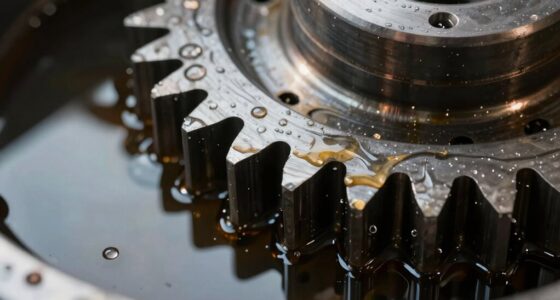

Moly in gear oil acts as both a friction modifier and an anti-wear agent, offering thorough protection for your gear systems. It forms a protective film on metal surfaces, reducing friction and preventing damage like pitting and scoring. This dual role helps gears run smoother, stay cooler, and last longer under heavy loads or high speeds. If you want to understand how this additive maximizes gear performance, there’s more to discover below.
Key Takeaways
- Moly in gear oil functions as both a friction modifier and an anti-wear agent simultaneously.
- Moly particles form a durable, protective film that reduces friction and prevents metal-to-metal contact.
- The additive minimizes heat generation, decreasing wear and extending gear lifespan.
- It enhances boundary film strength, ensuring smoother operation during start-up and under heavy loads.
- Overall, moly in gear oil provides combined friction reduction and wear protection for optimal gear performance.

Gear Oil Moly is a specialized lubricant designed to reduce friction and wear in gear systems. When you add moly to your gear oil, you’re introducing a solid lubricant that forms a thin, durable film on metal surfaces. This film acts as a barrier, preventing direct metal-to-metal contact and markedly reducing wear. The moly application is especially effective under high-pressure and heavy-load conditions, where traditional lubricants might struggle to protect gear components. By incorporating moly into your gear oil, you’re enhancing its anti-wear properties, which means fewer parts wear out prematurely and your gears stay smoother longer.
You might wonder whether moly in gear oil serves primarily as a friction modifier, an anti-wear agent, or both. The answer is that it does both, but its strength lies in its ability to reduce wear. When gears operate under stress, friction generates heat and causes metal fatigue. Moly particles embed themselves into the surface, creating a protective layer that minimizes metal-on-metal contact. This reduces the formation of heat and prevents metal fatigue, ultimately prolonging gear life. The wear reduction benefit is especially noticeable in heavily loaded or high-speed gears, where traditional oils can’t always provide sufficient protection.
In terms of application, moly is usually added as a solid additive to the base oil. It disperses evenly and forms a film that stays put, even under extreme conditions. This film not only decreases friction but also provides a smoother operation, which can improve efficiency and reduce energy consumption. When you use gear oil with moly, you’re effectively increasing the lubricant’s boundary film strength, which is vital during start-up, heavy loads, or adverse conditions. The result is less scoring, pitting, and gear damage, saving you money on repairs and downtime.
The benefit of moly application extends beyond just wear reduction. It also helps in reducing heat buildup, which can degrade traditional oils and cause premature failure. By maintaining a stable film between gear teeth, moly ensures that your gear system operates quietly and efficiently. This dual action—acting as both a friction modifier and an anti-wear agent—means you’re protecting your gear system more holistically. So, if you’re looking to maximize gear longevity, choosing a gear oil with moly is a smart move. It’s a proven technology that keeps your gears running smoothly, even under the toughest conditions, by reducing wear and maintaining ideal friction levels.
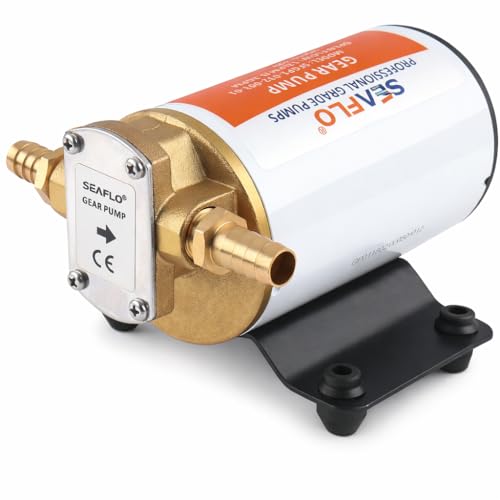
SEAFLO 12V Self Priming Impeller Gear Pump - 3.2 GPM Oil Change Diesel Fuel Transfer Pump, Reversible Flow, Copper Impeller, Rugged Metal Gears, Self Priming Design, 4 Year Warranty
[ SPECIFICATIONS ]: Model: SFOGP1-032-12 | Voltage: 12V DC | Flow Rate: 3.2 GPM (12 LPM) | Max...
As an affiliate, we earn on qualifying purchases.
Frequently Asked Questions
Does Moly in Gear Oil Improve Fuel Efficiency?
Moly in gear oil can improve your fuel economy by reducing friction within the transmission. As an additive benefit, moly acts as a friction modifier, helping parts move smoothly, and provides anti-wear protection. This combination minimizes energy loss and wear, leading to better efficiency. When used properly, moly-enhanced gear oils can help your vehicle run more efficiently, saving you fuel and extending the lifespan of your transmission components.
How Long Does Moly-Based Gear Oil Last?
Moly-based gear oil typically lasts around 20,000 to 50,000 miles, but gear oil longevity depends on driving conditions and maintenance. Don’t worry—moly degradation is slow, so it maintains its protective qualities longer. Regular oil checks and changes help prevent early breakdown, ensuring your gear system stays protected. With proper care, your gear oil remains effective, giving you peace of mind and reliable performance over time.
Can Moly Cause Gear Wear if Overused?
Yes, overusing moly in gear oil can cause gear wear due to moly overload. When you add too much molybdenum disulfide, it may create excessive film buildup, which can lead to inadequate lubrication and increased friction. This overload can ultimately accelerate gear wear instead of preventing it. Always follow the manufacturer’s recommended moly levels to guarantee ideal protection and avoid potential damage.
Is Moly Safe for All Types of Transmissions?
You wonder if moly is safe for all transmissions. In reality, its safety depends on transmission compatibility and proper moly application. While many gear systems benefit from moly’s anti-wear and friction-modifying properties, some older or specialized transmissions might not tolerate it well. Always check your manufacturer’s recommendations and guarantee the moly additive suits your specific transmission type to avoid unexpected issues.
Does Moly Affect the Environmental Impact of Gear Oil?
Moly can enhance the environmental benefits of gear oil by reducing wear and extending oil life, which means less frequent oil changes and waste. However, you should consider biodegradability concerns, as moly compounds may not break down easily in the environment. Choosing environmentally friendly formulations and following disposal guidelines helps minimize negative impacts while benefiting from moly’s protective qualities.

Sailingflo 12V Gear Pump-3.2 GPM Self-Priming Impeller Oil Transfer for Machinery Fuel, Viscous Liquids, Lubricant, Diesel Engine Scavenge Extractor Pump (84W, 12 LPM)
PARAMETERS: Impeller:Neoprene Compound, Seal: Lip Type, Ports: 3/8''Female Thread,1/2''Barbed Fittings, Volt: 12V DC, Max head: 3M, Amp draw:...
As an affiliate, we earn on qualifying purchases.
Conclusion
So, when it comes to moly in gear oil, is it just a friction modifier, or does it also serve as an anti-wear agent? The truth is, it does both, working together to improve gear performance and longevity. By reducing friction and preventing wear, moly helps your gears run smoother and last longer. Isn’t protecting your gear system worth considering whether moly’s dual role is the right choice for you?

MILADO 12V 100W Oil Change Extractor Pump, Electric Engine Oil Pump, Portable Fluid Transfer Pump for Engine/Transmission/Gear Oil, Suitable for Boat, Car, Truck, Motorcycle, Lawnmower
12V 100W PURE COPPER MOTOR: The oil change pump uses a 100W high power motor, engine oil flow...
As an affiliate, we earn on qualifying purchases.

Vansky Air Conditioner Leak Detector: Professional Car Tool 68 LED Automotive AC UV Dye Leak Detection Kit with Protective Glasses
Professional AC Leak Detection: Designed specifically for detecting automotive air conditioner leak, Vansky AC leak detector flashlight incorporates...
As an affiliate, we earn on qualifying purchases.