To avoid testing the wrong part of the system, analyze flow patterns to find stable, well-mixed zones, and steer clear of turbulence or dead zones. Use flow diagrams or models to identify these areas, ensuring your sampling ports are positioned downstream of mixing points and away from obstructions. Regularly verify and adjust placement based on system changes. Keep exploring to discover more tips for accurate sampling and ideal port placement.
Key Takeaways
- Identify flow-stable, well-mixed areas away from turbulence, dead zones, and obstructions for accurate sampling.
- Use flow visualization techniques like smoke or dye tests to confirm representative flow paths.
- Position sampling ports downstream of mixing points and away from process disturbances or stagnation zones.
- Regularly evaluate and adjust port locations based on flow pattern changes and system modifications.
- Verify port placement through direct measurements and inspections to ensure sampling from the correct system part.

Grain Probe Sampler:Stainless Steel Grain Probe Sampler – Durable Solid Sample Probe for Efficient Cement, Fertilizer & Powder Sampling – Essential Tool for Accurate Testing
1,Durable and Practical Design: This Double Tube Stratified Sampler is equipped with a Pointed Probe for quick and…
As an affiliate, we earn on qualifying purchases.
As an affiliate, we earn on qualifying purchases.
Introduction: Why Proper Sampling Port Placement Matters

Proper sampling port placement is essential because it directly impacts the accuracy and reliability of process data. Incorrect placement can lead to sampling errors, where the collected sample doesn’t accurately represent the system’s conditions. This can cause misleading readings and flawed decision-making. Additionally, poor placement increases contamination risks, as improper locations may trap residues or promote microbial growth, skewing results and compromising sample integrity. Ensuring the port is positioned correctly minimizes these issues, providing representative samples that reflect the true process state. Proper sampling techniques also help ensure the collected data truly reflects the system’s visual and operational conditions. By carefully selecting the right location, you reduce the chance of errors and contamination, leading to more trustworthy data and better overall system performance. Regular inspection and maintenance of sampling ports further ensure their continued effectiveness and prevent blockages or corrosion that could affect sample quality. Incorporating appropriate installation practices can also contribute to maintaining sample integrity over time, especially when considering the impact of system design on sampling accuracy.

ZOKYUYS Car Oil AC Dye Detection Kit, Leak Test Tool Kit, Auto Air Conditioner Leak Test Tool, Professional Car Tool, Leak Test Kit Includes LED Flashlight and Glasses
Strong flashlight: Flashlight is made of high-quality aluminum alloy,enhanced its heat dissipation performance. It surface non-slip texture grip,lanyards…
As an affiliate, we earn on qualifying purchases.
As an affiliate, we earn on qualifying purchases.
Assess System Flow and Dynamics Before Installing Ports

Before installing sampling ports, you need to understand how the system flows and behaves. Map out the flow paths and analyze how the system responds under different conditions. This helps you pinpoint the critical sampling points that will give accurate and representative data.
Map System Flow
Understanding the flow dynamics of your system is essential before installing sampling ports. Start with flow visualization techniques like smoke or dye tests to see how fluid moves through different sections. This helps identify areas of turbulence, dead zones, or uneven flow, which can compromise sampling accuracy. Mapping the system’s flow path ensures you place ports where representative samples can be obtained, avoiding misleading data from stagnant or unpredictable zones. Accurate flow mapping also reveals how flow patterns change under various operating conditions, so you can select the most reliable sampling points. Additionally, system flow assessment enables you to detect potential issues that may affect sample integrity. By thoroughly understanding flow behavior upfront, you reduce the risk of testing the wrong part of the system and improve the overall reliability of your sampling results.
Analyze System Dynamics
How can you guarantee sampling ports are placed effectively? By analyzing system dynamics thoroughly before installation. Understanding flow patterns helps you identify areas with minimal system variability, which assures more consistent sampling. You need to observe how fluid or gas moves through the system, noting fluctuations that could affect sampling precision. Recognizing these dynamics allows you to avoid regions with turbulent flow or high variability, reducing the risk of inaccurate data. This step also reveals how different system components interact over time, guiding you to ideal port locations. In doing so, you improve sampling accuracy and reliability. Taking the time to assess flow characteristics upfront ensures your sampling points truly reflect the system’s true state, ultimately leading to better process control and decision-making. Additionally, considering comedogenic ratings can help prevent skin issues related to materials used near sampling areas, ensuring safety and longevity of the system components. Moreover, understanding flow behavior is essential for optimizing port placement, minimizing potential measurement errors. A thorough analysis of system flow patterns can further enhance your ability to select optimal locations for sampling ports, ensuring consistent and accurate data collection.
Identify Critical Sampling Points
To identify critical sampling points, you need to assess the system’s flow and dynamics thoroughly. Understanding flow measurement patterns helps you determine where the flow is stable and representative of the entire system. Focus on areas with consistent flow, avoiding zones with turbulence, dead zones, or rapid fluctuations, as these can compromise sample accuracy. By analyzing flow behavior, you ensure that sampling ports are positioned where the flow is uniform and reliable. This prevents sampling errors and guarantees meaningful data. Properly placed sampling points capture accurate process conditions, making your measurements truly reflective of the system’s performance. Taking the time to evaluate flow dynamics upfront saves effort later and improves overall system monitoring and control.

SCH 80 PVC Sample Port Ball Valve – 1/4 Inch MNPT x Barb, Buna-N Seal, Includes NPT Adapter for Easy Installation, Manual On/Off Control for Water & Chemical Processing Applications
Durable PVC Construction: Crafted from strong and lightweight Schedule 80 PVC, this ball valve is designed for durability…
As an affiliate, we earn on qualifying purchases.
As an affiliate, we earn on qualifying purchases.
Using Flow Diagrams and Modeling to Plan Sampling Locations

Flow diagrams help you visualize how fluid moves through your system, making it easier to spot key sampling points. Building accurate models allows you to predict flow behavior and identify areas where data is most critical. By interpreting these tools effectively, you can strategically place sampling ports for ideal system monitoring. Incorporating evidence-based methods ensures your sampling decisions improve reliability and performance. Additionally, understanding system dynamics can enhance your ability to optimize sampling locations for better accuracy. Recognizing flow pressure variations within the system further supports precise placement of sampling points, ensuring comprehensive monitoring.
Interpreting Flow Diagrams
Interpreting flow diagrams is essential for accurately planning sampling locations, as these diagrams reveal the movement and distribution of fluids within a system. By analyzing flow paths and identifying areas of fluid stagnation or turbulence, you can optimize sampling points. Focus on fluid dynamics to understand flow behavior and pressure analysis to detect potential pressure drops that may affect sample accuracy. Use the following table to visualize key concepts:
| Concept | Application |
|---|---|
| Fluid Dynamics | Determine flow patterns and velocity changes |
| Pressure Analysis | Identify pressure drops and potential sampling issues |
| Flow Paths | Locate areas of fluid mixing or stagnation |
This approach ensures you target representative sampling locations, avoiding misleading data caused by overlooked flow variations. Understanding pressure drops and their impact on system performance can further refine your sampling strategy. Additionally, considering system design helps identify potential flow disruptions that could influence sampling accuracy.
Building Accurate Models
Building accurate models of fluid systems relies on integrating detailed flow diagrams with computational techniques to predict fluid behavior effectively. Clear diagrams help you visualize flow paths, identify key nodes, and understand pressure and temperature changes. To guarantee reliability, you must calibrate sensors properly; inaccurate sensor readings can lead to flawed models. Consistent sensor calibration guarantees data accuracy, which is essential for model validation. Data logging plays a vital role by capturing real-time measurements needed to refine your models and verify flow assumptions. Combining flow diagrams with reliable data logging allows you to simulate system performance accurately, identify optimal sampling points, and avoid testing areas where flow or conditions are misunderstood. This strategic approach enhances your ability to plan effective sampling locations confidently.
Identifying Critical Sampling Points
To effectively identify critical sampling points, you need to leverage detailed flow diagrams and computational models to understand system behavior. These tools reveal fluid dynamics within your system, highlighting areas where flow may be turbulent, stagnant, or poorly mixed. By analyzing flow diagrams, you can pinpoint zones that markedly influence sampling accuracy, guaranteeing your samples truly represent the system’s overall condition. Computational models help simulate various operating scenarios, allowing you to predict how changes affect flow patterns. This process of flow analysis ensures you place sampling ports at locations that capture representative data, minimizing errors caused by localized anomalies. Ultimately, understanding fluid dynamics through modeling enables you to optimize sampling points, improving accuracy and ensuring reliable system monitoring.

DUOCARA Open Channel Flow Meter Non-Contact Water Flow Measurement Device Industrial Liquid Flow Meter
Accurate technology ensures precise flow measurement in open channels, suitable for various applications.
As an affiliate, we earn on qualifying purchases.
As an affiliate, we earn on qualifying purchases.
Factors to Evaluate When Choosing Sampling Port Sites
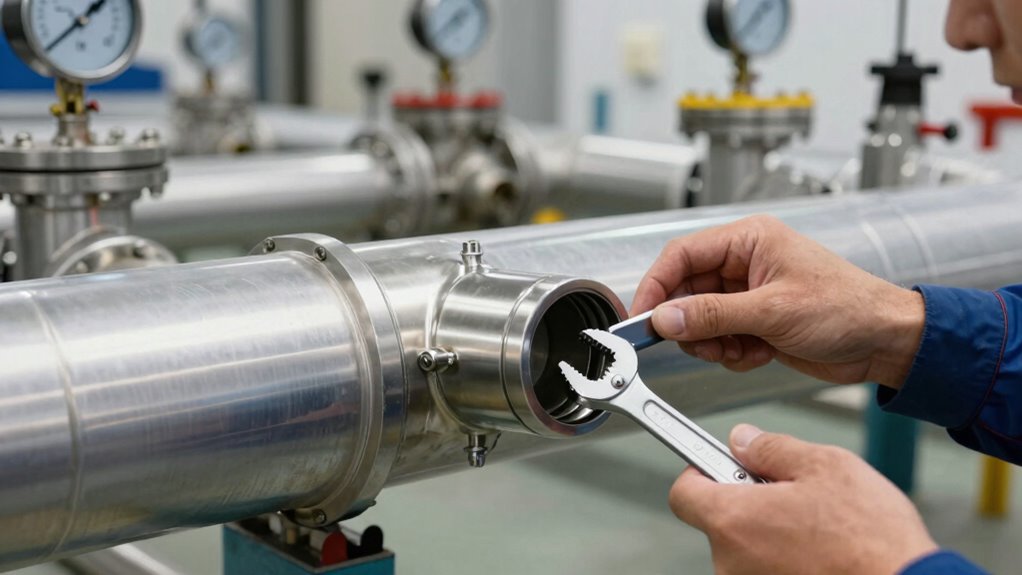
Choosing the right sampling port sites requires careful consideration of several key factors to guarantee accurate and representative sampling. First, assess the port design to assure it minimizes turbulence and dead zones, which can compromise sampling accuracy. The port should be positioned where flow is stable and representative of the overall system, avoiding areas near bends, valves, or obstructions. Consider flow velocity; too high or too low can skew data. Accessibility is also vital—select sites that allow easy installation and maintenance without disrupting operations. Additionally, evaluate the potential for contamination or interference from nearby processes. By thoroughly analyzing these factors, you guarantee your sampling points provide reliable data, helping you make informed decisions and maintain system integrity.
Strategies for Positioning Ports to Ensure Representative Data
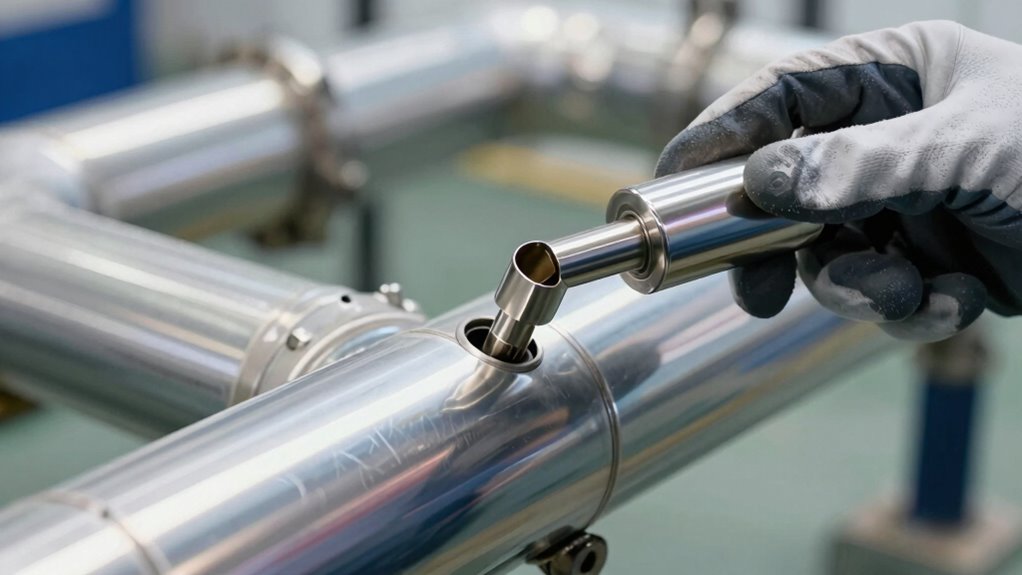
Effective port positioning hinges on selecting locations that capture representative samples of flow and composition. To guarantee sampling accuracy, you should place ports where flow is stable and well-mixed, avoiding turbulence or dead zones that could skew results. Position ports downstream of mixing points and away from entry points that may introduce contaminants. Regularly evaluate flow patterns to identify ideal sites, adjusting as needed to reflect system changes. Maintaining contamination control is critical—use proper sealing and materials to prevent external pollutants from affecting samples. Consistent placement in areas with uniform flow helps achieve reliable data. By focusing on strategic placement that considers flow dynamics and contamination risks, you improve sampling accuracy and ensure your data truly reflects the system’s conditions.
Common Mistakes That Lead to Testing the Wrong System Parts

One common mistake is misidentifying the actual system component that needs testing, which can happen when you rely solely on assumptions or incomplete system diagrams. This often leads to sampling ports placed in the wrong locations, resulting in inaccurate data. For example, neglecting proper sensor calibration can cause you to interpret faulty readings as system issues. Additionally, poor sample storage practices can compromise sample integrity, skewing test results. These errors cause you to test parts of the system that don’t reflect real conditions, wasting time and resources. To avoid this, ensure you fully understand the system layout, calibrate sensors correctly, and implement proper sample storage procedures. Understanding system layouts helps ensure correct sampling locations and reliable test results. Moreover, paying attention to measurement accuracy is essential to obtain valid data that truly reflects the system’s performance. Proper wiring practices can also prevent false readings caused by electrical interference or faulty connections. Inaccurate sampling can also result from unrecognized system variations, which makes comprehensive system knowledge crucial.
Tips for Verifying and Adjusting Sampling Port Placement
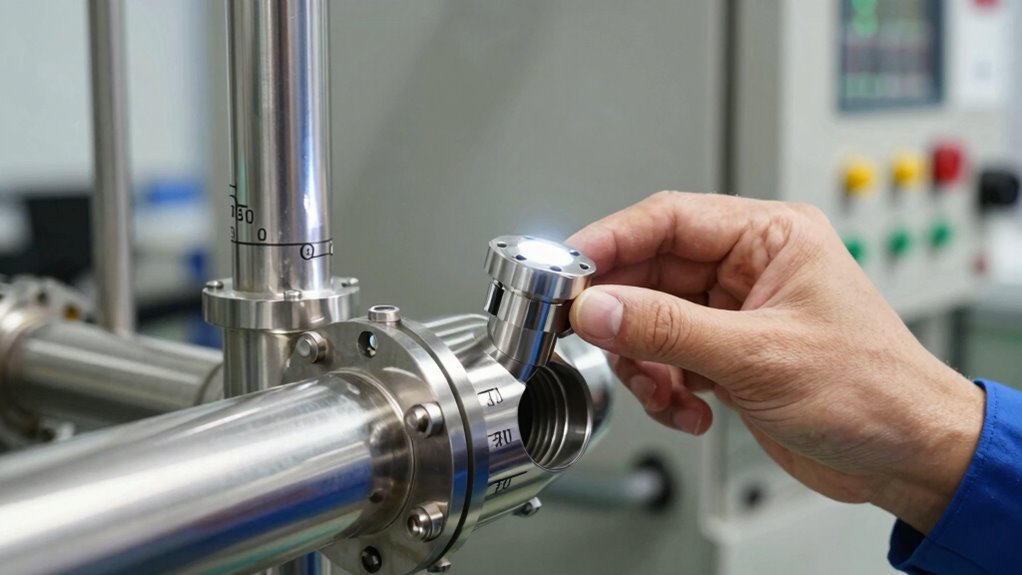
To guarantee your sampling port placement is accurate, you should verify its position by conducting direct measurements and visual inspections within the system. Proper confirmation ensures the sample location reflects true process conditions and supports accurate flow assessment. Adjustments may be necessary if measurements show misalignment or if flow disturbances are detected nearby. Regularly reevaluate placement, especially after system modifications, to maintain sampling integrity. Use these tips for verification and adjustment:
- Measure distance from key system features to confirm placement
- Inspect for turbulence or flow disruptions near the port
- Validate the port’s position relative to flow direction
- Check for obstructions affecting sample flow
- Reassess after system changes or maintenance
- Confirm the effectiveness of the sampling port placement using flow analysis techniques
- Additionally, consider employing flow visualization methods to better understand flow patterns around the sampling point
Following these steps helps optimize sample location and improves the reliability of your sampling process.
The Benefits of Multiple Sampling Points in Complex Systems
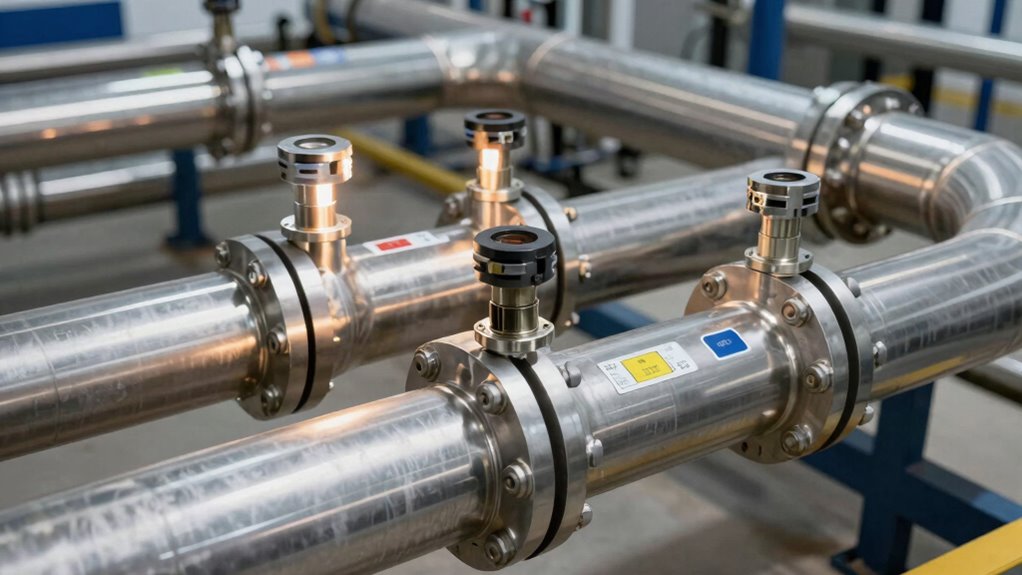
Implementing multiple sampling points in complex systems enhances the accuracy and reliability of process monitoring. By sampling from various locations, you reduce the risk of relying on a single point that might be affected by sample contamination or sensor calibration issues. Multiple points guarantee you capture a thorough view of the system’s behavior, helping identify inconsistencies or anomalies early. This approach also improves data quality, making it easier to make informed decisions. Additionally, having several sampling locations minimizes the chance of overlooking problem areas, which can lead to more effective troubleshooting and maintenance. Incorporating traceability into your sampling strategy ensures compliance and enhances the overall integrity of system testing. Employing redundant sampling can further safeguard against sensor failures and ensure continuous, trustworthy data collection. Utilizing herbal wellness practices in sampling strategies can promote a healthier system environment and reduce potential contamination risks. Overall, multiple sampling points strengthen your system’s robustness, ensuring you get precise, trustworthy data to optimize performance and prevent testing the wrong part of the system.
Case Studies: Successful Sampling Port Strategies
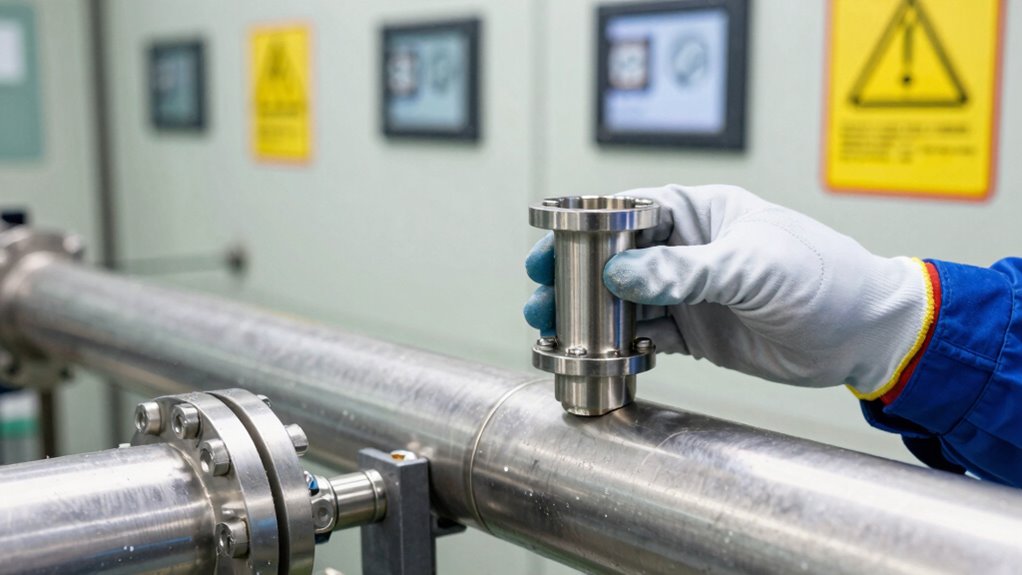
Examining real-world examples shows how choosing the right locations guarantees accurate monitoring of critical system points. When sampling ports are strategically placed, you can better validate sample integrity and detect issues early. These case studies highlight the importance of thoughtful placement to optimize system performance and data reliability.
Strategic Location Selection
Strategic placement of sampling ports can markedly enhance data accuracy and operational efficiency. By choosing ideal locations, you minimize the risk of sample contamination and ensure reliable flow measurement. Placing ports downstream of mixing points prevents misleading readings, while avoiding dead zones reduces stagnant fluid and inaccurate data. Consider proximity to process equipment to detect fluctuations early and prevent system issues. Proper placement also helps in capturing representative samples, reducing testing errors.
- Position ports where flow velocity is steady for accurate readings
- Avoid areas with turbulence or turbulence zones
- Install upstream of valves or equipment that could cause contamination
- Use flow patterns to identify high-traffic sampling points
- Ensure easy access for maintenance and sampling activities
Monitoring Key System Points
Effective monitoring of key system points hinges on choosing the right sampling port locations. When you position ports strategically, you improve sampling accuracy and guarantee reliable system diagnostics. In successful case studies, engineers identified critical flow areas where contaminants or variations are most detectable. By installing sampling ports at these points, they minimized sampling errors and avoided misleading data. Proper placement allows you to quickly detect issues, optimize system performance, and reduce downtime. In one example, relocating a port upstream of a filtration stage provided clearer insights into contamination sources. These strategies emphasize understanding system flow dynamics and targeting high-impact points. Ultimately, monitoring key system points with well-placed sampling ports leads to more accurate data collection and better-informed maintenance decisions.
Validating Sample Integrity
Validating sample integrity is essential to guarantee that the data you collect truly reflects the system’s conditions. Confirming sample accuracy involves preventing contamination and confirming port calibration. Successful strategies include regular port checks to avoid sample contamination, using proper sterilization techniques, and verifying calibration before sampling. These steps help maintain sample purity and reliability. Proper port design minimizes dead zones where contaminants can accumulate. Consistent documentation of calibration and maintenance schedules ensures sampling accuracy over time. Implementing these practices reduces errors and provides confidence in the data. When you validate sample integrity effectively, you avoid costly misinterpretations and improve system performance.
- Regular port calibration schedules
- Sterilization procedures
- Design considerations to prevent contamination
- Documentation of maintenance activities
- Prompt response to contamination signs
Final Checklist for Effective Sampling Port Placement
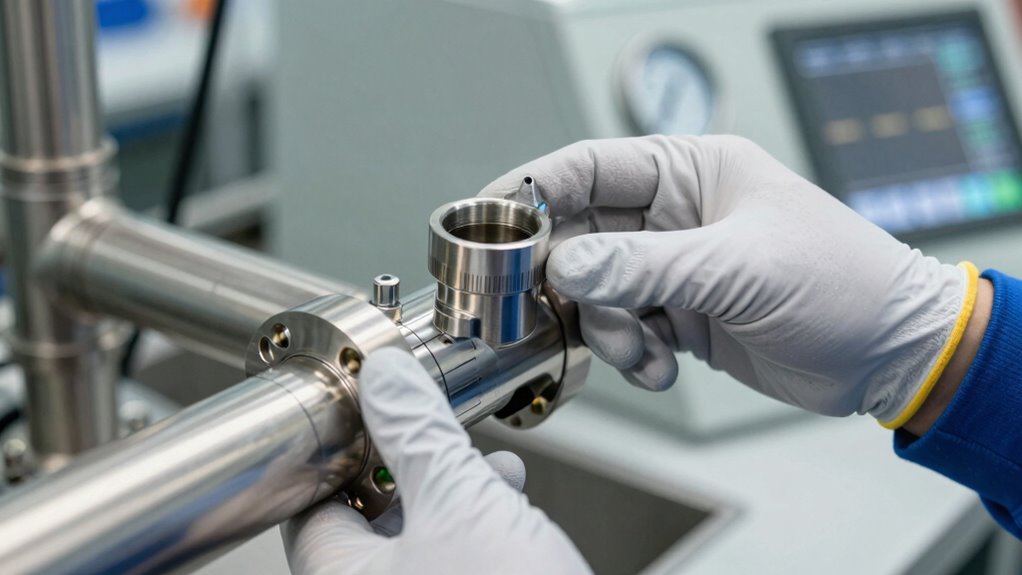
Before finalizing your sampling port placement, it’s essential to double-check all key factors to guarantee accurate and reliable data collection. Make sure the port is positioned where flow measurement is most representative of the system’s overall flow, avoiding turbulence or dead zones that can compromise sampling accuracy. Verify that the port is accessible for maintenance and sampling procedures, minimizing potential contamination or obstruction. Confirm the sampling point aligns with system specifications and that the connection is secure to prevent leaks or inaccuracies. Review the surrounding environment for vibrations or temperature fluctuations that could affect readings. By systematically addressing these factors, you’ll optimize sampling port placement, guaranteeing precise flow measurement and trustworthy data for system analysis.
Frequently Asked Questions
How Often Should Sampling Ports Be Inspected and Maintained Post-Installation?
You should inspect and maintain your sampling ports regularly, ideally following a set maintenance schedule. Typically, inspection frequency depends on system usage and environment, but monthly checks are common for ensuring reliability. During each inspection, look for corrosion, leaks, or blockages. Consistent maintenance keeps your sampling ports functioning correctly, prevents contamination, and guarantees accurate test results. Adjust the inspection frequency as needed based on system performance and observed wear.
What Safety Precautions Are Necessary During Sampling Port Installation and Testing?
Think of safety precautions during sampling port installation as building a fortress around yourself. You should always wear personal protective equipment like gloves and goggles, and guarantee electrical safety by de-energizing systems before working. Use proper tools, follow lockout/tagout procedures, and verify system stability. Staying alert and cautious safeguards you from hazards, making sure your sampling process is safe and successful.
Can Portable Sampling Devices Be Used Effectively With Fixed Sampling Ports?
Yes, portable sampling devices work effectively with fixed ports. You simply connect the portable device directly to the fixed port, ensuring a secure seal to prevent leaks. This setup allows you to quickly and accurately collect samples without needing permanent sampling equipment. Just make sure the fixed port is properly maintained and accessible, so you can efficiently use portable devices for your testing needs.
How Does Temperature Variation Affect Sampling Port Performance and Data Accuracy?
Temperature troubles can tarnish testing truth, so make certain stability for accuracy. Fluctuating temperatures can cause calibration drift, misrepresenting data and muddying measurements. To maintain precision, prioritize temperature stability and perform regular calibration checks. By controlling temperature variations and calibrating frequently, you guarantee trustworthy test results, avoiding errors caused by thermal shifts. Consistent conditions and vigilant calibration keep your sampling data dependable and precise, ensuring your system’s true performance is captured correctly.
Are There Industry Standards or Regulations Governing Sampling Port Placement?
You should follow industry guidelines and regulatory compliance standards when placing sampling ports. These regulations, set by authorities like OSHA or EPA, specify proper locations to guarantee accurate testing and safety. By adhering to these standards, you avoid sampling errors and ensure your system’s integrity. Always consult relevant regulations and industry best practices before installing sampling ports, so you’re confident your setup meets all legal and safety requirements.
Conclusion
Think of sampling ports as your system’s essential pulse points. When placed thoughtfully, they become your trusted compass, guiding you through the maze of flow and data. Avoid blind spots and dead ends by planning carefully, verifying often, and embracing multiple sites when needed. With these strategies, you’ll guarantee your measurements are true, like a clear mirror reflecting the system’s real heartbeat—letting you navigate confidently toward accurate, reliable insights.