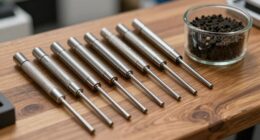
To prevent gear whine, you need to focus on measuring and maintaining the right gear backlash. Proper backlash ensures enough clearance for smooth engagement without causing noise or excess vibration. Too tight increases friction and wear, while too loose leads to gear rattle. Using the right tools and following precise measurement techniques helps keep backlash within ideal ranges. Keep an eye on this critical setting, and you’ll enjoy quieter, longer-lasting gears—learn how to do it correctly here.
Key Takeaways
- Measuring gear backlash ensures optimal clearance, preventing excessive noise and gear whine during operation.
- Use appropriate tools to take accurate backlash readings at specific gear tooth points.
- Regularly inspecting and adjusting backlash maintains smooth gear engagement and extends gear lifespan.
- Proper backlash balances gear contact, reducing friction, vibration, and the likelihood of gear whine.
- Comparing measurements against manufacturer specifications guides necessary adjustments to prevent gear noise.

Disc Brake Rotor Ball Joint Gauge, 0-1” by 0.001” Dial Indicator, Automobile Brake Disc Flatness Runout Backlash Measuring Tool, with 13” Flexible Stem Holder & Locking Pliers
Dial indicator gauge set specially designed to inspect the flatness and detect deformation of brake disc by measuring…
As an affiliate, we earn on qualifying purchases.
As an affiliate, we earn on qualifying purchases.
What Is Gear Backlash and Why Does It Matter?
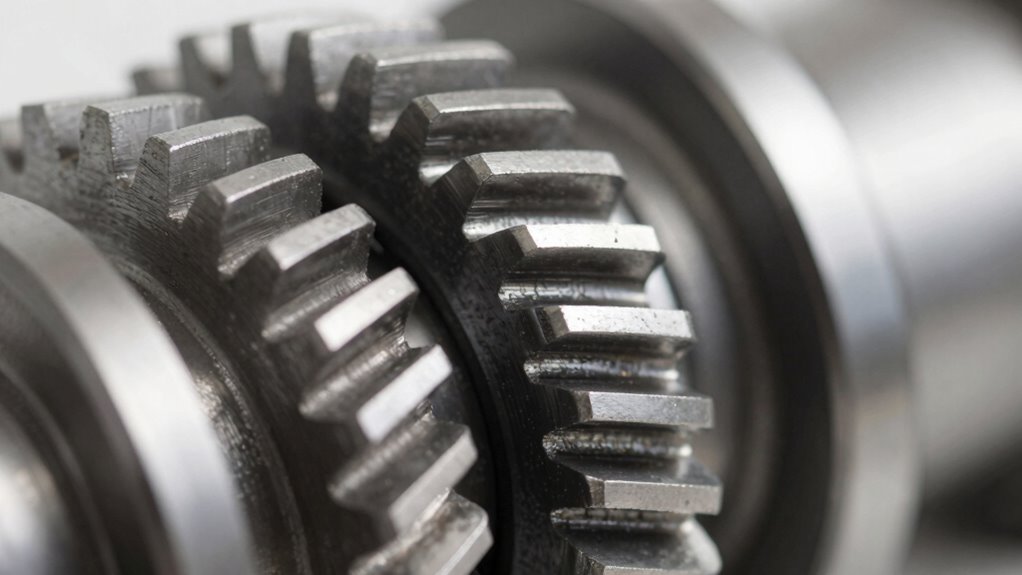
Have you ever wondered why gears don’t turn perfectly together? It’s mainly due to gear backlash—the tiny space between gear teeth that allows smooth engagement. Backlash matters because it prevents gears from binding or overheating, ensuring efficient operation. Proper lubrication techniques reduce friction and wear, helping maintain consistent backlash over time. Choosing the right gear material is also vital; materials like hardened steel or composites can minimize deformation and maintain gear tooth integrity. When backlash is too tight, gears can bind and cause noise or damage. Too loose, and you’ll experience excessive noise, gear slipping, or vibration. Controlling backlash through precise manufacturing and maintenance practices is essential for optimal gear performance. Understanding what backlash is and controlling it through correct lubrication and material selection keeps your gear systems running smoothly, quietly, and reliably.

LA Speedometer Gear 700r4 and BOP TH350 retainer, clip, 40-45 tooth driven gears, 15 tooth drive gear, and 2" housing
OEM fit for 700r4 and BOP TH350, Better than OEM material Will NOT FIT FOUR WHEEL DRIVE, 4WD
As an affiliate, we earn on qualifying purchases.
As an affiliate, we earn on qualifying purchases.
How Excessive or Insufficient Backlash Causes Gear Noise and Whine
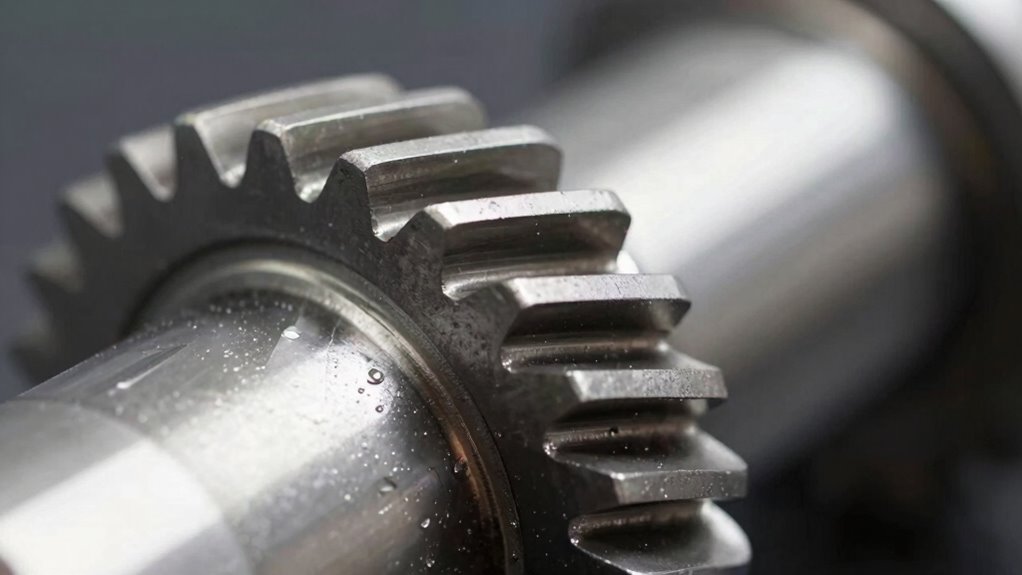
When gear backlash is not properly adjusted, it can lead to noticeable noise and whine during operation. Excessive backlash allows gears to move too freely, causing gear rattle and vibration, while insufficient backlash results in friction and binding. Both issues disrupt smooth operation and produce noise. Lubrication consistency plays a crucial role here; uneven or inadequate lubrication can amplify noise by increasing wear and reducing damping. Material compatibility also matters—using incompatible gear materials can cause uneven wear and contribute to gear whine. Proper backlash ensures that gears mesh just right, minimizing noise. Regularly checking and maintaining correct backlash levels, along with ensuring proper lubrication and material compatibility, helps prevent gear noise and keeps your system running quietly. Additionally, understanding the specific gear design and material properties can further enhance noise reduction strategies. Recognizing the importance of gear alignment is essential for maintaining optimal operation and noise levels. Maintaining proper manufacturing tolerances is also key to ensuring minimal vibration and noise during gear operation.
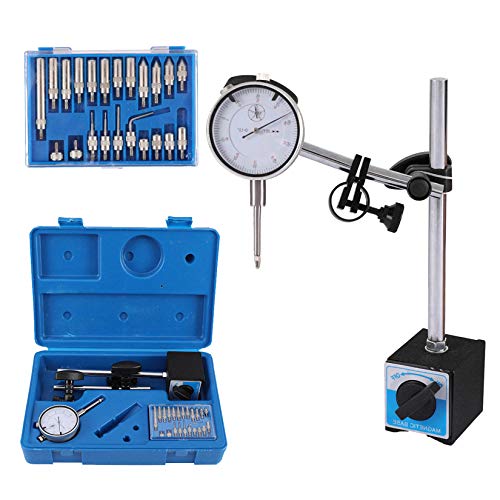
Qnkaa Dial Indicator with Magnetic Base Holder Fine Adjustable Long Arm 0-1" Magnetic Dial Indicator Professional Dial Gauge 0.001"
Qnkaa Dial Gauge Indicator : Measuring Range from 0-1". Resolution up to 0.001".
As an affiliate, we earn on qualifying purchases.
As an affiliate, we earn on qualifying purchases.
How Backlash Affects Gear Longevity and Performance

Proper backlash adjustment is key to ensuring your gears last longer and perform reliably. When backlash is too tight or too loose, it accelerates wear and reduces efficiency. Fine-tuning this setting helps optimize performance and extend the lifespan of your gear system. Additionally, understanding safety tips when working with gear systems can prevent accidents and injuries during maintenance. Maintaining consistent gear lubrication is also essential to minimize friction and prevent premature failure of components. Incorporating Free Floating techniques can help reduce stress on gears and improve overall system durability. Regular inspections and adjustments based on gear wear patterns can further enhance longevity and reliability. Moreover, familiarizing yourself with backlash measurement tools can improve precision during setup and maintenance.
Proper Backlash Adjustment
Adjusting backlash correctly is essential because it directly impacts gear longevity and performance. When setting backlash, you need to ensure the gear teeth have just the right amount of clearance—too tight and they’ll wear prematurely, too loose and they’ll cause excessive movement. Proper backlash allows for smooth gear operation and helps maintain gear lubrication, preventing overheating and early failure. Always consider material compatibility when adjusting; different gear materials may require specific backlash settings to avoid damage. Use precise measurement tools to achieve the correct clearance, and regularly verify adjustments during maintenance. Correct backlash adjustment minimizes unnecessary stress on gear teeth, prolongs service life, and guarantees optimal performance with minimal noise or gear whine. Ensuring the right measurement tools are used can improve accuracy and consistency in setting backlash. Proper setup is key to reliable, long-lasting gear operation. Additionally, recycling pots/pans and choosing eco-friendly disposal methods can help reduce environmental impact associated with gear maintenance and disposal.
Impact on Gear Wear
Backlash plays a crucial role in determining how long your gears last and how well they perform. Too little backlash increases gear contact pressure, accelerating wear and risking damage. Proper lubrication techniques help mitigate this by reducing friction and heat, extending gear life regardless of backlash size. Additionally, gear material selection influences wear resistance; stronger, durable materials can withstand increased contact stresses caused by improper backlash. When backlash is too tight, gear surfaces may grind prematurely, while excessive backlash allows for uneven load distribution, leading to uneven wear patterns. Balancing these factors is essential for longevity. Regularly reviewing backlash, applying suitable lubrication techniques, and choosing the right gear materials work together to optimize gear wear and maximize performance over time.
Performance Optimization
Optimizing gear performance hinges on understanding how backlash influences both longevity and efficiency. Proper gear lubrication reduces friction and wear, helping maintain ideal backlash levels over time. Proper lubrication methods can significantly extend gear life and maintain performance consistency. Too much backlash can lead to increased shock loads, accelerating gear material degradation, while too little causes excessive pressure, risking gear damage. Selecting the right gear material ensures durability and resilience against operational stresses, preserving backlash accuracy. Consistent maintenance, including adjusting backlash and applying appropriate gear lubrication, prevents premature wear and gear failure. Regularly monitoring gear backlash can help identify issues before they cause significant damage. Additionally, understanding gear dynamics and how they interact with backlash can lead to more precise adjustments and improved overall performance. Recognizing the role of gear material in resisting operational stresses can further optimize gear longevity. Proper gear alignment also plays a critical role in maintaining optimal backlash and preventing uneven wear. By fine-tuning backlash, you can improve gear performance, reduce noise, and extend service life. Remember, balancing backlash with suitable gear material and lubrication strategies is key to achieving smooth, reliable operation and maximizing gear longevity.
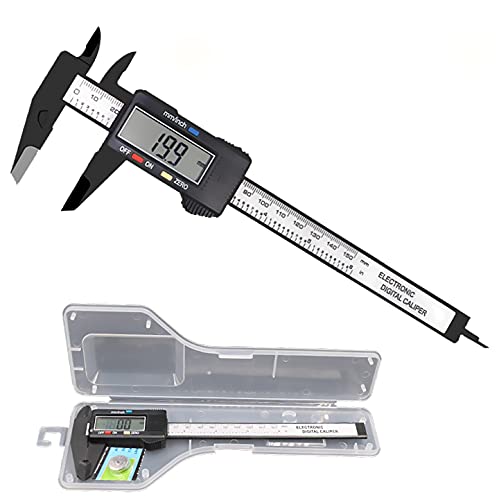
Simhevn Electronic Digital Calipers, inch and Millimeter Conversion,LCD Screen displays 0-6" Caliper Measuring Tool, Automatic Shutdown, Suitable for DIY/Jewelry Measurement (New150mm Black Plastic)
[4 measuring methods and safety]: Digital calipers can be used to measure inner and outer diameters, depths and…
As an affiliate, we earn on qualifying purchases.
As an affiliate, we earn on qualifying purchases.
How to Measure Gear Backlash: Tools and Techniques

To measure gear backlash accurately, you’ll need essential tools like dial indicators or depth gauges. Using proper techniques guarantees consistent results, so make sure to follow recommended procedures. Once you have your measurements, learn how to interpret the results to fine-tune gear performance effectively. Keep in mind that understanding gear dynamics can help optimize your adjustments and prevent operational issues. Additionally, understanding the importance of measurement accuracy can significantly impact the longevity and efficiency of your gear system. Recognizing proper calibration methods ensures your tools provide reliable readings over time. Being aware of microplastics in dust can also help maintain cleaner gear environments, reducing wear and contamination.
Essential Measuring Tools
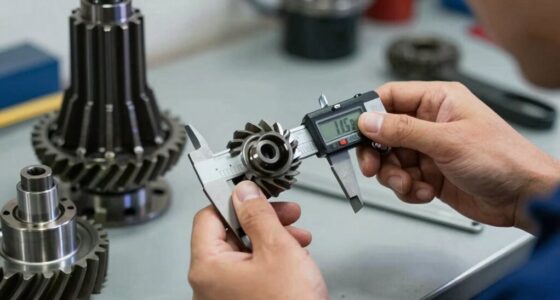
Accurately measuring gear backlash requires the right tools and techniques to guarantee precise results. You’ll need a dial indicator or a test gauge to measure the small clearances precisely. A sturdy magnetic base helps secure your measuring device in place, ensuring stability during measurement. Before measuring, verify the gear is properly lubricated, as inadequate gear lubrication can affect backlash readings. Also, consider material selection; softer materials may deform slightly, impacting measurements. Precision calipers can assist in confirming gear dimensions before testing. Using these tools correctly allows you to detect subtle variations in backlash, which is critical for preventing gear whine. Investing in quality measuring tools and understanding their proper use forms the foundation of accurate backlash measurement.
Proper Measurement Techniques
Proper measurement techniques are essential for obtaining reliable backlash readings. Start by ensuring the gears are clean and free of debris, as dirt affects accuracy. Use appropriate lubrication techniques—apply just enough lubricant to prevent metal-to-metal contact without creating a mess or altering gear movement. Confirm material compatibility to avoid damaging the gears; some lubricants can cause wear or swelling in certain materials. When measuring, position your tool correctly, making sure it contacts the gear teeth at the designated points. Maintain consistent pressure and avoid forcing the tool, which can skew results. Take multiple readings, noting any variations. Accurate backlash measurement depends on meticulous preparation, proper lubrication, and respecting material compatibility to ensure precise, repeatable results. Proper measurement methods are crucial to achieve consistent, reliable results in gear backlash testing.
Interpreting Backlash Results
Interpreting backlash results requires careful analysis to determine whether gear play falls within acceptable limits. You must consider factors like gear lubrication and material, which influence measurement accuracy. Excessive backlash may indicate worn gear material or inadequate lubrication, risking gear noise or failure. Conversely, too little backlash can cause binding and increased wear. Use the following table to help interpret your readings:
| Backlash Range | Implication |
|---|---|
| Within limits | Gear is properly meshed; lubrication and material are appropriate. |
| Too high | Worn gear material or insufficient lubrication; needs adjustment. |
| Too low | Over-tightening or incompatible gear material; risk of gear binding. |
Accurate interpretation helps you decide whether to adjust gear settings or inspect lubrication and material quality, ensuring smooth, quiet operation.
What Are Acceptable Backlash Ranges for Different Gears?
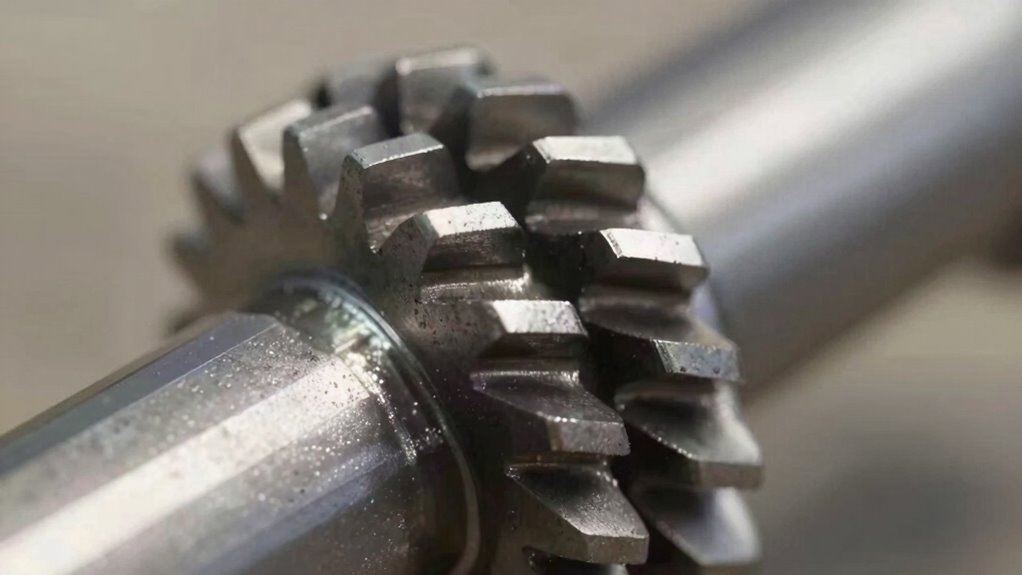
Have you ever wondered what makes gear operation smooth and reliable? Acceptable backlash ranges vary depending on gear type and application, but generally, a small amount of backlash is necessary to prevent gear binding. For precision gears, such as in CNC machines or robotics, backlash should be minimal—around 0.02 to 0.05 mm—to ensure accuracy. Heavier-duty gears, like in automotive differentials, can tolerate larger backlash, up to 0.1 mm or more. Proper gear lubrication and material compatibility are essential; they reduce wear and maintain consistent backlash over time. Too little backlash can cause binding, while too much leads to noise and premature wear. Always consult manufacturer specifications and consider operational conditions to determine ideal backlash ranges for your specific gears.
How to Adjust Gear Backlash to Prevent Noise and Wear
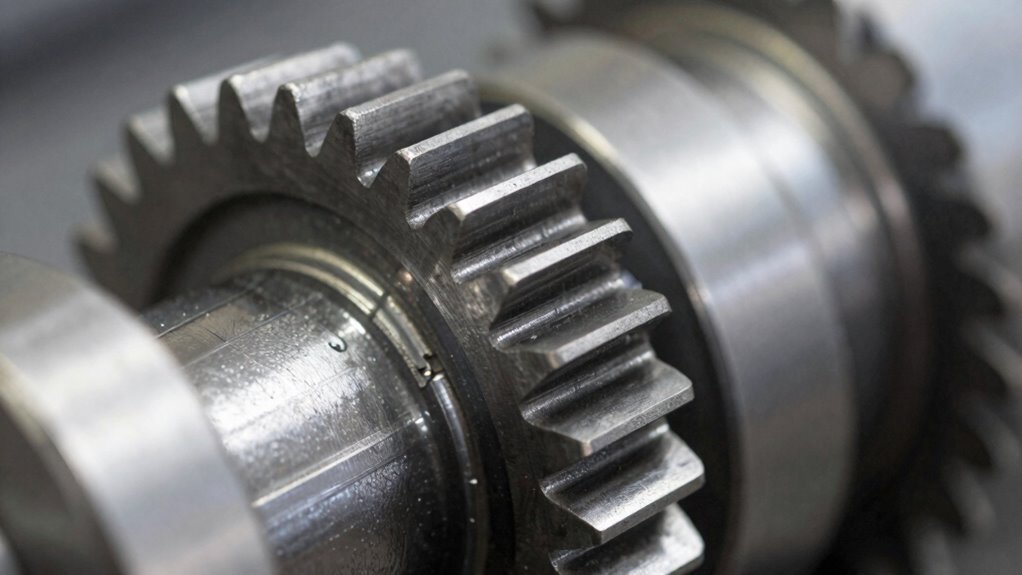
Start by measuring the gear backlash accurately to guarantee you have a clear baseline. Then, make adjustments with precision to achieve the proper clearance without causing excess play. Finally, test the gear operation and fine-tune as needed to prevent noise and reduce wear.
Measure Properly First
Wondering how to guarantee your gears run smoothly without noise or premature wear? Start by measuring the backlash correctly before making any adjustments. Proper measurement guarantees you identify the actual gear noise contributor and avoid over-tightening or loosening unnecessarily. Use precise tools like dial indicators to check the backlash at multiple points, especially during installation alignment. This step helps you determine the existing gear clearance accurately, preventing issues caused by improper setup. Remember, inaccurate measurements can lead to misaligned gears, increasing noise and wear. Taking the time to measure properly sets a solid foundation for adjustments. It’s a simple but essential step to ensure your gears operate quietly and efficiently, extending their lifespan and reducing the risk of damage.
Adjust With Precision
To effectively adjust gear backlash, you need to make precise, incremental changes based on your measurements. Start by tightening or loosening the adjusters gradually, checking for the ideal clearance. Too tight, and you’ll increase gear noise and wear; too loose, and backlash may cause gear whine or slippage. Always verify the gears are well-lubricated, as proper gear lubrication reduces friction and noise during operation. When making adjustments, aim for the smallest possible change that still maintains smooth engagement. Use your measurement tools carefully—small adjustments can have a big impact. Remember, patience is key; rushing adjustments can lead to inaccurate settings, resulting in increased wear and noise over time. Fine-tuning backlash with precision preserves gear integrity and quiet operation.
Test and Fine-tune
Before finalizing your gear backlash adjustment, conducting a test under real operating conditions is vital. Run the gear system and observe its performance, listening for any noise or signs of wear. During testing, pay close attention to lubrication techniques, guaranteeing the lubricant is appropriate for your gear materials to reduce friction and prevent overheating. Fine-tuning may involve slight adjustments to backlash, so monitor how changes impact noise levels and smoothness. Confirm that the gear materials are compatible with each other and with the lubricant to avoid excessive wear or damage. If necessary, reapply lubrication or switch to a different lubricant suited for your gear materials. This testing phase ensures your gear setup is optimized, prolonging lifespan and minimizing noise.
Common Mistakes When Measuring or Setting Backlash

One of the most common mistakes when measuring or setting backlash is rushing the process, which can lead to inaccurate readings and improper adjustments. Poor technique often results in inconsistent measurements, especially if lubrication isn’t consistent or if material compatibility issues are overlooked. To avoid these pitfalls, keep these points in mind:
Rushing backlash measurement causes inaccuracies; ensure proper technique, lubrication, and material compatibility for reliable results.
- Ensure lubrication is uniform across gear contact surfaces to prevent measurement errors.
- Verify material compatibility to avoid uneven wear, which can skew backlash readings.
- Take multiple measurements at different points to confirm accuracy before making adjustments.
Skipping these steps can cause persistent gear noise or failure over time. Proper attention to lubrication consistency and material compatibility guarantees reliable backlash measurements and ideal gear performance.
Troubleshooting Gear Whine When Backlash Isn’t the Only Issue
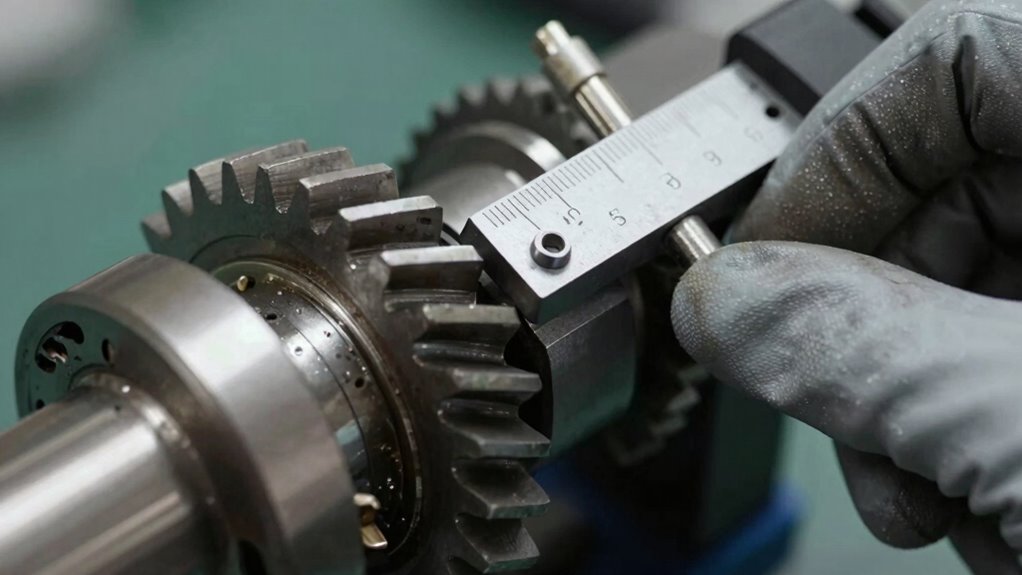
When gear whine persists despite correct backlash adjustments, it’s often a sign that other factors are at play. One common cause is gear noise stemming from improper gear alignment. Misaligned gears can create uneven contact, leading to vibrations and high-pitched noise that backlash alone doesn’t address. To troubleshoot, start by inspecting gear alignment carefully, ensuring the gears mesh smoothly without binding or excessive play. Check for signs of uneven wear or damage, which can also cause gear noise. Sometimes, even perfectly adjusted backlash won’t eliminate whine if the gears aren’t aligned properly. Correcting gear alignment often reduces or eliminates the noise, improving gear performance and prolonging lifespan. Don’t overlook alignment issues when troubleshooting persistent gear whine.
How Often Should You Check and Maintain Gear Backlash?
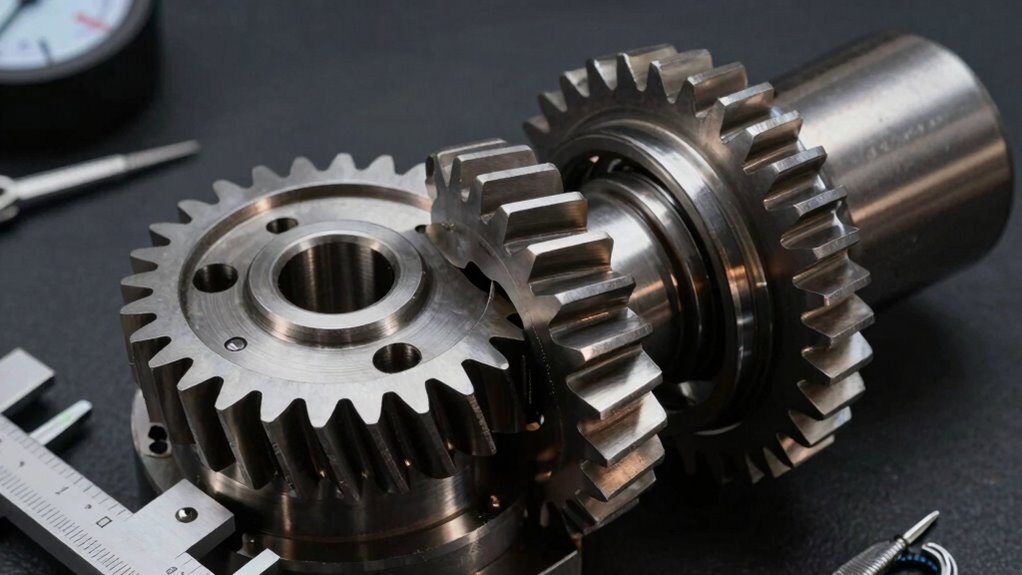
How often you should check and maintain gear backlash depends on how frequently your equipment operates and under what conditions. Regular inspections prevent gear wear and maintain ideal performance. Consider these factors:
- Follow lubrication protocols strictly; inadequate lubrication accelerates wear, affecting backlash.
- Reassess backlash after changing gear material selection, especially if switching to softer or harder materials.
- For heavy-duty or continuous operation, check backlash weekly; for infrequent use, monthly checks suffice.
Consistent monitoring helps identify early signs of backlash changes. Adjustments should be made promptly to prevent gear whine. Maintaining proper lubrication protocols and selecting appropriate gear materials extend intervals between checks, ensuring smooth operation and longevity of your gear system.
Best Practices for Maintaining Optimal Gear Backlash Over Time
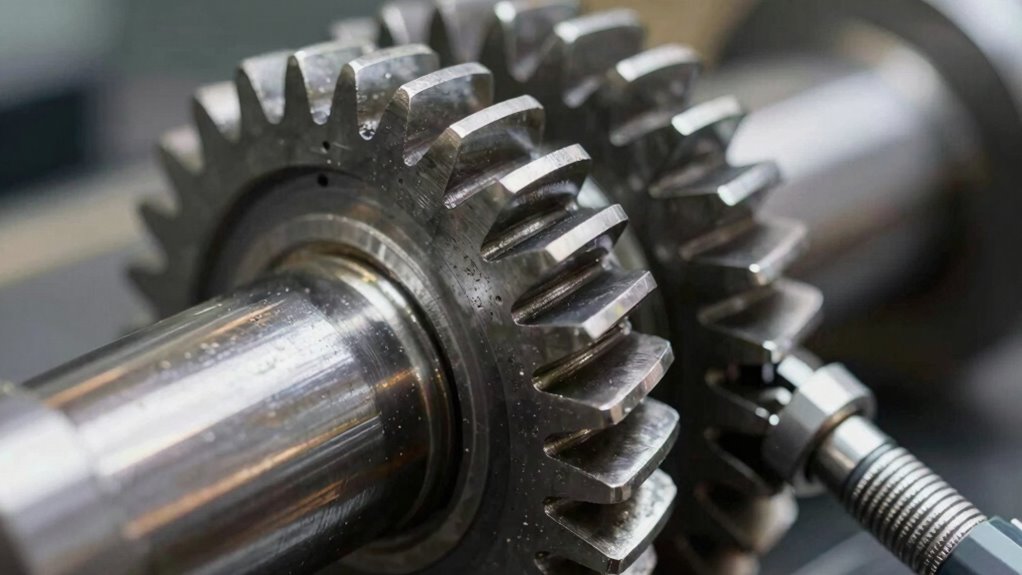
Maintaining ideal gear backlash over time requires consistent attention to detail and adherence to best practices. Regularly check gear lubrication to ensure smooth operation and prevent excessive wear, which can alter backlash. Proper lubrication reduces friction and minimizes material fatigue, preserving gear accuracy. Additionally, selecting the right materials during assembly is crucial; durable, compatible materials resist deformation and maintain proper mesh. Avoid neglecting these factors, as wear and material fatigue can cause backlash to increase or decrease, leading to gear noise or failure. Implement a routine inspection schedule, apply appropriate lubrication, and verify material integrity to sustain optimal backlash. These steps help prevent gear whine and extend your gear system’s lifespan, guaranteeing reliable, quiet operation over time.
Frequently Asked Questions
Can Backlash Adjustments Impact Gear Efficiency?
Yes, backlash adjustments can impact gear efficiency. When you fine-tune gear meshing, you improve load distribution across the gear teeth, reducing uneven wear and minimizing gear whine. Proper backlash ensures smooth operation, lowers friction, and enhances overall efficiency. If you set backlash too tight or too loose, it can cause excessive wear or noise, ultimately decreasing gear performance. Always aim for ideal backlash to maximize gear lifespan and efficiency.
What Are the Signs of Incorrect Backlash Beyond Noise?
If your gears show uneven wear or develop pitting, it’s a sign your backlash might be off. You’ll also notice increased heat from poor lubrication effects, which accelerate gear wear even further. Additionally, if you experience rough or jerky movement during operation, it indicates improper backlash. These issues highlight the importance of correct backlash adjustment to guarantee smooth gear performance and prevent long-term damage.
How Does Temperature Affect Gear Backlash Measurements?
Temperature affects gear backlash measurements through thermal expansion, which causes components to expand or contract. As temperatures rise, materials expand, increasing backlash; when temperatures drop, backlash decreases. To guarantee measurement accuracy, you should take readings in a stable temperature environment or account for thermal expansion effects. This way, you prevent misinterpretation of backlash changes and maintain precise gear setup, reducing noise and wear over time.
Are Digital Tools More Accurate Than Manual Methods?
Digital tools are generally more accurate than manual methods because they benefit from digital calibration, reducing human error. You can quickly and precisely measure backlash with digital devices, ensuring consistency and high accuracy. Manual precision relies heavily on your skill and experience, which can introduce variability. By choosing digital tools, you get reliable, repeatable results, making it easier to maintain ideal gear performance and prevent issues like gear whine.
What’s the Recommended Backlash for High-Speed Gear Systems?
For high-speed gear systems, you should aim for a backlash of about 0.02 to 0.05 millimeters. To maintain ideal performance, focus on precise gear alignment and guarantee lubrication consistency, which helps prevent excessive backlash or gear noise. Regularly check these factors, especially after maintenance or adjustments, to keep your gears running smoothly and minimize gear whine during high-speed operation.
Conclusion
To keep your gears running smoothly, measure your backlash regularly, set it accurately, and maintain it consistently. Avoid excess or insufficient backlash, and stay vigilant for signs of wear or noise. By monitoring, adjusting, and caring for your gears, you prevent whine, extend lifespan, and guarantee ideal performance. Keep these practices in mind, stay proactive, and enjoy quiet, reliable operation every time you power up.