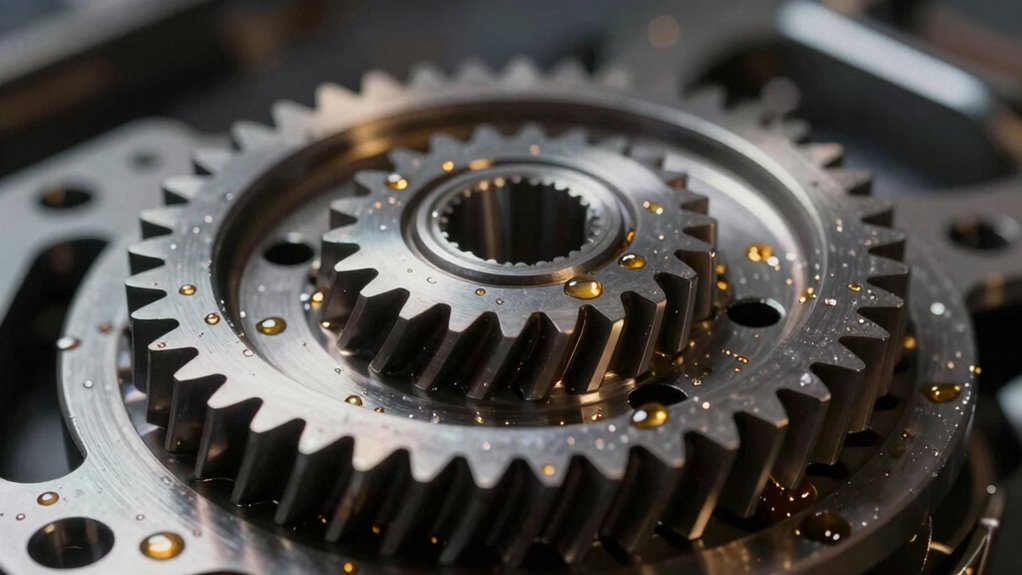

Planetary gearsets stress oil differently because their complex design involves multiple gears engaging simultaneously, creating uneven lubrication demands. Changes in gear ratios and load distribution further impact how oil flows and lubricates each component. The interaction of sun gears, planet gears, and ring gears under various operational conditions means that some parts require more lubrication than others. To keep everything running smoothly, you’ll want to understand how to manage these unique lubrication needs effectively.

Get business pricing on garage and car supplies
- Business-only prices and quantity discounts
- Tax-exempt purchasing
- Multiple users, one account, clear invoices
Key Takeaways
- Multiple gear contacts at once create uneven lubrication demands, stressing oil distribution within the gearset.
- Different gear ratios alter load distribution, requiring adaptive lubrication to prevent localized stress.
- High torque and speed variations increase friction and heat, challenging lubricant capacity and flow.
- Complex gear interactions cause variable lubrication flow paths, leading to uneven oil stress on components.
- Dynamic operational changes demand tailored lubricant viscosity and flow management to maintain consistent lubrication.
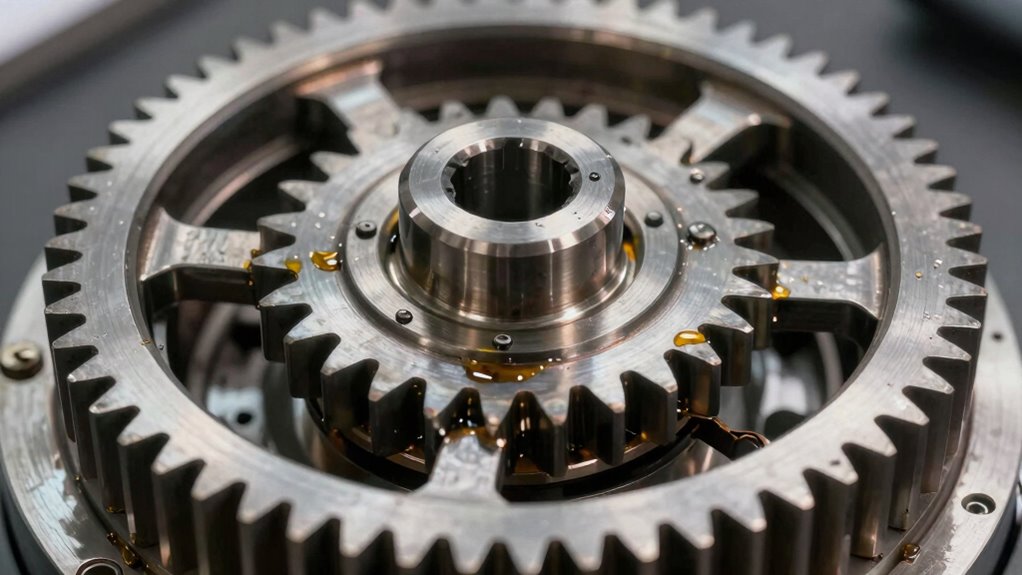
Have you ever wondered how complex machinery achieves smooth and efficient power transmission? It’s a fascinating process, especially when you consider the role of planetary gearsets. These systems are designed to handle high torque loads and deliver versatile speed control, but they come with unique lubrication challenges. Unlike traditional gear arrangements, planetary gearsets involve multiple gears engaging simultaneously, which can create uneven lubrication demands. The constant interaction of the sun gear, planet gears, and ring gear means lubrication must be evenly distributed to prevent wear and overheating. If lubrication isn’t managed properly, it can lead to increased friction, accelerated component wear, and even system failure. That’s why understanding how lubrication challenges vary within planetary gearsets is vital for maintaining their longevity and performance.
Another key factor that influences how planetary gearsets behave is gear ratio variations. These gearsets are inherently versatile because they can change gear ratios depending on which component is held stationary or driven. As the gear ratio shifts, the load distribution among the gears also changes. When the gear ratio is high, more load is transferred to certain gears, which can intensify lubrication demands in those areas. Conversely, at lower gear ratios, the load spreads more evenly, but this can still cause localized stress points. These variations mean that the oil must adapt dynamically to maintain ideal lubrication conditions. If the oil viscosity isn’t appropriate for the gear ratio in use, it can result in inadequate lubrication or excessive churning, both of which compromise efficiency and increase wear. Proper lubrication management is crucial for optimizing performance and lifespan.
Because of these factors, designing a lubrication system for planetary gearsets isn’t straightforward. You need to account for the varying gear ratios and the resulting shifts in load and friction. This often involves selecting lubricants with specific viscosity properties and designing oil flow paths that ensure consistent coverage regardless of gear ratio changes. Additionally, the system must handle the heat generated during operation, especially when gear ratios cause uneven stress across the gears. Proper lubrication not only minimizes wear but also helps dampen vibrations and noise, contributing to smoother operation overall.
planetary gear oil lubrication system
As an affiliate, we earn on qualifying purchases.
As an affiliate, we earn on qualifying purchases.
Frequently Asked Questions
How Does Lubrication Affect Planetary Gearset Performance?
Lubrication plays a vital role in planetary gearset performance by reducing friction and heat, which helps prevent wear on gears and bearings. Using the right lubrication fluid ensures smooth operation and minimizes stress on the system. When you maintain proper lubrication, you extend gear life, improve efficiency, and avoid costly repairs. Regularly check and replace the fluid to keep your planetary gearset functioning at its best and to prevent unnecessary wear.
What Materials Are Best for Planetary Gearset Durability?
Imagine the gears spinning smoothly, each contact point resilient against wear. You should choose materials like hardened steel or sintered alloys, which resist material fatigue. Surface treatments such as nitriding or carburizing enhance durability by creating a hard outer layer, reducing wear and tear. This combination guarantees your planetary gearset withstands stress, prolonging its lifespan and maintaining peak performance under demanding conditions.
How Do Planetary Gearsets Handle High Torque Loads?
You handle high torque loads in planetary gearsets by utilizing an ideal gear ratio and effective load distribution. The gear ratio allows the torque to be divided among multiple gears, reducing stress on individual components. Proper load distribution, achieved through balanced engagement of planets and carriers, ensures the gearset can transmit high torque efficiently without excessive wear or failure. This design helps maintain durability even under demanding conditions.
What Maintenance Practices Extend Planetary Gearset Lifespan?
To extend your planetary gearset lifespan, focus on proper lubrication techniques and material selection. Regularly check and change the oil to prevent contamination and guarantee ideal lubrication. Use high-quality lubricants suited for high-stress conditions. Additionally, choose gear materials that resist wear and heat. Proper maintenance, including inspecting for damage and keeping the gearset clean, helps reduce stress on the oil and prolongs the gearset’s life.
How Do Planetary Gearsets Compare to Other Gear Types in Stress Distribution?
You’ll find planetary gearsets distribute stress differently than other gear types because their gear alignment promotes even load sharing. This design minimizes stress concentration on individual gears, reducing wear and potential failure. Unlike straight gears, planetary sets handle varying loads more efficiently, which helps extend their lifespan. Proper maintenance ensures ideal gear alignment, further reducing stress concentration and keeping your gearset running smoothly and reliably over time.
high viscosity gear oil for planetary gearsets
As an affiliate, we earn on qualifying purchases.
As an affiliate, we earn on qualifying purchases.
Conclusion
Now that you understand how planetary gearsets stress oil differently, you might wonder if your system’s lubrication is truly up to the task. Proper oil management isn’t just about avoiding wear; it’s about ensuring your gearsets operate smoothly and efficiently for the long haul. So, are you giving your gear system the right oil and maintenance it needs? Remember, paying attention now can save you costly repairs down the road.
gearbox oil flow management products
As an affiliate, we earn on qualifying purchases.
As an affiliate, we earn on qualifying purchases.
automotive planetary gearset lubricant
As an affiliate, we earn on qualifying purchases.
As an affiliate, we earn on qualifying purchases.
Fall Picks
fall essentials
As an affiliate, we earn on qualifying purchases.