Limited slip differential chatter often results from worn clutches, poor-quality or degraded oil, or improper setup. If the clutch packs are slipping or misaligned, or if your oil lacks the right friction modifiers, you’ll notice uneven torque transfer and noise. Ensuring your oil is fresh and suited for limited slip systems, along with proper clutch adjustment, can smooth out the performance. Keep exploring to uncover specific solutions to eliminate your differential chatter effectively.
Key Takeaways
- Worn or damaged clutch components can cause inconsistent engagement and chatter, regardless of oil quality or setup.
- Poor-quality or degraded gear oil, especially lacking proper friction modifiers, can lead to slipping and noise.
- Incorrect installation or improper torque during setup can misalign clutches, resulting in chatter issues.
- Regular maintenance, including oil changes and clutch inspections, helps identify and prevent causes of limited slip chatter.
- Addressing all three factors—clutch condition, oil quality, and proper setup—ensures optimal differential performance and reduces chatter.

Spicer 708203 Differential Clutch Pack
- Package Height: 7.366 cm
- Package Length: 14.732 cm
- Package Width: 10.668 cm
As an affiliate, we earn on qualifying purchases.
As an affiliate, we earn on qualifying purchases.
What Causes Limited Slip Differential Chatter?
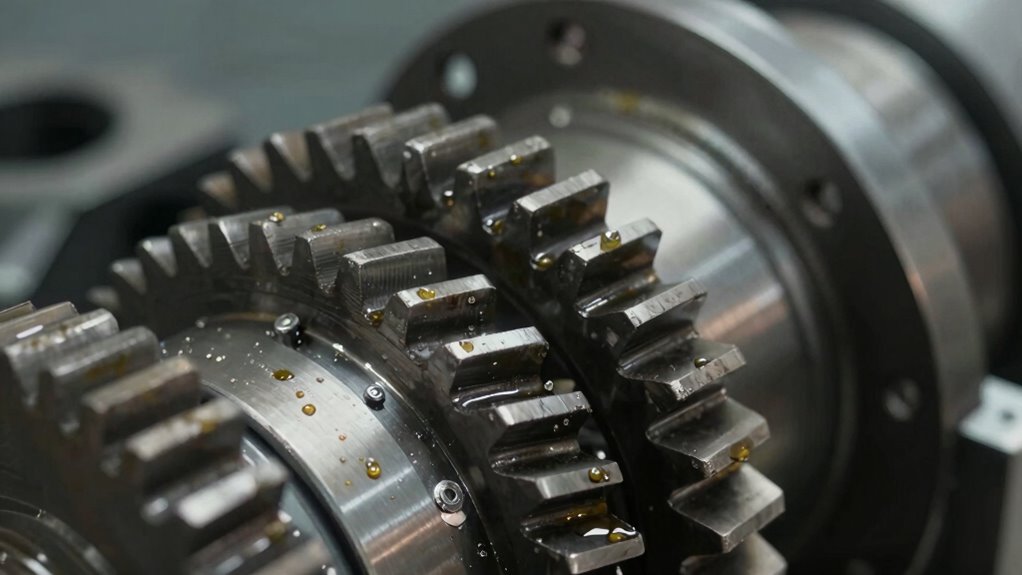
Limited slip differential chatter often occurs when the clutch packs inside the differential begin to slip or bind under certain conditions. One common cause is an improper gear ratio setup, which puts uneven stress on the differential components, making chatter more likely. Additionally, incorrect axle alignment can lead to uneven load distribution, causing the clutches to engage unevenly and produce noise or vibration. If the gear ratio isn’t matched properly to your vehicle’s setup, the differential may struggle to distribute torque smoothly, resulting in chatter. Similarly, misaligned axles can cause mechanical binding, further aggravating the issue. Ensuring the gear ratio is appropriate and axle alignment is precise helps your limited slip differential operate smoothly, reducing the chances of chatter caused by slipping or binding of clutch packs. Moreover, maintaining proper clutch pack tension and ensuring the differential fluid is clean and at the correct level can also prevent excessive chatter and promote smoother operation. Regular differential inspection can help identify early signs of wear or misalignment that may contribute to chatter. Additionally, using the correct type of differential fluid recommended for your setup can help minimize clutch slip and improve overall performance. Checking for wear on clutch components and replacing them when necessary is also essential for optimal operation. Incorporating proper setup practices during installation can significantly reduce the likelihood of chatter and improve differential longevity.

Lubegard 42851 Limited Slip Supplement, 4 fl. oz.
- Reduces differential noise: Eliminates chatter and squeals
- Universal compatibility: Works with all makes and models
- Protects against rust: Inhibits rust and corrosion
As an affiliate, we earn on qualifying purchases.
As an affiliate, we earn on qualifying purchases.
How Does Differential Oil Quality Affect Chatter?
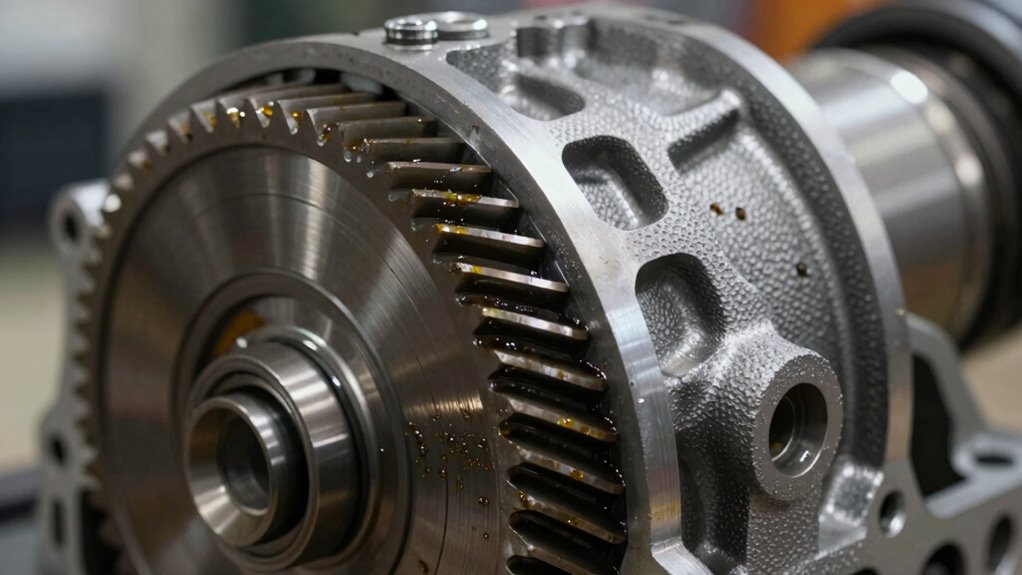
The quality of your differential oil plays a crucial role in preventing chatter by guaranteeing smooth operation of the clutch packs. Using high-quality gear oil with proper friction modifiers helps maintain the right balance of grip and slip within the limited slip differential. If the oil lacks adequate friction modifiers or degrades over time, it can cause uneven clutch engagement, leading to chatter. Poor-quality gear oil may also fail to provide sufficient lubrication, increasing metal-to-metal contact and making the clutch packs more prone to slipping or sticking. Regularly changing your differential oil with a reputable brand ensures the friction modifiers remain effective, promoting consistent clutch engagement and reducing chatter issues. Additionally, local automation systems can help monitor and alert you to fluid degradation or irregular operation, further supporting optimal performance. Ensuring you use oil specifically formulated for limited slip differentials can greatly improve clutch pack performance and help prevent chatter. Using oils that meet the desired specifications and are formulated for your differential type can extend component life and improve overall operation. Proper maintenance, including verifying oil specifications, and the use of approved gear oils are essential for long-term reliability and smooth operation of your differential.

Motive Gear R9.25RMKT Rear Master Kit for a Chrysler 9.25" Rear Differential with Timken Tapered Bearings
- Application: Rear Chrysler 9.25 Differential
- Included Components: Timken Tapered Bearings and Accessories
- Performance Benefits: Reduces friction for smooth operation
As an affiliate, we earn on qualifying purchases.
As an affiliate, we earn on qualifying purchases.
Is Worn or Misaligned Clutch Pack Causing Your Issue?
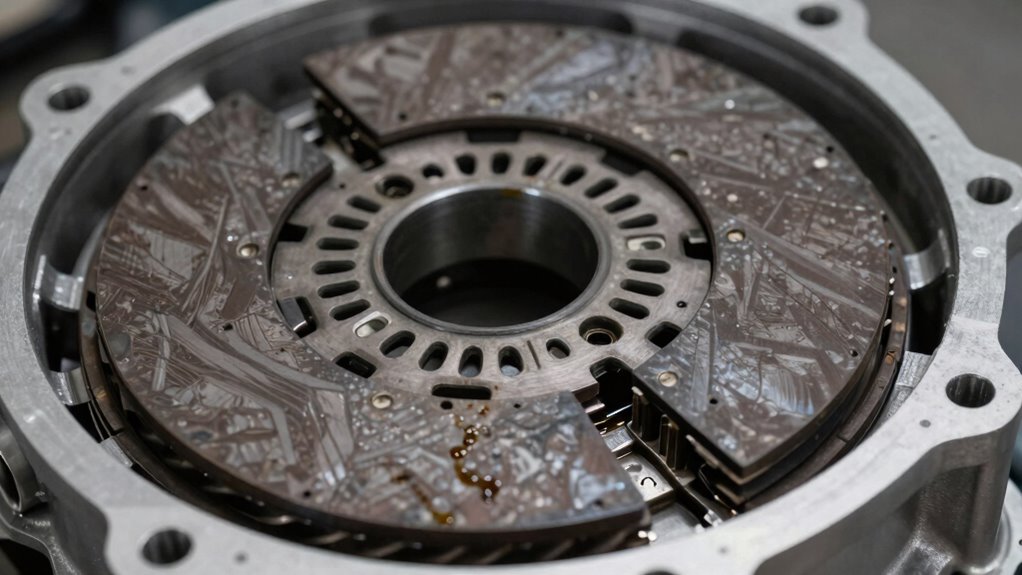
Worn or misaligned clutch packs can directly cause chatter by preventing smooth engagement of the limited slip differential. Clutch wear reduces the friction surfaces’ ability to engage properly, leading to slipping and uneven power transfer. Misalignment issues, whether from improper installation or wear over time, can cause the clutch plates to bind or not seat correctly. This misfit hampers the clutch’s ability to connect and disconnect smoothly, resulting in chatter during acceleration or deceleration. If you notice inconsistent handling or noise when turning, worn or misaligned clutch packs might be the culprit. Regular inspections can reveal signs of clutch wear or misalignment issues early, helping you determine whether the clutch pack needs service or replacement to restore proper differential function. Proper assembly and correct setup are essential to prevent these issues from recurring, and ensuring proper clutch operation can help extend the lifespan of your differential components. Additionally, understanding how to identify clutch wear signs can aid in early diagnosis before more serious damage occurs. Recognizing symptoms of misalignment can also be crucial in diagnosing the root cause of chatter and preventing further mechanical issues. Moreover, utilizing precise measurement tools can assist in assessing clutch pack condition and alignment accuracy to ensure optimal performance.
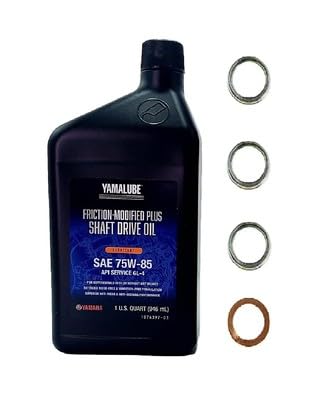
Grizzly 700 (2007-2024) all Models Differential/Gear Oil Change Kit 1 Quarts ACC-SHAFT-PL-32/ Washers
- Compatible Models: Grizzly 700 (2007-2024)
- Oil Change Kit: Includes front and rear differential oil
- Includes Oil Quart: 1 Quart ACC-SHAFT-PL-32
As an affiliate, we earn on qualifying purchases.
As an affiliate, we earn on qualifying purchases.
How to Adjust or Replace Clutches for Smooth Performance
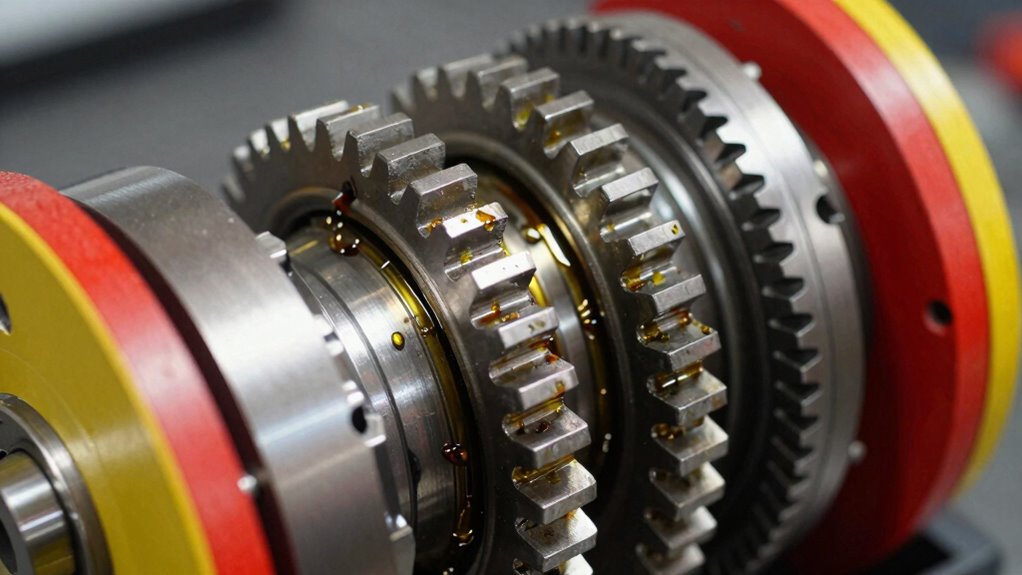
To restore smooth performance and eliminate chatter, focus on properly adjusting or replacing the clutch packs in your limited slip differential. Start with a thorough clutch adjustment by tightening or loosening the clutch pack bolts to achieve the correct preload and engagement feel. If adjustments no longer suffice, consider clutch replacement. Carefully remove the differential cover, inspect the worn or damaged clutch plates, and replace them with new parts designed for your vehicle. Proper installation is essential—ensure the clutch discs are correctly aligned and torqued according to manufacturer specifications. After replacing or adjusting the clutches, refill the differential with high-quality gear oil to ensure proper lubrication and performance. This process helps restore proper clutch engagement, reduces chatter, and guarantees smoother performance on the road. Additionally, understanding the setup of your differential can help prevent future issues and optimize performance. Properly maintaining gear oil levels and choosing the right viscosity are crucial for longevity and optimal operation. Regularly checking for microplastics in dust around your vehicle can also help identify potential air quality issues that may affect component longevity.
When Should You Repair, Replace, or Reconsider Your Differential?
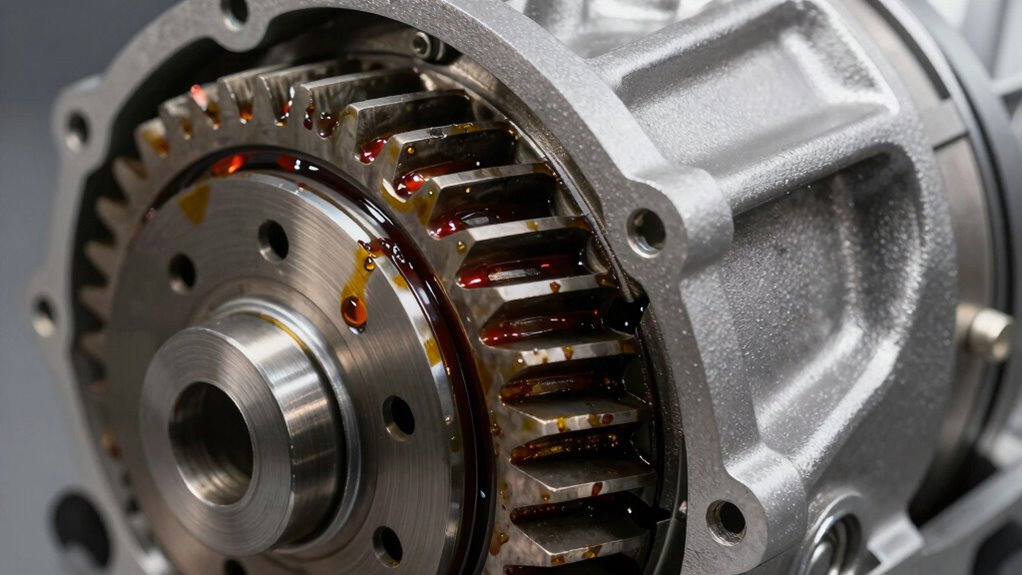
Knowing when to repair, replace, or reconsider your differential hinges on recognizing specific signs of trouble. If you notice persistent differential noise—such as whining, grinding, or clunking—it’s time to inspect your differential further. These noises often indicate worn gears or damaged components that need attention. Additionally, if your vehicle’s gear ratio selection no longer aligns with your driving needs, it may be a sign that your differential requires an upgrade or replacement. Excessive play or leaks also signal potential issues. Ignoring these signs can lead to more severe damage or failure. Regular maintenance and timely diagnosis help prevent costly repairs down the line. Reconsider your differential if these symptoms persist, and don’t delay addressing gear ratio mismatches that could compromise performance. Differential diagnostics can help identify underlying issues early. Monitoring differential oil quality is also crucial, as contaminated or degraded oil can accelerate wear and obscure developing problems. Implementing proper wear pattern analysis can aid in early detection of differential problems before they escalate.
Frequently Asked Questions
Can Driving Habits Influence Limited Slip Differential Chatter?
Yes, your driving style and shift technique can influence limited slip differential chatter. Aggressive or abrupt shifts may cause uneven clutch engagement, leading to chatter. Smooth, controlled shifts help maintain proper clutch contact and reduce vibrations. Additionally, avoiding aggressive driving habits can prevent unnecessary stress on the differential components, ensuring it operates quietly and smoothly. So, practicing gentle shifts and consistent driving style directly impacts the chatter you experience.
Are Aftermarket Oils More Effective Than OEM in Preventing Chatter?
You might find aftermarket gear oil more effective than OEM options in preventing chatter because they often contain specialized additives. These additives improve lubrication of the clutch material, reducing friction and noise. Look for high-quality gear oil formulated specifically for limited slip differentials. Properly selecting and maintaining the right oil helps guarantee smooth operation, minimizes chatter, and extends the lifespan of your clutch material.
How Does Temperature Affect Limited Slip Differential Performance?
Temperature impacts your limited slip differential performance by affecting the viscosity of your gear oil. When it’s cold, the oil thickens, making it harder for clutch plates to engage smoothly, which can cause chatter. Conversely, high temperatures thin the oil, reducing lubrication and risking clutch wear. To keep everything running smoothly, verify your gear oil is appropriate for the climate and maintains proper viscosity across temperature ranges.
What Are Signs of Impending Limited Slip Differential Failure?
You’ll notice differential noise, like clicking or grinding sounds, indicating potential issues. Clutch wear can cause slipping or uneven power transfer, hinting at impending failure. If you feel vibrations during turns or notice increased tire wear, these are signs that your limited slip differential might be failing. Address these early by inspecting clutch components and ensuring proper oil levels to prevent costly repairs down the line.
Can Modifications Improve or Worsen Differential Chatter?
Did you know that 65% of modified vehicles experience increased differential chatter? Modifications like changing gear ratios or altering clutch engagement can definitely improve your limited slip’s performance, but they can also worsen chatter if not done correctly. You might find smoother operation with proper setup, but improper modifications can cause uneven clutch engagement, leading to more chatter. Always verify your modifications are compatible with your differential’s design.
Conclusion
Ultimately, addressing limited slip chatter isn’t just about the oil or clutches—it’s about understanding the balance. Like tuning a finely crafted instrument, your differential needs the right setup and care. Ignoring worn parts might seem easier, but it could lead to bigger, costlier issues down the road. Sometimes, a simple adjustment makes all the difference, proving that maintenance isn’t just repair—it’s preservation of performance and peace of mind.