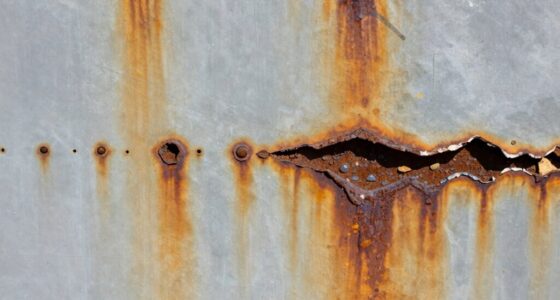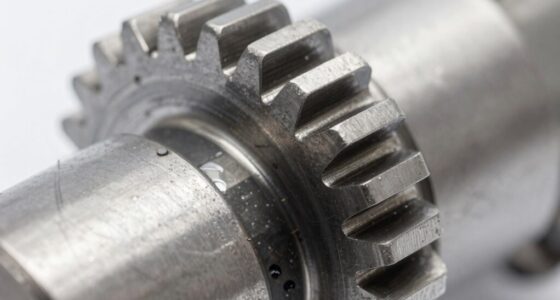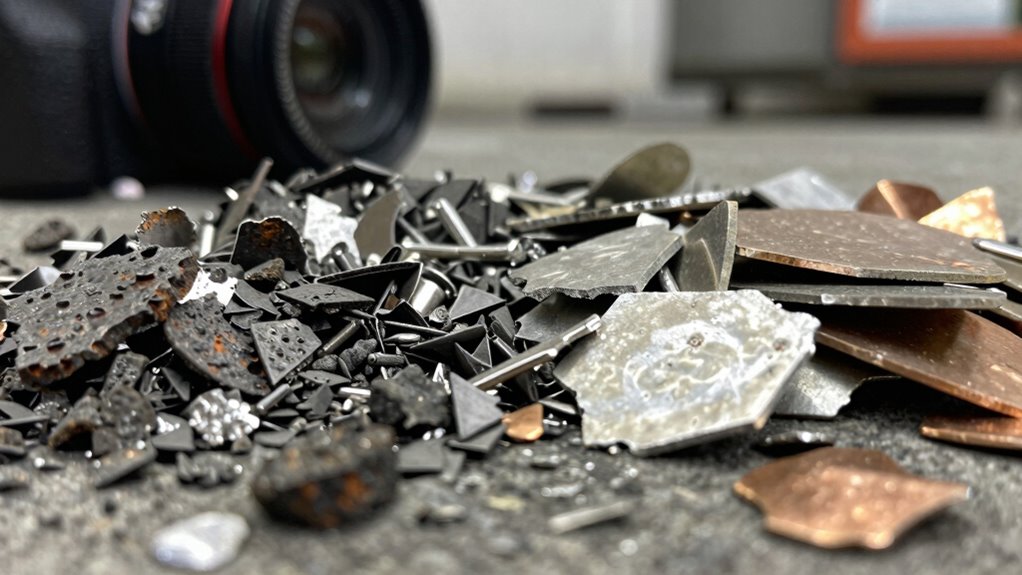

To quickly identify ferrous versus non-ferrous debris, use a magnet. If the debris sticks, it’s ferrous, which includes iron-based metals like steel and cast iron, and is magnetic. Non-ferrous metals like aluminum, copper, and brass don’t stick and are usually lighter and more corrosion-resistant. Recognizing these differences helps streamline sorting and recycling processes. Stay with us to discover more tips to improve your debris management and recycling efficiency.

Get business pricing on garage and car supplies
- Business-only prices and quantity discounts
- Tax-exempt purchasing
- Multiple users, one account, clear invoices
Key Takeaways
- Use a magnet: ferrous metals are magnetic and will stick; non-ferrous metals do not.
- Ferrous debris, like steel and cast iron, is heavier and often rusts; non-ferrous metals are lighter and corrosion-resistant.
- Non-ferrous metals include aluminum, copper, brass, and zinc, which are non-magnetic and typically more valuable.
- Magnetic separation is an efficient method for quickly sorting ferrous from non-ferrous debris in recycling.
- Recognizing weight, corrosion, and magnetic response helps in fast and accurate debris identification.
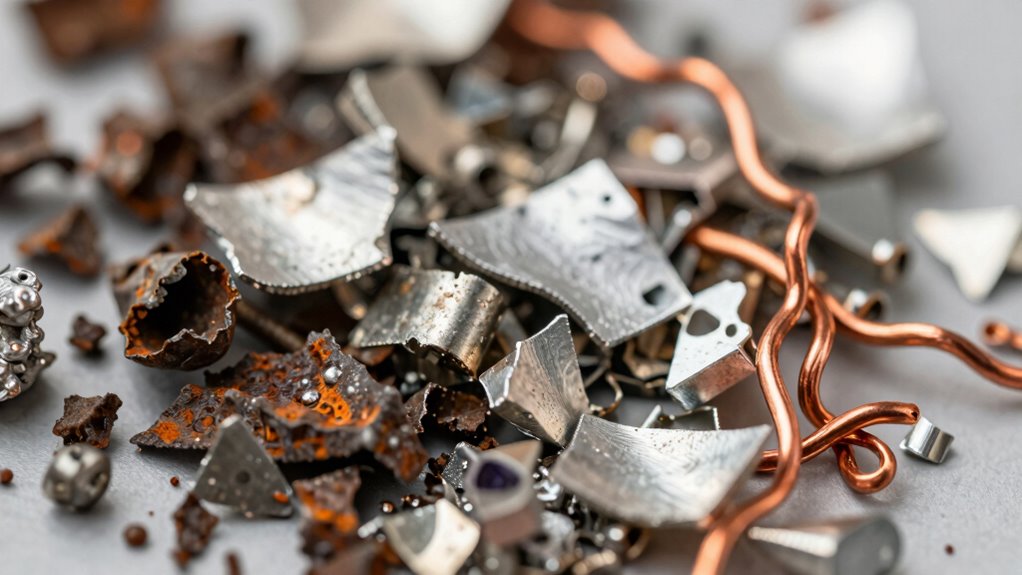
Have you ever wondered how ferrous and non-ferrous debris differ and why it matters? The key lies in their magnetic properties, which play a pivotal role in sorting and recycling processes. Ferrous metals contain iron, making them magnetic, so you can typically attract them with a magnet. Non-ferrous metals, on the other hand, lack significant iron content and are generally non-magnetic. Recognizing this difference helps you quickly identify and separate debris, streamlining recycling efforts and reducing contamination.
Ferrous metals contain iron and are magnetic; non-ferrous metals lack iron and are non-magnetic.
When you handle debris, using a simple magnet can be your first step. If the debris sticks to the magnet, it’s ferrous; if it doesn’t, it’s non-ferrous. This straightforward method saves time and effort, especially when dealing with large quantities of scrap. Ferrous metals like steel and cast iron are common in construction, appliances, and vehicles. They’re often heavier and more prone to rust, which can be a giveaway during inspection. Non-ferrous metals such as aluminum, copper, brass, and zinc are lighter, more corrosion-resistant, and frequently used in wiring, electronics, and decorative applications.
Understanding the significance of magnetic properties extends beyond identification. In recycling processes, separating ferrous from non-ferrous metals is essential for efficiency and purity. Magnetic separation is a primary technique, allowing recycling facilities to quickly sort metals without complex procedures. This boosts the value of recovered materials and minimizes contamination that could compromise the quality of recycled products. You’ll find that recycling plants rely heavily on this method because it’s fast, effective, and cost-efficient.
Furthermore, knowing the differences between ferrous and non-ferrous debris helps you avoid mistakes that could damage equipment or reduce recycling yields. For example, trying to magnetically extract non-ferrous metals won’t work, so you’ll need alternative methods like eddy current separation or manual sorting. By understanding their magnetic properties, you can better predict how different debris will behave during the recycling process, ensuring you optimize your operations. Additionally, metal composition can influence how easily debris is sorted and processed, making accurate identification even more critical.
magnetic metal separator for recycling
As an affiliate, we earn on qualifying purchases.
As an affiliate, we earn on qualifying purchases.
Frequently Asked Questions
How Can I Test Debris to Identify Ferrous Versus Non-Ferrous?
You can identify ferrous versus non-ferrous debris by performing magnetic testing and visual inspection. Use a magnet to see if it attracts the debris; if it does, it’s ferrous. If not, it’s likely non-ferrous. Also, visually inspect the debris for color and appearance—ferrous metals tend to rust and look darker, while non-ferrous metals like aluminum or copper are usually shiny and corrosion-resistant.
What Are Common Non-Ferrous Metals Found in Debris?
You’ll often find aluminum scraps and copper fragments in debris. Aluminum is lightweight, silvery, and easy to shape, while copper has a reddish-brown hue and is highly conductive. To identify them, try a magnet—neither reacts strongly to magnets, unlike ferrous metals. You can also perform a simple scratch test or use a conductivity meter. Recognizing these metals helps you sort debris efficiently and avoid mixing ferrous and non-ferrous materials.
Why Is Distinguishing Between Ferrous and Non-Ferrous Debris Important?
You might think identifying ferrous from non-ferrous debris isn’t vital, but it actually impacts metal recycling and industrial safety. Differentiating these metals ensures proper sorting, maximizing recycling efficiency and preventing equipment damage. Non-ferrous metals don’t rust, making them safer and more valuable, while ferrous metals are magnetic and prone to corrosion. Recognizing the difference helps you maintain a safer work environment and promotes effective recycling practices.
Are There Safety Risks Associated With Ferrous Debris?
Yes, ferrous debris can pose safety risks because it can cause hazardous contamination and injury. Magnets attract ferrous debris, which might be overlooked during cleaning, leading to equipment damage or accidents. You should always be cautious when handling ferrous materials, especially in industrial settings, to prevent injuries and guarantee a safe environment. Proper identification helps you manage these risks effectively and maintain safety standards.
What Tools Are Best for Sorting Debris by Metal Type?
To tackle tricky metal types, you’ll want tools that truly target. Magnetic sensors are superb for swiftly sorting ferrous from non-ferrous debris, thanks to their magnetic attraction. Handheld testers also come in handy, offering quick, reliable readings in the field. Together, these tools streamline sorting, saving time and reducing risk. Use magnetic sensors for ferrous metals, and handheld testers for precise, portable, pinpoint identification of various metals.
ferrous and non-ferrous metal testing magnet
As an affiliate, we earn on qualifying purchases.
As an affiliate, we earn on qualifying purchases.
Conclusion
Now that you can spot ferrous and non-ferrous debris like a pro, imagine yourself walking through a cluttered workshop, your eyes scanning for that faint glint of iron or the subtle shimmer of aluminum. With this quick guide, you’ll easily distinguish the two, preventing costly damage and keeping your equipment safe. Think of yourself as a vigilant guardian, effortlessly clearing the debris and ensuring smooth operation—your keen eye makes all the difference.
metal sorting tools for recycling plants
As an affiliate, we earn on qualifying purchases.
As an affiliate, we earn on qualifying purchases.
metal debris identification magnet
As an affiliate, we earn on qualifying purchases.
As an affiliate, we earn on qualifying purchases.
Fall Picks
fall essentials
As an affiliate, we earn on qualifying purchases.