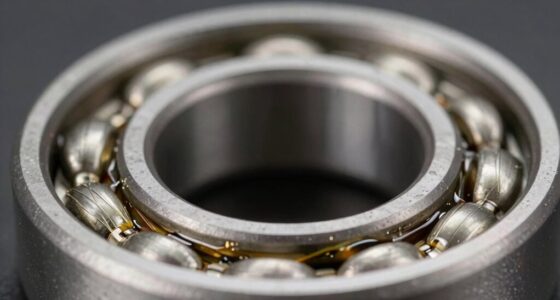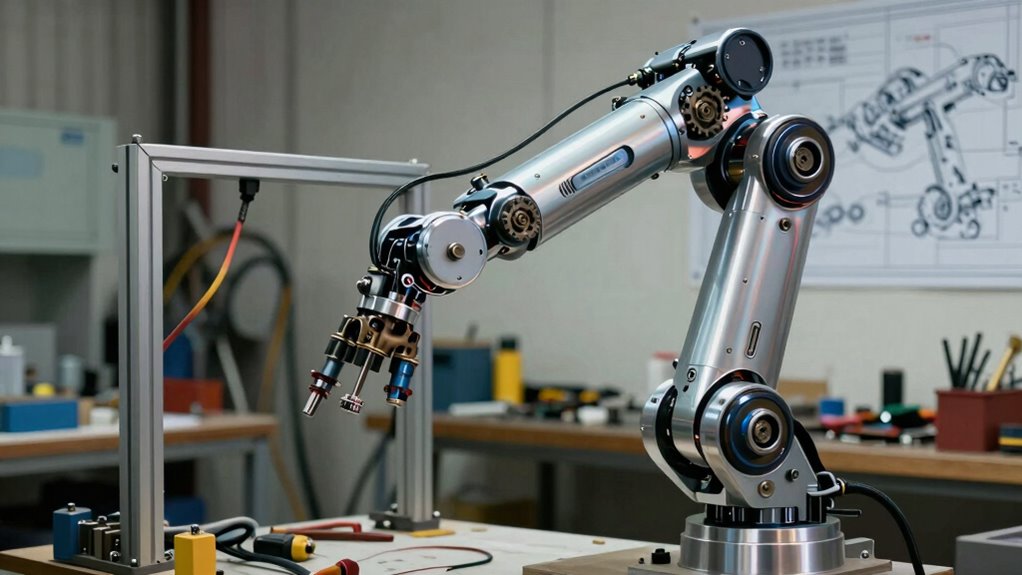

You can’t fix mechanical design limitations with software or engineering tools alone. Material constraints, manufacturing challenges, and fundamental physics set boundaries that digital solutions can’t overcome. For example, you can’t make a fragile material stronger or simplify a complex shape beyond what current technology allows. These physical and process-based limits require you to adjust your approach or expectations. Keep exploring to discover how understanding these constraints can help you make smarter design decisions.
Key Takeaways
- Mechanical design limitations are often due to material strength, weight, or environmental constraints that cannot be overcome by engineering practices alone.
- Technological and manufacturing constraints restrict the complexity and precision achievable in physical components.
- Design trade-offs are necessary when physical or process limits prevent optimal performance or functionality.
- No amount of simulation or software can bypass fundamental physical laws or material properties.
- Recognizing inherent design limits guides engineers to seek alternative solutions or accept necessary compromises.
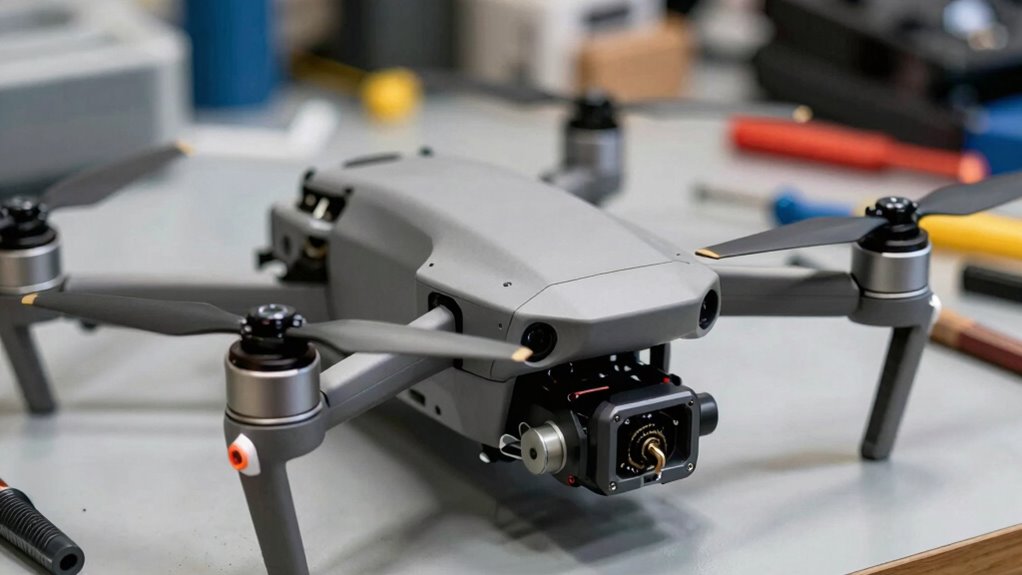
Mechanical design limitations often shape what engineers can achieve in creating functional and reliable systems. These constraints are not just theoretical; they directly influence the choices you make when selecting materials, manufacturing processes, and overall design approaches. Material constraints, for example, limit the strength, weight, and durability of your components. You might want to use a lightweight alloy for better performance, but if that material isn’t available in the right form or can’t withstand certain environmental conditions, you’re forced to compromise. Similarly, some materials might be too fragile or too difficult to machine, which can hinder production or lead to failures down the line. These material constraints often determine the scope of your design and set boundaries that are impossible to push past without risking failure or increasing costs exponentially. Additionally, understanding technological limits is essential because they fundamentally restrict what can be achieved regardless of design effort. Manufacturing challenges further complicate what you can achieve in your mechanical design. Even if your design looks perfect on paper, translating it into a real-world product can reveal unexpected hurdles. For instance, complex geometries or tight tolerances might be difficult or expensive to produce with available manufacturing methods. If your design requires intricate parts that can only be made through advanced machining or additive manufacturing, you might face limitations in scalability or cost-effectiveness. These manufacturing challenges can force you to simplify designs, which might compromise performance or efficiency. In some cases, manufacturing constraints necessitate redesigning entire components to fit within production capabilities, which can delay projects and inflate budgets. The combined impact of material constraints and manufacturing challenges means you often have to make tough decisions early in the design process. You might need to compromise on weight, size, or complexity to guarantee manufacturability and durability. This is where understanding the limits of current technology and materials becomes vital. While advanced software and simulations can help predict some issues, they can’t eliminate fundamental physical or process-based limits. When these boundaries are reached, no amount of engineering ingenuity or “EP” (engineering intuition) can override them. Instead, you’re left with the reality that certain goals are unattainable within existing constraints, requiring you to seek alternative solutions or accept trade-offs to guarantee your system remains functional and reliable.

6FT Fall Protection Retractable Lanyard, Self Retracting Lifeline Construction Lanyard Fall Arrest Safety Roofing Heavy Duty Leading Positioning (Large Hook)
SRL safety performance: DIJJIG 6 FT single-leg self-retracting lifeline is sewn with high-strength polyester webbing with a width…
As an affiliate, we earn on qualifying purchases.
As an affiliate, we earn on qualifying purchases.
Frequently Asked Questions
Can Software Improvements Overcome All Mechanical Design Flaws?
Software improvements can’t overcome all mechanical design flaws because software constraints limit how much you can optimize. While design optimization can enhance performance, it can’t fix fundamental mechanical issues like material strength or structural limitations. You need to address these mechanical aspects directly; otherwise, no amount of software tweaking will fully resolve the inherent design flaws. Focus on improving both the mechanical design and software for ideal results.
How Do Material Choices Impact Mechanical Design Limitations?
Did you know material choices can improve mechanical performance by up to 50%? Material properties directly influence design limitations, affecting strength, weight, and durability. When selecting materials, you should consider criteria like tensile strength, corrosion resistance, and thermal stability. Choosing the right materials helps you overcome mechanical constraints, ensuring your design meets performance goals and longevity, rather than relying solely on software improvements to fix inherent material-related issues.
Are There Innovative Manufacturing Techniques That Bypass Design Constraints?
You can bypass many traditional design constraints through advanced machining and additive manufacturing. These techniques allow you to create complex geometries and intricate features that were once impossible. Additive manufacturing, in particular, enables you to build parts layer by layer, reducing material waste and design limitations. By leveraging these innovative methods, you gain greater flexibility and precision, overcoming mechanical design challenges that standard manufacturing processes can’t address.
What Role Does User Feedback Play in Mechanical Redesigns?
User feedback plays a vital role in mechanical redesigns by providing valuable insights that guide your design iterations. You can identify pain points, discover new needs, and validate solutions directly from users. This ongoing input helps you refine the product, guarantee it meets real-world demands, and avoid costly mistakes. Incorporating user insights early and often leads to more effective, user-centered designs that better serve your target audience.
How Do Environmental Factors Influence Mechanical Component Performance?
You’d think environmental factors are minor, but they can crush your mechanical performance. Corrosion resistance matters more than you’d guess, especially in harsh environments, while temperature stability keeps components functioning smoothly. Ironically, ignoring these factors in your design can lead to premature failures, despite advanced engineering. So, pay attention—environmental influences aren’t just background noise; they’re critical to your component’s longevity and reliable performance.

Precision Machining For Beginners: The Comprehensive Guide To Understanding The Machines, Tools & Programming
As an affiliate, we earn on qualifying purchases.
As an affiliate, we earn on qualifying purchases.
Conclusion
When mechanical design hits its limits, you can’t just tweak a part or adjust a setting. You need to rethink, redesign, and sometimes reinvent. You can’t force a solution where there’s a fundamental flaw. You can’t ignore the constraints that shape what’s possible. Instead, you must embrace the challenge, analyze the root cause, and innovate beyond the boundaries. Because in the end, overcoming mechanical limitations requires more than effort — it requires a mindset shift.

Cold Spray in the Realm of Additive Manufacturing (Materials Forming, Machining and Tribology)
As an affiliate, we earn on qualifying purchases.
As an affiliate, we earn on qualifying purchases.

1/4" (.250) Stainless Steel Disc x 11" Diameter, 304 SS Metal Craft Industrial Precision DIY Metal Custom Fabrication Machined Parts Mechanical Components Durable Material
Ergonomic Size & Form: Experience the perfect blend of comfort and functionality with 1/4'' (.250) Stainless Steel Disc…
As an affiliate, we earn on qualifying purchases.
As an affiliate, we earn on qualifying purchases.