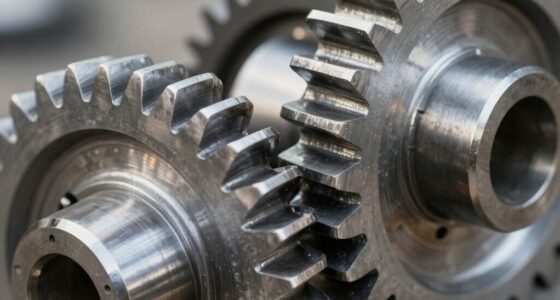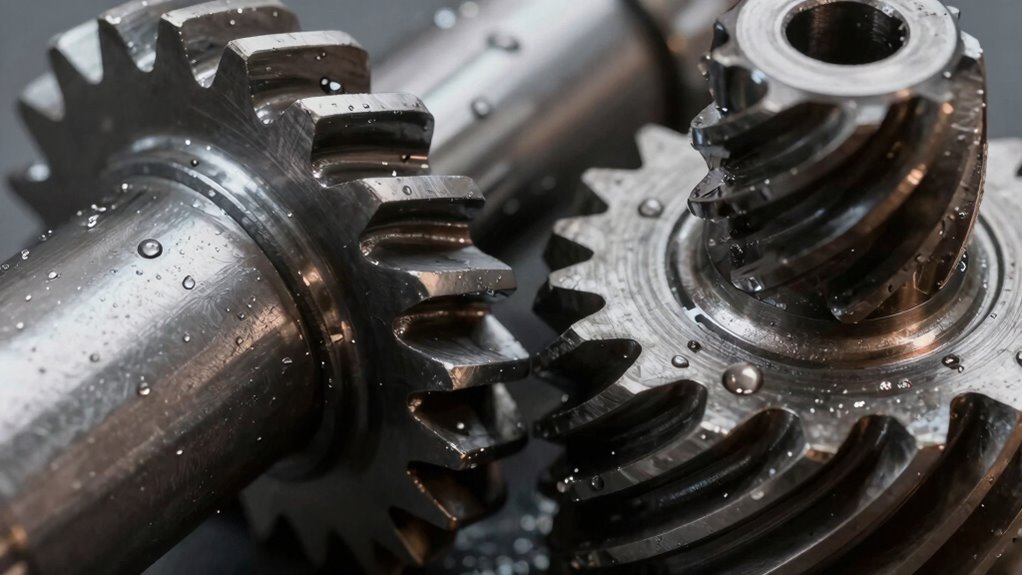

When comparing lubrication needs, helical gears typically use standard gear oils with anti-wear additives that focus on reducing friction and managing heat. Hypoid gears, however, require specialized oils with extreme pressure (EP) additives because they experience higher temperatures and sliding contact, which can cause more wear. You’ll find that hypoid gear lubricants are thicker and more resilient, ensuring protection under heavy loads. To discover how each gear type maintains performance, keep exploring these lubrication differences in detail.
Key Takeaways
- Helical gears use standard gear oils with anti-wear additives, focusing on reducing friction and heat.
- Hypoid gears require thick, EP additive-enhanced oils to handle high loads and sliding contact.
- Hypoid gear lubrication must manage higher heat and contamination, demanding specialized, high-viscosity oils.
- Helical gears operate smoothly with less friction, easing lubrication needs compared to hypoid gears.
- Proper lubrication for hypoid gears prevents rapid wear and extends lifespan under heavy load conditions.
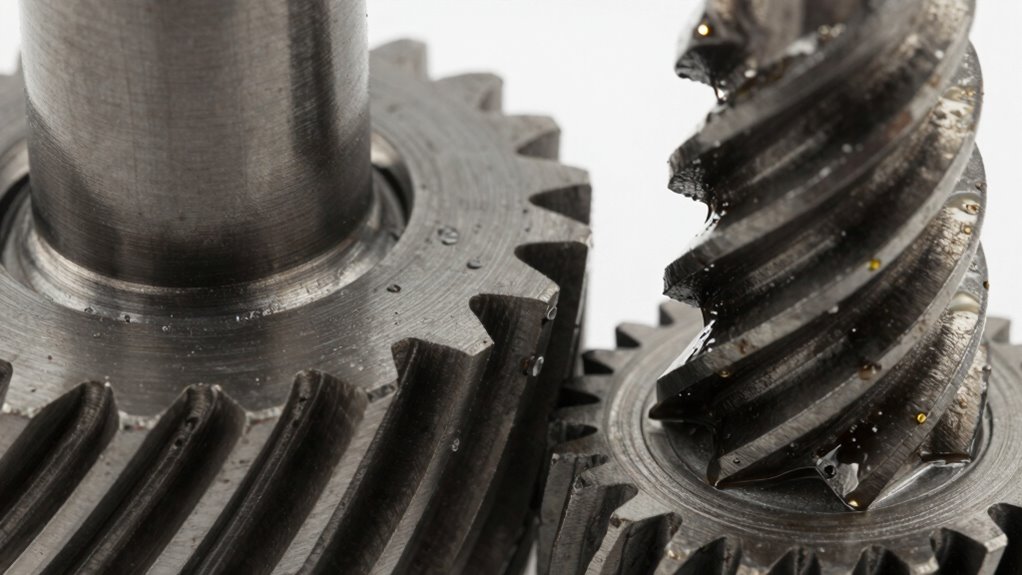
When choosing lubrication for gears, understanding the differences between helical and hypoid types is vital. These gear types differ markedly in design, which influences the kind of lubrication methods you should use. The gear material plays an important role here because it affects how the lubricant interacts with the gear surfaces. Typically, helical gears are made from steel or cast iron, and their design results in smoother tooth contact. Hypoid gears, often used in automotive differentials, are also usually steel but have a more complex tooth geometry, including an offset between the axes. This difference in material and design impacts the lubrication approach, as hypoid gears tend to generate more heat and require more specialized lubrication methods to prevent excessive wear and guarantee longevity.
For helical gears, the lubrication method generally involves high-quality oils that can maintain film strength under moderate loads and speeds. These gears operate with relatively less friction, so standard gear oils with good anti-wear additives often suffice. Because the tooth contact is smoother, the lubrication needs focus on reducing friction and dissipating heat efficiently. Regular oil changes and filters are usually enough to keep the gear functioning at its best. On the other hand, hypoid gears demand more careful lubrication. Their design causes more sliding contact and higher heat generation, which can lead to rapid gear wear if not properly lubricated. To combat this, specialized hypoid gear oils contain extreme pressure (EP) additives that form a protective film under heavy loads and high temperatures, preventing metal-to-metal contact. These oils are often thicker, with higher viscosity to ensure a durable film that can withstand the intense pressures.
Another key difference is that hypoid gears often require gear oils with specific additives to handle their unique lubrication needs. This is especially true in automotive applications, where the lubricant must also contend with contaminants and varying operating conditions. Conversely, helical gear lubrication tends to be more straightforward, with a focus on maintaining consistent film thickness and reducing heat buildup. The gear material’s resilience and the specific operating environment influence the choice of lubrication methods. You should consider whether the gear material is susceptible to corrosion or wear, and select oils with appropriate additives for protection.

Triax Gear Premium LS 80W-90, GL-5 Limited Slip Ready, Manual Transmissions, Hypoid Gear Systems, Differentials, NATO Military Approved, Widest OEM Specification Range (1 Gallon)
WIDEST SPEC RANGE ON THE MARKET: widely compatible with a very large number of hypoid gear systems, differentials,…
As an affiliate, we earn on qualifying purchases.
As an affiliate, we earn on qualifying purchases.
Frequently Asked Questions
How Often Should Lubricants Be Replaced in Helical and Hypoid Gears?
You should replace lubricants in helical and hypoid gears every 1,000 to 3,000 hours of operation, depending on usage and manufacturer recommendations. Regularly check for lubricant contamination, as dirt and debris can accelerate gear wear. If you notice increased contamination or gear noise, change the lubricant sooner to prevent damage. Proper lubrication maintenance ensures ideal gear performance and longevity, minimizing repair costs over time.
What Environmental Factors Influence Lubrication Choice for These Gears?
Ever wondered what environmental factors impact your gear lubrication? You should consider contaminant control and temperature management, as dirt, water, or dust can degrade lubricants and damage gears. Extreme temperatures, whether hot or cold, influence lubricant viscosity and performance. Both factors are vital in selecting the right lubricant to guarantee ideal gear operation, longevity, and efficiency, especially in challenging environments where conditions fluctuate rapidly.
Are Synthetic Lubricants Better Than Mineral Oils for These Gear Types?
Synthetic lubricants generally outperform mineral oils in lubrication efficiency for helical and hypoid gears. They offer better thermal stability, lower friction, and enhanced wear protection, making them ideal for demanding conditions. While mineral oils are more economical, synthetic options provide longer-lasting lubrication and better performance, especially in high-temperature or high-stress environments. Your choice depends on the gear’s operating conditions and your need for durability and efficiency.
How Does Lubrication Affect Noise Levels in Helical and Hypoid Gears?
Lubrication considerably impacts gear noise in helical and hypoid gears. When you use a lubricant with the right viscosity, it reduces friction and dampens vibrations, leading to quieter operation. If the viscosity is too low, gear noise can increase due to insufficient film strength. Conversely, too high viscosity might cause excessive drag. Proper lubrication ensures smooth meshing, minimizes gear noise, and enhances overall performance.
Can Improper Lubrication Cause Gear Failure in These Systems?
Imagine your gear system as a delicate dance; improper lubrication is like skipping steps, risking a fall. Without proper lubrication, lubrication failure can occur, leading to increased friction and heat. This accelerates gear damage and can cause catastrophic gear failure. You need to maintain consistent lubrication to keep the dance smooth and prevent costly repairs or replacements down the line. Proper care guarantees your gears stay resilient and perform flawlessly.

Super Lube Synthetic Gear Oil – Heavy Duty Synthetic Machinery Oil for Truck & Auto Maintenance – NSF H1 Food Grade Gear Lubricant – ISO 320 – Translucent Amber – Bottle – 1 qt (54300)
Rust and Oxidation Resistance: Super Lube Synthetic Gear Oil is a premium quality gear oil that prevents rust…
As an affiliate, we earn on qualifying purchases.
As an affiliate, we earn on qualifying purchases.
Conclusion
Just like choosing the right oil keeps your engine running smoothly, selecting the proper lubrication for gears guarantees they perform at their best. Helical gears need straightforward gear oil, while hypoid gears require thicker, specialized lubricants. Think of it as giving each gear the perfect fuel to keep everything turning effortlessly. When you pay attention to these lubrication differences, you’ll keep your gears whisper-quiet and lasting longer—like a well-oiled machine gliding smoothly through every turn.

Red Line 58204 Heavy Shockproof Gear Oil – 1 Quart
FULLY-SYNTHETIC FORMULAS – created from polyol ester base stocks, offer excellent lubrication under extreme conditions
As an affiliate, we earn on qualifying purchases.
As an affiliate, we earn on qualifying purchases.

Red Line 50104 75W85 GL-5 Full Synthetic Gear Oil for Hypoid Limited Slip Differentials – 1 Quart
SATISFIES REQUIREMENTS – for gear oil viscosity of SAE 75W80, 75W, 80W and 85W, as well as SAE…
As an affiliate, we earn on qualifying purchases.
As an affiliate, we earn on qualifying purchases.