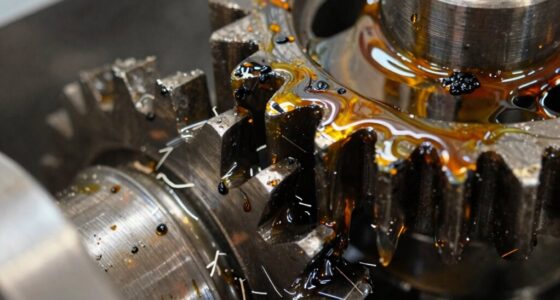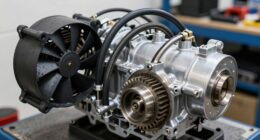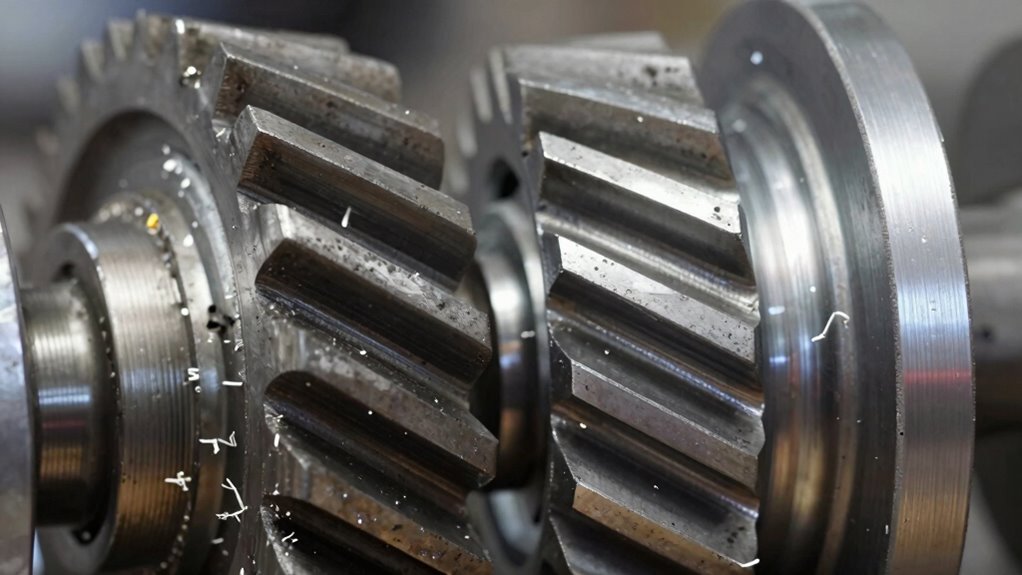
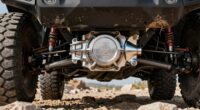
When gears engage through sliding contact, they generate more heat due to higher friction and micro-welding between teeth, leading to faster wear and elevated temperatures. Conversely, gears that use rolling contact experience less friction, stay cooler, and have a longer lifespan. Proper alignment and lubrication are critical for promoting rolling rather than sliding. To understand how these differences impact gear performance and heat, keep exploring the details that make some gears run hotter than others.
Key Takeaways
- Sliding contact generates more friction and heat than rolling contact, causing gears to run hotter.
- Sliding gears experience micro-welding and micro-damage, increasing thermal energy during operation.
- Proper lubrication reduces heat in sliding gears by minimizing direct contact and friction.
- Rolling gears have less friction, producing less heat and lowering operating temperatures.
- Precise manufacturing and alignment help ensure true rolling contact, reducing heat buildup.
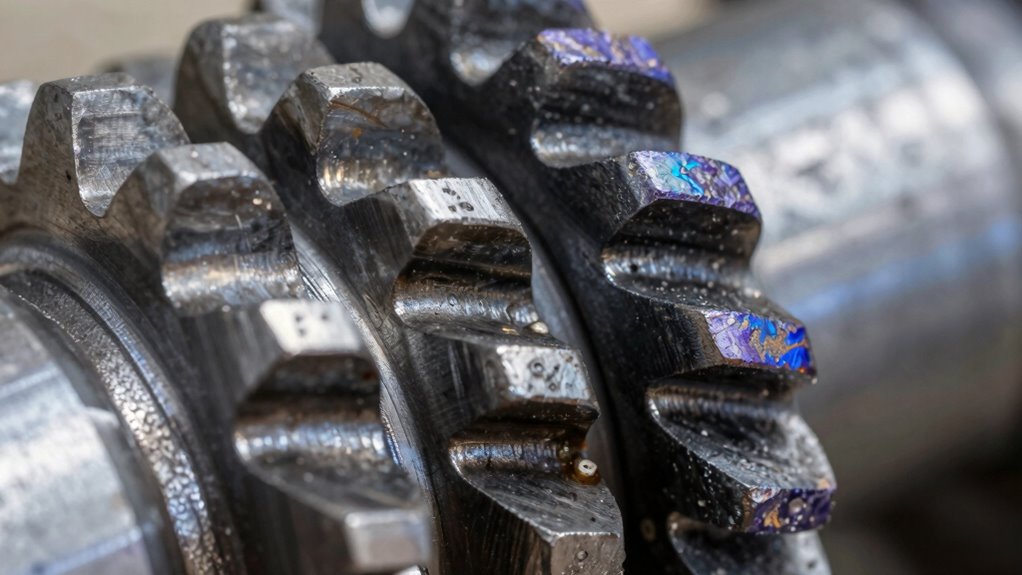
When it comes to transmitting power in gear systems, understanding the differences between gear tooth sliding and rolling is essential. These two mechanisms profoundly influence how gears generate heat, experience wear, and require lubrication. Gear tooth sliding occurs when teeth slide against each other during engagement, creating friction that leads to higher operating temperatures. This friction not only causes the gear teeth to heat up but also presents lubrication challenges, as adequate film thickness is necessary to prevent direct metal-to-metal contact. Without proper lubrication, material wear accelerates, shortening the lifespan of the gears and increasing maintenance needs.
In contrast, gear tooth rolling involves gears turning with minimal sliding, primarily relying on rolling contact between surfaces. Because rolling contact reduces the frictional forces involved, these gears tend to run cooler and experience less material wear over time. The lower friction also simplifies lubrication requirements, as a thinner or more stable film can often be sufficient to prevent metal contact. This results in fewer lubrication challenges and extends the service life of the gear system. However, achieving pure rolling contact requires precise manufacturing and alignment, which can add complexity and cost to the gear design. Maintaining proper alignment is crucial to ensure that rolling contact dominates and sliding is minimized, further reducing heat generation.
The heat generated by sliding gears stems from the continuous friction and micro-welding that can occur at contact points, especially when lubrication is inadequate. This heat accelerates material fatigue and wear, making it vital to select the right lubrication technology—such as high-quality oils or greases—to mitigate these effects. Proper lubrication forms a barrier that reduces direct contact, lowering friction and heat, but it must be maintained consistently to counteract the intense pressures and sliding action. On the other hand, rolling gears, due to their reduced friction, tend to produce less heat, simplifying cooling requirements and decreasing the risk of thermal distortion or damage. Understanding the lubrication techniques suitable for each gear type is key to optimizing performance and longevity.

3-IN-ONE Multi-Purpose Oil, 8 OZ
Since 1894 this versatile multi-purpose drip oil has been a trusted tool used by professional tradesmen and do-it-yourselfers
As an affiliate, we earn on qualifying purchases.
As an affiliate, we earn on qualifying purchases.
Frequently Asked Questions
How Does Lubrication Affect Gear Heat Generation?
Lubrication reduces gear heat generation by minimizing friction between gear teeth. When you use the right lubricant viscosity, it creates a thin film that prevents metal-to-metal contact. Surface contamination, like dirt or debris, can break this film down, increasing friction and heat. Proper lubrication guarantees smooth operation, keeps gears cooler, and extends their lifespan by reducing both friction and heat buildup.
Can Gear Material Influence Sliding Versus Rolling Friction?
Yes, the gear material influences sliding versus rolling friction due to its properties and manufacturing processes. Harder materials, like steel, tend to reduce sliding friction, promoting rolling contact that generates less heat. Meanwhile, softer materials or poorly finished surfaces increase sliding friction, leading to more heat. Manufacturing processes like precision machining and surface treatments can enhance surface smoothness, minimizing friction and wear, regardless of the material chosen.
What Maintenance Practices Reduce Gear Heating Issues?
You can reduce gear heating issues by choosing the right lubricant, ensuring it provides adequate lubrication and cooling. Regular gear inspections help you identify wear, misalignment, or damage early, preventing excessive friction and heat buildup. Keep gears properly aligned, avoid overloading, and maintain correct lubrication levels. These practices work together to minimize sliding friction and keep your gears running cooler, extending their lifespan and improving overall performance.
Are There Specific Applications Better Suited for Sliding or Rolling Gears?
Think of gear design as choosing the right vehicle for a journey. Sliding gears suit heavy-duty machines with high torque demands, like construction equipment, where their durability matters. Rolling gears excel in precision applications, such as robotics or clocks, where efficiency and less heat are crucial. For application selection, consider load, speed, and environment to match gear type with your needs, ensuring ideal performance and longevity.
How Does Gear Size Impact Heat Dissipation During Operation?
You’ll find that larger gears tend to dissipate heat more effectively because their greater surface area improves thermal expansion and heat transfer. Proper gear alignment is vital, as misalignment can cause uneven wear and excessive heat buildup. When gears are smaller, they might heat up faster due to less surface area for heat dissipation. Ensuring correct alignment and considering gear size helps manage operating temperatures and prolong gear life.
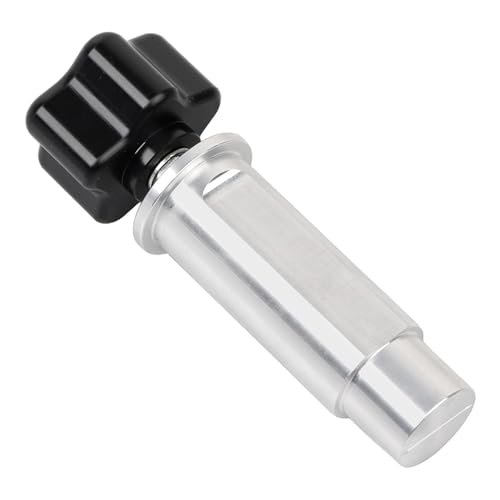
XMMT Feuling Oil Pump Gear Alignment Tool For Harley Twin Cam and M8 Milwaukee 8 Touring Electra Road Glide Street Glide Road King Dyna Softail
➢【Application】100% BThis procedure has proven to provide the best seal on the back scavenge port of the oil…
As an affiliate, we earn on qualifying purchases.
As an affiliate, we earn on qualifying purchases.
Conclusion
So, next time your gears seem to run hotter than expected, remember it’s the sliding that’s doing all the work — ironically, the very friction meant to keep things moving smoothly. Rolling gears might seem like the efficient heroes, but it’s the sliding contact that’s secretly causing the heat. Sometimes, what looks like the better choice actually heats things up more. Ironically, staying “cool” might just mean embracing a little sliding chaos.

AstraVox White Lithium Grease, Multi-Purpose Lubricant Lithium Grease with Brush for Hinges, Bearings, Gears, and Garage Doors, Ideal for Automotive, Marine, Industrial, and Household Use (1)
Superior Metal-to-Metal Lubrication: White lithium grease effectively reduces friction and ensures smooth operation. Lithium grease is ideal for…
As an affiliate, we earn on qualifying purchases.
As an affiliate, we earn on qualifying purchases.

Revolution Gear Master Install Kit, Fits D44 2007-18 JK Rubicon Rear
Country of Origin: United States
As an affiliate, we earn on qualifying purchases.
As an affiliate, we earn on qualifying purchases.