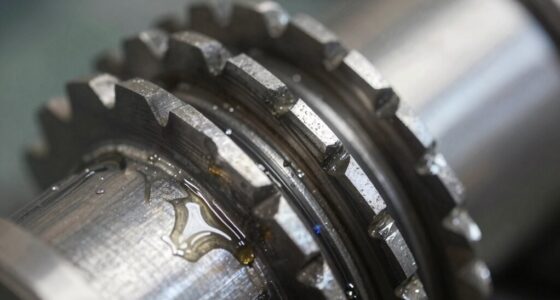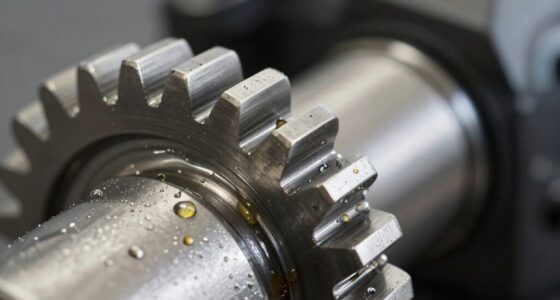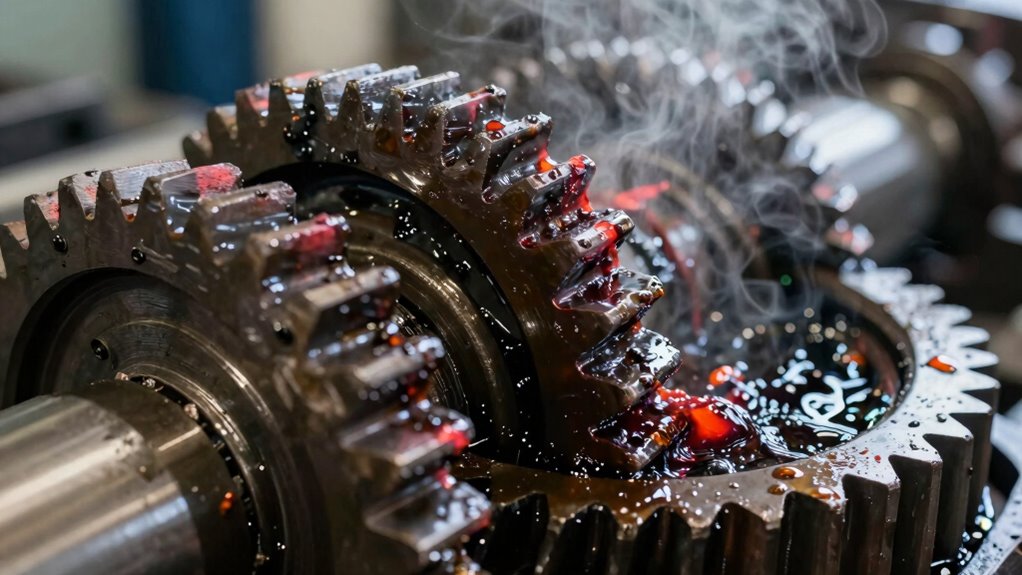

When gear oil overheats, its ability to lubricate properly drops, leading to faster wear and potential damage to your gears. The oil becomes thinner, making it harder to form a protective film and increasing friction. Overheating also reduces the oil’s additive effectiveness, which normally fights oxidation and corrosion. This can cause your transmission to operate sluggishly, make noise, and risk costly repairs. Keep going to discover how to prevent this from happening.
Key Takeaways
- Overheating causes gear oil to break down chemically, reducing its lubricating properties and leading to increased metal-to-metal contact.
- Excessive heat thins the oil, making it less effective at forming a protective film and increasing wear on gears.
- Hot oil loses its ability to transfer heat away from components, causing further temperature rise and potential damage.
- Elevated temperatures diminish additive effectiveness, accelerating corrosion, oxidation, and component deterioration.
- Signs of overheating include burnt smell, unusual noises, sluggish gear shifts, and can result in costly gear and transmission damage.
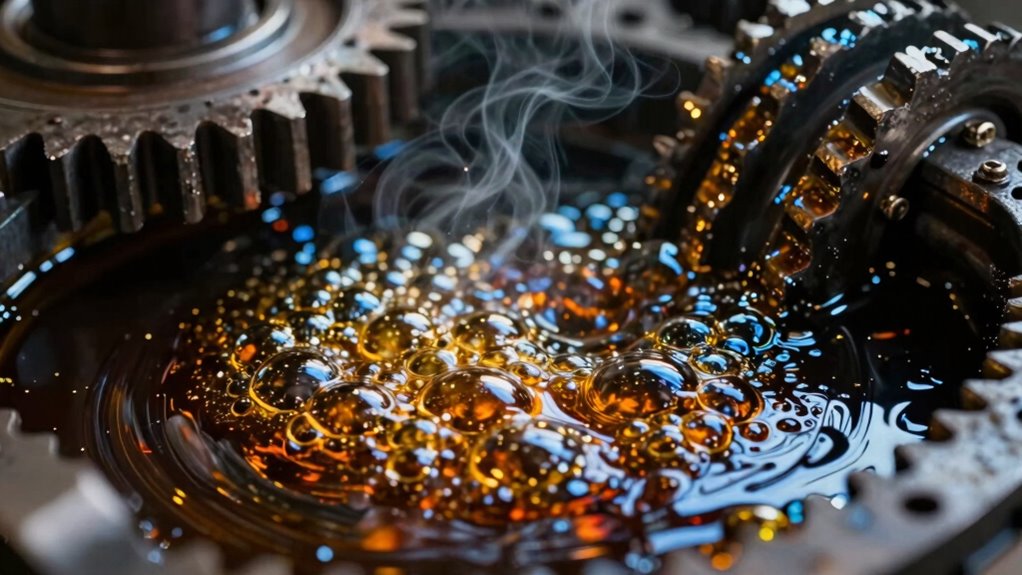
When gear oil overheats, it can lead to serious problems for your vehicle’s transmission and differential. One of the key issues is thermal breakdown, which occurs when the oil’s temperature rises beyond its designed limits. As the oil gets too hot, its chemical structure begins to deteriorate, losing its ability to lubricate effectively. This process accelerates quickly, leaving your gears exposed to increased friction and wear. You might not notice it immediately, but over time, thermal breakdown can cause damaging metal-to-metal contact, leading to costly repairs and reduced transmission lifespan.
Another vital consequence of overheating is the change in viscosity. Under normal conditions, gear oil maintains an ideal thickness that allows it to create a protective film over moving parts. When temperature spikes, the oil’s viscosity decreases, turning it into a thinner, less effective lubricant. This viscosity change means the oil can’t maintain a proper barrier between gears, increasing the risk of metal fatigue and component failure. You might observe symptoms like slipping gears, delayed shifting, or unusual noises, all signs that the lubrication isn’t doing its job.
Overheated gear oil thins, risking gear damage and symptoms like slipping or delayed shifting.
High temperatures also cause the oil to lose its ability to carry away heat. Instead of acting as a coolant, overheated gear oil can become a source of heat retention, further exacerbating the problem. As the oil breaks down, additives designed to prevent oxidation and corrosion become less effective, accelerating wear and tear on your transmission and differential components. If you ignore these signs, you could end up with severely damaged gears, requiring extensive repairs or replacements that are far more expensive than preventative maintenance.
Keeping an eye on your vehicle’s temperature and ensuring the gear oil stays within recommended limits is essential. Regularly checking the oil’s condition, especially during long drives or towing heavy loads, helps prevent overheating. If you notice the oil has a burnt smell, becomes unusually thin, or if your transmission feels sluggish or noisy, it’s a sign you need to change the oil or address cooling issues immediately. Remember, once the oil experiences thermal breakdown and viscosity change, it can’t fully recover; the damage is often irreversible. Acting quickly to replace overheated oil and improve cooling can save you from costly repairs and extend the life of your vehicle’s transmission system. Additionally, understanding lubrication properties can help you better maintain your vehicle’s performance under extreme conditions.

Bosch SP0F000045 Style Line 2" Mechanical Water/Oil Temperature Gauge (White Dial Face, Chrome Bezel)
Standard 2" white dial for 2-1/16" openings
As an affiliate, we earn on qualifying purchases.
As an affiliate, we earn on qualifying purchases.
Frequently Asked Questions
How Can I Prevent My Gear Oil From Overheating?
To prevent your gear oil from overheating, guarantee proper lubrication efficiency by regularly checking and maintaining the oil level. Use the correct oil viscosity for your gear system, as thicker or thinner oil can affect heat buildup. Keep vents clear to allow proper airflow, and avoid overloading your vehicle. Additionally, consider installing a temperature gauge to monitor oil temperature and take action before overheating occurs.
What Are the Long-Term Effects of Hot Gear Oil?
Hot gear oil accelerates oil degradation and lubricant breakdown, which can shorten gear lifespan by up to 50%. Over time, this leads to increased wear and potential gear failure. You might notice noisy operation or rough shifts. To avoid costly repairs, regularly check your gear oil temperature and change it as needed, ensuring your gears stay well-lubricated and protected, even under heavy use.
Can Hot Gear Oil Cause Gear Failure?
Yes, hot gear oil can cause gear failure. When gear oil gets too hot, it undergoes degradation, reducing its ability to lubricate effectively. This diminishes lubricant viscosity, leading to increased friction and wear on gears. Over time, these conditions can weaken gear components, increasing the risk of breakage or failure. Regularly monitoring and maintaining proper oil temperature helps prevent these issues and prolongs gear life.
How Often Should I Check Gear Oil Temperature?
You should check your gear oil temperature regularly, ideally every time you operate your equipment or at least weekly, to maintain lubrication efficiency. Monitoring temperature helps guarantee the oil’s viscosity remains ideal, preventing overheating that can lead to gear failure. By staying vigilant, you keep your gears properly lubricated, reduce wear, and extend their lifespan. Always follow your equipment manufacturer’s recommendations for specific intervals to keep everything running smoothly.
What Signs Indicate Gear Oil Is Too Hot?
You might notice abnormal gear noises or increased vibration, which indicate that lubrication efficiency is compromised due to oil viscosity loss from excessive heat. Overheating gear oil can cause overheating of components, leading to potential failure. If you observe burnt smell, discoloration, or gear slippage, it’s a clear sign that the oil’s temperature is too high, risking damage to your drivetrain. Regular checks help catch these signs early and maintain peak performance.

Hayden Automotive 678 Universal Rapid-Cool 9.5” x 11” Add-On Transmission Cooler – Not for Direct Replacement of the OE Cooler
Size Is 3/4 Inch X 11 Inch X 9-1/2 Inch
As an affiliate, we earn on qualifying purchases.
As an affiliate, we earn on qualifying purchases.
Conclusion
When gear oil overheats, it loses its lubricating properties, leading to increased wear and potential gear damage. Ignoring these signs can cause costly repairs and shorten your vehicle’s lifespan. Remember, a chain is only as strong as its weakest link—taking care of your gear oil keeps everything running smoothly. Stay vigilant, monitor temperatures, and don’t let heat undermine your gear system’s performance. Prevention is always better than repair.

K&W 402508 Trans-X Posi Trac Limited Slip Gear Oil Additive – 7 Fl Oz
Designed to quiet chattering differentials and improve gear oil performance.
As an affiliate, we earn on qualifying purchases.
As an affiliate, we earn on qualifying purchases.
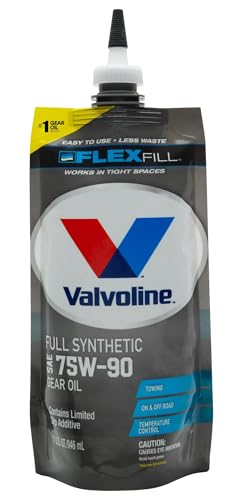
Valvoline FlexFill Advanced Full Synthetic Full Synthetic 75W-90 Gear Oil 1 QT FlexFill
FlexFill squeezable pouch releases 2X more fluid with less effort for 3X faster filling vs. traditional bottle packaging
As an affiliate, we earn on qualifying purchases.
As an affiliate, we earn on qualifying purchases.