TL;DR

Get business pricing on garage and car supplies
- Business-only prices and quantity discounts
- Tax-exempt purchasing
- Multiple users, one account, clear invoices
A car emergency kit for Halloween should cover visibility, warmth, communication, and common breakdowns, with a few extras for children and costumes. Check your car before you leave, secure loose gear, and agree on what everyone should do if you break down.
A Halloween drive can turn from a short trip to a long wait when a tire goes soft on a dark, chilly road. A little preparation keeps that delay from becoming a scramble for a flashlight, a warm layer, or a working phone.
This guide shows you what to pack in a car emergency kit for Halloween, what to check before leaving, and how to keep children safe if the car stops. Think of it as a regular roadside kit with a few autumn and costume-season additions.
Pack reflective gear, a flashlight, warmth, water, phone power, and vehicle-specific tire and battery supplies.
Add snacks, a backup light, and a bag for wet costume pieces when children are riding along.
Check tires, lights, wipers, fuel or battery range, and weather before leaving.
Secure loose equipment and keep masks or bulky costume props off the driver while the car is moving.
If a breakdown leaves you near traffic, prioritize passenger safety and call for professional help when the location is unsafe.
Pack These Essentials for a Halloween Night Breakdown
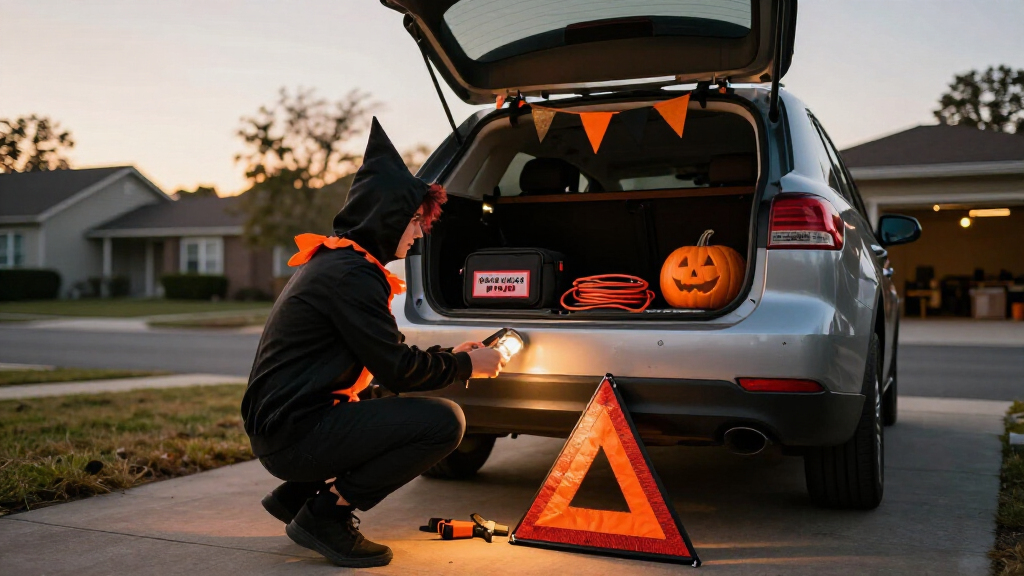
A car emergency kit for Halloween needs four things first: visibility, warmth, communication, and basic breakdown supplies. They form a practical chain: visibility helps other drivers notice a stopped car, warmth makes a delay more manageable, communication brings help, and vehicle supplies may resolve a minor problem. If one link is missing, the others can matter less: a jump starter is of little use if you cannot safely work beside traffic, and a charged phone cannot keep children warm during a long wait. Pack a reflective vest, flashlight, warning triangles or LED beacons, a blanket, phone charger, water, and the vehicle-specific gear you need for a flat tire or dead battery. Keep items you may need beside the road within reach, not buried under candy bags in the trunk, and secure everything so it cannot become a hazard if you brake suddenly.
For example, if your car stops on a dim suburban street, a reflective vest and warning light help other drivers spot you while you call for help. A fleece blanket and rain poncho make the wait more bearable when the air turns sharp and damp; keeping people warm matters more if children, older passengers, or anyone who cannot easily walk to shelter is with you. Put loose tools and equipment in a secured container so they cannot fly forward during a sudden stop. The placement of gear matters too: store the light where you can reach it before stepping outside, since searching the trunk in darkness may put you closer to moving traffic than necessary.
Portable jump starters, compact inflators, rechargeable LED beacons, and USB-C power banks take up less space than many older supplies. That convenience comes with a dependency: batteries need charging, devices must suit your vehicle, and unfamiliar equipment can be hard to use under stress. Check the instructions before you need them; a jump starter is not a good first-time experiment on a cold roadside. Simpler equipment may be easier to understand, while powered options can be quicker to deploy when they are maintained and compatible. Think about who will use each item: a compact device saves space, but only helps if someone can operate it safely and it has enough charge when the car stops.
A kit can help with minor trouble, but it does not replace roadside assistance or emergency services. Newer cars may offer emergency calling or roadside support through an app, though coverage, subscriptions, and a working vehicle battery can affect those features. Check your owner’s manual and keep a charged phone and backup power bank. If the location is unsafe, professional help is more valuable than having the tools to attempt a repair. In other words, the kit gives you options; it should not create pressure to fix a problem that is safer to leave to a professional.
- Visibility: reflective vest, flashlight with spare batteries, and warning triangles or LED beacons. Choose equipment you can place safely and use in poor weather; follow the manual and local guidance for where warning devices belong.
- Warmth and weather: blanket, rain poncho, gloves, warm hat, and hand warmers. These help during a wait, but they do not make it safe to remain in a dangerous location.
- Vehicle basics: tested jump starter or jumper cables, tire pressure gauge, inflator, basic tools, and the spare tire or repair supplies your car supports. Match supplies to your vehicle and your ability to use them.
- People and communication: first-aid supplies, needed medication, water, snacks, and a phone charger or power bank. Personal medication and a way to contact help can matter more than optional repair tools during a long delay.
A tire sealant kit may get you moving, but it has limits and may not suit every tire or vehicle. Read your manual for instructions and restrictions. If you do not have a spare tire, know what repair option your car carries and how to contact roadside assistance. A sealant can save time when the puncture and vehicle are within the product’s limits, but using it outside those limits can leave you with a failed repair and a longer wait. Treat a temporary repair as a way to reach appropriate service only when the product and vehicle instructions allow it.
Add a Few Supplies for Kids, Costumes, and Candy
A car emergency kit for Halloween works better when it accounts for tired children, wet costumes, and a longer-than-planned wait. Add a small bag of snacks, water, a backup light children can carry, and a bag for damp clothes or costume pieces. These extras address ordinary discomforts that can become harder to manage as a delay stretches on: hunger can make children restless, while wet clothing can leave them cold. Choose familiar snacks and a light a child can operate comfortably, and keep these supplies separate from repair gear so they are easy to find. This small amount of planning can help an adult focus on the breakdown instead of searching through tools for something a child needs right away.
Imagine your family leaves a pumpkin patch after sunset and one child’s costume cape is soaked from drizzle. A dry layer from the car and a snack can help while you wait for a tow. Keep masks, oversized props, and costume accessories packed away while the vehicle is moving; bulky items can distract the driver or shift around the cabin. A spare layer takes more room than a small prop, but it has a clearer safety benefit during a cold wait. If trunk space is tight, prioritize a warm layer and water over costume extras, since the former can make a real difference if the trip takes longer than planned.
Children are easier to spot when reflective details or lights stand out against a dark costume. Add reflective tape where it will not cover a child’s view or restrict movement, and use a small light for a dark walk between the car and an event. Reflective material works when headlights shine on it, while an active light can help in other conditions but needs charged batteries. Neither removes the need for adult supervision near roads. Follow current guidance from your local road-safety authority, since recommendations and rules can vary. Consider visibility part of the plan rather than a guarantee: drivers still need time and space to notice children, so adults should stay close and choose well-lit routes where possible.
Before heading out, tell children where to wait if they get separated and agree on a clear pickup spot. For instance, you might choose the lit entrance of a community center rather than “near the parking lot.” A specific place is easier to remember when the crowd is noisy and costumes make familiar faces harder to recognize. Make sure the children know which trusted adult to approach and what to do if the meeting place is inaccessible. A simple backup instruction—such as staying with the trusted adult at the entrance—reduces the chance that a child starts searching alone when the original plan changes.
Use This Five-Minute Check Before You Leave
A car emergency kit for Halloween does more good when your car is ready for the route and weather too. Before you leave, check tire pressure, headlights and brake lights, windshield wipers, fuel or battery range, and the forecast. The point is to catch problems while you still have choices: at home you can inflate a tire, replace a bulb, charge the car, or change plans; on a dark route, each option takes longer and may expose your passengers to traffic or cold. The check also helps you judge whether the planned trip has enough margin for an unexpected delay, instead of relying on everything going exactly right.
- Check the tires. Use the pressure listed on the driver-side door label or in your manual, not the number molded into the tire sidewall. Look for visible damage and confirm you know whether the car has a spare, inflator, or sealant kit. Correct pressure affects handling and helps you spot a problem early; knowing your repair setup prevents discovering its limits after a puncture. If a tire looks damaged or keeps losing pressure, postponing the trip may be safer than treating a quick top-up as a fix.
- Test lights and wipers. Turn on headlights, brake lights, and signals, then make sure the wipers clear the glass without leaving broad, blurry streaks. In rain and darkness, poor lights make it harder for you to see and for others to judge where you are, while ineffective wipers can erase the visibility advantage of driving slowly. These checks are quick, but addressing a failed bulb or worn wipers can take longer, so finding the issue at home gives you time to choose a safer option.
- Check your route and weather. Look for rain, cold temperatures, road work, and the expected return time. Top up fuel or charge before you set off if the trip leaves little margin. A route with fewer convenient stops or a long return after an event calls for more reserve than a short trip near home. Extra range is a buffer for detours and waiting; it cannot substitute for checking that the car is in good condition.
- Charge and pack. Charge your jump starter and power bank, put the flashlight where you can reach it, and secure tools, props, and costume bags. A device that is dead or buried is only extra weight, and unsecured gear can injure passengers during sudden braking. Check the flashlight and power devices before leaving, since an indicator light or successful charge is a better sign of readiness than remembering that you packed them.
- Set the family plan. Choose a pickup point and tell children who to contact or where to wait if your group gets split up. A short, specific plan is easier to follow when people are tired or distracted than a general instruction to “stay together.” Agreeing ahead of time also means adults can give calm, consistent directions if plans change in a crowded place.
For a 20-minute drive to a neighborhood party, that check may take less time than finding a gas station on the way home. If your dashboard shows a warning or the wipers cannot keep the windshield clear, deal with it before driving through a busy neighborhood after dark. The check cannot prevent every breakdown, but it can reduce avoidable ones and help you make a safer decision about whether to go. If a problem remains unresolved, weigh the convenience of going against the added risk of handling it later in darkness or bad weather.
Know What to Do If Your Car Breaks Down
A car emergency kit for Halloween is most useful when everyone knows the plan: get out of traffic, make the car visible, keep children together, and call for help. If the car still moves, steer to a safe place away from traffic before stopping. Turn on hazard lights and follow your vehicle manual and local road guidance for warning devices. The safest choice depends on the location: a quiet parking area offers room to wait or repair, while a narrow shoulder may leave too little space to exit safely. A few extra minutes spent reaching a safer stopping place can matter more than immediately investigating the problem.
On a busy road or narrow shoulder, getting out can expose passengers to traffic. Keep seat belts fastened and remain inside if leaving the vehicle would put you in greater danger; if you can reach a safer place well away from traffic, move together and stay behind a barrier where one is available. Do not stand behind or beside the car facing traffic. Children need especially clear instructions here because a curious step toward the shoulder can put them in a driver’s path. The choice to stay or leave depends on which option reduces exposure at that specific location, so keep everyone together and make the decision before anyone opens a door.
Call roadside assistance or emergency services when the situation calls for it, and share your location as clearly as you can. A connected-car feature may help, but it can fail without cell coverage or a working battery. If your phone dies, a charged power bank can restore contact; if there is no signal, use your judgment about whether you can safely reach a staffed, well-lit place for help. Do not leave passengers alone to seek a signal, and avoid walking along the road shoulder. A location pin, road name, or nearby landmark can help responders find you faster, so check what your phone can share before relying on that feature.
Suppose a flat leaves you stopped on a dark road with two children aboard. Keep them together, out of the roadway, and warm while you request help; do not let them wander toward other cars or walk along the shoulder for a better signal. A roadside kit supports that plan, but it cannot make an unsafe repair location safe. The key tradeoff is between fixing the problem quickly and keeping everyone away from traffic: when the work area is exposed, waiting for professional help is the safer course. That wait may feel inconvenient, but avoiding a roadside repair in a dangerous spot protects the passengers from the greater risk.
Never change a tire beside moving traffic if you cannot work well away from the roadway. Wait for professional roadside help when the location is unsafe or you are unsure how to make the repair.
Drive Slowly Where Trick-or-Treaters May Cross
A car emergency kit for Halloween cannot prevent a collision, so your driving habits matter just as much as your supplies. Slow down in residential areas, scan between parked cars, and expect children to cross unexpectedly as they follow friends or head toward a porch. Give yourself extra stopping distance, especially in rain or on streets with poor lighting. Lower speed gives you more time to notice movement and react, but it does not replace careful scanning at driveways and crossings. The practical implication is that a familiar route may still demand more attention than usual: parked cars, crowds, and excited children change what you can see from one block to the next.
For example, a child in a dark cape may step from between two parked SUVs while looking toward a house, not toward your headlights. Take your foot off the accelerator near groups and intersections, and avoid distractions such as phone notifications. Make sure anyone walking has a clear view and can move freely in their costume. Costumes and crowds can make people harder to see and less predictable, so leave more room than you would on an ordinary trip. Extra caution costs little time compared with the consequences of having too little room to stop.
If your outing includes more than a quick trip, keep a small kit of reflective gear, water, and warm layers in the car. Review your supplies as seasons change: check expiration dates, replace used first-aid items, and recharge lights, jump starters, and power banks. A standard roadside kit adapted for autumn weather is more useful when it is ready before the first cold night; a quick seasonal check also reveals when a once-useful item has expired, run flat, or stopped holding charge. That small routine keeps preparation dependable without requiring you to repack the whole kit before every outing.
Frequently Asked Questions
What should go in a car emergency kit for Halloween?
Start with a reflective vest, flashlight, warning triangles or LED beacons, blanket, rain poncho, gloves, water, first-aid supplies, phone power, and vehicle-specific tire and battery gear. Add snacks, a backup light for children, and a bag for wet costume pieces if kids are coming along.
Do I need jumper cables, a jump starter, or both?
Either can help with a dead battery, but a portable jump starter works without another car and needs to stay charged and compatible with your vehicle. Jumper cables need a suitable second vehicle and correct connection points. Check your owner’s manual before using either option.
How do I keep children visible while trick-or-treating?
Choose reflective costume details or add reflective tape where it will not block vision or restrict movement. A small flashlight or wearable light can help on dark streets, and children should stay with an adult near roads and driveways. Follow current local road-safety guidance.
Is it safe to drive in a costume or mask?
Do not drive in a mask or costume that blocks your vision, limits movement, or distracts you. Keep bulky props and loose costume pieces secured while the car is moving. Put them on after parking in a safe place.
How often should I check my emergency kit?
Check it at least when seasons change and before a longer trip. Replace expired supplies, restock anything you used, and recharge battery-powered lights, jump starters, and power banks so they work when needed.
Conclusion
Pack your kit before Halloween night, check your car while you are still home, and make a simple plan your children can repeat. When the road goes dark and the air turns cold, a charged light, a warm blanket, and a calm next step can make all the difference.
Fall Picks
fall essentials
As an affiliate, we earn on qualifying purchases.