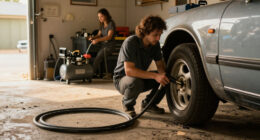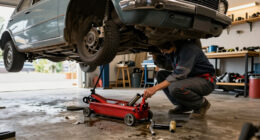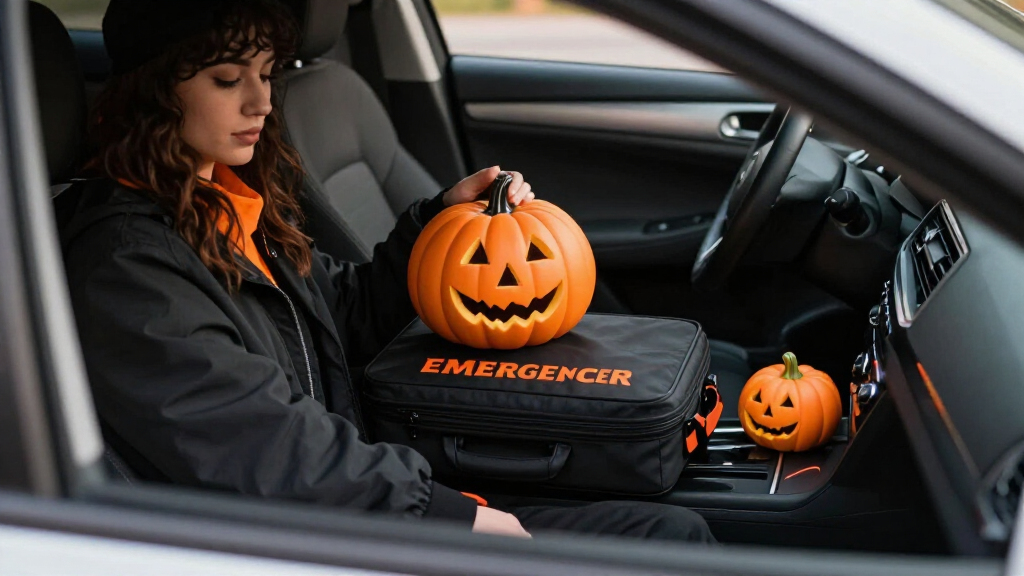
This guide shows you how to build a car emergency kit tailored to Halloween night: dark roads filled with costumed children, unpredictable October weather, and the chance your car sits idling at a curb for hours or breaks down on a cold evening. You will assemble a kit that handles three situations at once — a vehicle breakdown, a medical or comfort emergency, and the practical demands of trick-or-treating (glow sticks, warm layers, cleanup supplies).

Get business pricing on garage and car supplies
- Business-only prices and quantity discounts
- Tax-exempt purchasing
- Multiple users, one account, clear invoices

Everlit Survival Car Emergency Kit with Digital Tire Inflator, Jumper Cables, and First Aid Kit
- ✔ Tire Inflator Power: 12V with auto shutoff
- ✔ Jumper Cable Length: 12 feet
- ✔ Jumper Cable Gauge: 8 gauge
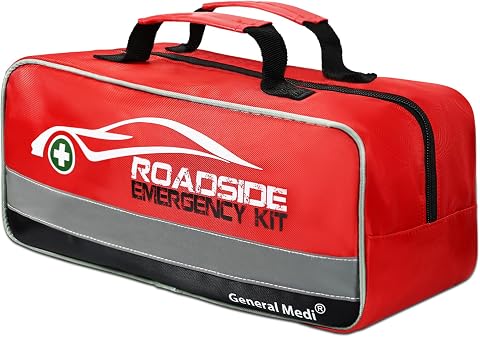
General Medi 127-Piece Roadside Car Emergency Kit with Mini First Aid Kit, Jumper Cables, Tow Rope, and Safety Vest
- ✔ Total Pieces: 127
- ✔ Includes: Mini first aid kit, jumper cables, tow rope, bandages, safety vest, emergency triangle
- ✔ Organization: Labeled compartments for quick access

HAIPHAIK Car Emergency Kit with 11.8ft Jumper Cables, Roadside Safety Kit
- ✔ Total Pieces: 124
- ✔ Jumper Cable Length: 11.8 feet
- ✔ Jumper Cable Certification: UL-certified, insulated tangle-free PVC
This guide is for any driver, regardless of mechanical skill. Everything here is off-the-shelf and requires no tools beyond a flashlight to install. Expect 1–2 hours of work if you need to gather supplies, or under an hour if you already own most items. By the end, you will have a fully stocked, organized, and inspected kit stored in your vehicle and ready before October 31.
Difficulty: Beginner | Time: 1-2 hours (plus a shopping trip)
What You’ll Need
Tools & Materials:
- A storage bin or duffel bag with a lid (soft-sided is safer in a crash)
- A permanent marker and masking tape for labeling
- Zipper-seal bags in gallon and quart sizes for organizing small items
- A working flashlight to inspect your trunk and tire wells
- Access to your vehicle owner’s manual (in the glovebox or online)
Knowledge:
- How to open your trunk or cargo area and locate your spare tire and jack
- How to check your phone’s battery and charge port
- No mechanical skills required
Before buying anything, inventory what you already own. Most households have flashlights, first aid supplies, blankets, and water on hand — the kit may cost very little if you consolidate. If you plan to buy items, do it at least a week before Halloween: glow sticks, reflective tape, and roadside flares sell out in late October.
Everlit Survival Car Emergency Kit with Digital Tire Inflator, Jumper Cables, and First Aid Kit
The Everlit kit earns our top spot for one reason the other two can’t match: a 12V digital tire inflator with auto shutoff. On a cold Halloween night, when a soft tire appears mid-trick-or-treat route, being able to top off air in a driveway instead of driving on a damaging flat to the nearest station is a genuine convenience upgrade. The inflator even includes an LED light, which matters when you’re working in the dark at 8 p.m. in late October.The rest of the kit holds its own against the competition. Compared with the General Medi kit, Everlit’s 12-foot 8-gauge jumper cables are longer and heavier-duty, giving you more flexibility in how you park relative to a donor car — a real advantage in tight residential streets. The 108-piece first aid kit is more substantial than General Medi’s mini kit, making it the best choice for families who may need to patch up a costumed kid’s scraped knee between houses. The tow strap, flashlight, and safety accessories round out a genuinely complete package, and the veteran-led curation shows in what was included and what was left out.The tradeoffs are real, though. The bag is bulkier than the HAIPHAIK’s hard case, which can be an issue in small cars with limited trunk space, and the 8-gauge cables, while the best here, still aren’t ideal for large trucks or SUVs with big engines. If you drive a full-size pickup, no kit in this lineup will fully cover a dead-battery scenario. Still, for the majority of sedan, crossover, and minivan drivers, this is the most complete Halloween-ready package of the three.
Pros:
- Digital tire inflator with auto shutoff and built-in LED light
- 12-foot 8-gauge UL-listed jumper cables, the longest and strongest in this lineup
- 108-piece first aid kit, the most complete medical set of the three
- Curated by veterans with a 1-year warranty and 60-day returns
Cons:
- Kit bag is bulky and may crowd small trunks
- Jumper cables may not support larger vehicles
- More expensive than purely mechanical kits
Best for: Families and daily drivers who want a single kit that handles tire, battery, and injury scenarios on dark fall nights
Not ideal for: Drivers of large trucks or those with very limited trunk space
Bottom line: The most complete and Halloween-practical kit of the three, worth the premium for the inflator alone.
“The most complete and Halloween-practical kit of the three, worth the premium for the inflator alone.”
General Medi 127-Piece Roadside Car Emergency Kit with Mini First Aid Kit, Jumper Cables, Tow Rope, and Safety Vest
Where the Everlit kit wins on powered equipment, the General Medi kit wins on organization and versatility per dollar. Its 127 pieces are arranged in labeled compartments that make finding the right tool fast — an underrated feature when you’re roadside in the dark with impatient kids in costumes. In our comparison, this is the easiest kit of the three to actually use under stress.It lacks a tire inflator, so a slow leak on Halloween night means a trip to a gas station air pump rather than a roadside fix — that’s the core tradeoff versus the Everlit. But the essentials are all present: jumper cables, tow rope, a reflective safety vest, and an emergency triangle. The vest and triangle combination matters more than many drivers realize; if you’re stopped on the shoulder of a dark rural road on a busy Halloween night, visibility gear protects you from the biggest actual risk, which is other drivers. The HAIPHAIH kit also includes cables and a triangle, but General Medi’s labeled layout beats its slot-based case for finding things quickly.The kit’s biggest strength is also its biggest weakness: versatility. It’s designed for car, home, workplace, camping, and hiking use, which means the components are general-purpose rather than vehicle-specialized. Some individual items feel basic in quality compared with Everlit’s heavier-duty cables and tools. For budget-conscious drivers, casual commuters, and anyone who wants one kit that lives in the trunk but occasionally travels to a campsite, that tradeoff is perfectly reasonable.
Pros:
- 127 pieces covering the core roadside essentials
- Labeled compartments make tools fast to locate in the dark
- Versatile enough for car, home, camping, and workplace use
- Made in a facility supplying lifeguard agencies, hospitals, and schools
Cons:
- No tire inflator, so flats require a gas station trip
- Individual components feel basic compared with Everlit’s
Best for: Budget-minded drivers and multi-use households who want organized, essential coverage without paying for powered tools
Not ideal for: Drivers who want a tire inflator included or heavy-duty components for frequent use
Bottom line: The smart pick for drivers who value organization and essentials over powered extras.
“The smart pick for drivers who value organization and essentials over powered extras.”
HAIPHAIK Car Emergency Kit with 11.8ft Jumper Cables, Roadside Safety Kit
The HAIPHAIH kit takes a different philosophy from the other two: instead of inflators or medical supplies, it invests in physical repair capability. Its 124 pieces include tire repair tools and a multi-function folding shovel with saw teeth, a bottle opener, and a compass — gear that the Everlit and General Medi kits simply don’t offer. For drivers on gravel roads, rural routes to pumpkin patches, or fall camping trips, that shovel and the tire repair kit are more useful than another bandage assortment.Compared with Everlit, the tradeoff is clear: no inflator, no large first aid kit, but genuine repair capability when you’re far from help. The UL-certified jumper cables feature insulated, tangle-free PVC construction, which is thoughtful design, though at 11.8 feet they’re slightly shorter than Everlit’s 12-foot cables — a meaningful limitation if you drive a truck where engine bays and battery positions vary. The hard plastic case with dedicated tool slots is more protective than General Medi’s soft bag and easier to slide under a seat, though at over 8 pounds it’s the heaviest option here.This kit makes the most sense for the driver whose Halloween involves back roads, trailheads, or motorcycling. It’s also a reasonable choice for anyone who prefers a hard case over a soft bag for durability. But urban and suburban commuters who mostly need safety visibility gear and first aid supplies will get more practical value from the General Medi at similar cost, and families will miss the comprehensive medical kit the Everlit provides.
Pros:
- 124-piece kit with genuine tire repair tools
- Multi-function folding shovel with saw teeth and compass
- UL-certified tangle-free jumper cables
- Compact hard case with dedicated slots for each tool
Cons:
- Over 8 pounds, the heaviest kit in this lineup
- 11.8-foot cables may be short for larger trucks
- No inflator or substantial first aid kit
Best for: Rural drivers, campers, and motorcyclists who need actual repair tools for situations far from help
Not ideal for: Suburban commuters and families who prioritize first aid supplies and visibility gear
Bottom line: The tool-forward pick for drivers whose Halloween route runs through places help can’t easily reach.
“The tool-forward pick for drivers whose Halloween route runs through places help can’t easily reach.”
As an Amazon Associate we earn from qualifying purchases.
Before You Start
Two things to settle before you gather supplies. First, decide where the kit lives in your car: the trunk or cargo floor is standard, but items you need fast (flashlight, glow sticks, first aid pouch) should go in the cabin — the glovebox, door pocket, or under a seat. In a breakdown on a busy road, you do not want to exit the vehicle into traffic to open the trunk. Second, check the weather forecast and your plans for Halloween night. If you will be driving children door to door in a neighborhood, the comfort and visibility items matter as much as the breakdown gear. If you are taking a highway trip to a party or fall event, weight the kit toward roadside emergency supplies. This guide covers both, and you can trim accordingly.
Step-by-Step Instructions
Step 1: Empty and Inspect Your Cargo Area
Open your trunk or cargo space, remove everything currently loose in it, and inspect the compartment. Find your spare tire, jack, and lug wrench (or confirm your car has a tire repair kit instead of a spare). Press the spare with your thumb: a full-size tire should feel firmly inflated, and a space-saver spare should feel hard.
Wipe down the cargo floor with a rag so your kit sits on a clean, dry surface and nothing traps moisture that could mildew your supplies.
Tip: If your spare is soft, cracked, or more than 8 years old, inflate or replace it before Halloween night. A flat spare is one of the most common roadside surprises.
Check: You can see the cargo floor, you know exactly where the spare and jack are, and the spare passes a visual and pressure check.
Step 2: Gather the Roadside Breakdown Core
Collect these items into one pile: jumper cables (at least 12 feet, 4-gauge or thicker for reliable winter starts), a flashlight with spare batteries or a hand-crank model, a reflective warning triangle or LED road flare, a tire pressure gauge, a small fire extinguisher rated for automotive use (Class B or ABC), and a phone charger compatible with your car’s port, plus a backup battery pack charged to full.
Test each item as you add it: click the flashlight on and off, squeeze the jumper cable clamps to confirm they open and close firmly, and check that the battery pack shows a full charge.
Tip: Choose a hand-crank or battery-free flashlight as your backup. Cold October nights drain batteries faster, and a dead flashlight in a dark trunk is worse than no flashlight.
Check: Every item powers on or mechanically functions when tested, and all of it fits in one carryable pile.
Step 3: Assemble the Safety and First Aid Supplies
Build a first aid pouch containing adhesive bandages in several sizes, sterile gauze pads, medical tape, antiseptic wipes, tweezers, scissors, disposable gloves, and any medications your family might need urgently (children’s pain reliever, an inhaler, an epinephrine auto-injector if prescribed). Add a mylar emergency blanket and one regular blanket or heavy coat to the pile.
Place a notepad and pencil in the pouch — in an accident or emergency, a phone can die, and writing down an insurance exchange or a license plate by hand still works.
Tip: Check expiration dates on medications, wipes, and any sterile packaging. Replace anything expired now rather than discovering it during an emergency.
Check: You can unzip or open the first aid pouch and find each item within five seconds, and nothing inside is expired.
Step 4: Add the Halloween-Specific Items
Add the layer that makes this a Halloween kit: gather a handful of glow sticks (crack one now to test the batch), a small bag of reflective tape or clip-on LED blinkers, bottled water, non-perishable snacks such as granola bars, a roll of paper towels, wet wipes, a plastic bag for wet or muddy costumes, and an umbrella or poncho. If children will be in the car, pack one backup costume piece — a spare cape or accessory — in case of a wardrobe failure mid-route.
Plan to use glow sticks for double duty: hand them to children walking between houses, and deploy them as low-power marker lights if you are stopped on a dark road.
Tip: Store bottled water inside the cabin if possible, not the trunk. Water left in a trunk through a hard freeze can split the bottle; cabin temperature stays milder.
Check: You have at least four working glow sticks, water, snacks, and cleanup supplies in the pile, and one glow stick glows brightly after activation.
Step 5: Pack the Kit in Zones
Load your container in reverse order of need: place blankets and the fire extinguisher on the bottom, arrange the first aid pouch and roadside gear in the middle, and set snacks and water on top. Move the true grab-and-go items — flashlight, glow sticks, phone charger — into the cabin where the driver’s seat can reach them without unbuckling.
Write a short inventory list on masking tape with the permanent marker and tape it inside the lid of the container: item names and the date you packed it. This makes future restocking a 2-minute job.
Tip: Use a soft duffel or a bin with rounded corners. Hard-edged bins become projectiles in a collision, and loose items in a cabin are a documented injury risk.
Check: The container closes fully, sits flat without sliding when you nudge it, and the flashlight and glow sticks are reachable from the driver’s seat.
Step 6: Secure the Kit and Run a Driveway Test
Fasten the container with a cargo net, strap, or bungee to a tie-down point if your vehicle has one, or wedge it snugly so it cannot shift more than an inch. Then run a rehearsal before Halloween: pull the car over safely during a scheduled errand, activate the hazards, retrieve the warning triangle, and crack a glow stick — all within two minutes.
Treat this rehearsal as essential: it converts a bag of gear into an actual plan.
Check: The kit does not move when you brake firmly, and you completed the full stop-hazard-retrieve drill in under two minutes.
Step 7: Schedule the Annual Check
Set a recurring reminder on your phone for early October each year. When it fires, check batteries, expired first aid items, snack dates, water bottles, and confirm nothing has migrated out of the kit over the year.
Tip: Tie the check to something fixed, like the first week of October or when stores put out Halloween candy — an anchor you cannot miss.
Check: A recurring calendar reminder exists and repeats annually.
Common Mistakes to Avoid
- Packing everything in the trunk, including items needed during a breakdown on a live road. — Keep the flashlight, glow sticks, charger, and warning triangle (or a second one) within arm’s reach of the driver’s seat. Exiting into traffic to open a trunk is the single riskiest move in a roadside stop.
- Buying cheap, short jumper cables that cannot carry enough current in cold weather. — Buy cables at least 12 feet long and 4-gauge or thicker. Thin 10-gauge cables from a checkout aisle frequently fail to start a cold engine.
- Forgetting to test items, so the flashlight has dead batteries and the water bottles froze and split last winter. — Test every powered item at packing time and set the annual October reminder. Inspect bottles for bulging or leaks before the season.
- Leaving the kit loose on the cargo floor where it slides and becomes a projectile. — Strap or wedge the container so it cannot shift. Do the firm-brake test before Halloween night.
Troubleshooting
Problem: No room in the trunk for a full kit (small car or shared cargo space).
Solution: Prioritize a slim soft duffel with the essentials: jumper cables or a compact jump-starter pack, flashlight, first aid pouch, one mylar blanket, water, glow sticks. A jump-starter power pack replaces bulky cables and fits under a seat.
Problem: Glow sticks or snacks were used during the year and not replaced.
Solution: Restock immediately using your inventory list taped inside the lid. Buy glow sticks in bulk once — they last 2–4 years sealed — and keep the spares in a closet, not the car, so heat and cold do not age them.
Problem: The car sits outside in freezing overnight temperatures and items are getting cold-damaged.
Solution: Move water and battery-powered items into the cabin or bring the battery pack indoors on cold snaps. Lithium battery packs hold charge far better at cabin temperature than at trunk temperature.
Problem: You need the kit on Halloween night but realize a needed medication or inhaler is at home.
Solution: undefined
What Success Looks Like
Your kit is complete when all of the following are true: the container sits secured in your cargo area and does not shift under firm braking; the flashlight, glow sticks, and phone charger are reachable from the driver’s seat; every powered item tested on and nothing in the first aid pouch is expired; the spare tire is inflated and the jack is in place; the taped inventory list is inside the lid with a packing date; and you completed the two-minute stop-hazard-retrieve drill. If you can hand any adult family member the kit and they could find the warning triangle, first aid pouch, and water in under a minute, the kit is done.
Next Steps
Once the kit is packed, do a 10-minute Halloween-night route plan: agree on a meeting point if anyone gets separated, charge every phone before leaving, and confirm your auto insurance and roadside assistance numbers are saved in your contacts (not just on a card at home). After Halloween, do not disassemble the kit — swap out the glow sticks and costume backup for ice scrapers and a small snow shovel, and the same container becomes your winter emergency kit. Restock depleted items within a week so the kit never sits half-empty, and let anyone who regularly drives the car know where everything is stored.
Frequently Asked Questions
How much should a Halloween car emergency kit cost?
If you already own a flashlight, blankets, and basic first aid supplies, expect $40–$80 to cover jumper cables, a warning triangle, glow sticks, a mylar blanket, and snacks. Buying a pre-assembled roadside kit ($30–$60) and adding the Halloween-specific items is a reasonable shortcut, but check pre-made kits for thin cables and cheap tools before relying on them.
Is a pre-packaged emergency kit good enough, or should I build my own?
Pre-packaged kits cover the roadside basics but almost never include first aid supplies, water, snacks, medications, or the visibility items that matter on a night full of pedestrians. Use a pre-made kit as the base if you like, then add the safety and Halloween layers from this guide and test everything.
What single most important item should I add if I only do one thing?
A fully charged phone battery pack with the correct cable for your phone. Nearly every Halloween-night problem — a breakdown, a lost child, a dead car battery, a minor injury — gets dramatically easier to solve when you can call for help, and idling at curbs for hours drains phone batteries fast.
Do glow sticks and safety items actually matter for trick-or-treat driving?
Yes. Halloween is one of the statistically deadliest nights of the year for child pedestrians, and most incidents happen between 6 and 9 p.m. in residential areas. Glow sticks on your own children and reflective markers on your stopped vehicle address the two visibility problems you directly control: seeing kids and being seen.
Where exactly should the kit live in the car?
The main container goes in the trunk or cargo floor, strapped or wedged so it cannot slide. The flashlight, glow sticks, phone charger, and one warning triangle go in the cabin — glovebox, door pocket, or seat-back pocket — so you never have to step into traffic to reach them during a roadside stop.