TL;DR
Prime for Young Adults — start your free trial
Fast free delivery, streaming and member deals for eligible 18–24 year olds.
Try it freeAs an affiliate, we earn on qualifying purchases.
New York City announced plans to install 700 curbside electric vehicle chargers across the city. The initiative aims to support the growing EV market and reduce urban emissions. Details on deployment and timeline are still developing.
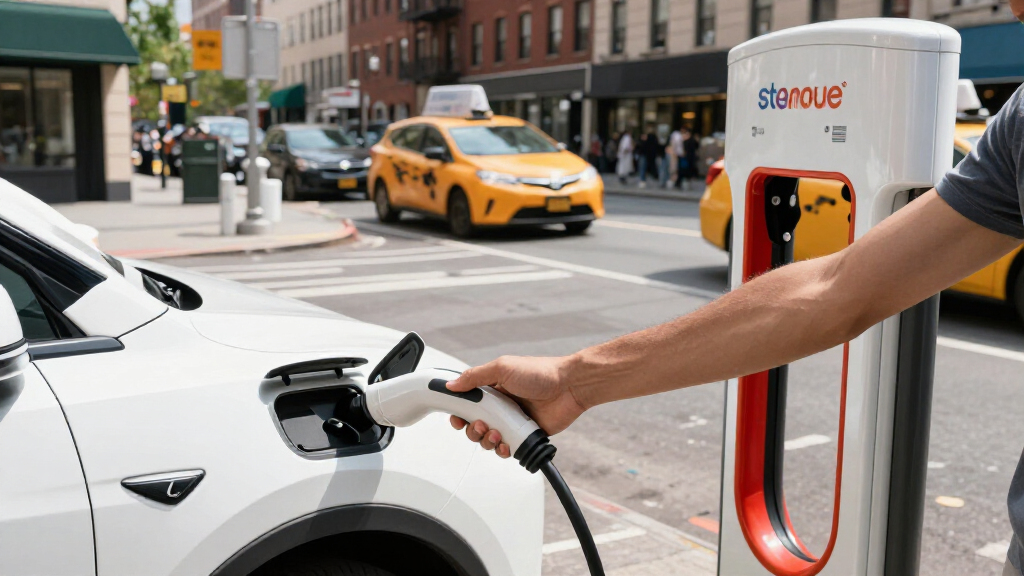
New York City has announced plans to install 700 electric vehicle chargers along city streets, marking a significant expansion of urban EV infrastructure. The initiative aims to support increasing EV adoption and reduce citywide emissions. Officials say the chargers will be placed directly on the curb, making charging more accessible for residents and visitors.
The city’s Department of Transportation (DOT) confirmed that the 700 new chargers will be installed in various neighborhoods over the next year. The chargers are designed for curbside placement, integrating with existing street infrastructure. This move responds to rising demand for EVs, driven by state and local policies aimed at phasing out internal combustion engines.
According to city officials, the chargers will be compatible with all major EV models and will be equipped with smart technology to optimize charging times and energy use. The project is part of a broader plan to install thousands of chargers across New York City, aiming to make EV charging as convenient as refueling traditional vehicles. The city has not yet disclosed specific locations or the total cost of the project.
Local advocacy groups and environmental organizations have welcomed the announcement, emphasizing that improved charging infrastructure is critical to achieving New York City’s climate goals. However, some community members have expressed concerns about street parking and potential congestion, which the city says will be mitigated through careful planning and community engagement.
Impact on EV Adoption and Urban Emissions
The addition of 700 curbside EV chargers is a major step toward making electric vehicles more practical and accessible for New Yorkers. By increasing charging points in residential and commercial areas, the city aims to remove barriers to EV adoption, particularly in neighborhoods lacking private garages or dedicated charging stations. This infrastructure expansion could accelerate the transition away from fossil fuel-powered vehicles, helping to reduce urban air pollution and greenhouse gas emissions. The initiative also positions New York City as a leader in urban EV infrastructure, potentially influencing other cities to follow suit.
electric vehicle curbside charging station
As an affiliate, we earn on qualifying purchases.
As an affiliate, we earn on qualifying purchases.
Growing Demand for EV Infrastructure in NYC
Interest in electric vehicles has surged nationwide and in New York City, driven by state policies, incentives, and growing consumer awareness of climate issues. The city has set ambitious targets to reduce emissions by 80% by 2050, with transportation being a major focus. Currently, the city’s EV charging network is limited compared to the number of electric vehicles on the road, which has prompted calls for expanded infrastructure.
Previous efforts have included installing charging stations in parking garages and public spaces, but curbside chargers represent a new approach aimed at widespread accessibility. The move aligns with broader trends seen in other major cities, where curbside chargers are increasingly viewed as essential for urban EV adoption.
It is important to note that the specific details about the deployment timeline, exact locations, and funding sources remain unconfirmed, and the project is still in the planning phases.
smart EV charger for street installation
As an affiliate, we earn on qualifying purchases.
As an affiliate, we earn on qualifying purchases.
Details on Deployment and Community Impact Still Unclear
While the announcement confirms the plan to install 700 curbside chargers, specific details such as the exact locations, deployment timeline, and funding sources have not been publicly disclosed. It is also unclear how the city will address potential concerns about street parking and congestion related to the new chargers.
Furthermore, the operational aspects, including maintenance and user access, are still to be detailed. The project’s success and integration with existing infrastructure remain to be seen as planning progresses.
home EV charger compatible with all models
As an affiliate, we earn on qualifying purchases.
As an affiliate, we earn on qualifying purchases.
Next Steps Include Community Engagement and Detailed Planning
The city is expected to release more detailed plans in the coming months, including specific locations for the chargers and timelines for deployment. Community engagement sessions are likely to be held to address local concerns and gather feedback. Additionally, the city will coordinate with utility providers and private partners to ensure the chargers are integrated smoothly into the urban landscape.
Monitoring the progress of this initiative will be key, as it could serve as a model for other cities seeking to expand urban EV infrastructure efficiently and equitably.
As an affiliate, we earn on qualifying purchases.
Key Questions
When will the curbside chargers be installed?
The city has not yet specified exact dates, but deployment is expected to occur over the next year as part of the ongoing planning process.
Where will the chargers be located?
Specific locations are still under development, with details to be announced as planning progresses.
How will the chargers affect street parking and traffic?
The city has indicated that careful planning and community input will help mitigate potential congestion issues related to the new chargers.
Will the chargers be free to use?
Operational details, including pricing, are yet to be announced by city officials.
How does this project fit into NYC’s climate goals?
The expansion of EV charging infrastructure supports the city’s goal to reduce emissions by 80% by 2050 by encouraging electric vehicle use and decreasing reliance on fossil fuels.
Source: rss
Fall yard work Picks
leaf blowers
As an affiliate, we earn on qualifying purchases.