
TL;DR

Get garage and car supplies delivered free — and shop member deals
- Fast, free delivery on millions of items
- Access to Prime Big Deal Days deals on October 6–7
- Prime Video, Amazon Music and more included
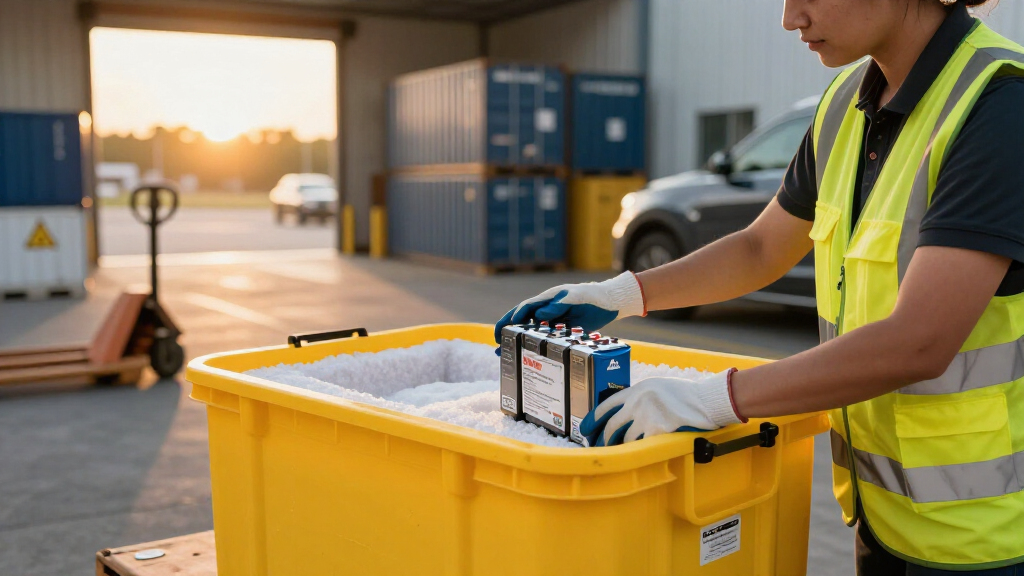
Renewance, a company managing end-of-life EV and energy storage batteries, has adopted purpose-built containers from DGeo that allow multiple damaged, defective or recalled (DDR) batteries to be shipped together. According to a case study published by Charged EVs and sponsored by Labelmaster, the change reduces transportation risk and handling costs compared with the standard one-battery-per-container approach.
Renewance, a company that manages end-of-life electric vehicle and energy storage batteries at scale, has changed how it ships damaged, defective or recalled (DDR) batteries by adopting a purpose-built container that carries multiple batteries per shipment, according to a case study published by Charged EVs. The container, Obexion AG, made by packaging firm DGeo, is designed specifically for DDR lithium batteries and replaces an approach that typically limited shippers to one battery per container.
DDR batteries are classified as dangerous goods, and under standard practice their safe shipment usually means placing a single battery in each container, the report states. For a company handling large volumes of end-of-life EV and energy storage batteries, that constraint increases both shipping costs and handling time, since every battery requires its own packaging, its own handling cycle, and its own place on a truck or pallet.
Renewance found an alternative in Obexion AG, described in the report as a reusable, stackable container built by DGeo specifically to hold multiple DDR batteries. According to the case study, the container allows Renewance to consolidate shipments and reduce the transportation risks associated with DDR batteries — batteries that may be swollen, internally damaged, or recalled for defects are treated as higher-hazard items than intact end-of-life packs.
Sterling Picton, who leads solutions development for end-of-life projects at Renewance, said the container was developed for this specific application rather than adapted from general-purpose packaging. “It’s a more advanced product, designed for this specific application,” Picton said. “It enables us to handle higher volume at a reduced risk.”
Why Battery Packaging Decisions Matter Now
The number of EV and stationary storage batteries reaching end of life is growing as early electric vehicles retire and grid storage installations age, and a portion of those batteries arrive damaged, defective, or recalled. Because DDR batteries are regulated as dangerous goods, logistics costs can become a bottleneck for recycling and second-life programs: if each compromised pack must travel in its own certified container, the cost per battery shipped rises sharply.
The Renewance case illustrates a broader industry effort to build packaging engineered for damaged lithium batteries rather than relying on containers designed for ordinary freight. Consolidated shipments mean fewer trips, less handling of hazardous packs, and — according to the company — lower overall risk. If the approach proves reliable at scale, it could influence how battery recyclers, automakers running recall campaigns, and logistics providers structure reverse-supply chains for hazardous battery waste.
It is worth noting that the case study is sponsored content, paid for by Labelmaster, a company that sells dangerous goods compliance products. The operational claims come from Renewance and the sponsor, not from independent testing or regulators.
Rules Governing Damaged Battery Shipments
Lithium batteries are regulated as hazardous materials in transport because they can catch fire if damaged, short-circuited, or improperly packed. Batteries identified as damaged, defective, or recalled face stricter handling rules than ordinary used batteries, which is why conventional practice has favored isolating a single DDR battery per container to limit the consequences of a thermal event during transit.
Renewance operates in this environment as a manager of end-of-life EV and energy storage batteries, coordinating collection, transport, and disposition at volume. The case study describes its packaging shift as a response to the cost and handling burden created by one-battery-per-container requirements. DGeo’s Obexion AG line is positioned as a certified packaging option built for this niche, and Labelmaster, the study’s sponsor, supplies dangerous goods compliance and packaging products to shippers.
“It’s a more advanced product, designed for this specific application.”
— Sterling Picton, solutions development lead for end-of-life projects, Renewance
Claims Not Independently Verified
The report is a sponsored case study, and several points are not independently verified. No specific figures are given for cost savings, the number of batteries per container, shipment volumes, or how much transportation risk was actually reduced. The report does not detail which regulatory approvals or UN performance certifications the Obexion AG containers hold for DDR shipments in specific jurisdictions, nor which transport modes (ground, sea, air) the consolidation approach applies to.
It is also unclear how long Renewance has used the containers, whether other large battery handlers have adopted similar packaging, and whether regulators or third parties have reviewed the company’s risk-reduction claims. Readers should treat the operational benefits described as company and sponsor statements rather than audited findings.
Scaling Battery Logistics Beyond One Company
The full case study, published by Charged EVs and sponsored by Labelmaster, is available for readers wanting the operational details of Renewance’s packaging change. For the broader industry, the relevant developments to watch are whether purpose-built DDR packaging gains wider adoption among recyclers and OEM recall programs, and whether regulators issue updated guidance on multi-battery shipments of damaged packs.
Companies shipping damaged lithium batteries should verify that any packaging they adopt carries the required dangerous goods certifications for their transport mode and jurisdiction, and should follow current regulatory requirements rather than relying on a single vendor’s claims. As end-of-life battery volumes grow, packaging and logistics choices like this one are likely to receive more attention across the recycling and reverse-logistics sectors.
Key Questions
What are DDR batteries?
DDR stands for damaged, defective, or recalled lithium batteries. Because they pose elevated fire and short-circuit risks, they are classified as dangerous goods and are subject to stricter shipping rules than intact used batteries.
What did Renewance change?
According to the case study, Renewance adopted DGeo’s Obexion AG containers — reusable, stackable packaging designed to hold multiple DDR batteries — allowing it to consolidate shipments instead of shipping one battery per container.
Is this an independent evaluation?
No. The report is a sponsored case study published by Charged EVs and paid for by Labelmaster, a dangerous goods compliance company. The claims about cost and risk reduction come from Renewance and the sponsor.
How much did the change save Renewance?
The report does not provide specific figures. It states that the new containers reduce cost, handling time, and transportation risk, but no dollar amounts, volumes, or risk metrics are given.
Why does one-battery-per-container shipping normally apply?
Damaged lithium batteries can experience thermal runaway — a self-sustaining fire. Isolating each DDR battery in its own container limits how a single failure can spread during transport, which is why standard dangerous goods practice often requires it.
Source: rss
Fall Picks
fall essentials
As an affiliate, we earn on qualifying purchases.